
Related Articles

When I think about the parts that keep a car running smoothly, the serpentine belt is one component that deserves more attention than it usually gets. It may look like a simple rubber belt, but it plays an important role in powering several accessories connected to the engine. A damaged or worn serpentine belt can leave a car unable to operate properly, and in some vehicles it can even cause serious engine problems.
In this guide, I will explain what a serpentine belt does, how it works, how to recognize serpentine belt problems, and what you can do to maintain it. I will keep things simple so that even someone with limited mechanical knowledge can understand why this belt is so important.
What Is a Serpentine Belt?
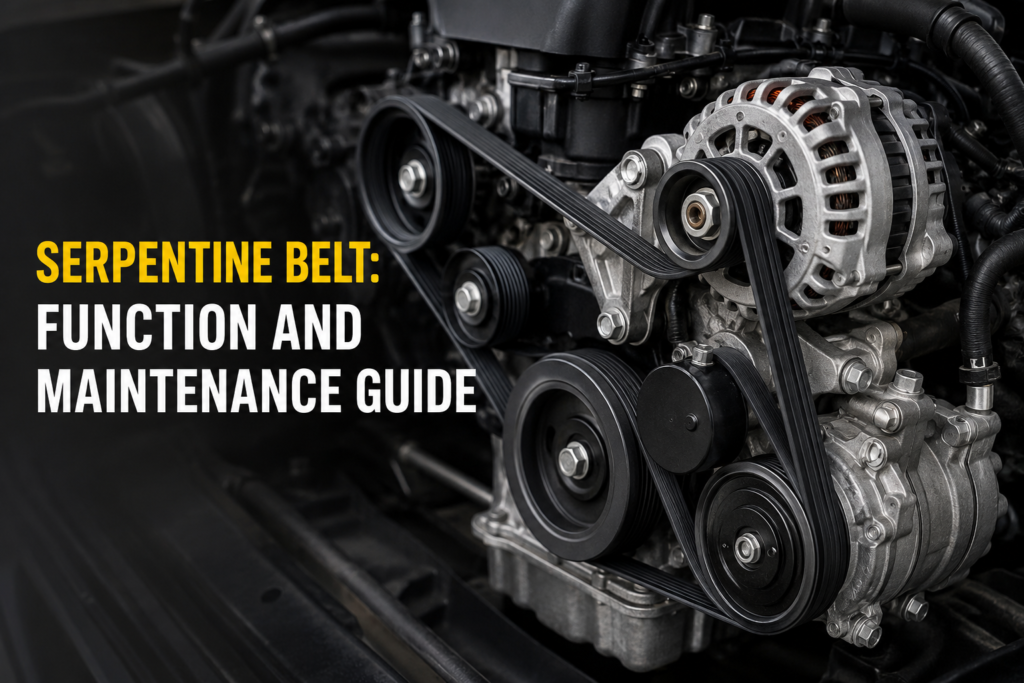
A serpentine belt is a long, continuous belt made from strong rubber compounds and reinforcing materials. It runs around several pulleys located at the front of the engine. Unlike older vehicles that sometimes used separate belts for different accessories, many modern cars use one serpentine belt to drive multiple components.
The belt gets its name from the way it winds around the different pulleys. Its path can look like a snake moving through the engine bay.
Depending on the vehicle, the serpentine belt can operate the alternator, air conditioning compressor, power steering pump, water pump, and other engine accessories.
The exact arrangement depends on the engine design. Some vehicles use an electric water pump or electric power steering, so those components may not be connected to the serpentine belt.
How Does a Serpentine Belt Work?
The serpentine belt receives its power from the engine crankshaft pulley. When the engine is running, the crankshaft rotates. This movement causes the serpentine belt to move around the other pulleys.
As the belt rotates, it transfers mechanical power to the accessories connected to it.
For example, the alternator uses the belt’s movement to generate electrical power for the vehicle and recharge the battery. If the air conditioning compressor is belt driven, the belt also helps operate the compressor when the air conditioning system is switched on.
The belt needs the correct amount of tension to work properly. This is where the belt tensioner becomes important. The tensioner keeps pressure on the belt so it stays tight against the pulleys while the engine is running.
There are also idler pulleys in many systems. These pulleys help guide the belt along the correct path and maintain proper contact with the other components.
Main Functions of a Serpentine Belt
The most important function of a serpentine belt is transferring engine power to different accessories.
One major component it can drive is the alternator. The alternator produces electricity while the engine is running. If the serpentine belt stops turning the alternator, the vehicle may eventually lose electrical power.
In some vehicles, the belt also powers the water pump. The water pump circulates coolant through the engine and cooling system. If that pump stops working, engine temperature can rise quickly.
The serpentine belt can also power the air conditioning compressor. This is why a problem with the belt can sometimes affect the air conditioning system.
On vehicles equipped with belt driven hydraulic power steering, the belt may also operate the power steering pump.
This shows why I consider serpentine belt maintenance an important part of regular car maintenance rather than something that should only be checked when a problem appears.
Signs of a Bad Serpentine Belt
A serpentine belt usually gives some warning signs before it completely fails. Paying attention to these signs can help prevent a sudden breakdown.
Visible Cracks
Cracks on the belt surface can indicate that the rubber is aging. A few small marks do not always mean immediate failure, but multiple cracks or severe deterioration deserve attention.
Frayed Edges
If the edges of the serpentine belt look damaged, rough, or frayed, the belt may not be tracking correctly on the pulleys. This can happen because of belt wear, pulley problems, or incorrect alignment.
Squealing Noise
A high pitched squealing sound from the engine area can be caused by a slipping serpentine belt. It may become more noticeable when starting the engine, accelerating, or switching on the air conditioning.
However, belt noise can also come from a worn tensioner, pulley bearing, or another component, so the belt should be inspected rather than replaced based only on sound.
Glazing
A shiny or unusually smooth belt surface can indicate excessive slipping or heat. A glazed belt may not grip the pulleys as effectively as it should.
Loss of Accessories
If several vehicle accessories suddenly stop working, the serpentine belt should be checked. For example, a failed belt may stop the alternator from charging the battery or may cause the air conditioning compressor to stop operating.
Burning Rubber Smell
A strong smell of burning rubber can indicate that the belt is slipping or rubbing against something. I would not ignore this sign because continued operation could make the problem worse.
What Causes Serpentine Belt Failure?
Age is one of the most common causes of serpentine belt wear. The belt operates in a hot engine compartment and is exposed to heat, friction, and constant movement.
Oil or coolant contamination can also damage the rubber. If a fluid leak reaches the belt, the belt may become weak or slippery.
Another possible cause is a damaged pulley. A pulley that does not rotate correctly can put extra stress on the belt.
A failing belt tensioner can also create problems. If the tension is incorrect, the belt may slip, vibrate, or wear unevenly.
Incorrect belt installation is another issue. The serpentine belt must follow the correct routing pattern. If it is installed incorrectly, accessories may rotate in the wrong direction or the belt may quickly become damaged.
How Often Should a Serpentine Belt Be Replaced?
There is no single replacement interval that applies to every car. Modern serpentine belts can last for many years, but their lifespan depends on the vehicle, engine design, driving conditions, belt quality, and maintenance.
Instead of relying only on mileage, I recommend checking the belt regularly and following the vehicle manufacturer’s maintenance schedule.
Some manufacturers provide a specific replacement interval, while others recommend inspection and replacement based on condition.
If the belt shows severe cracks, fraying, missing ribs, contamination, or other damage, it should be replaced even if the vehicle has not reached the recommended mileage.
How to Inspect a Serpentine Belt
Inspecting a serpentine belt is relatively simple, but the engine should always be switched off and cool before you examine it.
Start by locating the belt at the front of the engine. Look for cracks, missing sections, frayed edges, excessive wear, and signs of contamination.
You should also check whether the belt appears properly positioned on each pulley.
Do not place your hands near a moving belt or pulley while the engine is running. A rotating serpentine belt can cause serious injuries.
If you are unsure about what you are seeing, having a qualified mechanic inspect the belt is a better option than taking a risk.
Serpentine Belt and Tensioner Problems
One thing I have learned about belt systems is that replacing only the belt does not always solve the problem.
The tensioner and idler pulleys are also important parts of the system. A worn tensioner can create too much or too little belt tension. A damaged pulley bearing can produce noise and cause the belt to move incorrectly.
If a new serpentine belt becomes noisy or damaged shortly after installation, the other components should be inspected.
In some cases, replacing the belt and tensioner together makes sense, especially when the vehicle has high mileage and the tensioner is showing signs of wear.
Can You Drive With a Bad Serpentine Belt?
Driving with a damaged serpentine belt is not something I recommend.
If the belt completely breaks, the accessories it drives will stop operating. Depending on the vehicle, this could mean losing alternator charging, air conditioning, power steering assistance, or coolant circulation.
The consequences depend heavily on the vehicle’s design. If the water pump is driven by the serpentine belt, continued driving after belt failure could result in rapid overheating.
If you notice severe belt damage, loud belt noise, or warning lights related to charging or engine temperature, it is safer to stop and have the vehicle inspected.
Serpentine Belt Maintenance Tips
Good maintenance does not have to be complicated. Regular inspection is one of the easiest ways to protect the belt system.
I recommend checking the belt whenever you are already inspecting the engine. Look for visible damage and pay attention to unusual noises.
Keep an eye out for oil and coolant leaks because fluids can reach the belt and affect its condition.
It is also important to use the correct replacement belt for your vehicle. Serpentine belts are available in different lengths, widths, rib patterns, and materials. The correct belt must match the manufacturer’s specifications.
Do not use belt dressing as a permanent solution for a noisy belt. It may temporarily change the sound while leaving the actual problem unresolved.
If the belt tensioner or pulley is worn, replacing the belt alone may not provide a lasting repair.
Why Serpentine Belt Maintenance Matters
The serpentine belt may not be as noticeable as the engine oil, battery, or tires, but it performs an important job every time the engine runs.
A small amount of preventive maintenance can help identify problems before the belt breaks. This can save you from being stranded on the road and may also prevent damage to other engine components.
For me, the biggest lesson is simple: never judge a serpentine belt only by its appearance. A belt can look acceptable while another part of the belt drive system is already wearing out.
Final Thoughts
The serpentine belt is a simple but essential part of many modern vehicles. It transfers power from the engine to important accessories such as the alternator, air conditioning compressor, power steering pump, and sometimes the water pump.
Learning the common symptoms of serpentine belt failure can make vehicle ownership much easier. Cracks, frayed edges, squealing noises, glazing, burning rubber smells, and accessory problems are all signs that deserve attention.
Regular inspection and timely replacement are the best ways to keep the serpentine belt system working properly. I believe this is one of those small maintenance jobs that can make a big difference to reliability.
If you take care of the serpentine belt and its related components, you reduce the chance of unexpected failure and help keep your vehicle running smoothly for the long term.