Related Articles
Your car tires are one of the most important parts of your vehicle because they are the only components that directly connect your car to the road. I believe many drivers pay attention to the engine, brakes, oil, and battery but forget about their tires until a problem becomes obvious. The truth is that knowing when to replace car tires can help improve safety, handling, braking, and overall driving comfort.
Tires do not last forever. Even if they look acceptable from a distance, they can become worn, damaged, or aged over time. In this guide, I will explain the most common signs that your car tires need replacing and what you should check before making a decision.
Check the Tread Depth
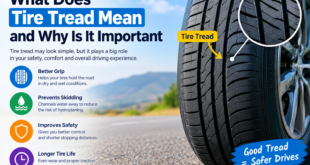
One of the easiest ways to know whether your tires need replacing is to check the tread depth. Tire tread helps your vehicle maintain contact with the road, especially when the road is wet.
As tires wear, the grooves become shallower. When the tread becomes too low, your tires may have less ability to move water away from the contact area. This can affect grip and increase the risk of losing control on wet roads.
Many tires have built in tread wear indicators located inside the grooves. When the tread surface becomes level with these indicators, it is generally time to replace the tire.
You can also ask a professional tire technician to measure the tread depth. This is a simple inspection and can give you a clearer idea of the remaining tire life.
Look for Cracks in the Sidewall
Another important sign is cracking on the sidewall. I always recommend looking closely at the sides of your tires rather than checking only the tread.
Small cracks can appear because of age, sunlight, heat, weather exposure, or long periods of use. Deep or widespread cracks can indicate that the rubber has started to deteriorate.
If you notice serious cracking, especially around the sidewall, it is better to have the tire inspected by a professional. A tire can sometimes become unsafe because of internal deterioration even when the tread still appears reasonable.
Watch for Bulges and Blisters
A bulge or blister on the sidewall is another warning sign that should never be ignored. These raised areas can indicate damage to the internal structure of the tire.
This type of damage can happen after hitting a pothole, curb, or other road obstacle. The outside of the tire may still look mostly normal except for the raised area.
If you notice a bulge, I would avoid unnecessary driving and have the tire inspected as soon as possible. A damaged tire may require replacement rather than repair.
Pay Attention to Uneven Tire Wear
Your tires should normally wear relatively evenly across the tread. If one section is wearing much faster than another, there may be an underlying problem.
Uneven tire wear can be associated with incorrect tire pressure, wheel alignment problems, suspension issues, or other mechanical conditions. Sometimes the tire itself is already too worn to continue using safely.
Look at both the inner and outer edges of each tire. Some wear problems can be difficult to notice if you only look at the center of the tread.
If you see unusual wear patterns, replacing the tire may be necessary, but it is also important to identify the cause. Otherwise, a new tire could develop the same problem.
Notice Changes While Driving
Sometimes your car gives you warning signs before the tire looks obviously damaged. Pay attention to changes in the way your vehicle feels on the road.
For example, you might notice more vibration through the steering wheel, increased road noise, poor handling, or a feeling that the car does not track smoothly.
These symptoms do not always mean that the tires need replacing. Wheel balance, alignment, suspension components, and other parts can create similar symptoms. However, unusual changes are a good reason to have the vehicle inspected.
I personally think it is better to investigate a small change early than wait until it becomes a major problem.
Check the Tire Age
Tire age is another factor that drivers often overlook. Tires can age even when the vehicle is not driven frequently.
The rubber materials can change over time because of heat, sunlight, storage conditions, and environmental exposure. This means a tire with plenty of tread may still need professional inspection because of its age.
You can find the tire manufacturing date on the sidewall. The date is represented by a code that identifies the week and year of manufacture.
There is no single replacement age that applies perfectly to every tire and every vehicle. Tire manufacturers and vehicle makers may provide different recommendations, so it is important to check the information provided for your specific tires and car.
Frequent Air Pressure Loss
If one tire repeatedly loses air, do not simply keep adding air and ignore the problem.
Frequent pressure loss can be caused by a puncture, damaged valve, wheel problems, or tire damage. In some cases, the tire may be repairable. In other cases, replacement may be necessary.
Driving with incorrect tire pressure can affect handling, fuel economy, and tire wear. That is why I recommend checking tire pressure regularly and following the pressure recommendation listed by your vehicle manufacturer.
Watch for Repeated Punctures
A single small puncture does not automatically mean you need a new tire. Some punctures can be professionally repaired depending on their size, location, and the condition of the tire.
However, repeated punctures or damage in important areas can be a reason to replace the tire.
If a tire has already experienced significant damage or has been driven while severely underinflated, a professional should inspect it before you continue using it.
Check for Exposed Cords
Exposed cords are a serious sign of excessive tire wear or damage. If you can see the internal material of the tire through the tread or sidewall, the tire should not be treated as normal road equipment.
This usually means the tire has deteriorated beyond a safe level or has suffered significant damage.
Do not wait for a convenient time to deal with this type of problem. Have the tire inspected immediately and replace it if advised by a qualified professional.
Your Braking Performance Can Tell You Something
Tires play an important role in braking because they need sufficient grip to transfer braking force to the road.
If your vehicle seems to require more distance to stop, especially on wet roads, there can be many possible causes. Worn tires are one possibility, but brake components and road conditions also matter.
If you notice a significant change in braking performance, have both the tires and braking system checked. It is important not to assume that new tires alone will solve every braking problem.
Do Not Ignore the Spare Tire
While checking your regular tires, remember to inspect the spare tire too.
Many drivers only think about the spare when they already have a flat tire. By then, they may discover that the spare is underinflated, damaged, or too old to use.
Check its pressure and condition occasionally and understand whether your vehicle uses a full size spare, temporary spare, or another type of emergency tire.
Replace Tires as a Set When Appropriate
Depending on your vehicle and tire condition, you may not always need to replace all four tires at exactly the same time. However, replacing tires in pairs on the same axle is often considered when only two tires need replacement.
Vehicles with all wheel drive systems can have additional requirements because differences in tire diameter can affect the drivetrain.
For this reason, I would always check the vehicle manufacturer’s recommendations before replacing only one or two tires.
Do Not Choose Tires Only by Price
When you need new tires, price is naturally an important consideration. However, I would not choose a tire based only on the cheapest available option.
Consider the correct tire size, load rating, speed rating, vehicle requirements, driving conditions, climate, and expected usage.
A tire that is suitable for your normal driving conditions can provide a better overall experience than simply choosing the least expensive option.
Final Thoughts
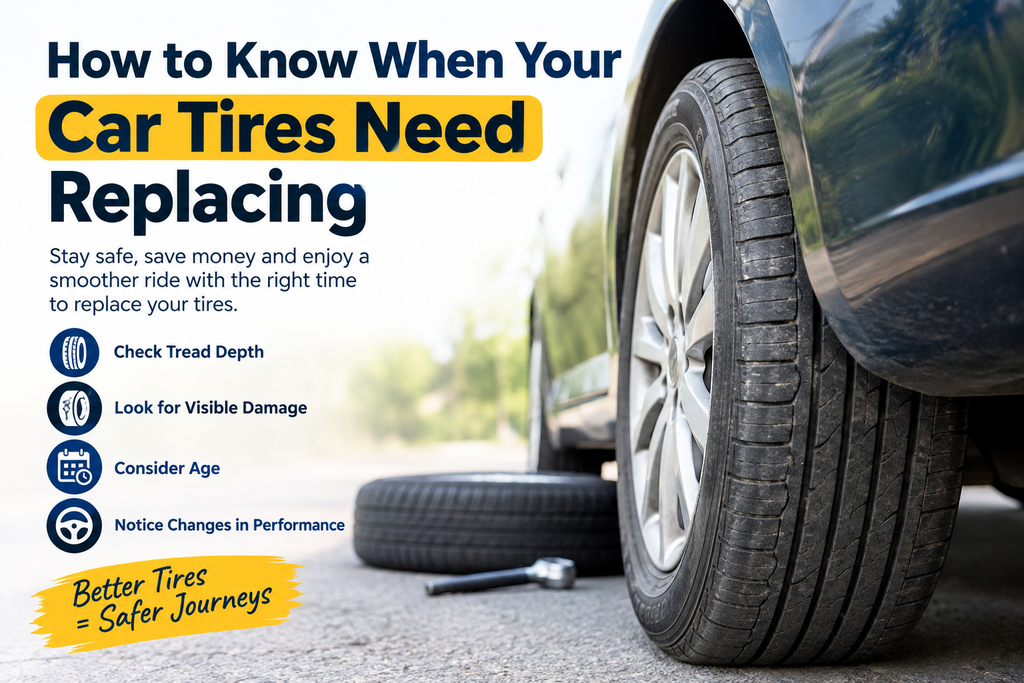
Knowing when your car tires need replacing is an important part of responsible vehicle ownership. Low tread depth, sidewall cracks, bulges, uneven wear, repeated air loss, exposed cords, and excessive age can all be reasons to have your tires professionally inspected.
I believe the best approach is to make tire checks part of your regular car maintenance routine. Take a few minutes to look at the tread, inspect the sidewalls, check the pressure, and pay attention to changes in driving performance.
Most importantly, do not wait until a tire fails before thinking about replacement. If you are unsure about the condition of your tires, a qualified tire professional can inspect them and explain whether they are still suitable for use.
Good tires are not just about a smoother ride. They are an important part of maintaining control and confidence every time you drive.