
Related Articles


When we talk about the major parts of a car engine, most people think about the spark plugs, battery, alternator, radiator, or belts. Engine mounts usually do not get much attention. However, from my point of view, engine mounts are one of those parts that quietly do an important job every time we start and drive a car.
An engine produces a lot of vibration and movement while running. Without proper engine mounts, those vibrations would travel directly through the vehicle body and make driving uncomfortable. Engine mounts hold the engine securely in position while also helping absorb unwanted vibration and movement.
In this article, I will explain what engine mounts are, what they do, the different types, common symptoms of bad engine mounts, and why replacing them at the right time is important.
What Are Engine Mounts?
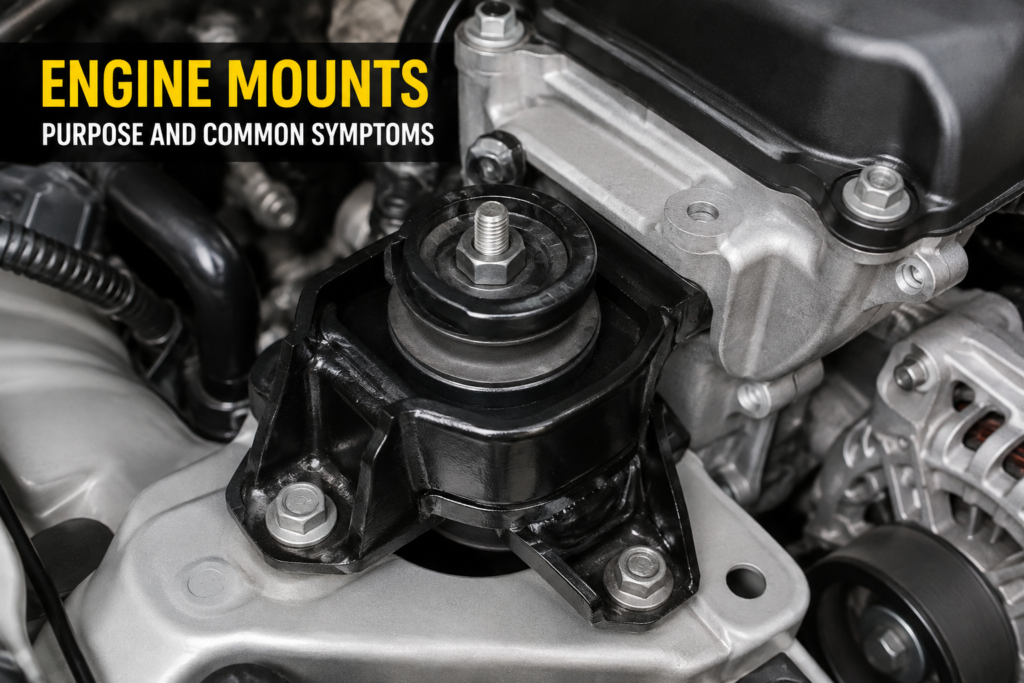
Engine mounts are components that connect the engine to the vehicle frame or chassis. They are usually made from a combination of metal and rubber, although some modern vehicles use hydraulic or electronically controlled mounts.
The metal section provides strength and keeps the engine securely attached to the vehicle. The rubber section helps absorb vibration and reduces the amount of engine movement transferred to the cabin.
Most cars have several engine mounts rather than just one. The exact number and location depend on the vehicle design, engine size, and transmission arrangement.
When the engine is running, it naturally moves slightly because of combustion, rotating components, acceleration, and changes in engine speed. The mounts are designed to control this movement without allowing the engine to move excessively.
What Is the Purpose of Engine Mounts?
The main purpose of engine mounts is to hold the engine securely while controlling vibration and movement. There are several important functions involved.
First, engine mounts support the weight of the engine and transmission assembly. A car engine is extremely heavy, so the mounts must be strong enough to carry that weight safely.
Second, they reduce vibration. Every engine creates some vibration during operation. Good engine mounts absorb much of this vibration before it reaches the vehicle body.
Third, engine mounts control engine movement. When you accelerate, brake, change gears, or drive over uneven roads, the engine can move slightly. Proper mounts keep that movement within a controlled range.
Finally, engine mounts help protect other components. Excessive engine movement can place stress on hoses, wiring, exhaust components, cooling system connections, and other parts around the engine.
For me, this is one of the most important reasons not to ignore engine mount problems. A damaged mount may not immediately stop the car, but continued driving can create additional problems.
Types of Engine Mounts
Engine mounts come in different designs depending on the vehicle.
Rubber Engine Mounts
Traditional rubber engine mounts use a strong rubber section between metal mounting points. They are simple, reliable, and commonly found in many vehicles.
Over time, the rubber can become hard, cracked, torn, or separated from the metal. Once this happens, the mount can no longer absorb vibration effectively.
Hydraulic Engine Mounts
Hydraulic engine mounts contain fluid inside the mount. The fluid helps control vibration and movement more effectively than a basic rubber design.
These mounts can provide a smoother driving experience, but they can develop leaks as they age. If hydraulic fluid is visible around the mount, it may indicate that replacement is needed.
Electronic Engine Mounts
Some newer vehicles use electronically controlled engine mounts. These systems can adjust their behavior depending on engine speed and driving conditions.
They are more advanced and can provide excellent vibration control, but they may also be more expensive to diagnose and replace.
Common Symptoms of Bad Engine Mounts
A failing engine mount can produce several noticeable symptoms. Some signs can also be caused by other mechanical problems, so proper inspection is important.
Excessive Engine Vibration
One of the most common symptoms is increased vibration. You may notice the steering wheel, dashboard, seats, or floor vibrating more than usual.
Sometimes the vibration is strongest when the vehicle is idling. If the engine feels unusually rough even though the engine itself is running normally, the engine mounts should be inspected.
Clunking or Banging Sounds
A damaged engine mount may allow the engine to move more than it should. When this happens, you may hear a clunk, knock, or banging sound when accelerating, braking, or changing gears.
For example, if you accelerate quickly and hear a noticeable clunk from the engine bay, a damaged mount could be one possible cause.
Excessive Engine Movement
An engine should not move dramatically when the vehicle is started, accelerated, or shifted between gears.
If the engine visibly rocks more than normal, it can be a sign that one or more engine mounts have become weak or damaged.
This is something I would take seriously because excessive movement can eventually affect nearby components.
Rough Feeling During Gear Changes
In vehicles with automatic or manual transmissions, worn engine mounts can make gear changes feel harsher.
You might feel a noticeable jolt when shifting from Park to Drive or Reverse in an automatic vehicle. In a manual car, you may notice extra movement when releasing the clutch or accelerating.
The transmission itself can cause similar symptoms, so an inspection is necessary before replacing any parts.
Increased Cabin Vibration at Idle
If your car feels smooth while driving but vibrates noticeably when stopped at a traffic light, worn engine mounts could be responsible.
A healthy mount should isolate much of the engine vibration from the cabin. When the rubber becomes damaged or hardened, more vibration reaches the vehicle body.
Visible Cracks or Damage
Sometimes the problem can be seen during a visual inspection. Rubber may show cracks, tears, or separation.
With hydraulic mounts, fluid leakage can be another warning sign.
However, not every damaged engine mount is easy to identify visually. Some internal damage may only become obvious when the mount is tested or when the engine movement is observed.
What Causes Engine Mounts to Fail?
Engine mounts do not last forever. Several factors can contribute to their failure.
Age is one of the most common causes. Rubber naturally becomes harder and less flexible over time.
Heat is another major factor. Engine mounts are exposed to high temperatures from the engine and exhaust system. Constant heat can accelerate rubber deterioration.
Oil and other fluid leaks can also damage rubber mounts. If engine oil, coolant, or other fluids repeatedly reach the mount, the material can deteriorate faster.
Driving conditions also matter. Frequent driving on rough roads, aggressive acceleration, heavy loads, and hard braking can place additional stress on the mounts.
Poor installation or an incorrectly fitted replacement mount can also create problems.
Can Bad Engine Mounts Damage Other Parts?
Yes, a severely damaged engine mount can contribute to problems with surrounding components.
If the engine moves excessively, it can place stress on electrical wiring, coolant hoses, fuel lines, exhaust components, intake connections, and transmission components.
In some vehicles, excessive movement can also cause the engine or transmission to contact nearby parts.
This is why I would not recommend ignoring a clearly damaged engine mount simply because the car still drives. A small repair can sometimes prevent a larger repair later.
How Are Engine Mounts Checked?
A mechanic usually starts with a visual inspection. The mount is checked for cracks, broken rubber, fluid leakage, loose hardware, or obvious damage.
The engine may also be observed while the vehicle is started or while the transmission is placed into different positions. This should only be done using proper safety procedures.
A technician may also compare engine movement and vibration with the manufacturer’s specifications or use other diagnostic methods.
It is important to remember that vibration does not automatically mean the engine mounts are bad. Problems with ignition, fuel delivery, engine timing, idle control, suspension, or drivetrain components can create similar symptoms.
A proper diagnosis can prevent unnecessary replacement.
When Should Engine Mounts Be Replaced?
There is no universal replacement interval for engine mounts. Some can last for many years, while others may wear sooner depending on the vehicle and driving conditions.
I would replace an engine mount when it is visibly damaged, leaking, excessively worn, or no longer controlling engine movement properly.
If one mount has failed because of age, the condition of the other mounts should also be checked. They have usually experienced similar operating conditions.
Replacing only one mount can sometimes be appropriate, but the decision should be based on its actual condition and the vehicle manufacturer’s recommendations.
Is It Safe to Drive With a Bad Engine Mount?
A mildly worn engine mount may allow you to drive for some time, but that does not mean it should be ignored.
If the mount is severely damaged, the engine can move excessively. This can create additional stress on other components and may affect how the vehicle feels during acceleration or gear changes.
If you notice strong vibration, loud clunking, visible engine movement, or a broken mount, I would recommend having the vehicle inspected as soon as practical.
Engine Mount Replacement Cost
The cost of engine mount replacement depends heavily on the vehicle, mount design, labor rates, and number of mounts that need replacement.
A basic rubber mount is usually less complicated than a hydraulic or electronically controlled mount. Some vehicles also require more labor because the mount is difficult to access.
Instead of choosing a replacement based only on the lowest price, I believe it is better to use a properly designed mount from a reputable manufacturer. A poor quality mount may not provide the same vibration control or service life as a suitable replacement.
How to Make Engine Mounts Last Longer
There is no way to prevent normal wear completely, but regular vehicle maintenance can help.
Keep an eye out for engine oil and coolant leaks because fluids can damage rubber components.
Avoid unnecessary aggressive acceleration and harsh driving whenever possible.
During routine servicing, ask the mechanic to inspect the engine mounts, especially if the vehicle has developed new vibration or unusual noises.
It is also useful to repair related problems quickly. For example, an engine that is running excessively rough can place additional stress on its mounts.
Final Thoughts
Engine mounts may not be the most noticeable components under the hood, but they play an important role in vehicle comfort, stability, and reliability. Their job is to support the engine, control movement, and reduce vibration before it reaches the vehicle cabin.
From my point of view, the biggest lesson is to pay attention to changes in how your car feels. Increased vibration, clunking noises, excessive engine movement, and harsh gear changes can all be signs that something needs attention.
A bad engine mount does not always mean an immediate breakdown, but ignoring the problem can allow additional components to become stressed or damaged. A proper inspection can identify the real cause and help you decide whether replacement is necessary.
Understanding the purpose and common symptoms of engine mounts makes it easier to notice problems early. With regular inspections and timely repairs, your engine mounts can continue doing their job of keeping the engine secure and the driving experience smooth.