Related Articles

Your car’s engine is the heart of the entire vehicle. As long as it runs smoothly, almost every other part of the car works as expected. From my experience, many people ignore small engine problems because the car still starts and drives. Unfortunately, those small warning signs often turn into expensive repairs if they are left unchecked. That is why I always believe it is better to identify problems early instead of waiting for a complete breakdown.
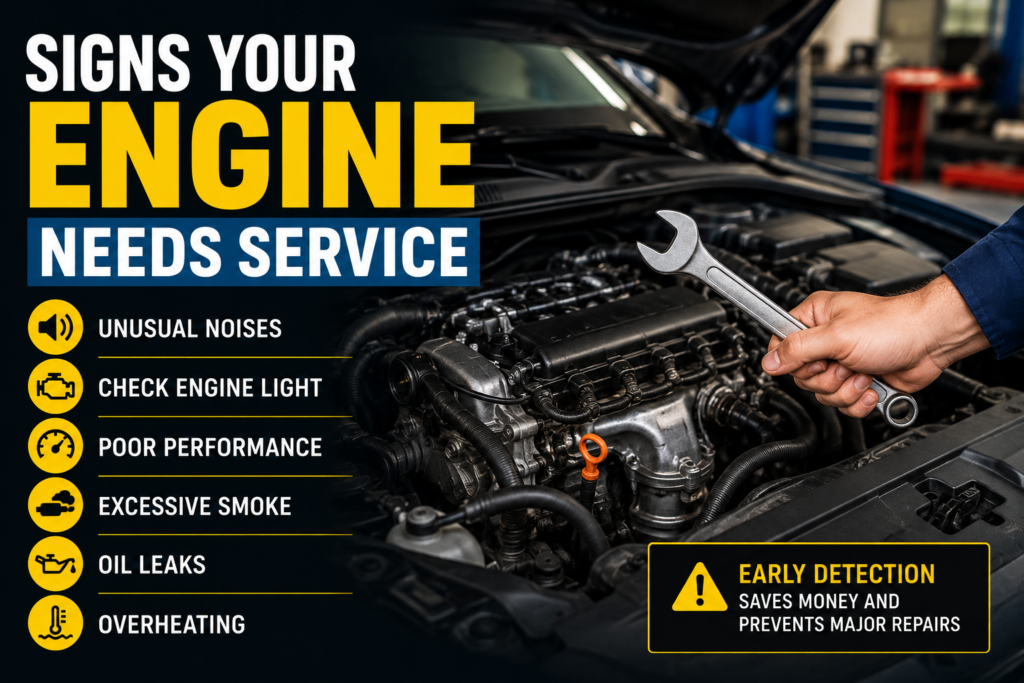
Knowing the signs your engine needs service can help you protect your investment, improve fuel efficiency, and keep your vehicle reliable for years. Modern engines are designed to last a long time, but they still require proper maintenance and timely repairs. Paying attention to unusual sounds, warning lights, and changes in performance can save both time and money.
In this article, I will explain the most common signs that indicate your engine may need professional attention and why acting quickly is always the smartest decision.
Why Engine Maintenance Is Important
Every time you drive, thousands of engine components work together at high speed. These parts generate heat, friction, and pressure. Regular maintenance keeps everything properly lubricated, cooled, and operating efficiently.
Ignoring maintenance allows small issues to grow into major mechanical failures. Routine servicing not only extends engine life but also improves fuel economy, performance, and driving safety.
A well maintained engine provides better reliability and reduces the chances of unexpected breakdowns.
Check Engine Light Stays On
The check engine light is one of the first warning signs that something may be wrong.
Many drivers continue driving because the vehicle seems normal, but this warning light should never be ignored.
The light can indicate problems involving:
Engine sensors
Ignition system
Fuel system
Emission controls
Air intake system
Timing components
Although some issues are minor, others require immediate attention.
Having the engine scanned for diagnostic trouble codes is the best way to determine the exact cause.
Unusual Engine Noises
A healthy engine operates smoothly without excessive noise.
If you begin hearing unusual sounds, they often indicate internal wear or mechanical problems.
Common engine noises include:
Knocking
Ticking
Grinding
Rattling
Squealing
Whining
Each sound may point toward a different issue, such as worn bearings, loose belts, low oil pressure, or damaged engine components.
Ignoring strange noises can lead to serious engine damage.
Poor Fuel Economy
If you suddenly find yourself visiting the gas station more often than usual, your engine may not be operating efficiently.
Several engine problems can reduce fuel economy.
These include:
Dirty air filters
Faulty oxygen sensors
Worn spark plugs
Fuel injector issues
Poor engine compression
A properly serviced engine burns fuel more efficiently and helps reduce operating costs.
Loss of Engine Power
One of the most noticeable warning signs is reduced engine performance.
Your vehicle may accelerate slowly or struggle when climbing hills.
Common causes include:
Clogged fuel filter
Weak fuel pump
Dirty throttle body
Faulty spark plugs
Air intake restrictions
Sensor failures
If the engine no longer responds as it normally does, professional inspection is recommended.
Rough Idling
When the engine is idling, it should run smoothly and quietly.
If you notice shaking, vibration, or uneven engine speed while stopped, something may be affecting combustion.
Possible causes include:
Dirty fuel injectors
Vacuum leaks
Worn ignition components
Throttle body contamination
Faulty sensors
Rough idling often becomes worse if repairs are delayed.
Excessive Exhaust Smoke
The color of exhaust smoke provides valuable clues about engine condition.
Blue smoke may indicate burning engine oil.
White smoke can suggest coolant entering the combustion chamber.
Black smoke often means excessive fuel consumption.
Any unusual exhaust color should be investigated as soon as possible because it may indicate internal engine problems.
Engine Overheating
The temperature gauge should remain within its normal operating range.
If the engine begins overheating, stop driving as soon as it is safe.
Overheating may result from:
Low coolant level
Faulty thermostat
Broken water pump
Cooling fan failure
Radiator blockage
Driving with an overheated engine can lead to warped cylinder heads or complete engine failure.
Oil Leaks Under the Vehicle
Small oil stains beneath the vehicle should never be ignored.
Oil leaks may come from:
Valve cover gasket
Oil pan gasket
Front crankshaft seal
Rear main seal
Oil filter
Drain plug
Low engine oil levels increase friction and accelerate engine wear.
Repairing leaks early prevents larger problems later.
Burning Smell
A strong burning odor while driving often indicates trouble.
Possible causes include:
Oil leaking onto hot engine parts
Burning coolant
Overheated belts
Electrical wiring issues
Damaged hoses
Any persistent burning smell deserves immediate inspection.
Difficulty Starting the Engine
If the engine becomes harder to start than usual, several components may require attention.
Common causes include:
Weak battery
Faulty starter
Fuel delivery problems
Ignition issues
Sensor failures
While some starting problems involve the electrical system, others originate within the engine itself.
Engine Misfires
An engine misfire occurs when one or more cylinders fail to ignite properly.
Symptoms often include:
Jerking during acceleration
Rough running
Reduced power
Flashing check engine light
Poor fuel economy
Misfires should never be ignored because they can damage the catalytic converter over time.
Vibrations While Driving
Excessive engine vibration often indicates something is wrong.
Possible causes include:
Damaged engine mounts
Ignition problems
Fuel delivery issues
Internal engine imbalance
Transmission problems
A smooth running engine should not produce excessive vibration.
Unusual Engine Smells
Different odors often reveal different mechanical issues.
Sweet smell may indicate coolant leakage.
Burning oil smell may point toward leaking seals.
Fuel smell could suggest injector or fuel line problems.
Recognizing these odors early allows repairs before larger damage occurs.
Low Oil Pressure Warning
The oil pressure warning light is one of the most serious alerts your vehicle can display.
Low oil pressure may result from:
Low oil level
Oil pump failure
Internal engine wear
Blocked oil passages
Faulty pressure sensor
Driving with low oil pressure can severely damage the engine within minutes.
Always stop the vehicle immediately if this warning appears.
Increased Exhaust Noise
If the engine suddenly sounds louder than normal, the exhaust system may have developed a leak.
While this is not always an engine problem, damaged exhaust components can affect engine performance and emissions.
Professional inspection helps identify the exact source.
Why Regular Engine Service Matters
Routine maintenance keeps the engine operating efficiently while reducing repair costs.
Regular servicing usually includes:
Oil changes
Oil filter replacement
Air filter inspection
Spark plug replacement
Coolant inspection
Belt inspection
Fluid checks
Diagnostic scanning
Preventive maintenance is far less expensive than repairing major engine damage.
Simple Habits That Protect Your Engine
I follow several habits that help keep my engine healthy.
Check engine oil regularly.
Replace filters on schedule.
Monitor coolant level.
Use quality fuel.
Listen for unusual sounds.
Repair leaks immediately.
Follow the manufacturer’s maintenance schedule.
Drive smoothly whenever possible.
These simple steps significantly increase engine reliability.
When Should You Visit a Mechanic
Not every warning sign means major engine damage, but several symptoms appearing together should never be ignored.
Visit a qualified mechanic if you notice:
Persistent warning lights
Poor performance
Repeated overheating
Oil leaks
Unusual noises
Heavy exhaust smoke
Frequent stalling
Difficulty starting
Early diagnosis often reduces repair costs and prevents more serious failures.
Preventive Maintenance Saves Money
Many drivers postpone servicing because the vehicle still seems to operate normally.
However, preventive maintenance almost always costs less than emergency repairs.
Replacing a worn spark plug, leaking gasket, or dirty air filter is much cheaper than rebuilding an engine damaged by neglect.
Regular inspections also improve resale value because buyers appreciate well maintained vehicles.
Final Thoughts
Recognizing the signs your engine needs service is one of the best ways to keep your vehicle reliable and avoid expensive repairs. Warning lights, strange noises, poor fuel economy, rough idling, overheating, oil leaks, and reduced performance are all signals that deserve attention. Ignoring these symptoms can allow small issues to become major mechanical failures that are far more costly to repair.
I always believe that taking care of the engine before problems become serious is the smartest approach. Regular maintenance, timely inspections, and quick repairs help extend engine life, improve fuel efficiency, and provide peace of mind every time you drive. A healthy engine not only delivers better performance but also makes every journey safer and more enjoyable.