
Related Articles
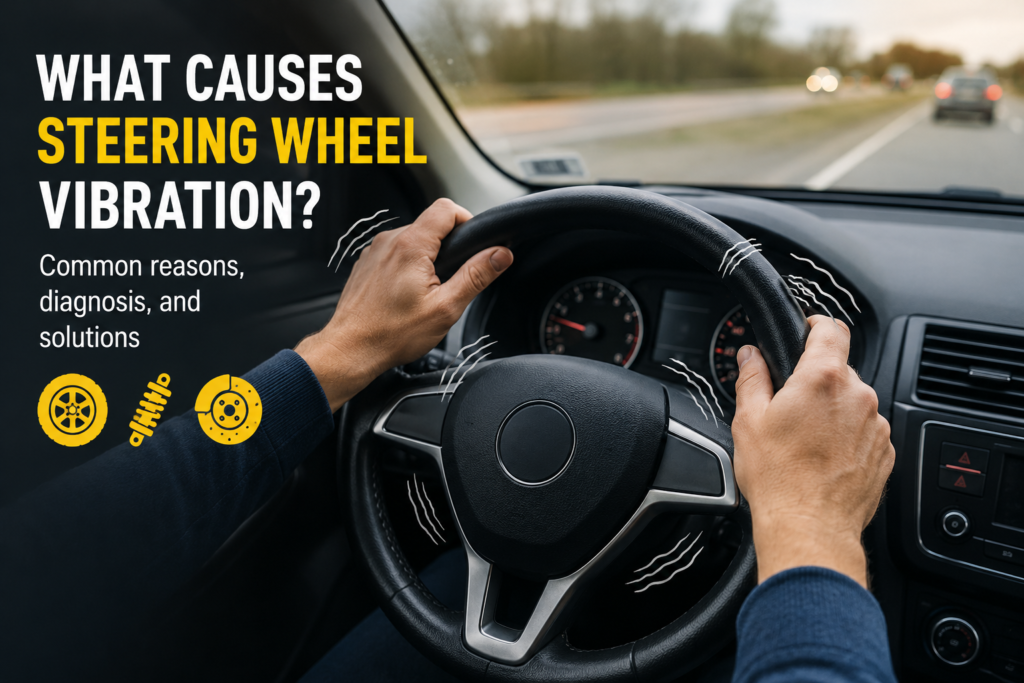
Steering wheel vibration is one of those car problems that is easy to notice and difficult to ignore. When the steering wheel starts shaking while driving, especially at certain speeds, most drivers immediately feel that something is not right. In my experience, steering wheel vibration should never be treated as a normal part of driving because it can be a warning sign of a tire, wheel, brake, suspension, or alignment problem.
The good thing is that many causes of steering wheel vibration are relatively simple to identify and repair. The important thing is to understand when the vibration happens, how strong it is, and whether it changes when you accelerate, brake, or turn.
Common Causes of Steering Wheel Vibration
There are several reasons why a steering wheel may vibrate. Some problems are minor, while others can affect vehicle safety. The most common causes include unbalanced tires, wheel alignment problems, damaged tires, bent wheels, brake issues, and worn suspension or steering components.
Understanding these causes can help you describe the problem accurately when you take your vehicle to a mechanic.
Unbalanced Tires
One of the most common causes of steering wheel vibration is tire imbalance. Every tire and wheel combination has a certain weight distribution. When that weight is not evenly distributed, the wheel can shake as it rotates.
This problem is usually more noticeable at higher speeds. For example, you may drive normally around town but notice the steering wheel vibrating once you reach highway speeds.
Wheel balancing corrects this problem by adding small weights to the wheel at specific locations. A technician uses a wheel balancing machine to identify where the weight needs to be added.
If your steering wheel vibration becomes noticeable between approximately 50 and 70 miles per hour, checking tire balance is a good place to start.
Wheel Alignment Problems
Poor wheel alignment can also contribute to steering wheel vibration. Wheel alignment involves adjusting the angles of the wheels so they sit correctly in relation to the road and each other.
When alignment is incorrect, the vehicle may pull toward one side, the steering wheel may not remain centered, and the tires can develop uneven wear.
Alignment problems often happen after hitting potholes, curbs, or other road obstacles. If you recently experienced a strong impact and then noticed steering wheel vibration, checking the wheel alignment makes sense.
It is important to remember that wheel alignment and wheel balancing are different services. Balancing corrects uneven weight distribution, while alignment corrects wheel angles.
Damaged or Uneven Tires
Tires are another major source of steering wheel vibration. A tire can become damaged from potholes, road debris, improper inflation, or normal wear.
Sometimes the damage is visible, such as a bulge or crack on the sidewall. In other cases, the problem may be hidden inside the tire.
Uneven tread wear can also cause vibration. If a tire has worn more heavily in certain areas, it may not rotate smoothly. This can create a noticeable shaking sensation through the steering wheel.
I always recommend checking the tires carefully when investigating steering wheel vibration. Look for unusual tread wear, cuts, cracks, bulges, or objects stuck in the tire.
Bent Wheels
A bent wheel can cause steering wheel vibration even when the tires are in good condition. This is especially common after hitting a pothole or curb.
Modern wheels can be damaged by a hard impact, and the damage may not always be obvious just by looking at the wheel. A slightly bent wheel may still hold air but fail to rotate smoothly.
A technician can inspect the wheel using specialized equipment to determine whether it is straight. Depending on the type and severity of the damage, the wheel may be repairable or may need replacement.
If steering wheel vibration started immediately after hitting a pothole, I would pay particular attention to the wheels and tires.
Brake Problems
If the steering wheel only vibrates when you apply the brakes, the braking system should be inspected.
Brake vibration can sometimes be related to uneven brake rotors. When the brake rotor does not maintain a smooth and consistent surface, the brake pads may not contact it evenly during braking.
This can create a pulsing or shaking sensation through the brake pedal and steering wheel.
The vibration may become stronger during braking from higher speeds. If this is happening, it is better to have the braking system checked rather than continuing to drive and hoping the problem disappears.
Worn Suspension Components
The suspension system helps keep the tires connected to the road and controls the movement of the vehicle. Components such as control arms, ball joints, tie rod ends, bushings, and wheel bearings can wear over time.
When these parts become loose or damaged, the wheel may not remain stable while driving. This can lead to vibration, steering instability, unusual tire wear, or knocking sounds.
Suspension related vibration can sometimes be difficult to diagnose because several components work together. A professional inspection can help identify which part is causing the problem.
Worn Steering Components
The steering system itself can also be responsible for vibration. Tie rods, steering joints, and other steering components experience significant stress during normal driving.
If a steering component becomes worn or loose, the steering wheel may feel unstable or shake while the vehicle is moving.
This type of problem deserves attention because steering components directly affect your ability to control the vehicle. If the steering feels loose or unpredictable along with vibration, I would avoid delaying an inspection.
Wheel Bearing Problems
Wheel bearings allow the wheels to rotate smoothly. When a wheel bearing starts to wear out, you may notice vibration, humming, grinding, or other unusual sounds.
The symptoms can sometimes change as you turn the vehicle. A worn wheel bearing may also create play in the wheel.
Wheel bearing problems should be inspected promptly because the component plays an important role in keeping the wheel rotating properly.
Incorrect Tire Pressure
Incorrect tire pressure is a simpler issue that many drivers overlook. Tires that are significantly overinflated or underinflated can affect how the vehicle feels on the road.
Incorrect pressure can also contribute to uneven tire wear and poor handling.
Checking tire pressure is one of the easiest things you can do when troubleshooting vibration. Always use the recommended pressure listed by the vehicle manufacturer rather than simply relying on the maximum pressure printed on the tire.
Why Does the Steering Wheel Vibrate at Certain Speeds?
Many drivers notice that steering wheel vibration appears only at a particular speed. This happens because rotating wheels can produce stronger vibration at certain speeds when an imbalance or other problem reaches a noticeable frequency.
For example, a tire that feels completely normal at low speeds may produce obvious vibration at highway speeds.
This is why it is useful to remember exactly when the vibration happens. Tell the technician whether it occurs while driving slowly, accelerating, cruising at highway speed, braking, or turning.
That information can make the diagnosis much easier.
Why Does the Steering Wheel Vibrate When Braking?
Steering wheel vibration that occurs mainly during braking points toward the braking system, although other problems can sometimes produce similar symptoms.
Uneven brake rotors, brake pad issues, or problems with suspension components can contribute to vibration during braking.
If the brake pedal also pulses when you slow down, mention this during the inspection. The combination of steering wheel vibration and brake pedal pulsation provides useful information about what may be happening.
Can Bad Alignment Cause Steering Wheel Vibration?
Yes, poor wheel alignment can contribute to vibration, although it is more commonly associated with symptoms such as uneven tire wear, vehicle pulling, and an off center steering wheel.
If the car recently hit a pothole or curb, it is worth checking both alignment and wheel condition. A single impact can affect more than one component.
How to Diagnose Steering Wheel Vibration
The first step is to identify when the vibration occurs. Pay attention to whether it happens during acceleration, cruising, braking, turning, or at a specific speed.
Next, inspect the tires for visible damage and check their pressure. Look at the tread for uneven wear.
After that, the wheels should be checked for balance and possible damage. If balancing does not solve the problem, the technician may inspect alignment, suspension components, steering parts, wheel bearings, and brakes.
I believe it is better to diagnose the actual cause rather than simply replacing parts. A proper inspection can save money and prevent the same problem from returning.
How to Prevent Steering Wheel Vibration
Regular maintenance can reduce the chance of developing steering wheel vibration. Keep your tires properly inflated and have them inspected regularly.
Wheel balancing should be checked when installing new tires or whenever you notice vibration. Wheel alignment should also be inspected if the vehicle starts pulling to one side or the steering wheel no longer sits straight.
Try to avoid potholes and curbs whenever possible. If you cannot avoid a road impact, inspect the tires and wheels afterward.
Regular tire rotation can also help promote more even tread wear, which may improve ride quality and tire life.
When Should You Take Your Car to a Mechanic?
A small vibration does not always mean there is an emergency, but it should not be ignored. If the vibration is becoming stronger, appears suddenly, or is accompanied by unusual noises, pulling, loose steering, or braking problems, have the vehicle inspected as soon as possible.
If you notice a damaged tire, a significant steering problem, or severe vibration, avoid driving unnecessarily until the vehicle has been checked.
Your steering wheel is directly connected to how your vehicle responds to your inputs. Any unusual behavior deserves attention.
Final Thoughts
Steering wheel vibration can have many causes, ranging from a simple tire balance issue to worn suspension or steering components. In my view, the best way to deal with the problem is to pay attention to when the vibration occurs and look for other symptoms.
Unbalanced tires, damaged tires, bent wheels, poor alignment, brake problems, worn suspension parts, steering components, wheel bearings, and incorrect tire pressure are all possible causes.
The important thing is not to guess blindly. A proper inspection can identify the source of the vibration and help you fix it before it becomes a bigger and more expensive problem.
If your steering wheel starts shaking, do not simply turn up the music and ignore it. Your car is often giving you a useful warning, and dealing with that warning early can help keep your driving experience smoother, safer, and more comfortable.