Related Articles

Choosing the right tires for your vehicle is one of the most important decisions you can make as a car owner. Many people spend a lot of time comparing engines, fuel economy, and safety features, but they often overlook the only part of the car that actually touches the road. From my experience, having the right tires can make a noticeable difference in comfort, handling, braking, and overall driving confidence.
One of the most common questions drivers ask is whether they should choose summer tires or all season tires. Both options have their own strengths, and the right choice depends on where you drive, the weather conditions, and your driving style. Understanding the differences between these two tire types can help you make a smarter decision and get the best performance from your vehicle.
In this article, I will explain how summer tires and all season tires compare, their advantages and disadvantages, and which option may be the better choice for your driving needs.
Why Tires Matter
Tires do much more than simply help your car move forward. They provide grip, support the vehicle’s weight, absorb road shocks, and help maintain control while turning, braking, and accelerating.
Even the most advanced safety systems cannot perform properly if the tires do not provide enough traction.
Using the correct tire for the weather and road conditions improves safety, performance, and driving comfort.
What Are Summer Tires
Summer tires are specially designed to deliver excellent performance during warm weather.
They use a softer rubber compound that provides outstanding grip on both dry and wet roads when temperatures remain above approximately 45 degrees Fahrenheit.
Summer tires are commonly found on sports cars, performance sedans, and luxury vehicles because they offer precise steering and shorter braking distances.
However, they are not designed for snow or freezing temperatures.
What Are All Season Tires
All season tires are designed to perform reasonably well in a wide variety of weather conditions.
Their rubber compound remains more flexible across changing temperatures, allowing them to provide balanced performance throughout much of the year.
Most passenger vehicles leave the factory equipped with all season tires because they offer a practical combination of comfort, durability, and year round convenience.
Although they perform well in many situations, they are not specialists in extreme summer heat or severe winter weather.
Main Differences Between Summer and All Season Tires
While both types serve the same basic purpose, they are engineered differently.
The largest differences involve:
Rubber compound
Tread design
Road grip
Temperature performance
Wet road handling
Cold weather capability
Tread life
Understanding these differences makes choosing the right tire much easier.
Dry Road Performance
Summer tires are built for maximum grip on dry pavement.
Their tread blocks provide a larger contact area with the road, improving steering precision and cornering stability.
Drivers who enjoy responsive handling often notice an immediate improvement after switching to summer tires.
All season tires also perform well on dry roads, but they usually cannot match the sharp handling and braking performance of dedicated summer tires.
Wet Weather Performance
Many people assume summer tires perform poorly in rain because of their name.
In reality, quality summer tires often provide excellent wet road performance.
Their tread patterns are designed to channel water away from the contact surface, reducing the risk of hydroplaning.
All season tires also handle wet roads well, making them a reliable option for everyday driving.
Both tire types can perform safely in rain when they have sufficient tread depth.
Cold Weather Performance
This is where the biggest difference becomes noticeable.
Summer tires lose flexibility when temperatures become very cold.
As the rubber hardens, traction decreases significantly.
Driving on icy or snowy roads with summer tires can become dangerous.
All season tires remain more flexible during cooler weather, allowing them to maintain better traction in mild winter conditions.
However, they still cannot match the performance of dedicated winter tires in heavy snow or ice.
Snow Performance
Summer tires should never be used in snowy conditions.
Their tread pattern lacks the grooves and biting edges needed for snow traction.
All season tires perform much better in light snow and cold weather.
For drivers living in areas with frequent snowfall, winter tires remain the safest option.
Tread Design Differences
Summer tires feature larger tread blocks with fewer grooves.
This design increases road contact and improves high speed stability.
All season tires contain more grooves and sipes that improve traction across different weather conditions.
Their tread design represents a compromise between summer performance and winter capability.
Ride Comfort
Most all season tires provide a smoother and quieter ride.
Their design focuses on comfort for everyday driving.
Summer tires sometimes produce more road noise because their tread prioritizes grip over quietness.
However, premium summer tires often combine excellent performance with impressive comfort.
Fuel Efficiency
Tire design influences rolling resistance.
Many modern all season tires are engineered to reduce rolling resistance, helping improve fuel economy.
Summer tires may have slightly higher rolling resistance because they prioritize traction.
The difference is generally small for everyday drivers.
Tire Lifespan
All season tires usually last longer than summer tires.
Their harder rubber compound wears more slowly during normal driving.
Many all season tires provide between 50000 and 70000 miles of service.
Summer tires typically wear faster because their softer rubber delivers greater grip.
Driving style also has a major impact on tire life.
Performance Driving
Drivers who enjoy spirited driving often prefer summer tires.
Benefits include:
Excellent cornering grip
Precise steering response
Shorter braking distances
Improved acceleration traction
Better high speed stability
These qualities make summer tires the preferred choice for performance vehicles.
Everyday Driving
For most daily commuters, all season tires offer excellent value.
Advantages include:
Year round convenience
Comfortable ride
Longer tread life
Good wet weather traction
Reliable performance
Lower maintenance costs
Many families choose all season tires because they eliminate the need for seasonal tire changes.
Cost Comparison
Summer tires often cost slightly more because of their specialized design.
However, pricing varies depending on the manufacturer, tire size, and performance level.
Although all season tires are generally more affordable, premium models can cost nearly the same as high quality summer tires.
The total cost should also include installation, balancing, alignment, and future replacements.
Which Tire Should You Choose
The best choice depends on your climate and driving habits.
Summer tires are ideal if you:
Live in a warm climate.
Drive a sports or performance car.
Enjoy responsive handling.
Want maximum dry road grip.
Rarely experience freezing temperatures.
All season tires are a better option if you:
Drive every day.
Experience changing weather.
Prefer convenience.
Want longer tread life.
Value comfort and balanced performance.
Tire Maintenance Tips
Regardless of which tire you choose, proper maintenance extends tire life and improves safety.
I always recommend following these habits.
Check tire pressure every month.
Rotate tires regularly.
Maintain proper wheel alignment.
Inspect tread depth.
Replace damaged tires immediately.
Avoid aggressive driving.
Keep tires properly balanced.
These simple maintenance practices improve both safety and performance.
Common Mistakes Drivers Make
Many drivers unintentionally shorten tire life by making avoidable mistakes.
Some of the most common include:
Driving with low tire pressure.
Ignoring wheel alignment problems.
Skipping tire rotations.
Using summer tires in freezing temperatures.
Waiting too long to replace worn tires.
Overloading the vehicle.
Regular inspections help prevent these issues.
Can You Mix Summer and All Season Tires
Mixing different tire types on the same vehicle is generally not recommended.
Different tread patterns and rubber compounds can create uneven handling and braking performance.
For the safest driving experience, all four tires should match whenever possible.
Final Thoughts
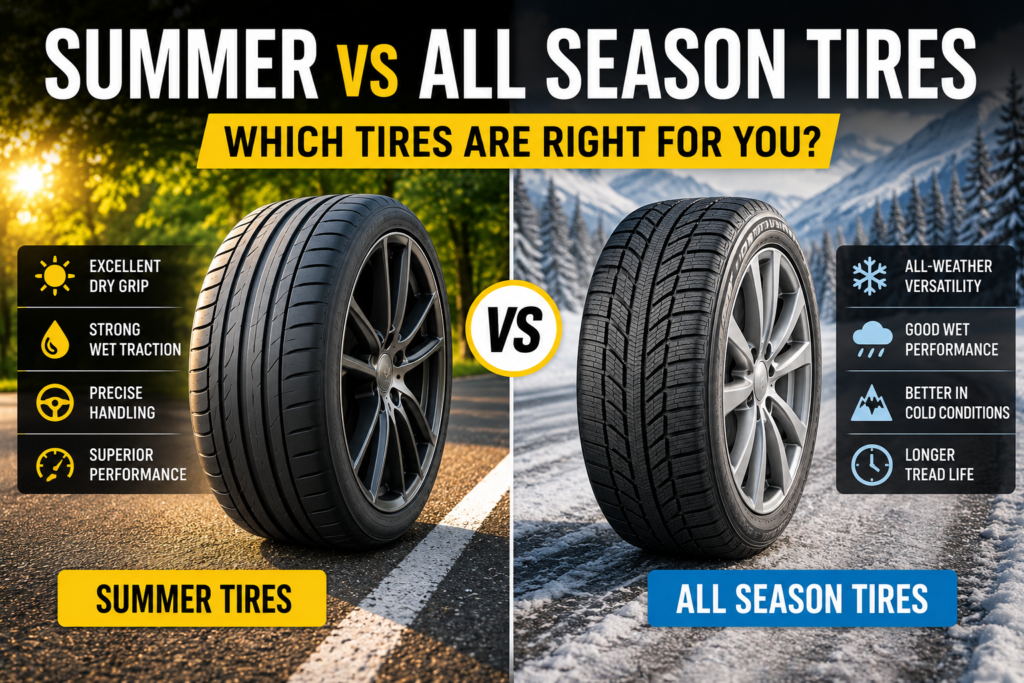
The decision between summer vs all season tires depends on how and where you drive. Summer tires provide outstanding grip, sharper handling, and better braking performance during warm weather, making them an excellent choice for performance focused drivers. All season tires offer balanced performance, longer tread life, improved comfort, and the convenience of handling a variety of weather conditions without frequent tire changes.
I always believe that choosing the right tire is about matching it to your driving needs rather than simply buying the most expensive option. Understanding your local climate, driving habits, and vehicle requirements will help you select tires that improve safety, comfort, and overall driving confidence. Investing in the right set of tires is one of the smartest decisions any vehicle owner can make.