Related Articles
When I look at a car tire, one of the first things I notice is the pattern on its surface. Those grooves and raised sections are not there only for appearance. They are called tire tread, and they play an important role in how a vehicle handles the road.
Tire tread helps a car maintain contact with the road, especially when the surface is wet, slippery, or uneven. It also affects braking, steering, traction, and overall driving safety. In my opinion, understanding tire tread is one of the simplest ways for a driver to become more aware of basic car maintenance.
Many drivers know that tires should have enough tread, but they may not know what tire tread actually means, how it works, or when it becomes unsafe. In this article, I will explain tire tread in simple terms and discuss why it is important for everyday driving.
What Does Tire Tread Mean?
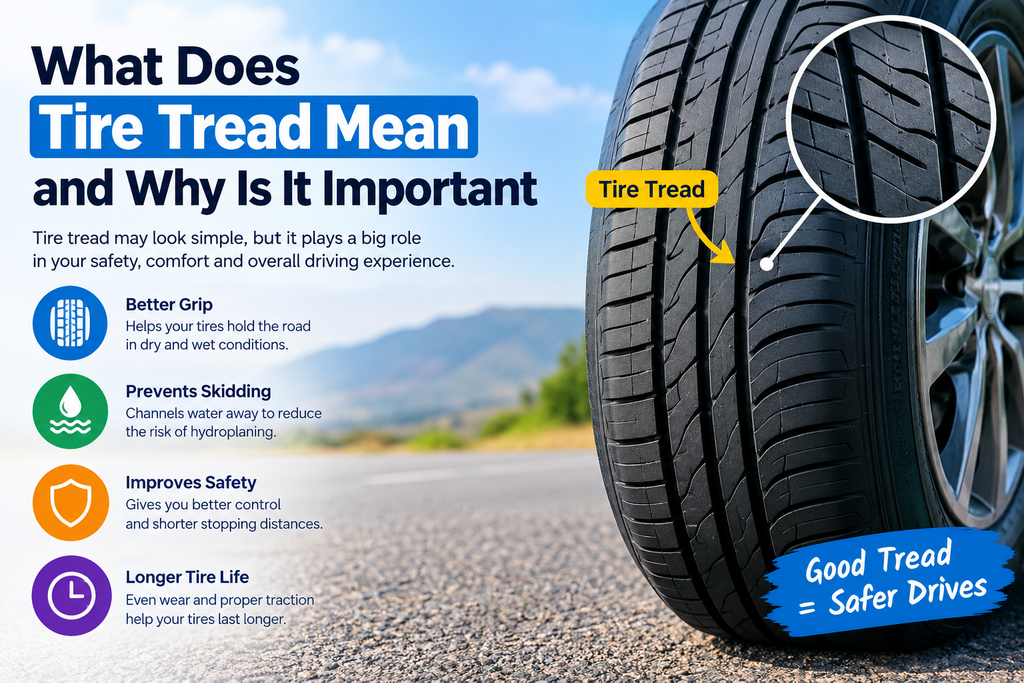
Tire tread refers to the patterned rubber surface that touches the road while you drive. It contains grooves, channels, ribs, and blocks that are designed to provide traction and move water away from the contact area.
If you look closely at a new tire, you will see a combination of deep grooves and raised rubber sections. These patterns form the tire tread. As you drive, the tread gradually wears down because the rubber is constantly contacting the road.
The amount of tread remaining on a tire is commonly used to determine how much useful life the tire has left. A tire with healthy tread can provide better traction than a severely worn tire, particularly in wet conditions.
Why Is Tire Tread Important?
Tire tread is important because your tires are the only parts of your vehicle that directly contact the road. The engine can produce power, but the tires are responsible for transferring that power to the road.
Good tire tread helps with acceleration, braking, and steering. It can also help the tire maintain traction when the road is wet.
One of the biggest jobs of tire tread is to help channel water away from the area where the tire meets the road. Without sufficient grooves, water can remain between the tire and road surface and reduce traction.
For me, this is one of the main reasons why checking tire tread should be part of regular car maintenance.
How Does Tire Tread Work?
The design of tire tread is more complicated than it may appear. Different sections of the tread perform different functions.
The grooves help move water away from the tire. The ribs and tread blocks help provide stability and traction. Some tread patterns are designed specifically for wet roads, while others are made for snow, off road driving, or high performance use.
When a tire rolls across the road, its tread continuously changes shape slightly. This helps the tire maintain contact with the surface while the tread pattern provides grip.
As the tread wears down, the depth of the grooves decreases. Eventually, the tire may not be able to perform as effectively as it did when it was new.
Tire Tread and Wet Roads
Wet roads are one of the situations where tire tread becomes especially important.
When water covers the road, the tire needs to move that water away from the contact area. The grooves in the tread provide channels through which water can escape.
If the tread is badly worn, there is less space available for water to move through. This can reduce traction and increase the possibility of losing control.
This is why I pay particular attention to tire tread before driving during heavy rain. A tire that looks acceptable in dry weather may behave differently when the road becomes wet.
What Is Tire Tread Depth?
Tire tread depth refers to the amount of tread remaining between the top surface of the tread and the bottom of the grooves.
New tires generally have considerably more tread than a worn tire. As the vehicle is driven, the tread gradually becomes shallower.
Tread depth is normally measured in thirty seconds of an inch in the United States, although millimeters are also commonly used. Different countries and regions have different legal minimums, so drivers should check their local requirements.
The legal minimum should not necessarily be treated as the ideal replacement point. Tire performance can change before the tire reaches the absolute legal limit.
How Can I Check Tire Tread?
Checking tire tread does not always require complicated equipment.
One simple method is to visually inspect the tread pattern. Look for areas where the grooves appear very shallow or where the surface looks significantly different from a newer section.
Many modern tires also have tread wear indicators. These small raised bars are built into the main grooves of the tire. When the tread wears down close to these indicators, it is a strong sign that the tire needs attention.
A tread depth gauge is another useful tool. It is inexpensive and can provide a more accurate measurement than a visual inspection.
When checking a tire, I recommend looking at several points across its width rather than checking only one spot. Uneven wear can cause one section of the tire to become much more worn than another.
What Are Tread Wear Indicators?
Tread wear indicators are small raised bars located inside the grooves of many tires.
Their purpose is to provide a visual indication of tread wear. As the tire wears, the tread surface gradually approaches the height of these bars.
When the tread becomes level with the wear indicators, the tire has reached a significantly worn condition and should be inspected for replacement.
These indicators are useful because you do not always need special equipment to notice severe tread wear. However, they do not replace a complete tire inspection.
What Causes Tire Tread to Wear?
Tire tread naturally wears as you drive, but some conditions can cause it to wear faster or unevenly.
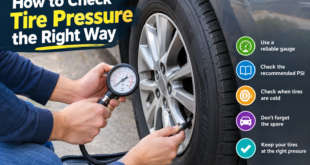
Incorrect tire pressure is one common factor. Driving with tires that are underinflated or overinflated can affect how the tread contacts the road.
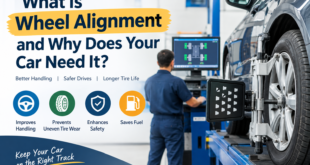
Wheel alignment can also influence tire wear. If the wheels are not properly aligned, certain parts of the tread may experience more contact with the road than others.
Suspension problems, aggressive driving, frequent hard braking, poor road surfaces, and incorrect tire rotation can also contribute to unusual wear.
Regular maintenance can help identify these problems before they cause unnecessary tire damage.
What Does Uneven Tire Tread Wear Mean?
Uneven tire tread wear means that different parts of the tire are wearing at different rates.
For example, one side of the tire may become more worn than the center. Another tire may show excessive wear on both edges.
Different wear patterns can point toward different maintenance problems. Incorrect tire pressure, alignment issues, worn suspension components, and wheel balance problems can all contribute to unusual wear.
If I notice significant uneven wear, I would not simply replace the tire and ignore the reason behind it. The underlying problem should also be checked because a new tire could develop the same issue.
Does Tire Tread Affect Braking?
Yes, tire tread can affect braking performance because tires need sufficient traction to transfer braking forces to the road.
The condition of the tire is only one part of braking performance. Road conditions, vehicle speed, brake components, weather, tire pressure, and driver behavior also matter.
However, tires with severely worn tread can have reduced ability to maintain traction, particularly on wet roads.
This is another reason why tire condition should not be ignored when maintaining a vehicle.
Does More Tread Always Mean a Better Tire?
Not necessarily.
A tire with deeper tread may have more usable tread remaining, but tire performance depends on much more than tread depth. Tire age, rubber condition, tire design, inflation pressure, alignment, and the type of road all matter.
A tire can have reasonable tread depth but still require inspection if it has cracks, bulges, cuts, or other visible damage.
This is why I think drivers should consider the overall condition of their tires rather than looking at tread depth alone.
When Should You Replace a Tire?
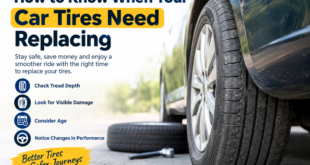
A tire may need replacement when its tread reaches the applicable wear limit, when tread wear indicators are reached, or when the tire has significant damage.
Cracks, bulges, exposed internal material, severe uneven wear, or other serious defects should also be taken seriously.
Tire age can be another consideration. Rubber can deteriorate over time even when a vehicle has not been driven very much. Drivers should check the tire manufacturer’s recommendations and have older tires inspected by a qualified tire professional.
If there is any doubt about the condition of a tire, professional inspection is a sensible step.
How Can You Make Tire Tread Last Longer?
There are several basic maintenance habits that can help tires wear more evenly.
First, check tire pressure regularly and keep it at the vehicle manufacturer’s recommended level. The recommended pressure is normally listed in the owner’s manual or on a vehicle information label.
Second, have the wheels aligned when necessary. Proper alignment can help reduce abnormal tread wear.
Third, rotate the tires according to the vehicle or tire manufacturer’s recommendations when applicable.
It is also helpful to avoid unnecessary hard acceleration and aggressive braking. Driving smoothly can reduce unnecessary stress on tires.
Finally, inspect your tires regularly instead of waiting until you notice a problem.
Final Thoughts
Tire tread may look like a simple pattern on a tire, but it has an important job. It helps provide traction, supports steering and braking, and allows water to move away from the contact area between the tire and road.
From my point of view, checking tire tread is one of the easiest parts of car maintenance that drivers can learn to do themselves. You do not need to be a mechanic to notice worn tread, uneven wear, or obvious tire damage.
Good tire maintenance is about more than keeping a car looking good. Your tires play a direct role in how the vehicle behaves on the road. Checking tread depth, maintaining correct tire pressure, watching for uneven wear, and replacing damaged or excessively worn tires can help keep your vehicle ready for everyday driving.
If you understand what tire tread means and why it matters, you can make better decisions about tire maintenance and avoid ignoring signs that your tires need professional attention.