Related Articles
When we think about regular car maintenance, we usually remember things like changing the engine oil, checking the brakes, or replacing worn tires. One important maintenance task that is sometimes overlooked is wheel alignment. In my experience, proper wheel alignment can make a noticeable difference in the way a car feels, handles, and uses its tires.
Wheel alignment is not simply about making the wheels look straight. It involves adjusting the angles of the wheels so they match the specifications recommended for your vehicle. When the alignment is correct, the tires can make proper contact with the road, the steering feels more natural, and the vehicle can drive more smoothly.
In this article, I will explain what wheel alignment is, why your car needs it, the common signs of poor alignment, and when you should have your wheels checked.
What Is Wheel Alignment?
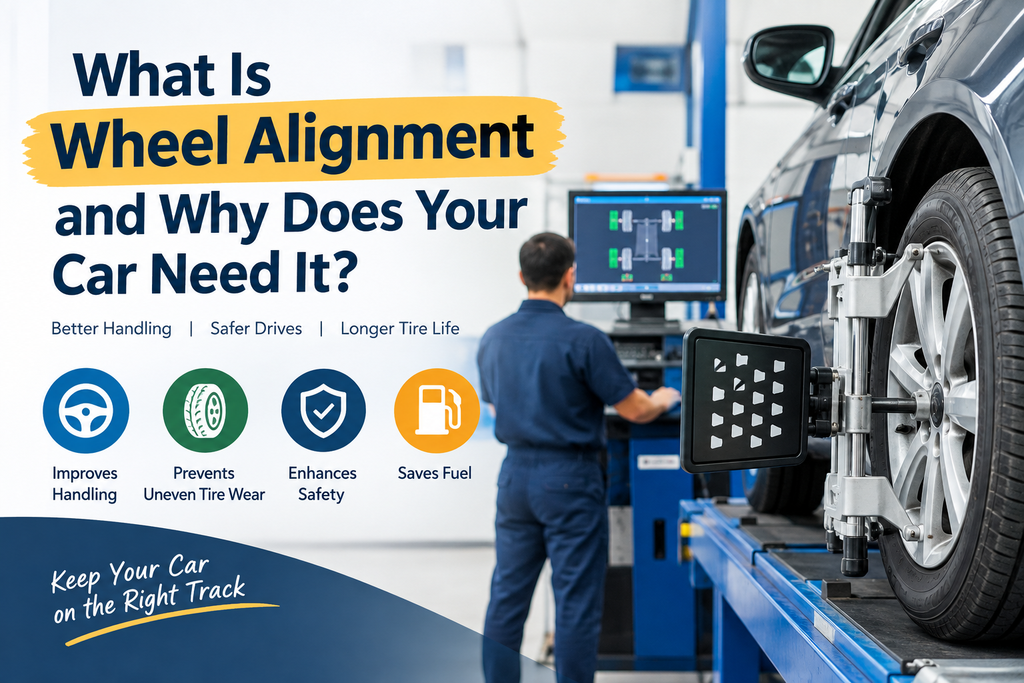
Wheel alignment is the process of checking and adjusting the position and angle of your vehicle’s wheels. A mechanic uses special equipment to measure the wheel angles and compare them with the manufacturer’s recommended specifications.
The main goal of wheel alignment is to make sure that the wheels are positioned correctly in relation to each other and the road.
There are several important alignment angles, including camber, caster, and toe. You do not need to understand every technical detail to know why they matter. These angles affect how your car steers, how your tires touch the road, and how evenly your tires wear.
If these angles become incorrect, your vehicle may start pulling to one side, the steering wheel may not sit straight, or your tires may wear faster than expected.
Why Does Your Car Need Wheel Alignment?
Your car needs proper wheel alignment because the wheels are designed to work together as a balanced system. Even a small change in their position can affect driving performance.
One of the biggest reasons for getting a wheel alignment is tire wear. When the wheels are not aligned correctly, certain parts of the tires can experience more pressure than others. This can cause uneven tire wear and reduce the useful life of your tires.
Proper wheel alignment can also improve handling. A properly aligned vehicle generally feels more stable and predictable when you turn, accelerate, or drive on a straight road.
Another reason is driving comfort. When the wheels are correctly aligned, the vehicle can move more naturally along the road. Poor alignment can make the car feel like it is constantly moving away from your intended direction.
Common Signs of Bad Wheel Alignment
One of the useful things about wheel alignment is that your car can often give you warning signs before the problem becomes serious.
Your Car Pulls to One Side
If your vehicle constantly moves toward the left or right when you are trying to drive straight, the wheel alignment may need to be checked.
A slight movement can sometimes be caused by road conditions, tire pressure, or the shape of the road. However, if the pulling is noticeable and happens regularly, it is worth having the vehicle inspected.
The Steering Wheel Is Not Straight
Another common sign is a steering wheel that remains tilted when the vehicle is traveling straight.
If your car is moving straight but the steering wheel looks noticeably off center, there could be an alignment problem. A mechanic can check the steering and wheel angles to determine the actual cause.
Uneven Tire Wear
Take a look at your tires from time to time. If one side of a tire is wearing much faster than the other side, incorrect wheel alignment could be one possible reason.
Uneven tire wear should not be ignored because tires are one of the most important safety components of your vehicle.
Your Car Feels Unstable
Poor wheel alignment can sometimes make a car feel less stable than usual. You may notice that you need to make small steering corrections more frequently while driving.
If your vehicle suddenly feels different, it is better to have the steering, suspension, tires, and alignment checked rather than assuming the feeling is normal.
What Causes Wheel Alignment Problems?
Wheel alignment can change for several reasons. One of the most common causes is hitting a pothole. A strong impact can affect suspension components and change the position of the wheels.
Hitting a curb can also cause alignment problems. Even if there is no visible damage, the impact can sometimes affect the suspension or steering components.
Normal wear can also play a role. Suspension parts, steering components, and other related parts can become worn over time. When this happens, the wheel angles may no longer remain within their recommended range.
Accidents are another possible cause. Even a relatively small collision can affect the alignment of a vehicle.
For this reason, I think it is a good habit to pay attention to how your car behaves after a strong impact.
Wheel Alignment and Tire Life
One of the biggest benefits of proper wheel alignment is protecting your tires.
Tires are expensive enough that most drivers want to get as much useful life from them as possible. Incorrect alignment can cause unusual wear patterns, which may force you to replace tires earlier than expected.
When the wheels are aligned correctly, the tires can maintain more consistent contact with the road. This helps distribute wear more evenly.
Of course, tire pressure, driving habits, road conditions, tire rotation, and tire quality also affect tire life. Wheel alignment is only one part of proper tire maintenance.
Does Wheel Alignment Improve Fuel Economy?
Proper wheel alignment can help your vehicle move efficiently because the tires are positioned correctly. When the wheels are significantly out of alignment, the tires may create additional resistance against the road.
This does not mean that a wheel alignment will suddenly transform your fuel economy. Fuel consumption depends on many factors, including driving speed, traffic, tire pressure, vehicle condition, engine performance, and driving habits.
However, maintaining correct wheel alignment is still a sensible part of overall vehicle maintenance.
When Should You Get a Wheel Alignment?
There is no single interval that applies perfectly to every vehicle. The recommended maintenance schedule can vary depending on the vehicle and driving conditions.
You should consider checking the alignment after hitting a major pothole or curb. It is also sensible to have it inspected if you notice uneven tire wear, steering problems, or the vehicle pulling to one side.
After replacing certain suspension or steering components, an alignment may also be recommended.
If you regularly drive on rough roads, your vehicle may experience more impacts than a car that mostly travels on smooth highways. In that situation, paying attention to alignment symptoms becomes even more important.
Wheel Alignment Is Different From Wheel Balancing
Wheel alignment and wheel balancing are two different services, although they are often confused.
Wheel alignment focuses on the angles and position of the wheels in relation to the vehicle and road.
Wheel balancing focuses on making sure the weight around the wheel and tire assembly is distributed correctly. An unbalanced wheel can cause vibration, especially at certain speeds.
Both services are important, but they solve different problems. If your vehicle has a steering or handling issue, a professional inspection can help determine whether alignment, balancing, tire condition, suspension components, or another issue is responsible.
Can You Check Wheel Alignment at Home?
You can notice some warning signs at home, but accurate wheel alignment requires specialized equipment.
You can start by checking whether your tires have unusual wear. You can also notice whether the steering wheel is centered and whether the car pulls consistently to one side on a suitable, safe road.
However, visual inspection alone cannot accurately measure the alignment angles.
If you suspect an alignment problem, I recommend having the vehicle inspected by a qualified mechanic or alignment technician. Professional equipment can measure the wheel angles much more accurately.
Why Regular Wheel Alignment Matters
It is easy to ignore wheel alignment because the problem may develop gradually. Your car may still start, drive, and stop normally even when the alignment is not correct.
The problem is that poor alignment can affect several areas at the same time. It can contribute to uneven tire wear, affect steering behavior, reduce driving comfort, and potentially make the vehicle harder to control.
Regular inspections can help identify problems before they become more expensive. Catching an alignment issue early may also help protect other components from unnecessary wear.
Final Thoughts
In my view, wheel alignment is one of those simple maintenance services that deserves more attention from everyday drivers. It may not receive as much attention as engine oil or brakes, but it has an important connection with your tires, steering, handling, and overall driving experience.
If your car pulls to one side, the steering wheel is not centered, or your tires are wearing unevenly, do not simply ignore the symptoms. Have the vehicle inspected and let a qualified professional determine whether wheel alignment is the cause.
Keeping your wheels properly aligned can help your tires wear more evenly, support better handling, and keep your car feeling comfortable on the road. Regular vehicle maintenance is ultimately about preventing small problems from becoming bigger and more expensive problems.
For that reason, checking wheel alignment when symptoms appear or after a strong impact is a simple step that can help you take better care of your car.