Related Articles
When I see a TPMS warning light on a car dashboard, I do not treat it as something that can simply be ignored. The TPMS warning light is there for an important reason. It tells the driver that one or more tires may not have the correct air pressure, or there could be a problem with the tire pressure monitoring system itself.
Many drivers know that the symbol is related to tire pressure, but they may not know what it actually means, why it comes on, or what they should do next. In my view, understanding the TPMS warning light is an important part of basic car maintenance because correct tire pressure affects safety, fuel economy, tire life, and driving comfort.
In this article, I will explain what the TPMS warning light means, why it comes on, how to respond to it, and when it may indicate a more serious problem.
What Is the TPMS Warning Light?
TPMS stands for Tire Pressure Monitoring System. It is an electronic system designed to monitor the air pressure inside a vehicle’s tires. When the system detects that the pressure in one or more tires has dropped below the recommended level, it sends a warning to the driver through the dashboard.
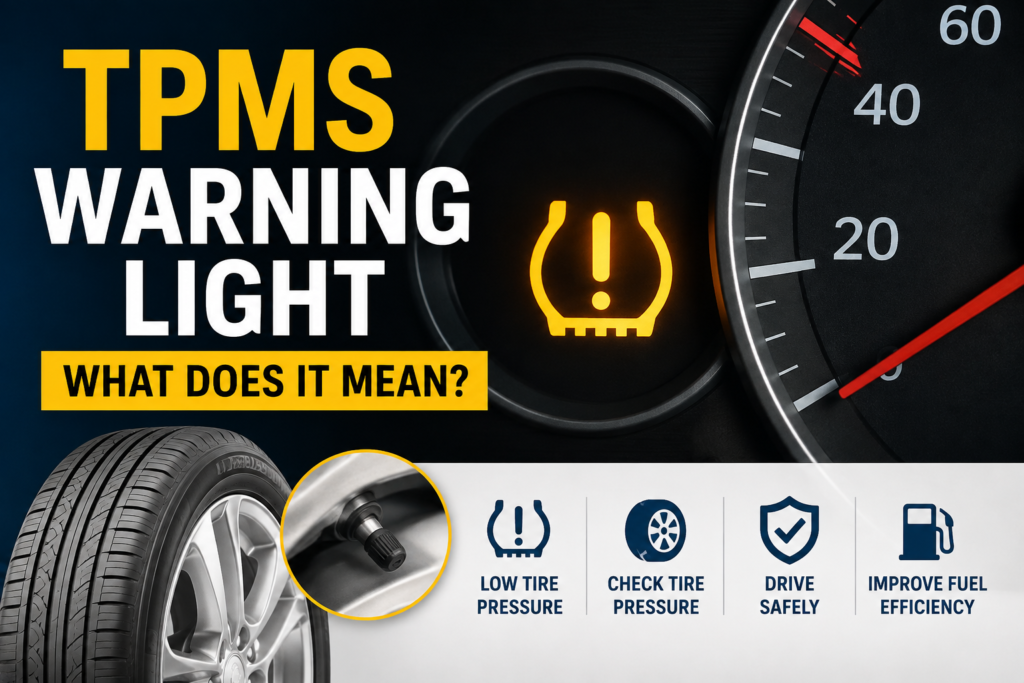
The TPMS warning light usually looks like a horseshoe or tire shape with an exclamation mark in the center. When it illuminates, it generally means that the tire pressure needs to be checked.
The exact warning system can vary between vehicles, but the purpose is the same. It helps drivers notice low tire pressure before it becomes a safety problem.
Why Does the TPMS Warning Light Come On?
There are several reasons why the TPMS warning light can appear on the dashboard. The most common reason is simply low tire pressure.
Tires naturally lose a small amount of air over time. Temperature changes can also affect tire pressure. For example, tire pressure can decrease when the weather becomes colder. This is why some drivers notice the TPMS warning light during winter or after a sudden change in temperature.
A puncture or slow leak is another common reason. If a tire has a nail, screw, damaged valve, or another source of leakage, its pressure may gradually fall until the TPMS detects the problem.
Sometimes the warning light can also appear after changing or servicing tires. If the TPMS sensors have not been properly recognized by the vehicle, the system may need to be reset or relearned.
What Does a Solid TPMS Light Mean?
A solid TPMS warning light usually means that one or more tires have low air pressure.
If I see a solid TPMS light, my first step would be to check the pressure of all four tires. Some vehicles also monitor the spare tire, but this depends on the vehicle and its TPMS design.
It is important not to guess the correct tire pressure. The recommended pressure is usually listed on a sticker inside the driver’s door area or in the vehicle owner’s manual.
The number printed on the tire itself is generally not the recommended pressure for normal driving. That number can refer to the maximum pressure the tire can safely handle under specified conditions.
After correcting the tire pressure, some vehicles will turn the warning light off automatically after driving for a short distance. Other vehicles may require a manual TPMS reset.
What Does a Flashing TPMS Light Mean?
A flashing TPMS warning light can mean something different from a solid light.
In many vehicles, the light flashes for a period of time and then remains illuminated when there is a problem with the TPMS itself. This could involve a damaged sensor, weak sensor battery, communication problem, or another system fault.
This is why I would not assume that adding air will always solve the problem. If the tire pressures are correct but the warning light continues flashing or remains on, the vehicle should be inspected.
A professional technician can use a diagnostic tool to check the TPMS sensors and identify the cause of the warning.
Can You Drive With the TPMS Warning Light On?
This depends on why the light is illuminated.
If the light comes on because of low tire pressure, I would check the tires as soon as possible. Driving for a long distance with significantly underinflated tires can increase heat buildup and tire wear. It can also affect handling and braking.
If a tire is visibly damaged, extremely low, or losing air quickly, I would not continue driving normally. A tire problem can become dangerous very quickly.
If the light is on because of a TPMS system fault and the tire pressures have been confirmed to be correct, the vehicle may still be drivable, but the monitoring system may not be able to warn you about future pressure loss. For that reason, the system should be checked rather than ignored.
How Should You Check Your Tire Pressure?
Checking tire pressure is one of the simplest maintenance tasks I recommend learning.
First, use a reliable tire pressure gauge. Ideally, check the tires when they are cold because driving creates heat and temporarily changes the pressure reading.
Remove the valve cap and press the gauge firmly against the valve stem. Check the pressure and compare it with the recommended pressure listed by the vehicle manufacturer.
If the pressure is low, add air until it reaches the recommended level. Check every tire, even if only one appears to be causing the warning.
After inflating the tires, replace the valve caps and check whether the TPMS warning light goes away. If it does not, the vehicle may need a TPMS reset or further inspection.
Why Correct Tire Pressure Matters
Correct tire pressure is much more important than many people realize.
When a tire is underinflated, more of its surface can flex while driving. This can create additional heat and cause uneven tire wear. It can also make the vehicle feel less responsive.
Low tire pressure can also reduce fuel efficiency because the tires create greater rolling resistance. This means the engine may have to work harder to move the vehicle.
On the other hand, overinflating tires is not a good solution either. Excessive pressure can reduce the tire’s contact area with the road and may affect ride comfort and handling.
For me, the main lesson is simple. The best tire pressure is the pressure recommended by the vehicle manufacturer.
Does Cold Weather Cause the TPMS Light to Come On?
Yes, temperature changes can cause the TPMS warning light to appear.
Air pressure decreases as temperatures become colder. A tire that was close to the recommended pressure during warm weather may fall below the vehicle’s TPMS warning threshold when the temperature drops.
This does not necessarily mean the tire has developed a leak. However, I would still check the pressure rather than assuming that the weather is the only reason.
If the pressure is low, inflate the tire to the recommended level. If the pressure keeps dropping, have the tire inspected for a puncture or other leak.
Why Does the TPMS Light Stay On After Adding Air?
Sometimes drivers inflate their tires and expect the TPMS warning light to disappear immediately. That does not always happen.
Some vehicles need to be driven for a short distance before the system updates the pressure information. Other vehicles have a TPMS reset procedure that must be completed manually.
There is also a possibility that one tire is still below the recommended pressure. A small difference may not always be obvious without using a pressure gauge.
If the light stays on after all tires have been checked and correctly inflated, I would consult the owner’s manual or have the system inspected.
Can TPMS Sensors Go Bad?
Yes, TPMS sensors can eventually fail.
Many direct TPMS systems use sensors installed inside the wheels. These sensors contain batteries and electronic components. Over time, the battery can become weak or stop working.
A sensor can also be damaged during tire installation or wheel service.
When a TPMS sensor fails, the dashboard may display a warning light or a flashing light depending on the vehicle. A diagnostic scan can usually help identify which sensor or component is causing the problem.
Replacing a faulty TPMS sensor is generally a better solution than repeatedly resetting the warning system without finding the actual cause.
What Should You Do When the TPMS Light Comes On?
If the TPMS warning light appears, I recommend following a simple process.
First, slow down and pay attention to how the vehicle feels. If the car is pulling to one side, vibrating, or handling differently, stop somewhere safe and inspect the tires.
Next, check the pressure of every tire with a reliable gauge. Inflate any tire that is below the recommended pressure.
Then inspect the tires visually. Look for nails, screws, cuts, cracks, bulges, or anything else that looks unusual.
If the pressure drops again after inflation, there may be a leak that needs professional repair.
Finally, if the tire pressures are correct but the TPMS warning light remains on, have the system checked.
TPMS Does Not Replace Regular Tire Checks
One thing I always keep in mind is that TPMS is an assistance system, not a replacement for regular tire maintenance.
The system is designed to warn the driver about certain pressure problems, but it does not necessarily detect every tire issue.
A tire can have uneven tread wear, sidewall damage, aging rubber, or another problem without triggering the TPMS warning light.
That is why I believe drivers should still inspect their tires regularly and have them professionally checked when necessary.
Final Thoughts
The TPMS warning light is a small dashboard symbol, but it can provide an important safety warning. In most cases, a solid TPMS light means that one or more tires have low air pressure. A flashing light may indicate a problem with the tire pressure monitoring system itself.
Whenever this warning appears, I would not ignore it. Checking tire pressure takes only a few minutes, and it can help prevent unnecessary tire wear, poor fuel economy, uncomfortable driving, and potentially dangerous tire problems.
Maintaining the correct tire pressure is one of the easiest ways to take care of a vehicle. The TPMS system makes that job easier by giving the driver an early warning when something may need attention.
In my opinion, the best approach is simple: take the TPMS warning light seriously, check all the tires, use the manufacturer’s recommended pressure, and investigate the problem if the warning does not disappear. A few minutes of attention can make a meaningful difference to your vehicle’s safety, performance, and tire life.
I can also create an AdSense friendly featured image for WordPress related to the TPMS warning light.