Related Articles

When I think about modern car safety, one feature that I believe deserves more attention is the Tire Pressure Monitoring System, commonly known as TPMS. Many drivers notice the TPMS warning light on the dashboard but may not know what is actually happening inside the vehicle when that light comes on. A tire pressure monitoring system is designed to check tire pressure and alert the driver when the pressure becomes too low.
Proper tire pressure is important for safety, fuel economy, handling, and tire life. Even a small pressure loss can affect the way a car drives. In my view, TPMS is one of those useful technologies that quietly works in the background and becomes especially valuable when a tire starts losing pressure.
What Is a Tire Pressure Monitoring System?
A Tire Pressure Monitoring System is an electronic safety system that monitors the air pressure inside a vehicle’s tires. Depending on the type of system, it can measure tire pressure directly or estimate it by using information from the vehicle’s wheel speed sensors.
When the system detects that tire pressure has dropped below a specific level, it sends a warning to the driver. This warning normally appears as a yellow or amber symbol on the dashboard that looks like a tire with an exclamation mark.
The main purpose of TPMS is not to replace regular tire checks. Instead, it provides an additional layer of protection by helping drivers notice pressure problems before they become more serious.
Why Tire Pressure Matters
Tire pressure affects much more than comfort. When tires have the correct amount of air, they can maintain better contact with the road and work as the manufacturer intended.
Underinflated tires can create additional rolling resistance. This means the engine may need more energy to move the vehicle, which can increase fuel consumption. Low tire pressure can also cause additional heat buildup inside the tire.
Overinflated tires can create their own problems. They may reduce the amount of tire surface touching the road and can make the vehicle feel less comfortable over rough surfaces.
From my point of view, checking tire pressure is one of the simplest maintenance tasks a driver can perform. TPMS makes this task easier by providing an electronic warning when the system detects a significant pressure problem.
How Does TPMS Work?
There are two main types of tire pressure monitoring systems: direct TPMS and indirect TPMS.
Both systems have the same basic goal, but they use different methods to detect changes in tire pressure.
Direct TPMS
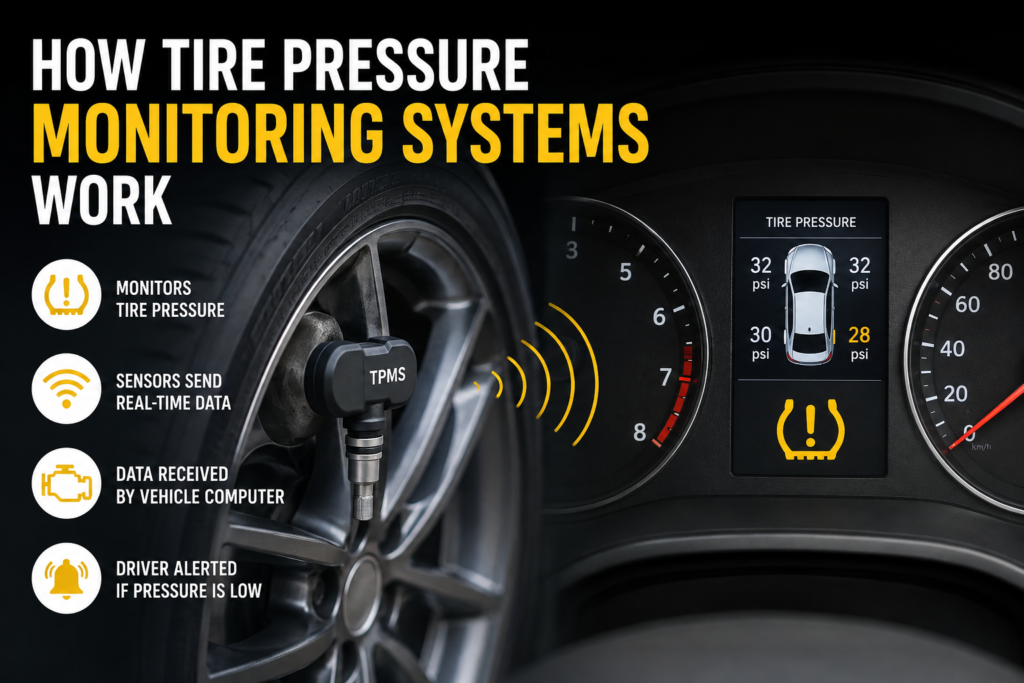
Direct TPMS uses pressure sensors installed inside or near the vehicle’s tires. These sensors measure the actual air pressure in each tire and send information to the vehicle’s computer.
In many vehicles, the sensor is attached to the wheel near the valve stem. It can measure tire pressure and sometimes temperature as well.
When the sensor detects a pressure reading outside the expected range, it communicates the information to the vehicle. The car’s electronic control system then determines whether a warning should be displayed.
Some vehicles can show the pressure of each individual tire on the dashboard. This can be very useful because the driver can quickly identify which tire needs attention.
Direct TPMS is generally very precise because it measures tire pressure directly. However, the sensors contain electronic components and batteries, so they can eventually require maintenance or replacement.
Indirect TPMS
Indirect TPMS does not normally use a pressure sensor inside each tire. Instead, it uses information from the vehicle’s wheel speed sensors.
The basic idea is that a tire with lower air pressure can have a slightly different rolling behavior compared with a properly inflated tire.
The vehicle’s computer monitors the rotation speed of the wheels. If one tire begins rotating differently from the others, the system may determine that the tire could have lost pressure.
Indirect TPMS can be simpler because it does not require individual pressure sensors inside the tires. However, it may not provide the exact pressure reading for each tire.
How a TPMS Warning Light Works
One of the easiest ways to understand how a tire pressure monitoring system works is to look at the dashboard warning light.
When the vehicle starts, the system checks information from the sensors or wheel speed system. If everything appears normal, the warning light should remain off.
If the system detects low tire pressure, the warning light can appear.
A solid TPMS light generally indicates that the system has detected a tire pressure issue. If the light flashes for a period and then stays illuminated, it may indicate a problem with the TPMS itself rather than simply low tire pressure.
This is why I believe drivers should not ignore the warning light. Even if the vehicle still feels normal, a tire could be losing air.
What Happens When Tire Pressure Drops?
Suppose one tire slowly loses air because of a small puncture. At first, the difference may not be obvious while driving.
As the pressure continues to fall, the TPMS can detect the change depending on the type of system and its calibration.
The system sends this information to the vehicle’s computer. The computer compares the readings with its programmed limits or with information from the other wheels.
If the pressure is low enough to trigger the warning threshold, the TPMS warning light appears on the dashboard.
At this point, the driver should check the tire pressure using a reliable pressure gauge and inflate the tire to the vehicle manufacturer’s recommended pressure.
It is important to remember that the recommended tire pressure is usually listed on a label inside the driver’s door area or in the owner’s manual. It may not be the same number printed on the tire itself.
Does TPMS Measure Tire Temperature?
Some direct TPMS sensors can also monitor tire temperature. Temperature can affect tire pressure because air expands when it becomes warmer and contracts when it becomes colder.
This is one reason why tire pressure can appear different on a cold morning compared with a warm afternoon.
A good tire pressure monitoring system can account for changing conditions to help provide useful information to the driver. However, drivers should still check their tire pressure when the tires are cold and follow the vehicle manufacturer’s recommended specifications.
TPMS and Fuel Economy
Tire pressure also has a connection with fuel economy.
When a tire is underinflated, it can create more rolling resistance. The engine may have to work harder to move the vehicle.
This does not mean that TPMS directly improves fuel economy. Instead, it helps drivers become aware of low tire pressure so they can correct the problem.
In my opinion, this is an important benefit because maintaining proper tire pressure can support efficient vehicle operation while also helping the tires perform correctly.
TPMS and Tire Safety
Safety is the main reason tire pressure monitoring systems exist.
Low tire pressure can affect braking, steering, cornering, and overall vehicle stability. It can also increase tire wear and heat buildup.
A TPMS warning gives the driver an opportunity to inspect the tire before the problem becomes more serious.
However, TPMS should never be treated as a replacement for visual inspections. A tire can have physical damage, uneven wear, or another problem without immediately triggering a warning.
I recommend looking at the tires regularly and checking their pressure with a manual gauge as part of normal vehicle maintenance.
What Should You Do When the TPMS Light Comes On?
When the TPMS warning light appears, the first step is to avoid panicking. Find a safe place to stop and inspect the tires if possible.
Use a tire pressure gauge to check each tire. If one or more tires have low pressure, inflate them according to the recommended vehicle specifications.
If the pressure drops again after inflation, the tire may have a puncture, valve problem, or another issue that needs professional inspection.
If the TPMS light remains on even after the tire pressures are corrected, the system may need to be reset or inspected.
In some vehicles, the system automatically recalibrates after driving. Other vehicles may require a manual reset procedure.
Common TPMS Problems
Like any electronic vehicle system, TPMS can sometimes develop problems.
A direct TPMS sensor has a battery with a limited lifespan. After several years, the sensor battery may become weak and eventually stop working.
Wheel changes and tire replacement can also affect TPMS sensors. If a sensor is damaged during tire service, the vehicle may display a TPMS fault.
Another possibility is a communication problem between the sensor and the vehicle’s control system.
For indirect systems, changes in tire size, tire wear, or incorrect calibration can affect how the system interprets wheel speed information.
This is why a flashing TPMS warning light should be taken seriously. It can mean that the monitoring system itself needs attention.
Benefits of Tire Pressure Monitoring Systems
There are several advantages of having TPMS in a vehicle.
First, it can improve driver awareness. A driver may not notice a gradual pressure loss, but the system can provide an early warning.
Second, maintaining proper tire pressure can support better tire performance and fuel efficiency.
Third, TPMS can help reduce the risk associated with driving on seriously underinflated tires.
Another benefit is convenience. Some modern vehicles display individual tire pressure readings on the dashboard, making it easier to monitor all four tires.
Limitations of TPMS
Although TPMS is useful, it has limitations.
It does not always warn about every tire problem. A tire can be damaged without losing enough pressure to trigger the system.
The system may also require calibration after certain tire or wheel services.
Temperature changes can affect tire pressure readings, and direct sensors eventually need battery replacement.
For these reasons, I would always consider TPMS an extra safety feature rather than a replacement for regular tire maintenance.
Final Thoughts
Understanding how a Tire Pressure Monitoring System works makes it easier to appreciate why this technology is included in modern vehicles. Whether the car uses direct TPMS sensors or an indirect system based on wheel speed, the main purpose is simple: help the driver recognize potentially low tire pressure.
In my view, TPMS is a small but important part of modern vehicle safety. It can provide an early warning when tire pressure changes and give drivers a chance to take action.
Still, the best approach is to combine TPMS with regular tire inspections and manual pressure checks. Keeping tires properly inflated can help support safety, handling, tire life, and fuel economy.
The next time the TPMS light appears on your dashboard, do not simply ignore it. Take a few minutes to check your tires. That small action can help prevent a much bigger problem on the road.