Related Articles

When I think about the most important parts under a car hood, the alternator is one component that deserves more attention. Many drivers know that a car has a battery, but fewer people realize that the battery is not designed to supply all of the electrical power by itself while the engine is running. This is where the car alternator becomes important.
A car alternator is an electrical component that produces electricity while the engine is running. It helps recharge the car battery and supplies electrical power to many systems, including the headlights, dashboard, air conditioning, entertainment system, sensors, and electronic control modules.
In my view, understanding how an alternator works makes it much easier to recognize certain electrical problems before they become serious. In this article, I will explain what a car alternator is, how it works, its main parts, common symptoms of failure, and why proper alternator maintenance matters.
What Is a Car Alternator?
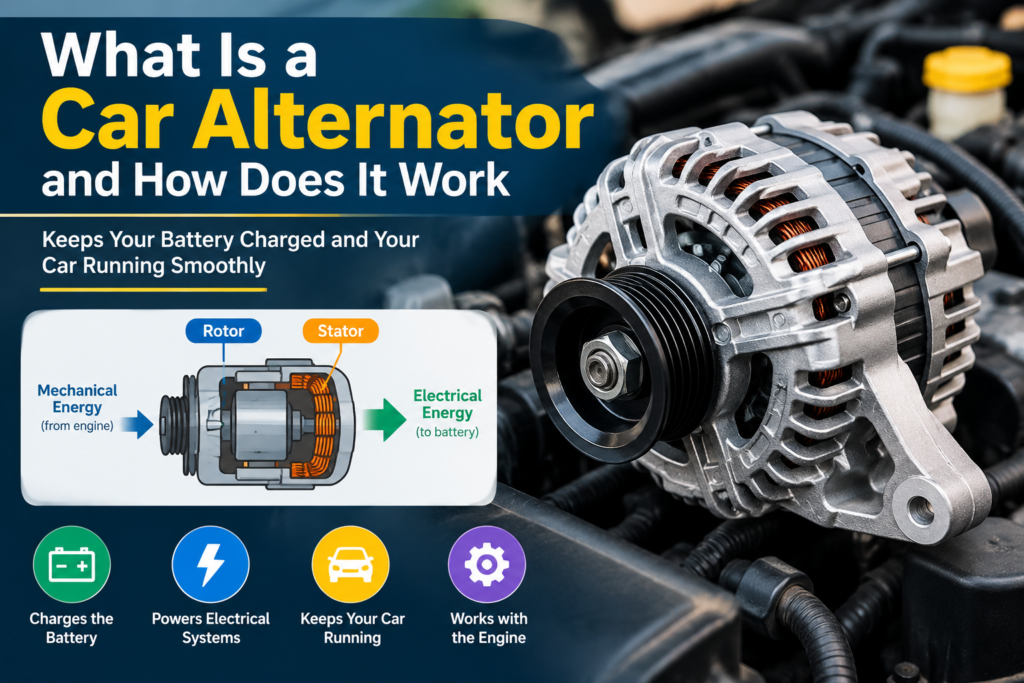
A car alternator is a device that converts mechanical energy from the engine into electrical energy. It is usually connected to the engine through a belt. When the engine runs, the belt turns the alternator pulley, allowing the internal components of the alternator to generate electricity.
The electricity produced by an alternator is used to operate the vehicle’s electrical systems and recharge the battery.
The battery is mainly responsible for providing the electrical power needed to start the engine. Once the engine starts, the alternator takes over much of the electrical workload while also keeping the battery charged.
This is why a healthy alternator is essential for reliable vehicle operation.
How Does a Car Alternator Work?
The basic operation of a car alternator is actually quite interesting. It uses electromagnetic principles to generate electricity.
When I look at the process in simple terms, it can be explained in a few stages.
First, the engine turns the alternator pulley through the serpentine belt or another drive belt. This causes the alternator’s internal rotor to spin.
The spinning rotor creates a rotating magnetic field. Around the rotor is another important component called the stator. As the magnetic field moves around the stator windings, electrical current is produced.
The alternator initially produces alternating current, also known as AC. However, most automotive electrical systems use direct current, or DC. A component called a rectifier converts the AC electricity into DC electricity.
The voltage regulator then controls the electrical output so that the vehicle receives an appropriate and stable voltage.
Finally, the electricity is distributed through the vehicle’s electrical system and used to recharge the battery.
So, in simple words, the process is:
Engine power → Alternator rotation → Magnetic field → Electricity → Rectification → Voltage regulation → Vehicle electrical system and battery
Main Parts of a Car Alternator
A modern alternator contains several important components. Each part has a specific job, and they all work together to produce usable electrical power.
Rotor
The rotor is the rotating part inside the alternator. It creates the magnetic field required to generate electricity.
The engine turns the alternator pulley, which causes the rotor to spin. Without rotor movement, the alternator cannot generate electricity in the normal way.
Stator
The stator is the stationary part surrounding the rotor. It contains coils of wire where electrical current is generated as the rotor’s magnetic field moves through them.
The interaction between the rotor and stator is one of the most important parts of the alternator’s operation.
Rectifier
The rectifier changes the alternating current produced by the alternator into direct current.
This is important because the car battery and most automotive electrical systems require DC electricity.
Voltage Regulator
The voltage regulator controls the alternator’s output. Electrical demand changes constantly while driving. Turning on headlights, an air conditioner, a heated rear window, or other equipment can increase electrical demand.
The regulator helps maintain the appropriate charging voltage instead of allowing the alternator’s output to become excessive.
Pulley
The pulley connects the alternator to the engine through the drive belt. As the engine runs, the belt turns the pulley and spins the alternator.
Some modern vehicles use special pulley designs to improve efficiency and reduce vibration.
Bearings
Bearings allow the internal rotating components to spin smoothly. If the bearings become worn, the alternator can produce unusual noises such as whining, grinding, or humming sounds.
Cooling System
Alternators generate heat while producing electricity. Many alternators have ventilation openings and internal fans that help move air through the unit.
Keeping the alternator at a reasonable operating temperature helps protect its internal components.
What Does an Alternator Do for a Car?
The main job of an alternator is to provide electrical power while the engine is running and keep the battery charged.
Modern cars depend heavily on electricity. A vehicle can have numerous electronic systems operating at the same time.
These can include headlights, interior lights, windshield wipers, air conditioning controls, infotainment systems, power windows, sensors, safety systems, engine control modules, and many other components.
If the alternator cannot provide enough electrical power, the battery may gradually become discharged.
This is why I consider the alternator an essential part of the overall charging system rather than simply another electrical component.
Alternator vs Car Battery
People sometimes confuse the job of the alternator with the job of the battery, but they perform different functions.
The car battery stores electrical energy and provides a strong burst of power when starting the engine. It also supplies electricity when the engine is not running.
The alternator generates electrical energy while the engine is running. It powers the vehicle’s electrical systems and restores energy to the battery.
A simple way to understand the difference is that the battery stores electricity, while the alternator produces electricity.
Both components need to work properly for the vehicle’s electrical system to function correctly.
Signs of a Bad Alternator
An alternator can develop problems for several reasons, including worn bearings, damaged electrical components, belt problems, overheating, or a failing voltage regulator.
One of the most recognizable warning signs is an alternator warning light or battery shaped warning light on the dashboard.
Another common symptom is dim or flickering headlights. If the alternator is struggling to provide enough electrical power, the lights may become noticeably weaker.
A weak or repeatedly discharged battery can also be connected to an alternator problem. However, a bad battery can create similar symptoms, so proper testing is important.
Other possible signs include unusual noises from the engine area, electrical accessories working inconsistently, difficulty starting the vehicle, or the engine eventually stopping after the battery becomes completely discharged.
In my opinion, unusual electrical behavior should not be ignored because a small charging problem can eventually leave a car unable to start.
What Causes Alternator Problems?
There are several reasons why an alternator may stop working correctly.
Normal wear is one of the most common causes. Alternators contain moving components and electrical parts that operate every time the engine runs.
A damaged or loose drive belt can also create charging problems. If the belt cannot turn the alternator properly, electrical production may decrease.
Heat is another concern. Alternators operate in a hot engine compartment, and excessive heat can shorten the life of electrical components.
Worn bearings, damaged wiring, faulty voltage regulators, and internal electrical failures can also affect alternator performance.
Regular inspection can help identify some of these problems before complete failure occurs.
How Long Does a Car Alternator Last?
There is no single mileage or time period that applies to every alternator. Its service life depends on the vehicle, driving conditions, electrical demand, climate, maintenance, and alternator design.
Some alternators can operate reliably for many years, while others may require replacement sooner.
Instead of replacing an alternator simply because the vehicle has reached a certain mileage, I believe it makes more sense to pay attention to symptoms and have the charging system tested when necessary.
Can You Drive With a Bad Alternator?
Driving with a failing alternator can be risky because the vehicle may eventually depend entirely on the remaining battery charge.
Once the battery becomes discharged, the engine may stop and electrical systems may no longer operate correctly.
If the alternator warning light comes on or several electrical problems appear at the same time, it is sensible to have the charging system inspected as soon as possible.
The exact response depends on the vehicle and the severity of the problem, but ignoring charging system warnings can turn a manageable repair into a situation where the vehicle cannot be driven.
How to Maintain a Car Alternator
Alternators generally do not require frequent maintenance like engine oil or air filters, but the surrounding charging system should still be inspected.
The drive belt should be checked for signs of wear, cracking, looseness, or damage. Battery terminals and electrical connections should also remain clean and secure.
It is also important to address oil or coolant leaks that could contaminate the alternator.
When electrical problems appear, testing the battery and alternator together can help identify the actual cause instead of replacing parts unnecessarily.
Final Thoughts
A car alternator is one of those components that many drivers rarely think about until something goes wrong. However, it plays a major role in keeping the vehicle’s electrical system operating while the engine is running.
The alternator converts mechanical energy from the engine into electrical energy. Its rotor and stator generate electricity, the rectifier converts AC into DC, and the voltage regulator controls the output. Together, these components help power the vehicle and recharge the battery.
From my point of view, knowing the basic function of an alternator is useful for every car owner. If you understand symptoms such as dim headlights, battery warning lights, unusual noises, or repeated battery discharge, you can react earlier and have the charging system checked before the vehicle leaves you stranded.
A healthy alternator, a properly maintained battery, and a good drive belt all contribute to a reliable automotive electrical system.