
Related Articles


When we think about a car engine, most people focus on the engine oil, battery, tires, or fuel. However, there is another important component working quietly under the hood that helps protect the engine from excessive heat. This component is the car radiator.
In my view, understanding the car radiator is important for every car owner because an engine produces a lot of heat while it is running. Without a proper cooling system, that heat can cause serious engine problems. The radiator plays a major role in controlling engine temperature and helping the vehicle run smoothly.
In this article, I will explain what a car radiator is, how a car radiator works, why it is important, and what common radiator problems you should know about.
What Is a Car Radiator?
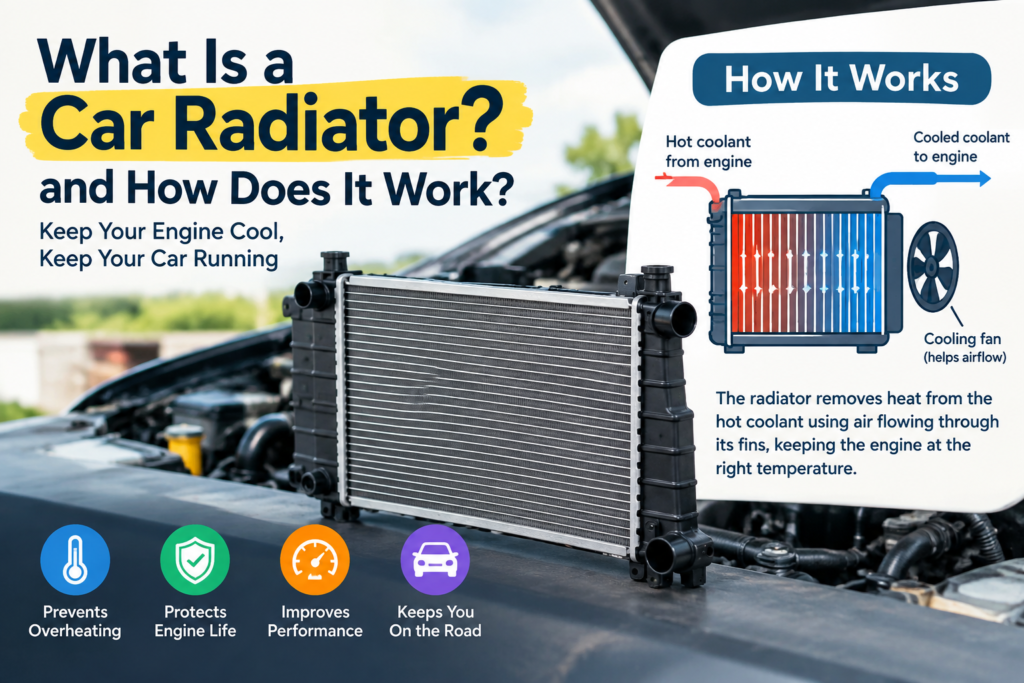
A car radiator is an important part of the engine cooling system. Its main job is to remove excess heat from the engine coolant before the coolant returns to the engine.
When an engine is running, combustion inside the cylinders creates a large amount of heat. Some of this heat is necessary for the engine to operate, but too much heat can damage engine components.
The cooling system uses coolant to absorb this extra heat. The hot coolant then travels from the engine to the radiator. Inside the radiator, the heat is transferred from the coolant to the surrounding air. The cooled coolant then travels back toward the engine.
This process continues while the engine is running.
From my point of view, the radiator can be thought of as a heat management system. It does not simply cool the engine directly. Instead, it helps control engine temperature by continuously removing heat from the coolant.
How Does a Car Radiator Work?
The basic working principle of a car radiator is quite simple.
When you start your vehicle, the engine begins producing heat. The coolant flows through passages inside the engine and absorbs some of this heat. As the coolant becomes hot, it moves toward the radiator through a hose.
The hot coolant enters the radiator through an inlet. Inside the radiator are many small tubes surrounded by thin metal fins. These tubes provide a large surface area for transferring heat.
As the hot coolant moves through the radiator tubes, heat moves from the coolant into the metal tubes and fins. Air passing through the fins then carries the heat away.
The cooled coolant leaves the radiator and returns to the engine. It then absorbs more heat and begins another cycle.
This continuous process helps maintain a suitable engine temperature.
Main Parts of a Car Radiator
A radiator may look like a simple rectangular component, but it contains several important parts that work together.
Radiator Core
The radiator core is the central section where most of the heat transfer takes place. It contains many small tubes and fins.
The hot coolant flows through the tubes while air moves across the fins. This allows heat to escape from the coolant.
Radiator Fins
The fins are thin metal surfaces attached to or positioned around the radiator tubes. Their purpose is to increase the surface area available for heat transfer.
More surface area allows the radiator to release heat more effectively.
Radiator Hoses
Radiator hoses carry coolant between the engine and radiator. One hose generally carries hot coolant toward the radiator, while another carries cooled coolant back toward the engine.
If a hose becomes damaged or develops a leak, the cooling system may lose coolant.
Radiator Cap
The radiator cap helps control pressure inside the cooling system. A pressurized cooling system can operate at a higher temperature without the coolant boiling as easily.
Because the radiator and coolant can become extremely hot, the radiator cap should never be opened when the engine is hot.
Cooling Fan
The cooling fan helps move air through the radiator, especially when the vehicle is moving slowly or standing still.
Depending on the vehicle, the fan may be controlled electrically or mechanically.
What Is Coolant and Why Does the Radiator Need It?
Coolant is the liquid that carries heat away from the engine. It is commonly made from a mixture of antifreeze and water.
Coolant is more suitable than plain water because it provides protection against freezing and helps protect the cooling system from corrosion. It also has properties that help the cooling system operate effectively under high temperature conditions.
The coolant travels through the engine, absorbs heat, and then carries that heat to the radiator.
This is why checking the coolant level is an important part of basic car maintenance.
Why Is a Car Radiator Important?
The radiator is important because excessive engine heat can cause serious problems.
Modern engines are designed to operate within a specific temperature range. If the engine becomes too hot, components can expand beyond their intended limits. This can lead to poor performance and potentially expensive repairs.
A properly working radiator helps remove excess heat and supports stable engine operation.
A healthy cooling system can also help protect components such as the cylinder head, head gasket, pistons, and other engine parts from excessive temperatures.
In my opinion, the radiator is one of those car components that many drivers do not think about until something goes wrong. Regular inspection can help prevent unexpected problems.
Signs of a Bad Radiator
A damaged or failing radiator can produce several warning signs.
One common sign is engine overheating. You may notice the temperature gauge moving higher than normal or a temperature warning light appearing on the dashboard.
Another possible sign is coolant leaking underneath the vehicle. Coolant may appear in different colors depending on the type being used.
You may also notice a sweet smell around the engine compartment when coolant is leaking.
Another warning sign can be visible corrosion or damage on the radiator. Bent fins, cracks, or damaged connections can affect cooling performance.
If the coolant level keeps dropping without an obvious reason, there may also be a leak somewhere in the cooling system.
These symptoms should not be ignored because continued overheating can result in much more expensive engine damage.
What Causes Radiator Problems?
There are several reasons why a car radiator can develop problems.
One common cause is corrosion. Over time, corrosion can damage radiator components and create leaks.
Another issue is physical damage. The radiator is located near the front of the vehicle, where it can sometimes be affected by road debris.
Blocked radiator fins can also reduce airflow. Dirt, insects, leaves, and other debris can collect around the radiator and make it harder for air to pass through.
Old or contaminated coolant can create additional cooling system problems.
Radiator hoses can also become brittle or cracked as they age. A damaged hose may allow coolant to escape and reduce the effectiveness of the cooling system.
How Can I Maintain a Car Radiator?
Radiator maintenance does not have to be complicated. The most important thing is to pay attention to the cooling system before a major problem develops.
I recommend checking the coolant level according to the instructions in your vehicle owner manual. If the level is repeatedly low, the cause should be investigated rather than simply adding more coolant again and again.
It is also useful to inspect the radiator and hoses for visible leaks or damage.
Keeping the front of the radiator reasonably clean can also help maintain airflow. However, cleaning should be done carefully to avoid damaging the delicate fins.
Coolant should also be replaced according to the vehicle manufacturer’s recommended maintenance schedule.
Using the correct coolant is important because different vehicles can require different coolant specifications.
Can a Car Run Without a Radiator?
A normal liquid cooled car cannot safely operate without a functioning radiator for an extended period.
The engine will continue producing heat, but there will be no effective way to remove that heat from the coolant. As a result, the engine temperature can rise quickly.
Driving an overheating vehicle can cause serious damage. If the temperature warning appears or the temperature gauge reaches an unsafe level, it is better to stop in a safe location and allow the engine to cool.
Continuing to drive while the engine is severely overheating can turn a relatively simple cooling system problem into a major engine repair.
Radiator vs Engine Cooling System
It is also important to understand that the radiator is only one part of the complete engine cooling system.
The cooling system can include the radiator, coolant, water pump, thermostat, hoses, cooling fan, expansion tank, and other components.
All of these parts work together.
For example, the water pump circulates coolant through the system. The thermostat helps regulate coolant flow according to engine temperature. The radiator removes heat from the coolant, while the cooling fan helps provide airflow when necessary.
If one component fails, the entire cooling system can be affected.
Final Thoughts
A car radiator may not receive as much attention as the engine or transmission, but it plays a very important role in keeping the vehicle running properly.
The basic job of a radiator is to remove heat from the engine coolant and release that heat into the surrounding air. This simple process is essential because modern engines generate significant heat during normal operation.
From my perspective, the best way to avoid radiator problems is to pay attention to basic maintenance. Check coolant levels, look for leaks, follow the recommended coolant service schedule, and never ignore signs of engine overheating.
Understanding how a car radiator works can also help you recognize problems earlier. A little knowledge about your vehicle’s cooling system can save you from unnecessary inconvenience and potentially expensive repairs.
If you understand the purpose of the radiator and the other components connected to it, you will have a much better idea of what is happening under the hood whenever your car is running.