
Related Articles

When I think about the most important systems in a car, the cooling system is one of the first things that comes to mind. The engine produces a tremendous amount of heat while it is running, and without a proper way to control that heat, serious engine damage can happen. Many people think the radiator is the entire cooling system, but in reality, the radiator is only one part of a larger system that works continuously to keep the engine at the correct operating temperature.
In my view, understanding how a car cooling system works is useful for every driver. It helps you recognize warning signs, understand basic maintenance, and avoid problems that can become expensive repairs. The system may look complicated at first, but its basic purpose is quite simple. It moves coolant through the engine, absorbs excess heat, carries that heat to the radiator, and releases it into the surrounding air.
What Is a Car Cooling System?
A car cooling system is designed to control engine temperature. During combustion, fuel and air burn inside the engine cylinders and create very high temperatures. Some of this energy is converted into mechanical power, but a large amount becomes heat.
The cooling system removes this unwanted heat and keeps the engine within a safe temperature range. At the same time, it prevents the engine from becoming too cold because an engine also needs to reach a suitable operating temperature for efficient performance.
Modern cars usually use a liquid cooling system. This system uses a mixture of coolant and water that circulates through passages inside the engine. The heated coolant then travels to the radiator, where the heat is transferred to the air.
Main Parts of a Car Cooling System
A typical car cooling system contains several important components. Each part has a specific job, and all of them need to work together.
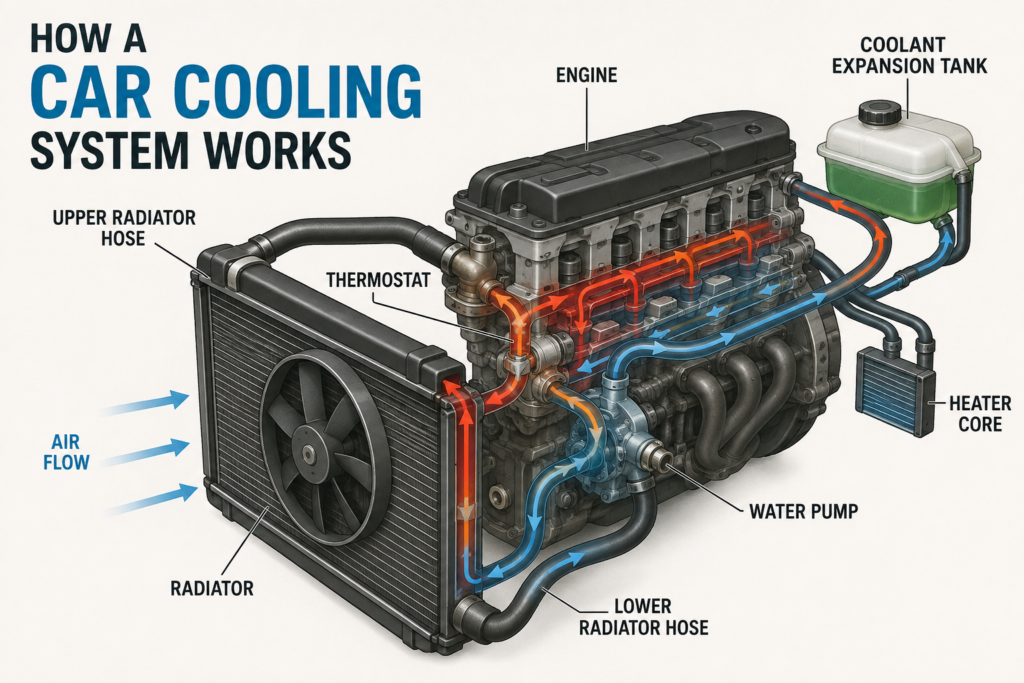
The radiator is responsible for releasing heat from the coolant. The water pump moves coolant through the system. The thermostat controls coolant flow according to engine temperature. Radiator hoses carry coolant between the engine and radiator. Cooling fans help move air through the radiator when natural airflow is not enough.
There is also a coolant expansion tank that stores extra coolant and allows the coolant to expand as it becomes hot. Many vehicles also have a heater core, which uses hot engine coolant to provide warm air inside the cabin.
The radiator cap or pressure control system is another important part because it helps maintain the correct pressure inside the cooling system.
How Engine Coolant Circulates
The basic process begins with the water pump. When the engine is running, the water pump circulates coolant through passages in and around the engine.
As the coolant moves through these passages, it absorbs heat from the engine. The coolant becomes hotter as it travels through the engine block and cylinder head.
The hot coolant then moves toward the thermostat. If the engine has not reached its normal operating temperature, the thermostat stays mostly closed. This allows the coolant to circulate through the engine without immediately going through the radiator.
Once the engine reaches the correct temperature, the thermostat opens. Hot coolant can then flow toward the radiator.
This simple process is extremely important because it allows the engine to warm up quickly while also preventing excessive heat once the engine is operating normally.
The Role of the Radiator
The radiator is probably the most recognizable part of the cooling system. It is usually positioned near the front of the vehicle so that air can pass through it while the car is moving.
Hot coolant enters the radiator through the upper section. Inside the radiator, the coolant passes through small tubes surrounded by thin metal fins. These fins increase the surface area available for heat transfer.
As air moves through the radiator, heat travels from the hot coolant into the metal tubes and fins and then into the surrounding air. The coolant becomes cooler as it passes through the radiator.
The cooled coolant then leaves the radiator and returns toward the engine through the lower radiator hose. The water pump circulates it again, and the process continues.
This cycle happens continuously while the engine is operating.
Why the Thermostat Is Important
The thermostat is a small component, but I consider it one of the most important parts of the cooling system. Its main job is to control coolant flow based on temperature.
When the engine is cold, the thermostat remains closed or mostly closed. This helps the engine reach its normal operating temperature faster.
When the engine becomes hot enough, the thermostat opens and allows coolant to flow through the radiator. This helps control engine temperature.
A thermostat that remains stuck closed can cause the engine to overheat because hot coolant cannot reach the radiator properly. A thermostat stuck open can cause the engine to run too cool, which may reduce fuel efficiency and affect heater performance.
How the Water Pump Works
The water pump provides the movement needed to circulate coolant. Without proper coolant circulation, heat would quickly build up inside the engine.
In many vehicles, the water pump is driven by a belt, although some modern cars use an electric water pump. When the pump operates, it pushes coolant through the engine passages and cooling system.
A failing water pump can cause overheating, coolant leaks, unusual noises, or poor coolant circulation. In some cases, a damaged pump may not circulate enough coolant even if the coolant level appears normal.
This is why checking only the coolant level is not always enough when diagnosing an overheating problem.
The Cooling Fan
The cooling fan helps move air through the radiator. This is especially important when the vehicle is stationary or moving slowly.
When a car is traveling at higher speed, air naturally passes through the radiator. But when the vehicle is sitting in traffic, there may not be enough natural airflow to remove heat.
The cooling fan turns on when needed and pulls or pushes air through the radiator. Depending on the vehicle, the fan may be controlled by the engine computer, a temperature sensor, or another control system.
If the cooling fan fails, a car may appear to operate normally while driving at highway speeds but begin overheating when sitting in traffic.
The Importance of Coolant
Coolant is more than just water. It is specially formulated to transfer heat while also providing protection against freezing, corrosion, and deposits.
Most vehicles use a mixture of antifreeze and water. The exact coolant type and mixture should follow the vehicle manufacturer’s recommendations.
Using the wrong coolant or mixing incompatible coolant types can create problems. Coolant should also be kept at the correct level.
One thing I always consider important is checking the coolant when the engine is cold. Opening a pressurized cooling system while the engine is hot can be dangerous because hot coolant and steam can escape with significant pressure.
What Happens When the Engine Gets Too Hot?
When the cooling system cannot remove enough heat, the engine temperature rises. This condition is known as overheating.
There can be several reasons for overheating. A low coolant level, damaged radiator, failed water pump, stuck thermostat, blocked radiator, leaking hose, faulty cooling fan, or head gasket problem can all contribute to overheating.
Modern cars usually have a temperature gauge or warning light to alert the driver. If the temperature gauge moves into the hot zone or an overheating warning appears, continuing to drive can cause severe engine damage.
An overheating engine can suffer from damaged seals, warped components, or even internal engine failure. For that reason, overheating should never be ignored.
Common Car Cooling System Problems
Cooling system problems often provide warning signs before they become major failures.
One common sign is a coolant leak. You may notice colored fluid under the vehicle or a sweet smell around the engine compartment. Another warning sign is an engine temperature that is higher than normal.
A damaged radiator hose can also cause problems. Hoses become exposed to heat and pressure over time, so they can become soft, cracked, swollen, or brittle.
A failing thermostat may cause temperature fluctuations or overheating. A faulty water pump can produce noise or leakage. A cooling fan problem may cause overheating mainly during slow driving or when the car is stationary.
It is also possible for air to become trapped inside the cooling system after certain repairs. Air pockets can interfere with proper coolant circulation and may cause unusual temperature behavior.
How to Maintain a Car Cooling System
Regular maintenance can prevent many cooling system problems. I believe the easiest habit is to check the coolant level periodically when the engine is completely cool.
It is also useful to inspect the radiator hoses for cracks, swelling, or signs of leakage. Look around the radiator, water pump, and expansion tank for visible coolant leaks.
The coolant itself should be replaced according to the vehicle manufacturer’s maintenance schedule. Over time, coolant can lose some of its protective properties.
Keeping the radiator area clean is also important. Dirt, leaves, insects, and other debris can restrict airflow through the radiator.
If your vehicle starts overheating, do not simply keep driving and hope the temperature returns to normal. Stop in a safe location and allow the engine to cool. If the problem continues, professional inspection is the safest option.
Why the Cooling System Matters
The engine is designed to operate within a specific temperature range. Too much heat can cause damage, while too little heat can reduce efficiency.
The cooling system therefore does much more than simply prevent overheating. It helps maintain stable engine temperature, supports efficient combustion, protects engine components, and provides heat for the vehicle’s interior.
In modern vehicles, the cooling system also works with sensors and electronic controls. The engine computer can monitor temperature and control cooling fans and other systems according to operating conditions.
Final Thoughts
Understanding how a car cooling system works makes it easier to appreciate how many components cooperate behind the scenes. The water pump circulates coolant, the engine transfers heat into that coolant, the thermostat controls when the radiator receives hot coolant, and the radiator releases the heat into the air.
The cooling fan provides additional airflow when necessary, while the expansion tank manages changes in coolant volume. Together, these components keep engine temperature under control.
From my point of view, basic cooling system knowledge can save a driver from unnecessary trouble. Paying attention to coolant levels, temperature warnings, leaks, and unusual smells can help identify problems early.
A healthy car cooling system is essential for reliable engine performance. Regular inspection and proper maintenance are much easier and less expensive than dealing with serious engine damage caused by overheating.