
Related Articles

When I think about the parts that keep a car engine working properly, the thermostat is one of those small components that does not always get the attention it deserves. Many drivers know about the radiator, coolant, water pump, and cooling fan, but the thermostat is often overlooked. In reality, it plays a very important role in controlling engine temperature.
A car engine needs to operate within a specific temperature range. If the engine stays too cold, it may not run efficiently. If it becomes too hot, serious engine damage can occur. The car thermostat helps maintain the right temperature by controlling the flow of engine coolant between the engine and radiator.
In this article, I will explain what a thermostat does, how a car thermostat works, the common signs of a bad thermostat, and why replacing it at the right time is important.
What Is a Thermostat in a Car?
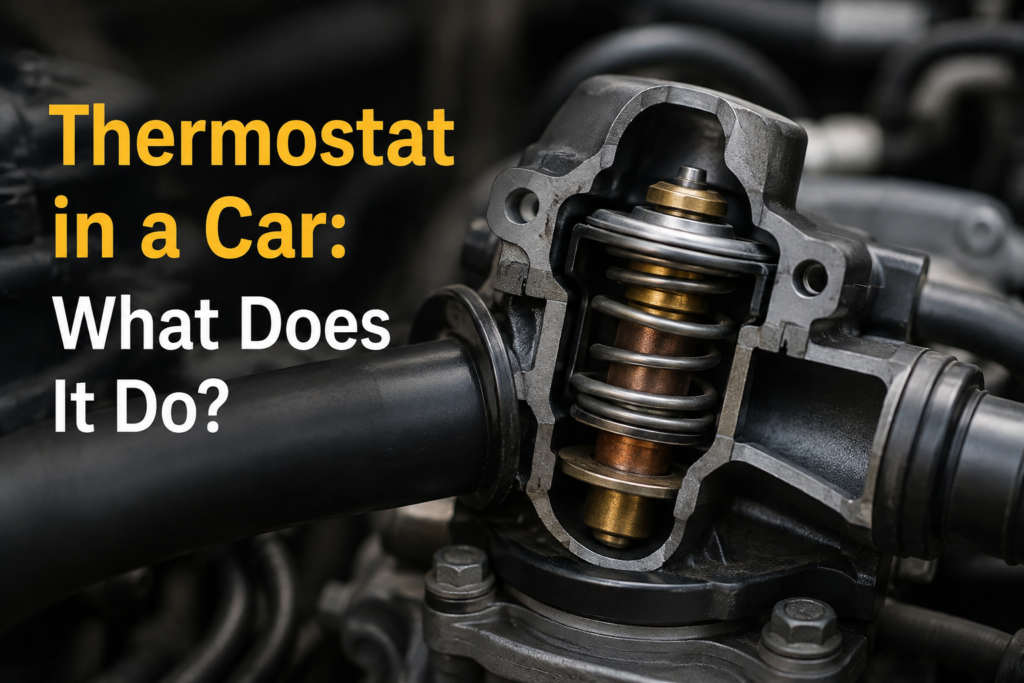
A thermostat is a temperature controlled valve installed in the engine cooling system. Its main job is to regulate the flow of coolant according to the engine temperature.
When the engine is cold, the thermostat remains closed. This prevents coolant from immediately flowing through the radiator. Instead, the coolant circulates within the engine and helps it reach its normal operating temperature faster.
As the engine becomes warmer, the thermostat gradually opens. This allows hot coolant to travel toward the radiator, where heat is released into the surrounding air. The cooled coolant then returns to the engine and the process continues.
In simple terms, I would describe the thermostat as a temperature gate for the cooling system. It opens when the engine needs more cooling and stays closed when the engine needs to warm up.
How Does a Car Thermostat Work?
The operation of a thermostat is quite simple, but it is extremely important.
Most traditional automotive thermostats use a temperature sensitive material inside a small housing. As the coolant temperature rises, this material expands and pushes against a mechanism that opens the thermostat valve.
When the coolant temperature drops, the material contracts and the valve closes again.
For example, when you start your car in the morning, the engine is relatively cold. The thermostat is usually closed at this point. Because coolant is not being sent through the radiator immediately, the engine can reach its normal operating temperature more quickly.
Once the engine reaches the temperature specified for that particular thermostat, the valve begins to open. More coolant can then flow through the radiator, helping control the engine temperature.
The exact opening temperature depends on the vehicle and engine design. This is why I always recommend using the correct thermostat specified for the vehicle instead of choosing one based only on appearance.
Why Is the Thermostat Important?
The main purpose of a car thermostat is temperature control, but its job affects several other areas of vehicle performance.
An engine that reaches its normal operating temperature can generally work more efficiently. The engine oil also reaches the temperature where it can properly lubricate internal components.
The thermostat also helps the cooling system respond to changing driving conditions. When the vehicle is working hard, such as during long drives, climbing hills, carrying heavy loads, or driving in hot weather, the cooling system needs to remove more heat.
Without proper thermostat operation, the engine may not maintain a stable temperature.
From my point of view, this is why such a small component deserves attention. A thermostat may be inexpensive compared with major engine components, but a faulty thermostat can contribute to much more expensive problems.
What Happens When a Thermostat Gets Stuck Closed?
One of the more serious thermostat problems occurs when the valve becomes stuck in the closed position.
If the thermostat does not open when the engine gets hot, coolant cannot properly reach the radiator. The engine continues producing heat, but the cooling system cannot remove it efficiently.
This can cause the temperature gauge to move into the hot zone. In severe situations, the engine can overheat.
An overheating engine should never be ignored. Excessive heat can damage gaskets, cylinder heads, hoses, and other engine components.
Some common signs of a thermostat stuck closed include a rising temperature gauge, coolant boiling or leaking, steam from the engine area, and an overheating warning light.
If an engine is overheating, I would not recommend continuing to drive simply because the car still starts and moves. It is much safer to stop and allow the engine to cool before having the cooling system inspected.
What Happens When a Thermostat Gets Stuck Open?
A thermostat stuck open creates a different problem.
Instead of keeping coolant inside the engine while it warms up, the thermostat allows coolant to flow through the radiator continuously. As a result, the engine may take much longer to reach its normal operating temperature.
You may notice that the temperature gauge stays lower than normal, especially during highway driving or cold weather.
A stuck open thermostat can also affect cabin heating. If the engine does not become warm enough, the heater may produce less heat than expected.
Modern vehicles can also experience reduced fuel efficiency or changes in engine operation when the engine does not reach its intended temperature.
This problem may not seem as dangerous as an overheating engine, but it still deserves attention.
Common Symptoms of a Bad Thermostat
A faulty thermostat can produce several warning signs. The symptoms can vary depending on whether the thermostat is stuck open, stuck closed, or operating inconsistently.
One common symptom is an engine temperature that is higher or lower than normal.
Another warning sign is an unstable temperature gauge. If the needle moves unusually between temperatures, there may be an issue with the thermostat or another part of the cooling system.
Poor cabin heating can also point toward a thermostat problem, especially when the engine takes a long time to warm up.
In some vehicles, a check engine light may appear if the engine temperature does not behave as expected.
Coolant leaks near the thermostat housing can also occur, although a leak does not always mean the thermostat itself has failed. The housing, gasket, hose, or surrounding components may be responsible.
For this reason, I would avoid replacing parts based only on one symptom. A proper diagnosis is always better than guessing.
Can a Bad Thermostat Cause Overheating?
Yes, a faulty thermostat can cause engine overheating, particularly when it becomes stuck closed.
However, overheating does not automatically mean the thermostat is the problem. Several other cooling system components can cause similar symptoms.
A failing water pump, damaged radiator, low coolant level, blocked radiator, faulty cooling fan, leaking hose, or head gasket problem can also lead to overheating.
This is why checking the complete cooling system is important.
If the temperature gauge suddenly rises into the red zone, I would treat it as a serious warning. Continuing to drive an overheating vehicle can turn a relatively simple repair into a major engine repair.
How Often Should a Car Thermostat Be Replaced?
There is no universal replacement interval for every thermostat.
Some thermostats can last for many years and continue working properly for a long time. Others may fail earlier because of corrosion, contaminated coolant, mechanical wear, or problems in the cooling system.
For this reason, I prefer to replace the thermostat when there is a confirmed problem rather than replacing it randomly.
However, if the cooling system is already being opened for another major repair, such as a water pump replacement, it can sometimes make sense to inspect or replace the thermostat at the same time, depending on the vehicle manufacturer’s recommendations.
Always check the owner’s manual or reliable service information for the correct procedure and thermostat specification.
What Should You Check Before Replacing a Thermostat?
Before replacing the thermostat, it is important to confirm that it is actually causing the problem.
First, check the coolant level when the engine is completely cool. A low coolant level can create temperature problems and should be addressed.
The radiator, hoses, water pump, cooling fan, and thermostat housing should also be inspected.
The temperature sensor and electrical system may need checking as well, especially if the temperature gauge is giving unusual readings.
A professional technician can use diagnostic equipment and temperature measurements to determine what is happening inside the cooling system.
I think this approach saves money in the long run because replacing a thermostat will not fix an overheating problem caused by a damaged water pump or blocked radiator.
Can You Drive With a Bad Thermostat?
It depends on how the thermostat has failed.
If it is stuck open, the engine may simply take longer to warm up and may run cooler than intended. Even then, the problem should be repaired because proper engine temperature is important for efficient operation.
If the thermostat is stuck closed and the engine is overheating, continuing to drive is a very bad idea.
An overheating engine can suffer serious damage in a short period of time. If the temperature gauge reaches the danger zone, the safest choice is to stop the vehicle and allow it to cool before checking the situation.
Never open a hot radiator cap because the cooling system can be under pressure and hot coolant can cause serious burns.
Thermostat and Engine Cooling System
The thermostat does not work alone. It is one part of a complete engine cooling system.
The water pump circulates coolant through the engine and cooling system. The radiator removes heat from the coolant. The cooling fan helps move air through the radiator when necessary. Hoses carry coolant between different components.
The thermostat controls when and how coolant begins flowing through the radiator.
All these components need to work together. If one component fails, the engine temperature can be affected.
This is why regular coolant maintenance is also important. Old or contaminated coolant can contribute to corrosion and damage within the cooling system.
Final Thoughts
The thermostat in a car may be a small component, but its job is extremely important. It helps the engine reach its normal operating temperature and controls coolant flow to prevent excessive heat.
A thermostat stuck closed can contribute to overheating, while a thermostat stuck open can cause the engine to run cooler than intended. Both conditions can affect vehicle performance and should be investigated.
From my experience with basic automotive maintenance, I think the biggest lesson is not to ignore changes in engine temperature. If the temperature gauge suddenly behaves differently, the heater stops producing normal heat, or the engine starts overheating, it is worth checking the cooling system instead of waiting for the problem to become worse.
Understanding how a car thermostat works also makes it easier to understand the entire cooling system. It is a simple part with an important responsibility, and keeping it in good working condition can help protect the engine, improve efficiency, and prevent unnecessary repair costs.
Frequently Asked Questions
What does a thermostat do in a car?
A car thermostat controls the flow of coolant between the engine and radiator. It stays closed while the engine is cold and opens as the engine reaches its normal operating temperature.
What are the signs of a bad thermostat?
Common signs include overheating, a temperature gauge that stays unusually low, unstable engine temperature, poor cabin heating, and in some vehicles a check engine light.
Can a bad thermostat damage an engine?
Yes. A thermostat stuck closed can cause overheating, and severe overheating can lead to expensive engine damage.
Is a thermostat expensive to replace?
The cost depends on the vehicle, thermostat design, labor rates, and the location of the thermostat. In many vehicles, the thermostat itself is relatively inexpensive compared with major engine components.
How long does a car thermostat last?
There is no fixed lifespan for every thermostat. Its service life depends on the vehicle, cooling system condition, coolant quality, driving conditions, and component quality.