
Related Articles



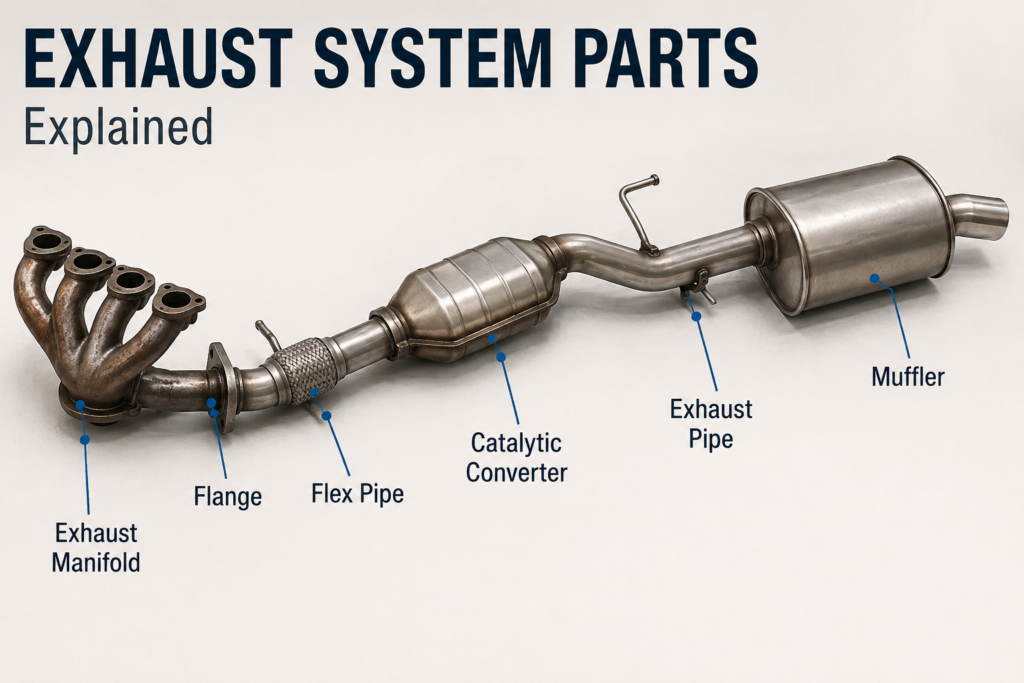
When I think about the exhaust system in a car, I see it as much more than a group of pipes underneath the vehicle. It is an important system that helps the engine breathe, controls harmful emissions, reduces exhaust noise, and directs hot gases safely away from the engine and passenger cabin. Many drivers know the muffler, but there are several other exhaust system parts that work together to keep a vehicle running properly.
In my view, understanding these parts makes it much easier to recognize exhaust problems before they become expensive repairs. A strange sound, bad smell, poor acceleration, or visible rust can sometimes be an early warning that one part of the exhaust system needs attention.
What Is an Exhaust System?
The exhaust system is a collection of components that carries exhaust gases away from the engine. These gases are produced when fuel and air burn inside the engine cylinders. After combustion, the gases need to leave the engine efficiently.
The exhaust system guides these gases through several components before releasing them from the tailpipe. During this process, harmful pollutants are reduced and engine noise is controlled.
The exact design can vary depending on the vehicle, engine type, and emission requirements, but most modern cars have several major exhaust system parts that perform similar jobs.
1. Exhaust Manifold
The exhaust manifold is one of the first major components in the exhaust system. It is connected directly to the engine cylinder head and collects exhaust gases from multiple cylinders.
I consider the exhaust manifold the starting point of the exhaust path. Each cylinder produces exhaust gases, and the manifold brings those gases together so they can move toward the rest of the system.
Exhaust manifolds are usually made from cast iron or heat resistant steel because they have to handle extremely high temperatures. Some modern engines use specially designed manifolds that improve exhaust flow and help the engine reach operating temperature quickly.
A cracked exhaust manifold can cause noticeable problems. You may hear a ticking or tapping sound from the engine area, especially when the engine is cold. An exhaust leak near the manifold can also allow harmful gases to escape before they reach the catalytic converter.
2. Exhaust Manifold Gasket
The exhaust manifold gasket creates a seal between the manifold and the engine cylinder head. Its job is simple but extremely important.
Without a proper seal, exhaust gases can escape from the connection point. Over time, the gasket can become damaged because of repeated heating and cooling cycles.
A failed exhaust manifold gasket may cause an exhaust leak, unusual engine noise, reduced efficiency, or an unpleasant exhaust smell. In some cases, soot marks around the manifold area can also indicate a leak.
3. Oxygen Sensors
Oxygen sensors are another important part of a modern exhaust system. They monitor the amount of oxygen in the exhaust gases and send information to the engine control unit.
The engine computer uses this information to adjust the fuel and air mixture. This helps the engine maintain efficient combustion while controlling emissions.
Many modern vehicles have more than one oxygen sensor. Some are positioned before the catalytic converter while others are located after it. The sensors work together to monitor engine operation and catalytic converter performance.
A faulty oxygen sensor can contribute to poor fuel economy, rough engine operation, increased emissions, and a check engine light.
4. Catalytic Converter
The catalytic converter is one of the most important exhaust system parts when it comes to emission control. Its main purpose is to reduce harmful pollutants in exhaust gases before they leave the vehicle.
Inside the catalytic converter is a special honeycomb structure coated with materials that help chemical reactions take place. These reactions convert certain harmful gases into less harmful substances.
A catalytic converter can become damaged or clogged for several reasons. Engine misfires, excessive oil consumption, contamination, or physical damage can all cause problems.
A clogged catalytic converter may reduce engine performance because exhaust gases cannot flow freely. You may notice weak acceleration, poor fuel economy, or unusual engine behavior.
5. Flex Pipe
The flex pipe is a flexible section of the exhaust system that helps absorb movement and vibration. The engine moves slightly while running, but the exhaust system is mounted to the vehicle body.
The flex pipe provides some flexibility between these moving parts.
From my experience with basic automotive systems, the flex pipe is easy to overlook until it starts leaking. Because it is exposed to heat, vibration, road moisture, and movement, it can eventually develop cracks or holes.
A damaged flex pipe can produce a loud exhaust sound. You may also notice an exhaust smell or a noticeable change in the sound of the engine.
6. Exhaust Pipes
Exhaust pipes connect the different components of the exhaust system. They provide a path for gases to travel from the engine toward the tailpipe.
The diameter and shape of an exhaust pipe are important because they affect exhaust flow. Manufacturers design the pipe system according to the engine and vehicle requirements.
Exhaust pipes are exposed to water, dirt, road salt, heat, and other environmental conditions. Rust can eventually weaken the metal and create holes.
A leaking exhaust pipe may cause a louder exhaust sound and can allow gases to escape underneath the vehicle.
7. Muffler
The muffler is probably the most familiar exhaust component. Its main job is to reduce the noise produced by the engine.
Inside a muffler are chambers, passages, and sometimes sound absorbing materials. These structures help reduce sound waves as exhaust gases pass through.
A damaged muffler can make the vehicle much louder than normal. A hole caused by rust may produce a deep or rattling sound.
A noisy exhaust does not always mean the muffler is the problem. Other components, such as exhaust pipes, joints, or resonators, can also create unusual sounds.
8. Resonator
Some vehicles have a resonator in addition to the muffler. The resonator helps control specific sound frequencies produced by the engine.
I like to think of the resonator as a sound tuning component. While the muffler handles overall exhaust noise, the resonator can help improve the quality and character of the exhaust sound.
Not every vehicle uses a separate resonator. Its location and design depend on the vehicle manufacturer and exhaust configuration.
9. Tailpipe
The tailpipe is the final section of the exhaust system. It directs treated exhaust gases away from the vehicle.
It is usually the part of the system that you can easily see at the rear of the car. Some vehicles have one tailpipe while others have two or more.
The tailpipe itself is relatively simple, but it still needs to remain secure and free from major damage. Excessive rust or a damaged mounting point can cause it to become loose.
10. Exhaust Hangers and Mounts
Exhaust hangers and mounts hold the exhaust system in place underneath the vehicle. They are often made using rubber sections and metal brackets.
These components allow the exhaust system to move slightly while preventing it from hitting the vehicle body.
A broken exhaust hanger can cause a rattling sound, especially when driving over bumps. In severe cases, part of the exhaust system can hang too low and become vulnerable to road damage.
Common Exhaust System Problems
Exhaust systems operate in a difficult environment. They experience extreme temperatures, vibration, moisture, dirt, and road debris.
One of the most common problems is rust. Rust can slowly eat through exhaust pipes, mufflers, and other metal components. Small holes can eventually become large leaks.
Another common issue is an exhaust leak. Leaks can occur at pipe joints, gaskets, flanges, the manifold, flex pipe, or muffler.
A clogged catalytic converter is another serious problem. It can restrict exhaust flow and affect engine performance.
Broken exhaust hangers can also create rattling noises. If the exhaust system moves too much underneath the vehicle, it may contact the chassis or other components.
Signs of a Bad Exhaust System
There are several symptoms that can indicate an exhaust system problem.
A louder than normal exhaust sound is one of the easiest signs to notice. You may also hear rattling, ticking, or buzzing noises.
An unusual exhaust smell inside or around the vehicle should never be ignored. Exhaust gases can contain harmful substances, so any suspected leak should be inspected promptly.
Reduced engine performance can sometimes be connected to restricted exhaust flow. Poor fuel economy and a check engine light may also point toward problems with oxygen sensors, emissions components, or other engine related issues.
Visible rust, holes, loose pipes, or hanging components are also signs that the exhaust system needs inspection.
How to Maintain an Exhaust System
Regular inspection is one of the best ways to protect the exhaust system. During routine servicing, I recommend paying attention to the condition of pipes, hangers, joints, and the muffler.
It is also useful to listen for changes in exhaust sound. A small change can sometimes be an early indication of a leak.
If your vehicle is driven frequently on rough roads or in areas where water and dirt collect underneath the car, checking the exhaust system becomes even more important.
You should also avoid ignoring a check engine light, especially when it appears together with poor performance or unusual exhaust smells.
Final Thoughts
The exhaust system is an important part of every modern vehicle. The exhaust manifold collects gases from the engine, the oxygen sensors monitor exhaust conditions, the catalytic converter reduces harmful emissions, the pipes move gases through the system, and the muffler and resonator control noise. Hangers and mounts keep everything safely positioned while the tailpipe directs gases away from the vehicle.
In my opinion, learning about exhaust system parts is useful for every car owner. You do not need to be a professional mechanic to understand the basic function of each component. Knowing what these parts do can help you recognize unusual sounds, smells, and performance changes much earlier.
A well maintained exhaust system supports proper engine operation, emission control, comfortable driving, and overall vehicle safety. If you notice a sudden change in exhaust sound, an unusual smell, visible damage, or reduced engine performance, getting the system inspected is usually the smarter choice than waiting for a small problem to become a major repair.