Related Articles

When it comes to choosing the right tires for a car, many drivers focus mainly on price, brand, or tread life. In my opinion, one of the most important things to understand is the difference between summer tires and all season tires. Both are designed for road use, but they are built with different goals in mind.
Summer tires are designed to deliver strong performance in warm weather. They focus on grip, handling, braking, and steering response. All season tires, on the other hand, are designed to provide balanced performance across a wider range of weather conditions. They are made for drivers who want one set of tires that can handle normal summer conditions, mild cold weather, and occasional light snow.
The right choice depends on where you drive, your local weather, your driving style, and what you expect from your vehicle. In this guide, I will explain the key differences between summer vs all season tires so you can make a more informed decision.
What Are Summer Tires?
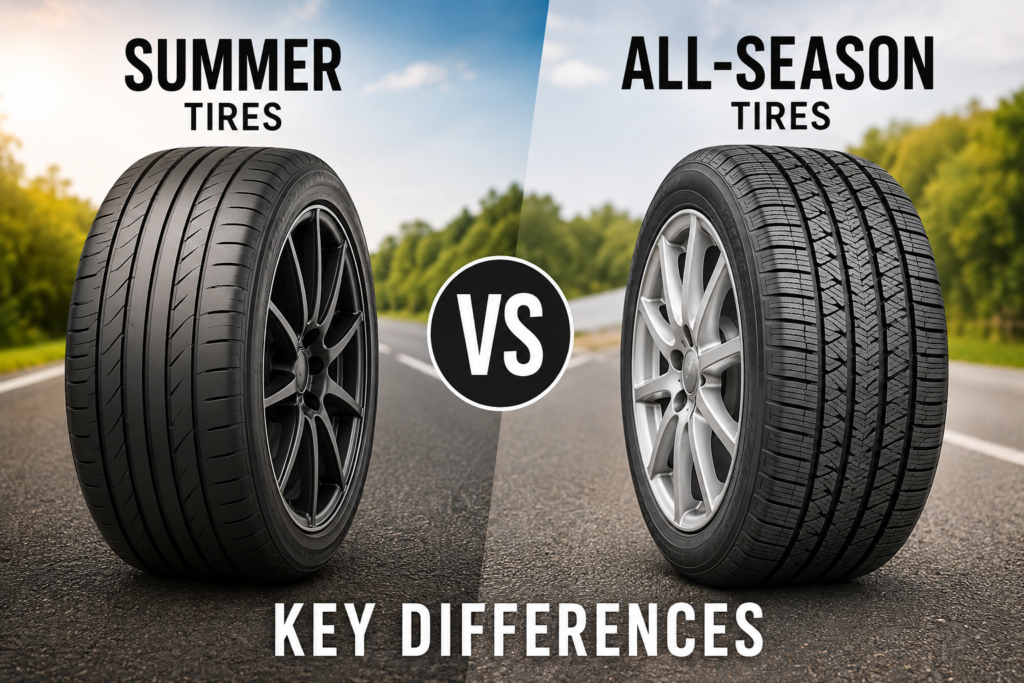
Summer tires are specifically designed for warm weather and dry or wet roads. Their rubber compounds are developed to remain flexible and provide excellent traction when temperatures are relatively high.
One thing I notice about summer tires is how responsive they can feel. When you turn the steering wheel, the car usually feels more direct and connected to the road. This is especially noticeable during highway driving, cornering, or emergency braking.
Summer tires often have tread patterns that prioritize road contact and water evacuation. They generally have fewer grooves compared with all season tires. This design helps increase the amount of rubber touching the road, which can improve handling and braking performance.
For drivers who enjoy responsive handling or own a performance oriented vehicle, summer tires can be an excellent option.
What Are All Season Tires?
All season tires are designed as a compromise between different types of driving conditions. They are intended to work reasonably well in warm weather while also maintaining useful performance when temperatures drop.
The main advantage of all season tires is convenience. Instead of changing between different tire types during the year, many drivers can use one set for most normal driving conditions.
All season tires usually have more grooves and sipes than summer tires. These features help the tire manage rain and provide some traction in light snow and colder conditions.
However, the term all season can sometimes be misunderstood. It does not mean that these tires are perfect in every season or capable of replacing dedicated winter tires. Their performance is generally a middle ground.
Summer vs All Season Tires: Main Difference
The biggest difference between summer and all season tires is the way they are designed to perform in different temperatures.
Summer tires are optimized for warm conditions. All season tires are designed to provide a broader operating range.
If I were choosing tires for a car that is driven mainly during hot weather and I wanted better handling, I would seriously consider summer tires. If I wanted convenience and did not want to change tires according to the season, all season tires would make more sense.
The choice is not simply about which tire is better. It is about which tire is better for your driving conditions.
Dry Road Performance
Dry road performance is one area where summer tires usually have an advantage.
Their rubber compound and tread design are focused on maximizing grip and steering response in warm conditions. This can make the vehicle feel more stable and predictable when taking corners.
All season tires can also perform very well on dry roads, especially during normal daily driving. However, they are designed to balance several conditions rather than focus entirely on warm weather performance.
For ordinary city driving, the difference may not seem dramatic. But during spirited driving or hard braking, the advantages of a quality summer tire can become more noticeable.
Wet Road Performance
Wet weather performance is another important factor when comparing summer vs all season tires.
A good summer tire can provide excellent wet grip because its tread pattern is designed to maintain contact with the road while moving water away from the contact area.
All season tires also perform well in rain and are designed with grooves and channels to handle wet roads. Their advantage is that they try to maintain this performance across a wider temperature range.
In my experience, tire quality matters greatly here. A high quality tire with the correct pressure and adequate tread depth can provide much better wet weather confidence than an inexpensive tire that has been poorly maintained.
Cold Weather Performance
This is where all season tires generally have an advantage over summer tires.
As temperatures become colder, the rubber compound used in summer tires can become harder. When this happens, the tire may lose some of its ability to grip the road.
All season tires use a compound that is designed to remain more suitable for cooler temperatures. This makes them a better choice for regions where winters are cool but not extremely severe.
If your area regularly experiences freezing temperatures, heavy snow, or icy roads, neither summer tires nor conventional all season tires should automatically be considered the best solution. Dedicated winter tires may be more appropriate.
Snow Performance
All season tires can provide limited traction in light snow, but they are not designed to compete with dedicated winter tires.
Their tread patterns usually include more grooves and small cuts that can help with mild winter conditions. However, deep snow and icy roads require a tire specifically engineered for severe winter weather.
Summer tires are generally a poor choice for snowy and icy conditions. Their warm weather focused compound and tread design are not intended for serious winter driving.
Therefore, if you live in an area with regular snowfall, it is important to look beyond the summer vs all season comparison and consider winter tires as well.
Handling and Steering Response
If you enjoy a sporty driving experience, summer tires can be very appealing.
They are designed to provide strong lateral grip and responsive steering. The sidewalls and tread construction can also contribute to a more controlled feeling during cornering.
All season tires are generally tuned more toward comfort and versatility. They can provide good handling, but their goal is to balance performance with ride comfort, tread life, and changing weather conditions.
For a normal commuter vehicle, all season tires may provide everything you need. For a performance car, summer tires may better match the vehicle’s capabilities.
Ride Comfort
All season tires often have an advantage when comfort is a priority.
Many all season models are designed to provide a quiet and comfortable ride for everyday driving. Their tread patterns and construction can help reduce road noise.
Summer performance tires can sometimes feel firmer because they are designed with handling and road feedback in mind.
This does not mean every summer tire is uncomfortable. Tire construction varies considerably between brands and models. Still, if comfort is your main priority, a quality touring style all season tire may be worth considering.
Tread Life
Tread life depends on many factors, including tire quality, driving habits, vehicle alignment, tire pressure, road conditions, and maintenance.
All season tires often offer good overall tread life because they are designed for everyday driving and a wide range of conditions.
Some summer performance tires can wear faster, particularly when driven aggressively. Softer compounds can provide excellent grip but may also wear more quickly.
Personally, I would not choose a tire based only on its expected mileage. A tire that provides the right combination of grip, comfort, safety, and durability can be more valuable than one that simply lasts the longest.
Fuel Economy
Tires can also affect fuel economy.
Rolling resistance varies from one tire to another. Some all season tires are designed with fuel efficiency in mind, while some performance oriented summer tires prioritize grip and handling.
The difference in fuel consumption depends on the specific tire, vehicle, road conditions, tire pressure, and driving style.
Maintaining the correct tire pressure is one of the simplest things a driver can do to support good fuel economy and even tire wear.
Which Tires Are Better for Hot Weather?
If you live in a location where temperatures are warm for most of the year, summer tires can be a strong option.
They are designed to take advantage of warm road conditions and can provide excellent traction, braking, and handling.
All season tires can still work very well in hot weather, especially for normal commuting. However, drivers who want maximum warm weather performance may prefer summer tires.
Which Tires Are Better for Daily Driving?
For most daily drivers, all season tires are often the more practical choice.
If your routine involves commuting to work, driving around town, occasional highway trips, and dealing with changing weather, an all season tire can offer a useful balance.
You do not have to worry about changing tires when the weather changes slightly. This convenience is one of the biggest reasons all season tires remain popular.
Summer vs All Season Tires for Performance Cars
Performance cars can benefit significantly from summer tires.
A powerful vehicle can only use its performance effectively when the tires can provide enough grip. Summer tires can help deliver better cornering, braking, and steering response in warm conditions.
That said, not every performance car needs summer tires. If the vehicle is mainly used for normal commuting, a high performance all season tire may provide a more comfortable and practical experience.
Can You Use Summer Tires All Year?
Whether you can use summer tires all year depends on your local climate.
If your region remains warm throughout the year and does not experience freezing temperatures or snow, summer tires may be suitable for year round use.
However, if temperatures regularly become very cold, summer tires may not be the safest option. The rubber can become less flexible, reducing available traction.
Always consider your actual weather conditions rather than simply choosing a tire based on its name.
Can You Use All Season Tires in Summer?
Yes, all season tires can be used during summer.
They are designed to operate in warm conditions and can provide good traction on dry and wet roads. For normal driving, many all season tires perform very well during hot weather.
The main difference is that they do not usually provide the same level of warm weather performance as a dedicated summer performance tire.
For everyday driving, however, the difference may be less important than comfort, price, durability, and convenience.
Summer vs All Season Tires: Which Should You Choose?
Choosing between summer tires and all season tires comes down to your priorities.
Choose summer tires if you want excellent warm weather grip, sharper handling, strong braking performance, and a more responsive driving experience.
Choose all season tires if you want versatility, everyday comfort, longer usability across changing weather, and the convenience of using one tire setup throughout much of the year.
If your area experiences serious winter weather, you should also consider dedicated winter tires instead of assuming that all season tires can handle every condition.
Final Thoughts
When comparing summer vs all season tires, there is no single answer that works for every driver. Both tire types have their strengths, and the best choice depends on your climate and driving needs.
Summer tires are excellent for warm weather performance. They can provide strong grip, responsive steering, and confident handling on dry and wet roads. All season tires offer a more balanced approach and are better suited to drivers who want versatility throughout the year.
In my view, the smartest approach is to think about how and where you actually drive. If warm weather performance is your priority, summer tires are worth considering. If convenience and versatility matter more, all season tires may be the better choice.
Most importantly, whatever tire you choose, make sure it is the correct size and load rating for your vehicle. Keep the tire pressure at the recommended level, inspect the tread regularly, and replace tires when they become worn or damaged. Good tire maintenance is just as important as choosing the right type of tire.