Related Articles
When it comes to taking care of a car, tires and wheels deserve more attention than many drivers give them. Two services that often create confusion are wheel alignment and wheel balancing. I have noticed that people sometimes use these terms as if they mean the same thing, but they actually solve two completely different problems.
Understanding the difference between wheel alignment vs wheel balancing can help you recognize problems earlier, improve driving comfort, protect your tires, and avoid unnecessary repair costs. Both services are important, but they are performed for different reasons.
In this article, I will explain wheel alignment and wheel balancing in simple terms, discuss their symptoms, benefits, costs, and explain when you may need each service.
What Is Wheel Alignment?
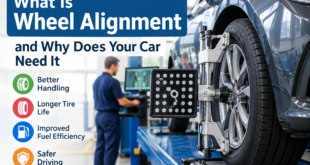
Wheel alignment is the process of adjusting the angles of the wheels so they match the specifications recommended for your vehicle. These angles affect how the tires sit against the road and how the vehicle moves when you are driving.
The main alignment angles include camber, caster, and toe. You do not need to understand every technical detail to recognize why alignment matters. What matters most is that correctly aligned wheels help your vehicle drive straight and allow the tires to make proper contact with the road.
When your wheels are out of alignment, you may notice that your car pulls toward one side. Your steering wheel may also sit crooked while driving on a straight road. Another common sign is uneven tire wear, especially when one side of the tire wears faster than the other.
In my view, wheel alignment is especially important after hitting a large pothole or curb because these impacts can change the position of suspension and steering components.
What Is Wheel Balancing?
Wheel balancing is different from alignment. It focuses on making sure the tire and wheel assembly rotates evenly.
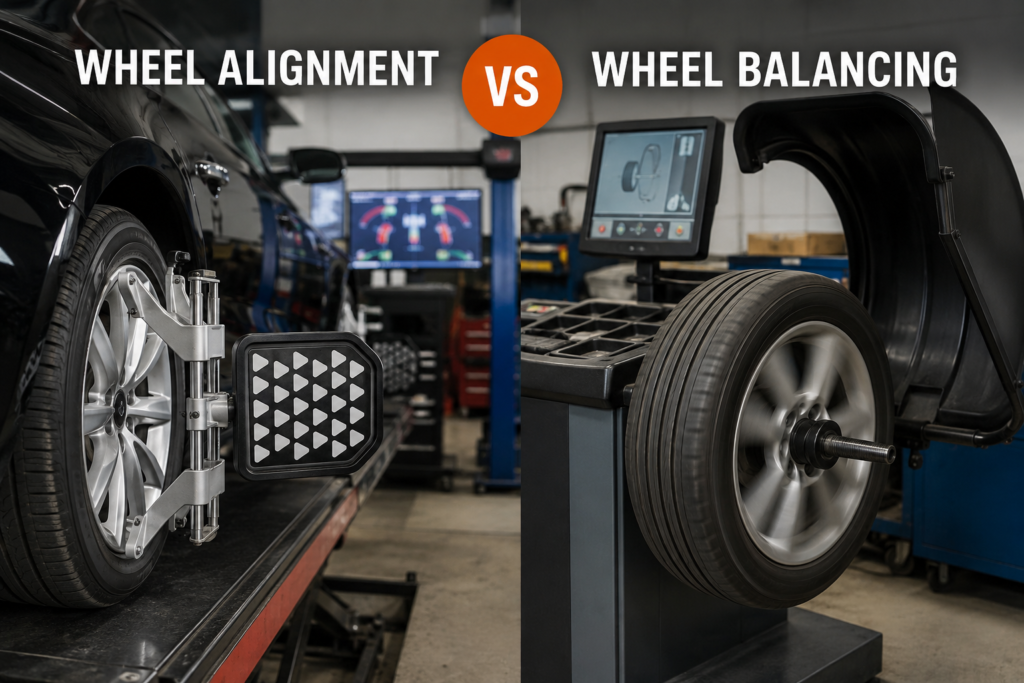
A tire and wheel may look perfectly normal from the outside but still have a slight weight imbalance. During balancing, the wheel is mounted on a balancing machine that spins it and identifies areas where weight needs to be added.
Small balancing weights are then placed on the wheel to correct the imbalance.
One of the most common symptoms of an unbalanced wheel is vibration. You may feel the vibration through the steering wheel, seat, or floor, especially when driving at higher speeds.
If your vehicle starts shaking after installing new tires, wheel balancing should be one of the first things you have checked.
Wheel Alignment vs Wheel Balancing
The easiest way to understand wheel alignment vs wheel balancing is to remember that alignment is mainly about the direction and angle of the wheels, while balancing is about the weight distribution of the rotating wheel and tire.
Wheel alignment makes sure the wheels are positioned correctly relative to the vehicle and the road.
Wheel balancing makes sure the wheel and tire rotate smoothly without excessive vibration.
These services are different, but they can sometimes be needed at the same time.
For example, imagine you have driven over a deep pothole. The impact could affect the alignment and also damage or disturb a wheel. If you then experience both uneven tire wear and vibration, a mechanic may recommend checking both alignment and balance.
Common Signs You Need Wheel Alignment
There are several warning signs that can indicate an alignment problem.
One of the most obvious signs is when the car pulls to the left or right while you are trying to drive straight. You may constantly need to correct the steering to keep the vehicle in its lane.
Another sign is a steering wheel that is not centered. If the road is straight but the steering wheel remains noticeably turned to one side, your vehicle may need an alignment inspection.
Uneven tire wear is another major warning sign. If the inside or outside edge of a tire is wearing much faster than the rest of the tread, incorrect wheel alignment could be responsible.
You may also notice that your vehicle feels less stable while cornering. In some cases, the steering may feel unusual or the car may not respond as naturally as it normally does.
If you notice these symptoms, I would not ignore them. Incorrect alignment can cause tires to wear prematurely, which can turn a relatively simple service into a more expensive tire replacement.
Common Signs You Need Wheel Balancing
Wheel balancing problems usually feel different from alignment problems.
The most common symptom is vibration while driving. The vibration may become more noticeable as your speed increases. Depending on which wheel is affected, you may feel it through the steering wheel, floor, or seat.
If the steering wheel shakes at highway speeds, an unbalanced front wheel could be one possible cause. If the vibration is felt more strongly through the seat, a rear wheel may be involved.
Another possible sign is unusual tire wear. An imbalance can cause the tire to bounce or rotate unevenly, which may contribute to irregular wear over time.
You may also notice vibration shortly after purchasing new tires. New tires should normally be balanced during installation, but if the balancing was not performed correctly or a balancing weight has fallen off, vibration can develop.
Why Wheel Alignment Is Important
Proper wheel alignment can make a noticeable difference in how your vehicle drives.
When the wheels are correctly aligned, the tires can maintain better contact with the road. This can help the vehicle track more naturally and reduce unnecessary tire wear.
Good alignment can also make steering feel more predictable. When I drive a properly aligned vehicle, the steering generally feels more controlled and natural, especially on longer trips.
Another important benefit is tire life. Tires are not cheap, so getting the alignment checked when necessary can help prevent premature and uneven wear.
Alignment is also important for maintaining proper vehicle handling. If the wheels are significantly misaligned, the vehicle may not behave as expected during turns or emergency maneuvers.
Why Wheel Balancing Is Important
Wheel balancing is mainly about smooth and comfortable rotation.
A properly balanced wheel can reduce unwanted vibration and help the vehicle feel smoother at speed. It can also reduce stress on certain components because excessive vibration can affect suspension and steering parts over time.
Balanced wheels also support more even tire wear.
Whenever I install new tires, I consider balancing an essential part of the process rather than something that should be skipped. A new tire may look perfect, but the complete tire and wheel assembly still needs to rotate correctly.
When Should You Get a Wheel Alignment?
There is no single mileage number that applies perfectly to every vehicle. Instead, alignment should be checked based on driving conditions and symptoms.
You should consider having the alignment inspected after hitting a major pothole or curb. It is also sensible to check alignment after certain suspension or steering repairs.
If you notice your vehicle pulling to one side, a crooked steering wheel, or unusual tire wear, an alignment inspection is worthwhile.
Some drivers also have alignment checked periodically as part of routine maintenance, particularly if they regularly drive on rough roads.
When Should You Get Wheel Balancing?
Wheel balancing is commonly performed when new tires are installed. It may also be necessary if you experience vibration at certain speeds.
If a wheel loses a balancing weight, the tire and wheel assembly can become unbalanced. A mechanic can place the wheel on a balancing machine to identify and correct the problem.
Balancing should also be checked if a tire has been removed and reinstalled or if you notice new vibration that was not present before.
Can You Need Both Services?
Yes, you can absolutely need both wheel alignment and wheel balancing.
This is an important point because fixing one problem does not automatically fix the other.
For example, balancing a wheel will not correct a vehicle that pulls to one side because of incorrect alignment. Similarly, an alignment will not eliminate a vibration caused by an improperly balanced tire and wheel.
If you are experiencing several symptoms at once, a professional inspection can determine whether one or both services are necessary.
Wheel Alignment and Wheel Balancing After New Tires
Whenever you purchase new tires, it is a good idea to have them properly balanced. The tire is mounted onto the wheel, and the complete assembly needs to be checked for balance.
A wheel alignment may also be recommended depending on the condition of your vehicle. Installing new tires does not automatically mean the alignment is incorrect, but new tires can make existing alignment problems more noticeable.
If your old tires had uneven wear, I would especially recommend checking the alignment before simply installing another set and continuing to drive.
Does Wheel Balancing Fix Uneven Tire Wear?
Wheel balancing can help prevent certain types of irregular wear caused by vibration, but it does not correct every type of uneven tire wear.
If the tire is wearing heavily on one edge, incorrect alignment could be the more likely issue. Incorrect tire pressure, worn suspension components, improper rotation, and other mechanical problems can also contribute to uneven wear.
This is why it is better to identify the actual cause instead of assuming that balancing or alignment will solve every tire problem.
How Much Do Wheel Alignment and Balancing Cost?
The cost of wheel alignment and wheel balancing depends on the vehicle, location, workshop, equipment, and type of service required.
Wheel balancing is generally a simpler service, while alignment may require more detailed measurements and adjustments.
Instead of choosing a service based only on price, I recommend choosing a reputable tire or automotive service center with proper equipment. A cheaper service that does not correctly diagnose the problem may end up costing more in the long run.
Final Thoughts on Wheel Alignment vs Wheel Balancing
The difference between wheel alignment vs wheel balancing becomes much easier to understand once you know what each service actually does.
Wheel alignment focuses on the angles and positioning of the wheels. Wheel balancing focuses on the weight distribution of the tire and wheel assembly so it can rotate smoothly.
If your vehicle pulls to one side, the steering wheel is off center, or your tires are wearing unevenly, alignment may be the issue. If you experience vibration at certain speeds, especially after installing tires, balancing may be the better place to start.
In my opinion, both services are important parts of proper tire maintenance. They can improve driving comfort, support even tire wear, and help you get more useful life from your tires. Paying attention to small changes in steering, vibration, and tire wear can help you identify problems before they become expensive.
The next time your vehicle feels different on the road, do not simply assume that you need new tires. Sometimes the real solution is as simple as checking the wheel alignment, balancing the wheels, or inspecting both.