Related Articles

When people talk about changing car wheels, they often focus on the design, color, or overall appearance. In my opinion, however, the most important thing to understand before buying new wheels is the actual wheel size. A wheel is not simply a round piece of metal that fits onto a car. Its diameter, width, and offset all affect how it fits, how the car handles, and how the tires perform.
Understanding wheel size can save you from buying wheels that look great but do not fit your vehicle properly. It can also help you choose a setup that gives your car the appearance and driving feel you want.
In this guide, I will explain wheel diameter, wheel width, and wheel offset in simple terms. I will also explain why each measurement matters and what you should consider before changing your wheels.
What Does Wheel Size Mean?
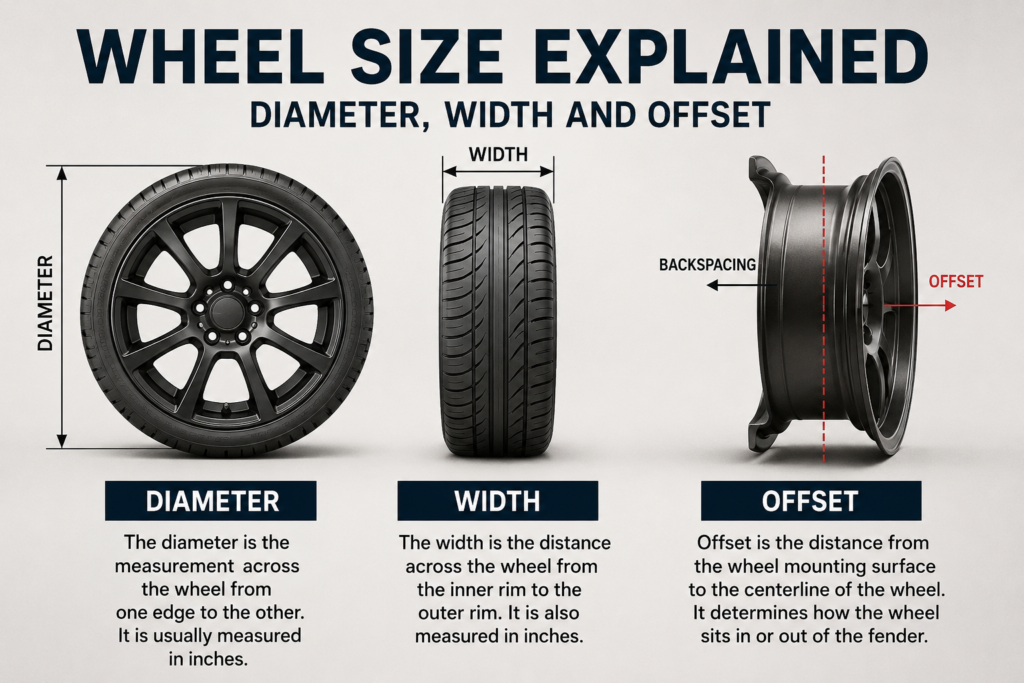
Wheel size describes several important measurements that determine how a wheel fits your car. The three measurements people commonly discuss are diameter, width, and offset.
For example, you may see a wheel described as 17 x 8 with an offset of +35. The first number represents the wheel diameter, the second represents the wheel width, and the offset tells you where the wheel sits in relation to its mounting surface.
These numbers may look confusing at first, but once you understand what they mean, reading wheel specifications becomes much easier.
What Is Wheel Diameter?
Wheel diameter is the measurement across the wheel from one edge to the other through the center. It is normally measured in inches.
Common wheel diameters include 15 inches, 16 inches, 17 inches, 18 inches, 19 inches, and 20 inches. Larger wheels have become popular because they can give a vehicle a more aggressive and modern appearance.
For example, a 17 inch wheel has a diameter of approximately 17 inches. A 19 inch wheel is larger and requires a tire with a smaller sidewall if the overall tire diameter is to remain close to the original specification.
This is important because changing wheel diameter usually means changing tire size as well.
How Wheel Diameter Affects Your Car
Increasing wheel diameter can change the appearance and driving characteristics of a vehicle. Larger wheels usually allow the use of lower profile tires. These tires have shorter sidewalls, which can make steering feel more responsive.
From my experience, one of the biggest reasons drivers choose larger wheels is appearance. A larger wheel can fill the wheel arch better and give a car a sportier look.
However, there can be disadvantages. A low profile tire has less sidewall to absorb impacts from potholes and rough roads. If you frequently drive on damaged roads, a very large wheel with a low profile tire may not be the most practical choice.
Larger wheels and tires can also cost more. Therefore, I believe the best wheel diameter is not always the largest one that fits the vehicle. It is the size that provides a good balance between appearance, comfort, handling, and practicality.
What Is Wheel Width?
Wheel width is the distance from the inner edge of the wheel to the outer edge. Like diameter, it is normally measured in inches.
For example, a wheel specification of 18 x 8 means the wheel has an 18 inch diameter and is 8 inches wide.
Wheel width is especially important because it affects which tire sizes can be safely and correctly mounted. A wider wheel generally requires a tire with an appropriate width range.
A wider wheel can also affect how the tire sits on the vehicle. It may provide a wider contact area depending on the tire selected, which can influence cornering and steering response.
However, wider does not automatically mean better.
A wheel that is too wide for the vehicle can create clearance problems. It may come too close to the suspension components on the inside or extend too far toward the fender on the outside.
That is why I always recommend checking the manufacturer’s recommended wheel and tire specifications before making a major change.
Why Wheel Width Matters
Wheel width affects more than appearance. It can influence handling, tire selection, ride quality, and clearance.
A wider wheel can provide a more aggressive appearance and may work well with wider performance tires. Many enthusiasts prefer this setup because it can give the car a planted appearance.
On the other hand, a wider wheel and tire combination can add weight and may be more vulnerable to damage from potholes. It can also make the steering feel different.
For everyday driving, I think it is better to choose a wheel width that matches the vehicle and tire rather than simply choosing the widest wheel available.
What Is Wheel Offset?
Wheel offset is one of the most important measurements when it comes to wheel fitment. It describes the position of the wheel mounting surface in relation to the centerline of the wheel.
Offset is normally measured in millimeters.
There are three basic types of wheel offset: positive offset, zero offset, and negative offset.
Most modern passenger cars use positive offset wheels. With positive offset, the mounting surface is positioned toward the outside face of the wheel.
Zero offset means the mounting surface is located at the centerline of the wheel.
Negative offset means the mounting surface is positioned toward the inside of the wheel. This pushes more of the wheel outward from the vehicle.
Positive Wheel Offset
Positive offset is common on many modern vehicles.
If you install a wheel with a higher positive offset than the original wheel, the wheel may move farther inward toward the suspension. Depending on the vehicle, this can reduce clearance between the wheel and suspension components.
For example, changing from a +35 offset to a +45 offset on a wheel with the same width generally moves the wheel inward by about 10 millimeters.
This is why offset should never be ignored when buying new wheels.
Negative Wheel Offset
Negative offset pushes the wheel farther outward.
This is commonly associated with modified vehicles and off road builds because it can create a wider and more aggressive stance.
However, excessive negative offset can cause the wheel and tire to extend beyond the fender. It can also increase the load on suspension and steering components.
In my opinion, negative offset can look impressive when used correctly, but it should always be selected with the vehicle’s suspension, tire size, and fender clearance in mind.
Why Offset Is So Important
A wheel can have the correct diameter and width but still fail to fit properly because of its offset.
This is one of the most common mistakes people make when choosing aftermarket wheels.
Imagine your original wheel is 18 x 8 with a specific offset. You find another 18 x 8 wheel that looks almost identical. If the offset is significantly different, the new wheel may sit in a completely different position.
It could move too close to the suspension, or it could stick too far outside the fender.
Incorrect offset can also contribute to rubbing during steering or suspension movement. In extreme cases, it may affect handling and component wear.
This is why proper wheel fitment requires looking at all three measurements rather than focusing on diameter alone.
Understanding Wheel Size Examples
Let’s take a simple example of a wheel marked as 18 x 8 +35.
The 18 means the wheel diameter is 18 inches.
The 8 means the wheel width is 8 inches.
The +35 means the wheel has a positive offset of 35 millimeters.
This information gives you a basic idea of the wheel’s physical dimensions and mounting position.
Another example could be 19 x 9 +40. This wheel is larger in diameter and wider than the first example. Its offset is also different.
Even though both wheels may look similar, they can sit differently on the vehicle and require different tire sizes.
Wheel Size and Tire Size
Wheel size and tire size are closely connected.
When you increase wheel diameter, you generally need a tire with a shorter sidewall to keep the overall outside diameter close to the original tire.
For example, a car originally equipped with smaller wheels may use a tire with a taller sidewall. If you move to a larger wheel, the tire sidewall may become shorter.
Maintaining a similar overall tire diameter is important because a major change can affect the speedometer, gearing, traction control systems, and available clearance.
That is why I would never choose a new wheel size without checking the appropriate tire size at the same time.
How Wheel Size Affects Ride Comfort
Wheel size can have a noticeable effect on ride comfort.
Smaller wheels often allow taller tires. The extra sidewall can absorb more bumps and imperfections in the road.
Larger wheels usually require shorter sidewalls. These tires can provide sharper steering response, but they may transmit more road impacts into the cabin.
If comfort is your priority, I would generally avoid choosing an unnecessarily large wheel. If appearance and handling are more important, a larger wheel with a suitable tire may be a better choice.
The right decision depends on how and where you drive.
How Wheel Size Affects Handling
Wheel diameter, width, and offset can all influence handling.
A suitable larger wheel and tire combination can improve steering response and provide a sportier driving feel. Wider tires may also provide additional grip when the tire compound and road conditions allow it.
However, larger wheels can sometimes be heavier. Additional unsprung weight can affect ride quality and suspension response.
This is why expensive lightweight wheels can sometimes be a better performance choice than simply buying the largest wheels available.
Common Wheel Fitment Mistakes
One common mistake is choosing wheels based only on appearance.
Another is assuming that any wheel with the correct diameter will fit. Diameter is only one part of the equation.
Ignoring offset is another major mistake. A wheel with the wrong offset can cause clearance issues even when the diameter and width appear suitable.
People also sometimes forget about the center bore, bolt pattern, brake clearance, and tire size. These specifications are equally important when determining whether a wheel is suitable for a particular vehicle.
Before buying wheels, I recommend checking the complete factory specifications for your car and comparing them with the specifications of the new wheels.
Should You Choose Larger Wheels?
There is no universal answer.
If you want a sportier appearance and sharper steering response, larger wheels may be appealing. If your priority is comfort, durability, and affordability, staying closer to the factory wheel size may make more sense.
For daily driving, I personally think a balanced setup is usually the best option. A wheel should look good, but it should also work well with the vehicle and the roads you regularly drive on.
A practical wheel setup can give you the appearance you want without creating unnecessary problems.
Final Thoughts
Understanding wheel size is much easier once you know what diameter, width, and offset actually mean.
Wheel diameter tells you how large the wheel is from edge to edge. Wheel width tells you how wide the wheel is. Wheel offset determines where the wheel sits in relation to the vehicle’s mounting surface.
All three measurements work together.
When choosing new wheels, I believe it is important to look beyond appearance and consider tire compatibility, suspension clearance, fender clearance, ride comfort, handling, and overall vehicle specifications.
The right wheel size can improve the appearance and driving experience of your car. The wrong combination can create rubbing, clearance problems, uncomfortable driving, and unnecessary expense.
For that reason, take your time when comparing wheel specifications. Understanding diameter, width, and offset before you buy can help you choose wheels that fit correctly and perform the way you expect.
Primary SEO Keyword: Wheel Size Explained
Secondary Keywords: wheel diameter, wheel width, wheel offset, wheel size, wheel fitment, tire size, positive offset, negative offset, aftermarket wheels, wheel specifications