Related Articles

When choosing new wheels for a car, most people focus on wheel size, design, and price. I used to think those were the main things to consider too. However, wheel offset is just as important because it affects how a wheel sits inside the wheel arch and how it works with the suspension, brakes, and steering components.
If you are planning to buy aftermarket wheels or change your car’s wheel size, understanding what is wheel offset can save you from expensive fitting problems. The wrong offset can make a wheel sit too far inside or outside the fender, and in some cases it can even cause rubbing or handling issues.
In this guide, I will explain wheel offset in simple terms, including positive offset, zero offset, negative offset, how wheel offset is measured, and why it matters when choosing wheels for your car.
What Is Wheel Offset?
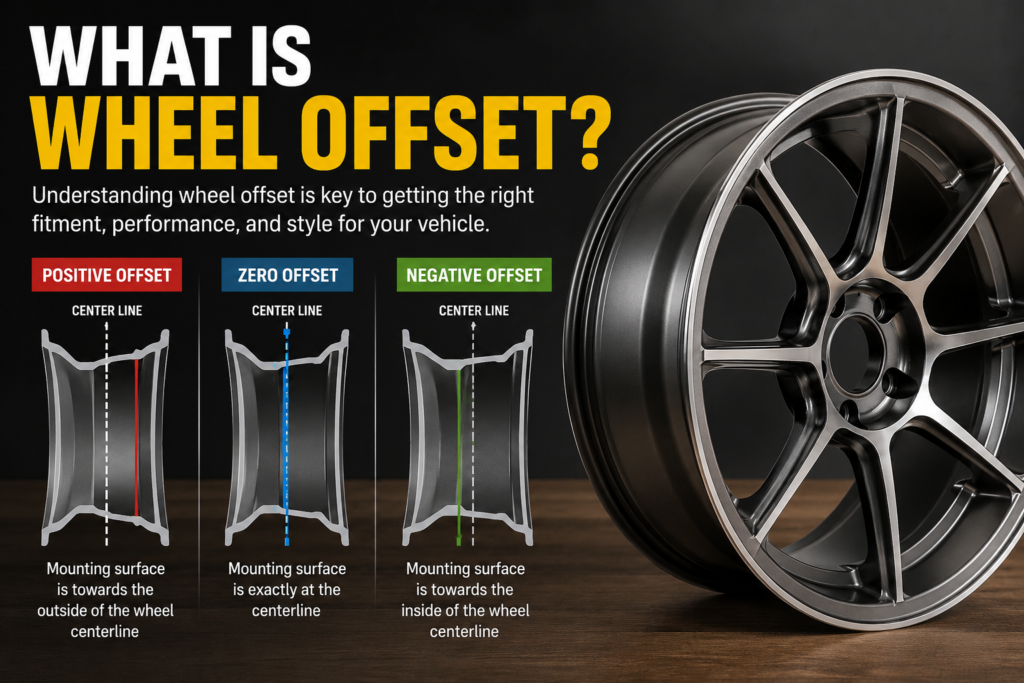
Wheel offset is the distance between the centerline of a wheel and the mounting surface where the wheel attaches to the vehicle hub. It is usually measured in millimeters.
The offset determines how far the wheel sits inward or outward relative to the vehicle. Even a small change in offset can noticeably change the position of the wheel.
For example, if a wheel has a positive offset, its mounting surface is positioned toward the outside face of the wheel. This causes the wheel to sit farther inside the wheel arch.
A negative offset moves the wheel outward. This is often seen on some trucks, off road vehicles, and customized cars where the owner wants a wider or more aggressive stance.
Understanding this measurement is important because two wheels can have the same diameter and width but fit very differently because their offsets are different.
How Is Wheel Offset Measured?
Wheel offset is measured in millimeters from the wheel’s centerline to its mounting surface.
To understand this, imagine cutting the wheel vertically through its exact center. That point represents the centerline. Now look at the surface of the wheel that touches the vehicle hub.
The distance between these two points is the wheel offset.
If the mounting surface is toward the outside of the wheel, the wheel has positive offset. If the mounting surface is exactly at the centerline, it has zero offset. If the mounting surface is toward the inside of the wheel, it has negative offset.
You may see wheel specifications written in a format such as ET45. The ET number represents the wheel offset in millimeters. Therefore, ET45 means the wheel has a 45 millimeter positive offset.
What Is Positive Wheel Offset?
Positive wheel offset means the wheel’s mounting surface is positioned toward the front or outside face of the wheel relative to its centerline.
Many modern passenger cars use positive wheel offset. This design helps keep the wheel tucked inside the fender and provides enough clearance for suspension components.
For example, a wheel with a +45 mm offset will generally sit farther inward than a similar wheel with a +25 mm offset, assuming the wheel width is the same.
Positive offset can be useful for maintaining a factory style fitment. However, going too far with positive offset can move the wheel closer to suspension components, which may create clearance problems.
When I look at aftermarket wheels, I always consider offset together with wheel width. Looking at offset alone does not tell the complete story.
What Is Zero Wheel Offset?
Zero offset means the mounting surface is located exactly at the wheel’s centerline.
This type of wheel position places the wheel evenly around its centerline. Zero offset is less common on many modern passenger vehicles but can be found on certain trucks, older vehicles, and specialized applications.
A zero offset wheel can give a vehicle a different stance compared with its original wheels. Depending on the vehicle and wheel width, it may also move the outer edge of the wheel farther toward the fender.
It is important not to assume that zero offset will automatically provide a better fit. Every vehicle has its own suspension design, brake clearance, and fender dimensions.
What Is Negative Wheel Offset?
Negative wheel offset means the mounting surface is positioned toward the inside of the wheel relative to its centerline.
This causes more of the wheel to extend outward from the vehicle. Negative offset is often associated with a deep dish appearance and an aggressive stance.
You can commonly see negative offset wheels on customized trucks, four wheel drive vehicles, and some modified cars.
Although negative offset can look attractive, it can also change the way the vehicle behaves. Moving the wheel outward can increase the scrub radius and place additional loads on steering and suspension components.
For this reason, I would never choose a negative offset simply because the wheel looks better. The offset needs to be suitable for the vehicle.
Why Does Wheel Offset Matter?
Wheel offset matters because it controls the position of the wheel in relation to the vehicle.
A correct wheel offset helps provide enough space between the wheel and suspension components while also keeping the tire away from the fender.
If the offset is wrong, several problems can occur.
The wheel may rub against the suspension.
The tire may contact the fender.
The steering response may change.
The vehicle may feel different during cornering.
Suspension components may experience additional stress.
The wheel may not sit correctly inside the wheel arch.
Brake clearance can also become a concern with certain wheel designs.
This is why I consider wheel offset one of the most important specifications when buying aftermarket wheels.
Wheel Offset and Wheel Width Work Together
One of the biggest mistakes people make is looking only at offset.
Wheel width also affects how far the wheel extends toward the inside and outside of the vehicle.
Imagine you replace a seven inch wide wheel with an eight inch wide wheel while keeping the same offset. The wider wheel will extend farther on both sides of its centerline.
That means the inner edge can move closer to the suspension while the outer edge can move closer to the fender.
Changing the offset at the same time can move the wheel even more.
For example, installing a wider wheel with a lower positive offset can make the wheel sit noticeably farther outward. This may create the aggressive appearance many enthusiasts want, but it also increases the chance of tire rubbing.
This is why I always recommend considering wheel width and offset together rather than treating them as separate specifications.
Positive vs Negative Wheel Offset
The easiest way to understand the difference is to think about where the wheel sits.
A positive offset generally moves the wheel inward.
A zero offset places the mounting surface at the centerline.
A negative offset generally moves the wheel outward.
Positive offset is common on modern passenger cars because it allows the wheel to remain relatively close to the body.
Negative offset can provide a wider appearance and is popular in some custom applications.
Neither positive nor negative offset is automatically better. The correct offset depends on the vehicle and the specific wheel and tire combination.
How Wheel Offset Affects Vehicle Appearance
Wheel offset has a major effect on the appearance of a car.
A higher positive offset can make the wheels look more tucked into the wheel arches. A lower offset can make the wheels appear closer to the fender edge.
This is why some modified vehicles have a wide and aggressive stance. The owner may have selected wheels with a lower offset to push the wheels outward.
However, appearance should not be the only consideration.
A wheel that sticks too far outside the fender can expose the tire to road debris and may not be legal in some locations. A wheel that sits too far inside can create clearance problems with suspension components.
In my opinion, the best wheel fitment is one that looks good while still maintaining safe clearance.
How Wheel Offset Affects Handling
Changing wheel offset can also influence vehicle handling.
When the wheel position changes, the relationship between the tire contact patch and the steering system can change. This can affect steering feel and the amount of effort required to turn the steering wheel.
A significant offset change may also increase the load placed on wheel bearings and other suspension components.
That does not mean every change in offset is dangerous. Small changes may work perfectly well when the wheel and tire combination is properly selected.
The important point is to stay within a suitable range for your particular vehicle.
How to Find Your Car’s Correct Wheel Offset
Before buying new wheels, start by checking your vehicle’s original wheel specifications.
You can usually find wheel information in the owner’s manual, vehicle documentation, or through the manufacturer’s specifications.
You should know the original wheel diameter, wheel width, bolt pattern, center bore, and offset.
Then compare those specifications with the aftermarket wheel you want to install.
Do not rely only on the wheel diameter. A wheel can have the correct diameter but still have an unsuitable offset or width.
If you are unsure, a professional wheel and tire shop can check the fitment and clearance before installation.
Can You Change Wheel Offset?
Yes, you can change wheel offset, but the change needs to be carefully planned.
Many enthusiasts choose a different offset to create a more aggressive appearance or improve wheel fitment. However, changing offset changes the position of the wheel.
A lower positive offset generally moves the wheel outward. A higher positive offset generally moves it inward.
The amount of change matters. A small difference may be perfectly acceptable, while a large change can create clearance or handling problems.
Wheel spacers can also effectively change the wheel position by moving the wheel outward. However, spacers should be selected carefully and installed correctly because they affect wheel mounting and suspension geometry.
What Happens If Wheel Offset Is Wrong?
The effects of incorrect wheel offset depend on how far the specification is from the vehicle’s recommended range.
If the wheel sits too far inward, it may contact suspension components, brake parts, or other components.
If it sits too far outward, the tire may rub against the fender or inner wheel arch, especially when turning or when the suspension compresses.
Incorrect offset can also change steering behavior and place additional stress on suspension and wheel bearing components.
That is why I would rather spend a little more time checking fitment before purchasing wheels than discover a problem after installation.
Final Thoughts on Wheel Offset
Understanding what is wheel offset is essential if you are planning to change your car’s wheels. Offset determines where the wheel sits in relation to the vehicle, and even a small change can affect clearance, appearance, steering, and handling.
Positive offset moves the mounting surface toward the outside of the wheel and generally keeps the wheel farther inward. Zero offset places the mounting surface at the centerline. Negative offset moves the mounting surface toward the inside and generally pushes the wheel outward.
From my point of view, the best approach is to choose wheel offset based on proper fitment rather than appearance alone. Always consider wheel width, tire size, brake clearance, suspension clearance, and fender space together.
A good looking wheel is important, but a properly fitted wheel is even more important. When the offset, width, and tire size all work together, you can improve the appearance of your car without creating unnecessary problems.
If you are shopping for aftermarket wheels, take the time to understand the offset specification before making your final decision. It can make the difference between a wheel that simply looks good and a wheel that fits your vehicle properly and performs the way you expect.