Related Articles
When choosing new wheels for a car, most people focus on wheel size, design, and price. However, one measurement that deserves just as much attention is wheel offset. The offset of a wheel affects how far the wheel sits inside or outside the wheel arch, and it can influence handling, tire clearance, suspension components, and the overall appearance of the vehicle.
In my view, understanding positive vs negative wheel offset is especially important before buying aftermarket wheels. A wheel can have the correct diameter and width but still cause problems if its offset is not suitable for the vehicle.
What Is Wheel Offset?
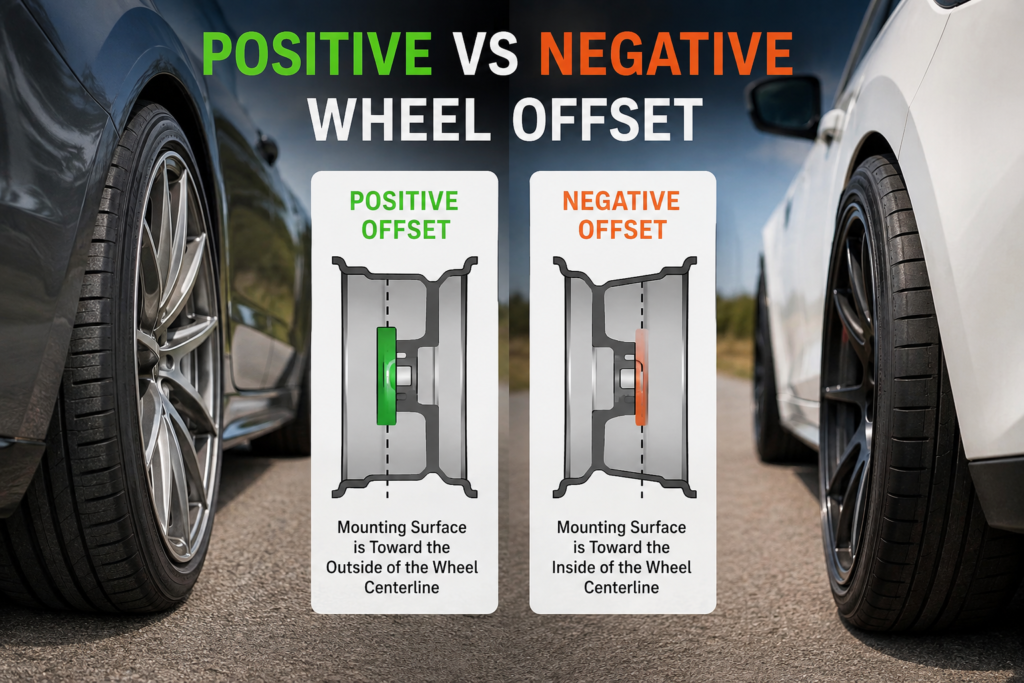
Wheel offset is the distance between the wheel’s centerline and its mounting surface. The mounting surface is the part of the wheel that sits against the vehicle hub.
Offset is usually measured in millimeters and can be positive, zero, or negative.
A positive wheel offset means the mounting surface is positioned toward the outer face of the wheel. This pulls the wheel farther inward toward the suspension.
A negative wheel offset means the mounting surface is positioned toward the inside of the wheel. This pushes the wheel outward toward the fender.
A zero offset means the mounting surface is exactly at the centerline of the wheel.
These measurements may sound technical at first, but they become much easier to understand when you think about where the wheel actually sits on the car.
What Is Positive Wheel Offset?
Positive wheel offset is very common on modern passenger cars. Many factory wheels use positive offset because manufacturers design the suspension and bodywork around a specific wheel position.
With positive offset, the wheel sits farther inside the wheel arch. The mounting surface is closer to the outside face of the wheel, which moves the wheel inward.
One advantage of positive offset is that it can help keep the wheel and tire within the vehicle’s original body lines. This can provide a clean factory appearance and reduce the possibility of the tire sticking outside the fender.
However, there is a limit. If the offset becomes too positive, the wheel may move too close to suspension components such as the strut, brake components, or control arms.
For this reason, simply choosing the highest positive offset available is not a good idea. The correct offset depends on the specific vehicle, wheel width, tire size, and suspension setup.
What Is Negative Wheel Offset?
Negative wheel offset moves the wheel outward from the vehicle. The mounting surface is positioned farther toward the inside of the wheel, which causes more of the wheel to sit outside the hub.
Negative wheel offset is often associated with off road vehicles, trucks, and customized cars. It can give a vehicle a wider and more aggressive appearance.
When I look at vehicles with a noticeable negative offset, one of the first things that stands out is the wider stance. The wheels appear to sit closer to the edge of the fenders, creating a more muscular appearance.
However, negative offset is not only about looks. Moving the wheel outward changes the position of the tire relative to the suspension and steering system. This can affect handling and place additional stress on certain components.
A negative offset setup therefore needs to be selected carefully rather than simply choosing the wheel that sticks out the most.
Positive vs Negative Wheel Offset
The easiest way to understand the difference is to think about wheel movement.
Positive offset moves the wheel inward.
Negative offset moves the wheel outward.
Zero offset places the mounting surface directly at the wheel centerline.
For example, a wheel with an offset of +45 mm has a mounting surface positioned 45 mm toward the outside face from the centerline. A wheel with an offset of −10 mm has the mounting surface positioned 10 mm toward the inside from the centerline.
The difference can have a noticeable effect on wheel fitment.
How Wheel Offset Affects Appearance
Wheel offset has a major influence on how a vehicle looks.
A higher positive offset generally gives the vehicle a more tucked in appearance. The wheel sits deeper inside the wheel arch and can look similar to the factory setup.
A lower offset moves the wheel outward. This can create a wider stance and a more aggressive appearance.
Negative offset takes this effect even further. On trucks and modified vehicles, deeply negative wheels can create a dramatic appearance with the wheels extending close to or beyond the fenders.
Personally, I think appearance should be considered after fitment rather than before it. A wheel that looks great in a photograph may not work properly on a particular vehicle.
The best wheel setup is one that provides the desired appearance while maintaining safe clearance and proper driving characteristics.
How Positive Offset Affects Handling
Changing wheel offset changes the relationship between the tire contact patch and the suspension geometry.
If a wheel is moved significantly inward or outward, the steering geometry can change. This can influence steering feel and the amount of effort required to turn the steering wheel.
A moderate change may not create a major difference on every vehicle, but a large change can become noticeable.
Positive offset that places the wheel too far inward may also create clearance problems with suspension components. The tire or wheel could come too close to a strut, control arm, or other component.
This is why the factory wheel offset is a useful starting point when selecting aftermarket wheels.
How Negative Offset Affects Handling
Negative offset moves the tire contact patch farther away from the vehicle’s hub. This increases the distance between the tire’s contact area and the steering axis.
A large change can affect steering response and steering feel. Some drivers may notice heavier steering, increased kickback over rough roads, or changes in how the vehicle responds to bumps.
Negative offset can also increase the leverage placed on wheel bearings and suspension components.
This does not mean that every negative offset wheel is unsafe. It simply means the change should be appropriate for the vehicle and suspension design.
Wheel Offset and Tire Clearance
One of the most important reasons to understand wheel offset is clearance.
A wheel needs enough space between the inner side of the wheel and suspension components. At the same time, the outer side needs enough space from the fender and wheel arch.
If the offset is too positive, the inside of the wheel may move closer to suspension components.
If the offset is too negative, the outside of the wheel and tire may move closer to the fender.
Tire width also matters. A wider tire combined with an aggressive offset can create clearance problems even if the wheel itself fits.
This is why wheel offset should never be considered separately from wheel width and tire size.
Does Negative Offset Make a Car Wider?
Yes, changing to a more negative offset generally moves the wheels farther outward. However, the exact amount depends on the original wheel offset and the new wheel specifications.
For example, changing from a +40 mm wheel to a +10 mm wheel represents a 30 mm reduction in offset. Assuming the wheel width remains the same, the wheel’s mounting position changes significantly.
If the new wheel is also wider, the final position of both the inner and outer edges will change.
This is why wheel fitment calculations are useful before purchasing wheels.
Positive Offset vs Negative Offset for Trucks
Trucks and off road vehicles often have more flexibility when it comes to wheel offset, especially when they have larger wheel arches or modified suspension.
Negative offset wheels are popular because they can give trucks a wider and more aggressive stance. They can also be part of a larger off road wheel and tire setup.
However, excessive negative offset can increase the risk of rubbing against the fenders and may affect steering and suspension behavior.
For daily driven trucks, I would personally avoid choosing an extremely aggressive offset simply for appearance. A balanced setup is usually easier to live with.
Positive Offset vs Negative Offset for Daily Driving
For a daily driven car, staying reasonably close to the manufacturer’s recommended wheel specifications is usually the safest approach.
A factory style positive offset can provide good clearance and predictable handling.
If you want aftermarket wheels, a small change in offset may be acceptable depending on the vehicle. However, it is important to check the wheel width, tire size, brake clearance, suspension clearance, and fender clearance.
Daily driving also means dealing with potholes, uneven roads, speed bumps, and rough surfaces. A setup that looks impressive at a car show may not necessarily be the most comfortable or practical option for everyday use.
What Happens If Wheel Offset Is Wrong?
Incorrect wheel offset can cause several problems.
The most obvious issue is rubbing. The tire may contact the fender, suspension, or other components when the steering wheel is turned or when the suspension moves.
Incorrect offset can also change steering behavior. In some cases, the vehicle may feel different during acceleration, braking, or cornering.
An extreme offset may place additional loads on wheel bearings and suspension components.
There can also be legal and practical concerns if the tires extend beyond the fenders. Local regulations may restrict how far wheels and tires can protrude from the vehicle body.
For these reasons, wheel offset should be treated as a functional measurement rather than just a styling choice.
How to Choose the Correct Wheel Offset
The first thing I recommend is checking the original wheel specifications for your vehicle. Look for the factory wheel width, diameter, offset, bolt pattern, and center bore.
Then compare those specifications with the aftermarket wheels you are considering.
If you want a wider wheel, remember that increasing width changes the position of both the inner and outer edges. Offset alone does not tell the complete story.
You should also consider the tire size. A wider tire can create rubbing even when the wheel offset appears suitable.
For modified vehicles, suspension height and alignment settings also matter.
When there is any doubt, it is worth having the wheel fitment checked by an experienced tire or wheel professional before making a purchase.
Can Wheel Spacers Change Offset?
Wheel spacers effectively move the wheel outward from the hub. In practical terms, installing a spacer makes the effective offset more negative.
For example, a 10 mm spacer moves the wheel outward by approximately 10 mm.
Spacers can be useful in certain applications, but they need to be correctly installed and matched to the vehicle and wheel. Poor quality spacers or incorrect installation can create safety issues.
I would not use spacers simply to make a wheel look more aggressive without first checking clearance and compatibility.
Final Thoughts on Positive vs Negative Wheel Offset
Understanding positive vs negative wheel offset can save you from expensive wheel fitment mistakes.
Positive offset generally moves the wheel inward, while negative offset moves it outward. Neither is automatically better. The correct choice depends on the vehicle, wheel width, tire size, suspension setup, brake clearance, and intended use.
For most standard daily driven vehicles, staying reasonably close to the factory wheel offset is a sensible approach. If you are building a truck, off road vehicle, or performance car, a different offset may provide the stance and performance characteristics you want, but the entire setup should be considered together.
In my opinion, the best wheel offset is not necessarily the one that makes the wheels stick out the most. It is the one that gives the vehicle the appearance you want while maintaining proper clearance, predictable handling, and reliable everyday performance.
Before buying new wheels, always check the complete fitment rather than looking at offset alone. A few minutes of research can help you choose wheels that look good and work properly for your vehicle.