Related Articles
When people start looking at aftermarket wheels, they usually focus on wheel size, width, bolt pattern, and offset. However, there is another important measurement that often gets overlooked: wheel backspacing. In my experience, understanding backspacing makes choosing the right wheels much easier because it tells you how far the inner edge of the wheel sits toward the suspension and other components.
If you are changing your vehicle’s wheels, increasing wheel width, or simply trying to understand wheel fitment, knowing what wheel backspacing means can save you from expensive mistakes. A wheel can have the correct diameter and bolt pattern but still cause clearance problems if its backspacing is not suitable for the vehicle.
In this guide, I will explain what wheel backspacing is, how it is measured, how it relates to wheel offset, and why it matters when selecting wheels.
What Is Wheel Backspacing?
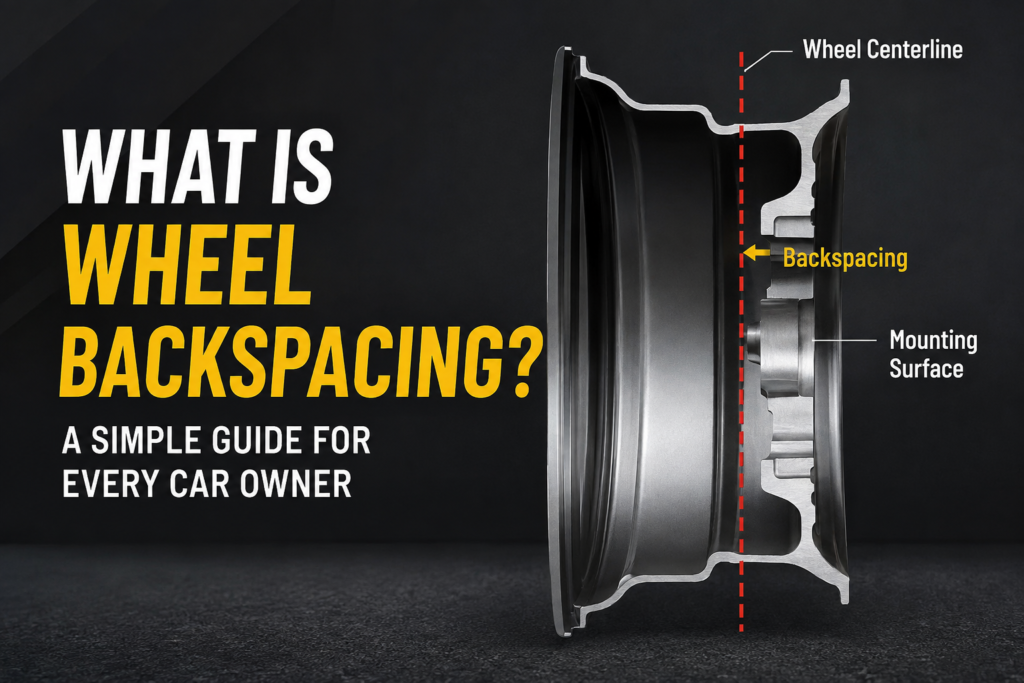
Wheel backspacing is the distance from the wheel mounting surface to the back edge of the wheel. In simple terms, it tells you how much of the wheel extends inward toward the suspension and brake components when the wheel is mounted on the vehicle.
Backspacing is normally measured in inches.
For example, if a wheel has 5 inches of backspacing, the distance from the mounting face of the wheel to its inner edge is 5 inches.
This measurement is particularly useful because it helps determine whether the inside of the wheel will have enough clearance around components such as brake calipers, suspension arms, struts, and steering components.
I find it helpful to think of backspacing as an inside clearance measurement. The larger the backspacing, the farther the wheel sits inward. A smaller backspacing generally places more of the wheel toward the outside of the vehicle.
How Is Wheel Backspacing Measured?
Measuring wheel backspacing is fairly simple if you have a flat surface and a straight measuring tool.
First, place the wheel face down on a flat surface. The front face of the wheel should be facing downward while the back of the wheel is facing upward.
Next, place a straight edge across the back lip of the wheel. Measure straight down from the straight edge to the wheel’s mounting surface.
The measurement you get is the wheel backspacing.
For example, if the distance between the wheel’s mounting surface and the straight edge is 4.5 inches, the wheel has approximately 4.5 inches of backspacing.
It is important to understand that backspacing is not the same thing as wheel width. Wheel width tells you the distance across the wheel between the bead seats, while backspacing tells you where the mounting surface sits in relation to the rear edge of the wheel.
Why Does Wheel Backspacing Matter?
Wheel backspacing matters because there is limited space behind a wheel.
Your wheel needs to clear the suspension, brakes, steering components, and other parts located inside the wheel well. If the wheel has too much backspacing, it may move too far inward and contact one of these components.
For example, a wheel with excessive backspacing could come too close to the strut or suspension arm. Even if the tire itself looks fine from the outside, the inner sidewall or wheel could rub against something when the steering is turned.
On the other hand, a wheel with very little backspacing will sit farther outward. This can create clearance problems with the fender, especially when using wider tires or lowering the vehicle.
This is why I always recommend looking at the complete wheel fitment rather than choosing a wheel based only on its appearance.
Wheel Backspacing and Wheel Offset
One of the most common questions is about the difference between wheel backspacing and wheel offset.
They describe similar aspects of wheel position, but they use different measurements.
Wheel offset is normally expressed in millimeters. It describes the position of the wheel’s mounting surface relative to the wheel’s centerline.
There are three basic offset categories:
Positive offset means the mounting surface is positioned toward the outside face of the wheel. This generally moves the wheel farther inward.
Zero offset means the mounting surface is located at the centerline of the wheel.
Negative offset means the mounting surface is positioned toward the inside of the wheel. This generally moves the wheel farther outward.
Backspacing, meanwhile, is measured directly in inches from the mounting surface to the back edge of the wheel.
Both measurements help describe wheel position, but backspacing can be particularly easy to understand when thinking about inner clearance.
How Wheel Width Changes Backspacing
Wheel width has a major effect on backspacing.
Imagine two wheels with the same offset but different widths. The wider wheel will naturally extend farther inward and outward.
This means you cannot look at backspacing without considering the wheel width.
For example, a 7 inch wheel and a 9 inch wheel can have different backspacing even if they have similar offset measurements. The wider wheel needs more space, so its inner edge can move closer to suspension components depending on where the mounting surface is positioned.
This becomes especially important when upgrading to wider wheels.
A wheel that fits perfectly in the original size may create rubbing problems after moving to a wider aftermarket wheel.
Backspacing Example
Let’s say you are considering an 8 inch wide wheel with 5 inches of backspacing.
The wheel’s mounting surface is positioned 5 inches from the rear edge of the wheel. This means approximately 5 inches of the wheel’s width sits on the inside side of the mounting position, while the remaining portion extends outward.
The actual calculation can be affected by the way wheel width is specified because advertised wheel width generally refers to the bead seat width rather than the complete outer lip to lip measurement.
For this reason, I would not rely on a simple calculation alone when fitting wheels to a vehicle. Manufacturer specifications and actual clearance measurements are important.
Too Much Backspacing
Too much wheel backspacing means the wheel sits too far inward.
This can cause several problems.
The wheel may contact the strut, suspension arm, brake components, or steering parts. In some cases, the tire can also rub against the inner wheel well.
You may notice rubbing when turning the steering wheel or when the suspension moves over bumps.
Excessive inward positioning can also affect the visual appearance of the vehicle because the wheels may look tucked too far inside the fenders.
For a modified vehicle, this can become even more noticeable when wider tires are installed.
Too Little Backspacing
Too little backspacing moves the wheel farther outward.
This can improve inner clearance but may create another set of problems.
The tire or wheel could extend beyond the fender. Depending on the vehicle and local regulations, excessive tire protrusion may also be undesirable or illegal.
A wheel positioned too far outward can rub against the fender or fender liner during cornering or suspension compression.
It can also change the vehicle’s steering feel and suspension geometry.
So, while reducing backspacing may solve an inner clearance problem, it is not automatically the correct solution.
Backspacing and Tire Clearance
It is important to remember that wheel clearance and tire clearance are related but not identical.
The wheel might clear the suspension while the tire sidewall still rubs against the inner fender.
A wider tire can create additional clearance requirements even when the wheel itself fits correctly.
Tire diameter, tire width, sidewall shape, suspension height, steering angle, and vehicle alignment can all affect the final result.
This is why I recommend checking the entire combination of wheel and tire rather than looking at the wheel alone.
How to Choose the Correct Backspacing
When selecting wheels, start by finding the specifications of your original wheels.
Look for the original wheel width, diameter, offset, and, when available, backspacing.
Then consider how the new wheel will differ.
If you are installing a wider wheel, determine how much additional space it will require. If you are changing offset or backspacing, consider how much the wheel will move inward or outward.
You should also check brake clearance, suspension clearance, and fender clearance.
For heavily modified vehicles, physically measuring the available space can be extremely helpful.
I also recommend checking the wheel manufacturer’s fitment information because two wheels with similar specifications can still have differences in spoke design, barrel shape, and brake clearance.
Backspacing for Trucks and Off Road Vehicles
Wheel backspacing is especially important for trucks and off road vehicles.
Many truck owners choose wider wheels and tires to achieve a more aggressive appearance or improve off road performance. However, increasing wheel width or changing backspacing can significantly change how the tire sits in relation to the suspension and fenders.
A wheel with less backspacing generally pushes the tire outward. This can help create more space between the tire and suspension components, but it can also increase the chance of fender rubbing.
For off road vehicles, suspension travel makes clearance even more important. A tire that clears the fender while the vehicle is parked may rub when the suspension compresses on uneven terrain.
Can Wheel Spacers Change Backspacing?
Wheel spacers can effectively move the wheel outward.
When a spacer is installed between the wheel and the hub, the wheel mounting position moves away from the vehicle. This effectively reduces the amount of wheel positioned inward.
For example, installing a spacer can create more clearance between the wheel and an inner suspension component.
However, spacers should not be treated as a universal solution. They can affect wheel bearing loads, stud engagement, hub fitment, and overall suspension geometry.
If spacers are used, they should be properly sized and installed according to the vehicle and wheel requirements.
Common Mistakes When Choosing Wheel Backspacing
One of the biggest mistakes I see people make is choosing wheels based only on diameter.
A 17 inch wheel does not automatically fit every vehicle that uses 17 inch wheels.
Another mistake is ignoring wheel width. A wider wheel changes where the inner and outer edges are located.
Some people also confuse offset with backspacing. Although the two measurements are connected, they are not interchangeable without considering wheel width.
Another common mistake is forgetting about the tires. A wheel may fit perfectly, but a wider tire can still cause rubbing.
Finally, many people check clearance only while the vehicle is parked. The suspension and steering geometry change while driving, especially over bumps and during tight turns.
Final Thoughts
Understanding what wheel backspacing is can make wheel shopping much less confusing. Backspacing tells you the distance from the wheel mounting surface to the rear edge of the wheel, helping you understand how much space the wheel will occupy inside the wheel well.
In my opinion, backspacing should always be considered together with wheel width, wheel offset, tire size, suspension setup, and vehicle clearance. Looking at only one measurement can easily lead to a poor fit.
If you are buying aftermarket wheels, take the time to compare the original specifications with the new wheels. Check both inner and outer clearance, and remember that the correct fit is about more than simply making the wheel bolt onto the vehicle.
A properly selected wheel should clear the suspension and brakes, provide enough fender clearance, and work correctly with your chosen tire size. Once you understand backspacing, offset, and wheel width, choosing the right wheels becomes much easier and you can avoid many of the common fitment problems that come with aftermarket wheel upgrades.