Related Articles
Tire pressure is one of those things that many drivers do not think about until a warning light appears on the dashboard or a tire looks noticeably low. In my opinion, tire pressure deserves much more attention because it affects safety, handling, fuel economy, tire life, and even driving comfort. Keeping the correct tire pressure is simple, inexpensive, and something almost every car owner can manage without special mechanical knowledge.
The right tire pressure is not necessarily the number printed on the tire itself. Your vehicle manufacturer provides a recommended pressure based on the vehicle, its weight, suspension, and tire specifications. Once you understand where to find that information and how to check your tires correctly, maintaining proper tire pressure becomes a quick part of your normal car care routine.
Why Tire Pressure Matters
Tires are the only part of your car that actually touches the road, so their condition has a direct effect on how the vehicle behaves. Tire pressure determines how much of the tire contacts the road and how the tire flexes while driving.
When tire pressure is too low, the tire has to flex more. This can create extra heat and rolling resistance. It can also make the steering feel less precise and may cause uneven tire wear. In severe cases, driving with seriously underinflated tires can damage the tire.
Overinflated tires can also cause problems. When there is too much air, the tire becomes stiffer and may provide less comfortable handling over rough roads. The center portion of the tread can also wear faster than the outer areas.
For everyday driving, the goal is simple. Keep every tire at the pressure recommended by the vehicle manufacturer.
Where to Find the Recommended Tire Pressure
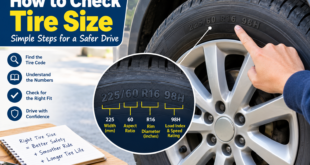
One of the most common mistakes I see is using the number printed on the tire sidewall as the normal tire pressure. That number is generally related to the tire’s maximum pressure rating, not necessarily the recommended pressure for your vehicle.
The correct tire pressure can usually be found on a sticker inside the driver’s door frame or door jamb. Some vehicles also provide the information inside the fuel door, glove box, or owner’s manual.
The sticker may show different pressures for the front and rear tires. It can also provide a recommended pressure when the vehicle is heavily loaded. This is important because the correct tire pressure can depend on how much weight the vehicle is carrying.
I always recommend checking the vehicle manufacturer’s information rather than guessing based on appearance or using a generic pressure number.
How to Check Tire Pressure Correctly
Checking tire pressure is not difficult, but doing it at the right time makes a difference.
The best time to check tire pressure is when the tires are cold. A cold tire means the vehicle has been parked for several hours or has not been driven far enough for the tires to heat up significantly.
When you drive, friction and flexing cause the tires to warm up. As the temperature inside the tire increases, the pressure also increases. If you check a hot tire and immediately reduce the pressure to match the cold recommended number, you could end up with an underinflated tire after it cools.
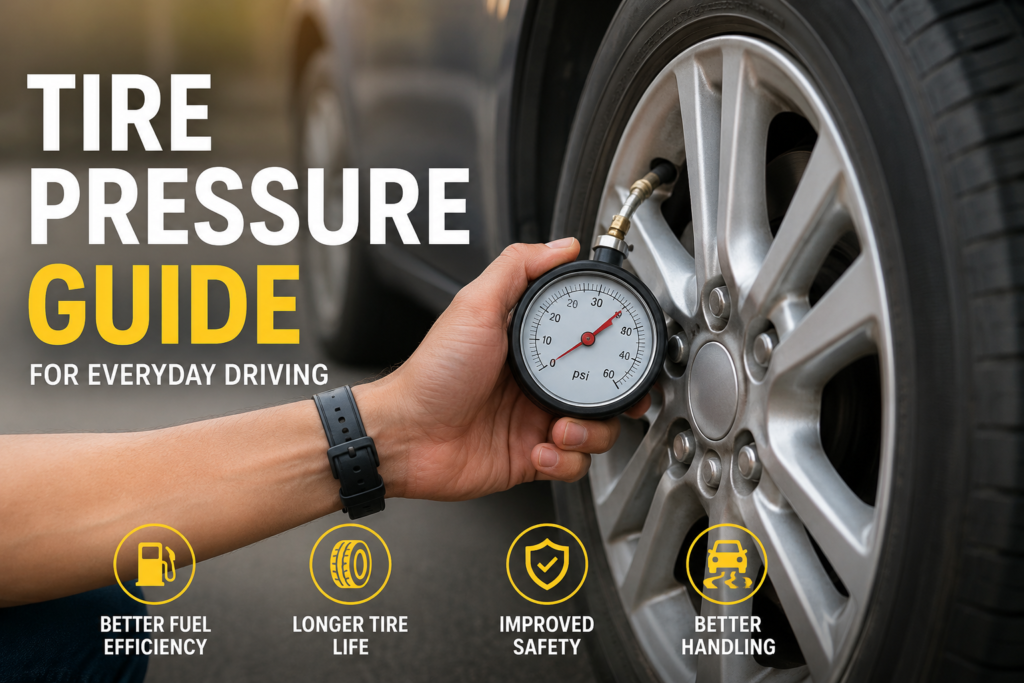
To check your tire pressure, remove the valve cap and firmly place a reliable tire pressure gauge on the valve stem. The gauge will show the current pressure. Compare the reading with the recommended pressure listed by your vehicle manufacturer.
If the pressure is low, add air gradually and check it again. If it is too high, release a small amount of air and check again.
Once the pressure is correct, replace the valve cap.
How Often Should You Check Tire Pressure?
I believe checking tire pressure once a month is a good habit for most everyday drivers. It is also worth checking before a long road trip or whenever there is a noticeable change in weather.
Tires naturally lose a small amount of air over time, even when there is no obvious puncture. Temperature changes can also affect pressure. A significant drop in outside temperature can cause tire pressure to decrease.
If your vehicle has a tire pressure monitoring system, do not treat it as a replacement for regular checks. The system is useful because it can alert you when pressure drops significantly, but manually checking the tires can help you notice gradual changes before they become a bigger issue.
Tire Pressure and Fuel Economy
Proper tire pressure can also help your car use fuel more efficiently. When tires are underinflated, they generally create more rolling resistance. This means the engine has to work harder to move the vehicle.
The effect may seem small during a single trip, but maintaining correct tire pressure over thousands of miles can contribute to better fuel efficiency.
For drivers who use their vehicles every day, this is one of the easiest maintenance habits to adopt. You do not need expensive equipment or complicated tools. A basic pressure gauge and an air compressor are enough for most situations.
I would not recommend increasing tire pressure beyond the manufacturer’s recommendation simply to try to save fuel. Proper tire pressure should always come first.
Tire Pressure and Driving Safety
Correct tire pressure plays an important role in safe driving. A properly inflated tire can provide more predictable handling and maintain the contact characteristics intended by the vehicle manufacturer.
Underinflated tires may feel softer and can make steering less responsive. They may also generate additional heat, especially during extended highway driving.
Overinflated tires can feel harsh and may reduce the tire’s ability to absorb bumps effectively. Both conditions can affect the way a vehicle responds to steering and braking.
This is especially important during wet weather. Tires need a suitable contact patch and adequate tread condition to help maintain traction on wet roads. Correct pressure is one part of maintaining that performance.
Of course, tire pressure cannot compensate for worn tread, damaged tires, poor alignment, or unsafe driving habits. It is simply one important part of overall tire maintenance.
What Happens When Tire Pressure Is Too Low?
Driving with low tire pressure can create several problems. The first thing you may notice is that the car feels different. Steering can feel heavier, and the vehicle may not respond as sharply as usual.
An underinflated tire also flexes more than intended. This increases heat buildup and can accelerate tire wear. The shoulders of the tread may wear more quickly than the center.
If a tire is losing pressure repeatedly, do not simply keep adding air. There may be a puncture, damaged valve, wheel problem, or another leak that needs to be inspected.
A tire that loses pressure quickly should be checked by a qualified tire professional before continued driving.
What Happens When Tire Pressure Is Too High?
Overinflation is also worth taking seriously. A tire with excessive pressure can become noticeably harder and may make the ride less comfortable.
The tread contact pattern can change as well, potentially causing more wear in the center of the tread. The vehicle may feel more sensitive to road imperfections.
Some drivers increase tire pressure because they believe harder tires will always improve fuel economy. In my view, this is not a good reason to ignore the manufacturer’s recommended pressure. The correct pressure is the better choice for normal driving.
Do All Four Tires Need the Same Pressure?
Not always. Some vehicles specify different pressures for the front and rear tires.
This can happen because of differences in vehicle weight distribution, suspension design, tire size, or handling requirements. Always check the vehicle’s tire information label instead of assuming that all four tires should have identical pressure.
If your vehicle has a full size spare tire, check its recommended pressure as well. A spare can sit unused for months and still lose air.
Tire Pressure in Hot and Cold Weather
Weather has a noticeable effect on tire pressure. In colder conditions, tire pressure generally decreases. In hotter conditions, pressure increases as the air inside the tire becomes warmer.
This does not mean you should constantly adjust the pressure based on the temperature of the moment. Instead, check the tires when they are cold and use the manufacturer’s recommended cold tire pressure.
During seasonal changes, I recommend paying extra attention to tire pressure. A pressure that was correct several weeks ago may need checking after a significant change in temperature.
Understanding the Tire Pressure Warning Light
Modern vehicles often have a tire pressure monitoring system. If the warning light comes on, it usually means one or more tires have pressure outside the expected range.
Do not ignore the warning simply because the car still feels normal. A slow leak may not be obvious from the driver’s seat.
Check all four tires with a pressure gauge as soon as it is safe to do so. If one tire is significantly lower than the others, look for signs of damage and have it inspected.
After correcting the pressure, some vehicles may require the tire pressure monitoring system to be reset according to the manufacturer’s instructions.
Signs Your Tire Pressure May Be Wrong
There are several clues that your tire pressure deserves attention. A tire may look visibly lower than the others, although visual inspection alone is not reliable.
You may also notice unusual steering, a rougher or softer ride, uneven tread wear, or a tire pressure warning light.
However, I would not wait for these signs. Regular checking is much better than trying to identify a problem after it develops.
Should You Check Tire Pressure Before a Long Trip?
Absolutely. Before a highway trip or long journey, I recommend checking all four tires and the spare if your vehicle has one.
Long distance driving can place additional demands on tires because they remain at highway speeds for extended periods. Starting your trip with the correct pressure is a simple way to reduce avoidable tire related problems.
While checking the pressure, inspect the tread for unusual wear, cuts, cracks, bulges, or objects stuck in the tire.
It is also a good idea to make sure your tire pressure gauge and emergency equipment are available before leaving.
My Simple Tire Pressure Routine
For everyday driving, I prefer keeping tire maintenance simple. Once a month, I check all four tires when they are cold. I compare each reading with the pressure shown on the vehicle information label.
If one tire is noticeably lower than the others, I do not simply assume that it is normal. I monitor it and have it inspected if the pressure continues to drop.
I also check the tires before long trips and after situations where a tire may have been damaged, such as hitting a deep pothole.
This routine takes only a few minutes, but it can help identify problems before they become expensive or dangerous.
Final Thoughts
Tire pressure may seem like a small part of car maintenance, but it has a surprisingly large effect on everyday driving. Correct tire pressure can support better handling, more consistent braking, improved fuel economy, longer tire life, and a more comfortable driving experience.
The most important point is to use the tire pressure recommended by your vehicle manufacturer. Do not rely only on the number printed on the tire sidewall, and do not judge pressure by looking at the tire.
Check your tires when they are cold, use a reliable pressure gauge, and make tire pressure checks part of your regular maintenance routine. If a tire repeatedly loses air, get it inspected rather than repeatedly adding air and ignoring the cause.
In my opinion, proper tire pressure is one of the easiest things a driver can control. A few minutes of attention each month can make your everyday driving safer, smoother, and more economical.
Frequently Asked Questions
What is the correct tire pressure for my car?
The correct tire pressure is provided by the vehicle manufacturer. Look for the tire information label on the driver’s door frame or check your owner’s manual.
Is 35 PSI good for every car?
No. Different vehicles require different tire pressures. Always follow the recommended pressure for your specific vehicle.
Should I check tire pressure when the tires are hot?
It is best to check tire pressure when the tires are cold. Driving heats the tires and temporarily increases pressure.
How often should tire pressure be checked?
For normal everyday driving, checking once a month is a good habit. You should also check before long trips and when there are major temperature changes.
Can low tire pressure reduce fuel economy?
Yes. Underinflated tires can increase rolling resistance, which may cause the engine to use more fuel.
Does the number on the tire mean the recommended pressure?
Not necessarily. The number on the tire sidewall can refer to the tire’s maximum pressure rating. Use the vehicle manufacturer’s recommended pressure for normal driving.