Related Articles
When I think about tire maintenance, one thing I believe every driver should understand is the connection between temperature and tire pressure. Many people check their tires only when they look low or when a warning light appears on the dashboard. However, tire pressure can change noticeably with the weather, even when there is no puncture or other problem with the tire.
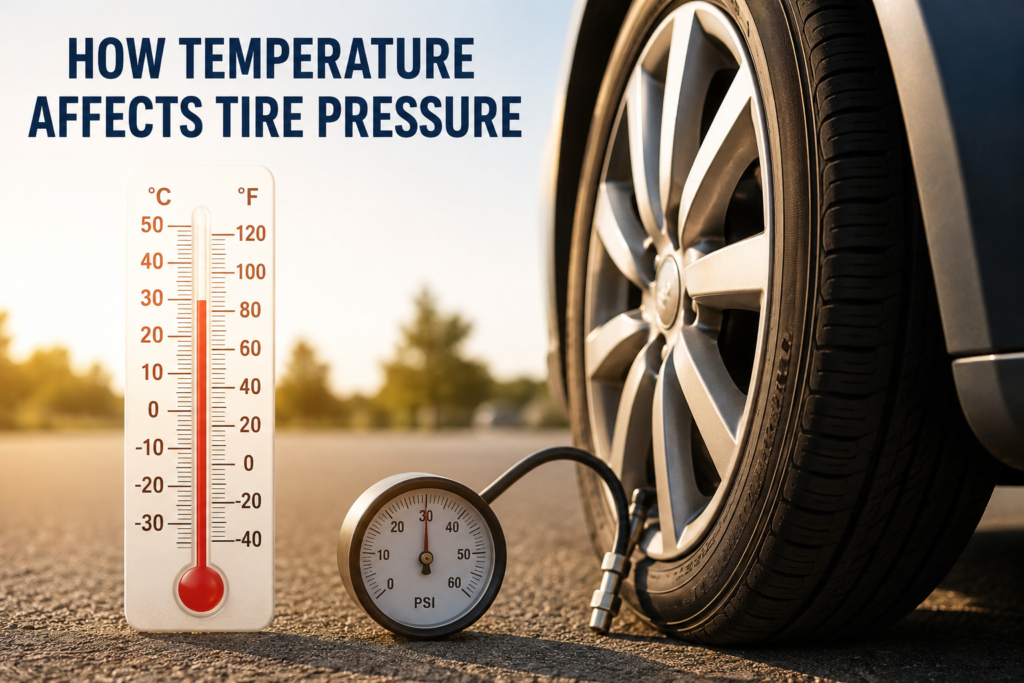
Temperature affects tire pressure because the air inside a tire expands when it gets warmer and contracts when it gets colder. This simple change can make a real difference in how a vehicle feels and performs on the road. In my experience, understanding this relationship makes it much easier to maintain the correct tire pressure throughout the year.
Why Temperature Changes Tire Pressure
Tires are filled with air, and air responds to changes in temperature. When the temperature rises, the air molecules inside the tire move more actively and create greater pressure against the inside of the tire. As a result, tire pressure increases.
When the temperature drops, the opposite happens. The air inside the tire becomes less active and contracts, causing the tire pressure to decrease.
A commonly used rule is that tire pressure can change by about 1 PSI for every 10 degrees Fahrenheit change in temperature. This is only a general guideline because the actual change can depend on the tire, vehicle, starting pressure, temperature difference and other conditions.
For example, if your tires are correctly inflated at 32 PSI on a cool morning, the pressure may be lower after a significant temperature drop. This does not necessarily mean the tire has developed a leak. The change may simply be the result of colder air.
How Cold Weather Affects Tire Pressure
Cold weather is one of the biggest reasons drivers notice changes in tire pressure. During winter, outside temperatures can fall significantly overnight. If you check your tires early in the morning, you may find that the pressure is lower than it was during warmer weather.
This is completely normal to a certain extent. The problem starts when drivers ignore the pressure change and continue driving with underinflated tires.
Low tire pressure can increase the amount of tire that touches the road. This creates more rolling resistance, which means the engine may have to work harder to move the vehicle. Fuel economy can suffer, and the tires can also wear unevenly.
Underinflated tires may also feel less responsive when steering. In some situations, they can generate more heat during driving, especially at higher speeds or when the vehicle is heavily loaded.
For these reasons, I recommend checking tire pressure more regularly when temperatures begin to fall.
How Hot Weather Affects Tire Pressure
Hot weather can increase tire pressure as well. When the temperature outside rises, the air inside the tires becomes warmer and pressure increases.
There is another important factor to consider. Tires naturally become warmer after the vehicle has been driven. Friction with the road, flexing of the tire sidewalls and warm outdoor temperatures all contribute to increased tire temperature.
This means you should not immediately reduce the pressure because you see a higher reading after driving. Tire pressure should normally be checked when the tires are cold.
If you reduce the pressure while the tires are hot, you could accidentally leave them underinflated after they cool down. That is why the recommended tire pressure should be checked under cold tire conditions.
What Is Cold Tire Pressure?
Cold tire pressure does not necessarily mean the tire has to be freezing cold. It generally means the vehicle has been parked long enough for the tires to return close to the surrounding air temperature.
The best time to check tire pressure is usually before driving or after the vehicle has been parked for several hours.
This gives you a more reliable reading because the tires have not been heated by road friction and normal driving.
I personally think this is one of the easiest tire maintenance habits to develop. Keeping a reliable tire pressure gauge in the vehicle or garage can make regular checks much simpler.
Why the Recommended Tire Pressure Matters
Every vehicle has a recommended tire pressure provided by the manufacturer. You can usually find this information on a sticker inside the driver’s door area or in the vehicle owner’s manual.
It is important to follow the manufacturer’s recommended pressure rather than the maximum pressure printed on the tire sidewall.
The number on the tire sidewall is generally related to the tire’s maximum rated pressure under specified conditions. It is not necessarily the correct everyday tire pressure for your particular vehicle.
The recommended pressure is selected based on factors such as vehicle weight, handling, braking, ride comfort and tire specifications.
Temperature does not change the recommended pressure. Instead, temperature changes the actual pressure inside the tire. The goal is to adjust the tire pressure when necessary so that it matches the vehicle manufacturer’s recommendation when measured under the proper conditions.
Tire Pressure and Fuel Economy
One reason I pay attention to tire pressure is fuel economy. Tires that are significantly underinflated can increase rolling resistance.
When rolling resistance increases, the engine needs more energy to keep the vehicle moving. Over time, this can contribute to higher fuel consumption.
Temperature changes can therefore have an indirect effect on fuel economy. A sudden cold spell may lower tire pressure enough to affect how efficiently the vehicle rolls.
This does not mean every small pressure change will produce a noticeable difference in fuel consumption. However, keeping tires properly inflated is a simple maintenance habit that can support efficient driving.
Tire Pressure and Tire Wear
Incorrect tire pressure can also affect how a tire wears.
When a tire is underinflated, the outer portions of the tread can experience greater wear. When a tire is significantly overinflated, the center portion of the tread may wear more quickly.
Uneven tire wear can reduce the useful life of the tire and may indicate that pressure, alignment or another vehicle component needs attention.
Temperature related pressure changes can therefore become a regular part of tire maintenance. Checking pressure throughout the year helps prevent small changes from becoming bigger problems.
Does Tire Pressure Change Overnight?
Yes, tire pressure can change overnight because the temperature around the vehicle can change.
Imagine parking your car in the afternoon when the weather is warm. Several hours later, the temperature may drop considerably. The air inside the tires cools along with the surrounding environment, and the pressure can decrease.
This is one reason a tire pressure warning may appear on a cold morning even if everything seemed normal the previous afternoon.
If the pressure returns to a normal range after the tires warm up, the temperature may have been responsible. However, you should still check the pressure properly rather than assuming the warning can be ignored.
What About Direct Sunlight?
Direct sunlight can cause one tire to become warmer than another. If one side of your vehicle is sitting in strong sunlight, the tires on that side may show a higher pressure reading.
This does not necessarily indicate a problem with those tires.
For the most accurate comparison, check all four tires under similar conditions. If possible, measure them when the vehicle has been parked and the tires are cold.
If one tire consistently loses pressure compared with the others, that is different. A slow leak could be caused by a puncture, damaged valve, wheel problem or another issue that should be inspected.
How Often Should You Check Tire Pressure?
There is no harm in checking tire pressure regularly. I believe checking once a month is a good basic habit, while checking more frequently can be useful during major weather changes or before a long trip.
You should also check tire pressure before carrying a heavy load or traveling at highway speeds if the vehicle manufacturer provides specific recommendations for those conditions.
Do not rely entirely on the tire pressure monitoring system. The system is useful for warning you about significant pressure changes, but a manual pressure gauge can help you monitor your tires before a problem becomes serious.
Tips for Maintaining Tire Pressure in Different Temperatures
There are a few simple habits that can make tire pressure maintenance easier.
First, check the pressure when the tires are cold. This gives you a more consistent reading.
Second, use the pressure recommended by your vehicle manufacturer.
Third, check your tires when the seasons change. Moving from hot summer weather to cooler winter conditions can cause noticeable pressure changes.
Fourth, inspect the tires for visible damage, cracks, nails or objects stuck in the tread.
Finally, if one tire repeatedly loses pressure, do not assume temperature is the only reason. Temperature affects all tires, while a leak normally affects one tire more noticeably than the others.
Final Thoughts
Temperature and tire pressure are closely connected, and understanding this relationship can make vehicle maintenance much easier. Cold temperatures generally lower tire pressure, while warmer temperatures increase it. Driving also heats the tires and can temporarily raise the pressure reading.
The important thing is not to react to every pressure change by simply adding or removing air without considering the tire’s temperature. Instead, check your tires when they are cold and compare the reading with the vehicle manufacturer’s recommended tire pressure.
From my point of view, tire pressure is one of the simplest parts of car maintenance to overlook, but it can have an effect on handling, tire wear, fuel economy and overall driving confidence. A few minutes spent checking your tires regularly can help you catch problems early and keep your vehicle performing as it should.
Whether you are dealing with a cold winter morning, a hot summer afternoon or a long highway journey, keeping an eye on tire pressure is a small habit that can make a meaningful difference. Proper tire pressure is not just about getting the number right. It is about understanding how your tires respond to the conditions around them and maintaining them accordingly.