Related Articles


An oil change is one of the most common maintenance services for a car, but many drivers are not completely sure what they are actually paying for. In my experience, an oil change is more than simply removing old engine oil and adding new oil. A proper oil change service usually includes several important checks that help keep the engine running smoothly and give the technician a chance to notice potential problems early.
Engine oil plays an important role in protecting the moving parts inside the engine. It helps reduce friction, control heat, remove small contaminants, and keep internal components properly lubricated. Over time, engine oil becomes dirty and loses some of its ability to protect the engine. This is why regular oil changes are an important part of car maintenance.
In this article, I will explain what an oil change service normally includes, what happens during the service, and what you should expect when you take your car to a repair shop.
What Is an Oil Change Service?
An oil change service is a routine vehicle maintenance procedure where the old engine oil is removed and replaced with fresh oil that meets the requirements of the vehicle manufacturer.
Most oil change services also include replacing the oil filter. Depending on the repair shop, the service may include checking fluid levels, inspecting the engine area, checking tire pressure, and looking for obvious leaks or worn components.
The exact service can vary from one shop to another. Some basic oil change packages only include oil and filter replacement, while more complete packages include a basic vehicle inspection.
Checking the Vehicle Before the Oil Change
Before draining the old oil, a technician may inspect the vehicle and confirm the correct oil type and quantity. This is important because different engines require different oil specifications.
The technician may check the vehicle identification information, engine type, manufacturer recommendations, and previous service records if they are available. Modern vehicles can require specific oil grades and specifications, so using the correct engine oil is more important than simply choosing an oil based on price.
A quick inspection may also help identify visible leaks or damaged components before the service begins.
Draining the Old Engine Oil
The main part of an oil change is removing the old engine oil. The vehicle is usually positioned on a lift or suitable service area so the technician can access the oil drain plug underneath the engine.
The drain plug is removed carefully, allowing the old oil to flow into a collection container. The oil may be dark or dirty after thousands of miles of use. Dark oil does not automatically mean the engine has a serious problem. Engine oil naturally changes color as it circulates through the engine and collects contaminants.
The technician normally allows enough time for the old oil to drain properly. Once most of the old oil has been removed, the drain plug is reinstalled securely.
Replacing the Oil Filter
In my opinion, replacing the oil filter is one of the most important parts of a proper oil change. The oil filter removes dirt, metal particles, and other contaminants from the engine oil as the oil circulates.
A clogged or heavily used filter may not perform as effectively as a new filter. That is why many manufacturers recommend replacing the oil filter whenever the engine oil is changed.
The technician removes the old filter and installs a new one that is compatible with the engine. The filter seal is usually checked carefully to reduce the risk of leaks.
Some vehicles use cartridge style filters while others use spin on filters. The design depends on the engine.
Adding Fresh Engine Oil
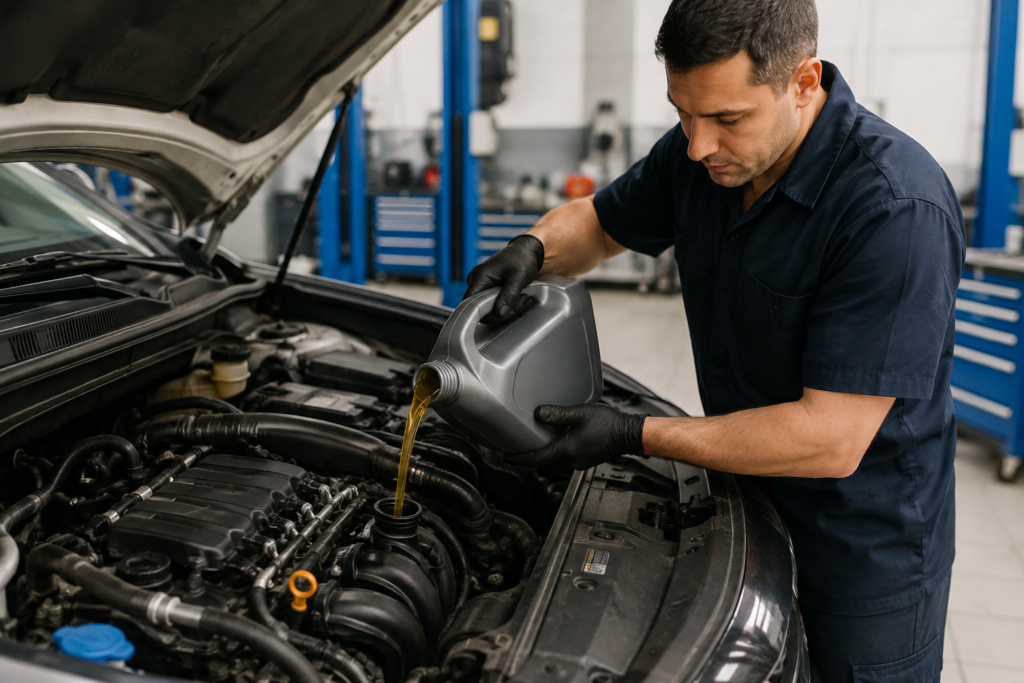
After the old oil has been drained and the filter has been replaced, fresh engine oil is added to the engine.
The technician uses the oil grade and specification recommended for that particular vehicle. Common examples include 0W 20, 5W 30, 5W 40, and 10W 40, although the correct choice depends on the vehicle and operating conditions.
The correct amount of oil is also important. Too little oil can reduce lubrication and potentially cause serious engine damage. Too much oil can also create problems, so technicians normally add the recommended amount and then verify the level.
Checking the Engine Oil Level
After adding fresh oil, the technician checks the engine oil level. On vehicles with a traditional dipstick, the oil level can be checked manually.
The vehicle is normally parked on a level surface, and the technician checks that the oil is between the appropriate markings. Some newer vehicles use an electronic oil level measurement system instead of a traditional dipstick.
This final check is important because simply pouring in a certain amount of oil does not guarantee that the level is perfect. The actual level should always be verified according to the vehicle manufacturer’s procedure.
Checking for Oil Leaks
A good oil change service should also include checking for visible oil leaks around the drain plug and oil filter.
After fresh oil has been added, the technician may start the engine briefly and inspect the area underneath the vehicle. This helps confirm that the drain plug and filter are properly sealed.
If an oil leak is noticed, it should not be ignored. A small leak can become a bigger problem over time and may eventually cause the engine oil level to become dangerously low.
Checking Other Fluid Levels
Many repair shops include basic fluid checks as part of an oil change service. These checks can include engine coolant, brake fluid, windshield washer fluid, power steering fluid where applicable, and transmission fluid where the vehicle design allows it to be checked easily.
Not every oil change package includes fluid replacement. Usually, the technician is simply checking the levels and condition and informing the customer if something needs attention.
I find this useful because an oil change appointment can be a convenient opportunity to catch a low fluid level before it becomes a bigger issue.
Checking Tire Pressure
Some oil change services also include a quick tire pressure check. Correct tire pressure is important for handling, braking, fuel economy, and tire life.
If the pressure is too low or too high, the technician may adjust it according to the manufacturer’s recommended pressure.
This is usually a quick check, but it can make a meaningful difference to everyday driving.
Inspecting the Engine Area
A basic visual inspection may also be included in an oil change service. The technician may look for obvious signs of leaking fluids, damaged hoses, loose components, worn belts, or other visible problems.
This does not mean the vehicle receives a complete mechanical inspection. A proper diagnostic inspection requires additional time and equipment.
However, a quick visual inspection can sometimes identify a problem before it becomes more expensive.
Resetting the Oil Change Reminder
Modern vehicles often have an oil life monitoring system or maintenance reminder. After completing an oil change, the technician may reset the reminder so that the vehicle can accurately track the next service interval.
If this reminder is not reset, the dashboard may continue showing an oil change message even though the service has already been completed.
The reset procedure varies by vehicle. Some cars allow the driver to reset it through the dashboard controls, while others may require a specific procedure.
Recording the Maintenance
A professional repair shop may also record the date, mileage, oil type, and other details of the service.
Keeping maintenance records is useful because it allows you to track when the oil was last changed. It can also help when selling the vehicle because documented maintenance can show potential buyers that the car has been properly cared for.
I recommend keeping receipts or digital service records whenever possible.
How Long Does an Oil Change Take?
A standard oil change service can often be completed relatively quickly. The actual time depends on the vehicle, the repair shop, the technician, and whether additional inspections are being performed.
A simple oil and filter replacement may take around 20 to 45 minutes at many service locations. However, it can take longer if the shop is busy or if the technician discovers another issue that needs attention.
It is always better to allow enough time for the technician to perform the service properly instead of rushing through it.
How Much Does an Oil Change Service Cost?
The cost of an oil change depends on several factors. These include the type of oil, the amount of oil required, the oil filter, vehicle type, labor rates, and location.
Conventional oil may cost less than synthetic oil, while some modern engines require premium synthetic oil because of their specific design and manufacturer requirements.
I would not recommend choosing an oil simply because it is the cheapest option. The most important thing is to use an oil that meets the manufacturer’s required specification.
Should You Get a Full Inspection With an Oil Change?
An oil change is an excellent opportunity to have your vehicle checked, but it should not be confused with a complete vehicle inspection.
If your car has unusual noises, warning lights, poor performance, fluid leaks, vibration, or starting problems, tell the technician. These symptoms may require additional diagnosis.
A basic oil change can help maintain the engine, but it cannot solve every mechanical problem.
Why Regular Oil Changes Matter
Regular oil changes help maintain proper lubrication and support the long term health of the engine. Fresh oil helps reduce friction between moving parts and carries heat and contaminants away from important engine components.
Following the recommended oil change interval can also help reduce the risk of excessive engine wear.
The correct service interval depends on the vehicle, oil type, driving conditions, and manufacturer’s recommendations. If you frequently drive in heavy traffic, dusty conditions, extreme temperatures, or make many short trips, your vehicle may require more frequent maintenance.
Final Thoughts
An oil change service is more than simply changing the oil. A proper service usually involves draining the old engine oil, replacing the oil filter, adding the correct fresh oil, checking the oil level, and inspecting the vehicle for visible problems.
Depending on the service package, the technician may also check other fluid levels, tire pressure, leaks, and the maintenance reminder.
From my point of view, regular oil changes are one of the simplest ways to stay ahead of engine maintenance. The key is not only changing the oil on time but also using the correct oil and filter for your vehicle.
If you are unsure about what your car needs, checking the owner’s manual or asking a qualified technician is always a good approach. Spending a little time on routine maintenance can help prevent avoidable engine problems and keep your vehicle dependable for many years.