Related Articles

When it comes to basic car maintenance, checking the coolant level is one of the easiest things a car owner can do. I believe it is also one of those simple checks that can save you from a much bigger problem later. Engine coolant plays an important role in controlling engine temperature and preventing overheating. If the coolant level becomes too low, your engine may not be able to maintain a safe operating temperature, especially during hot weather or long drives.
The good thing is that you usually do not need special tools to check your car’s coolant level. With a little knowledge and a few minutes, you can inspect the coolant reservoir yourself. In this guide, I will explain how to check your car’s coolant level, what the markings mean, when to add coolant, and what signs may indicate a cooling system problem.
What Is Engine Coolant?
Engine coolant is a specially formulated liquid that helps regulate the temperature of your engine. It travels through passages inside the engine and absorbs excess heat. The heated coolant then moves toward the radiator, where the heat is released before the coolant returns to the engine.
Coolant also provides protection against freezing and corrosion. This is why it is important to use the correct type of coolant recommended for your vehicle instead of simply adding any liquid available.
Many people call coolant antifreeze, although the terms are not always exactly the same. Modern engine coolant is usually a mixture of antifreeze and water designed to provide temperature protection and corrosion resistance.
Why Checking Your Car’s Coolant Level Matters
I recommend checking the coolant level regularly because a low coolant level can be an early warning sign of a problem. Your vehicle depends on the cooling system to keep the engine within its normal operating temperature.
If the coolant level is too low, the engine can become excessively hot. Continued overheating can lead to expensive repairs involving components such as the head gasket, cylinder head, or engine itself.
A coolant level check can also help you notice leaks before they become serious. If you repeatedly have to add coolant, that should not be treated as normal maintenance. There may be a leak somewhere in the cooling system that needs professional attention.
When Should You Check the Coolant Level?
The safest time to check engine coolant is when the engine is completely cool. I prefer checking it after the car has been parked for several hours, such as in the morning before starting the vehicle.
Never open the radiator cap when the engine is hot. The cooling system can become pressurized during normal operation, and hot coolant or steam may escape with enough force to cause serious burns.
If you have recently driven the car, allow the engine enough time to cool before inspecting the coolant level.
How to Check Your Car’s Coolant Level
Checking the coolant level is generally straightforward. Here is the process I recommend.
Park Your Car on a Level Surface
Start by parking your vehicle on a flat and stable surface. Turn off the engine and allow it to cool completely.
A level surface makes it easier to get an accurate reading from the coolant reservoir. Make sure the parking brake is also applied before opening the hood.
Open the Hood
Once the engine is cool, open the hood and secure it properly. Locate the coolant reservoir in the engine compartment.
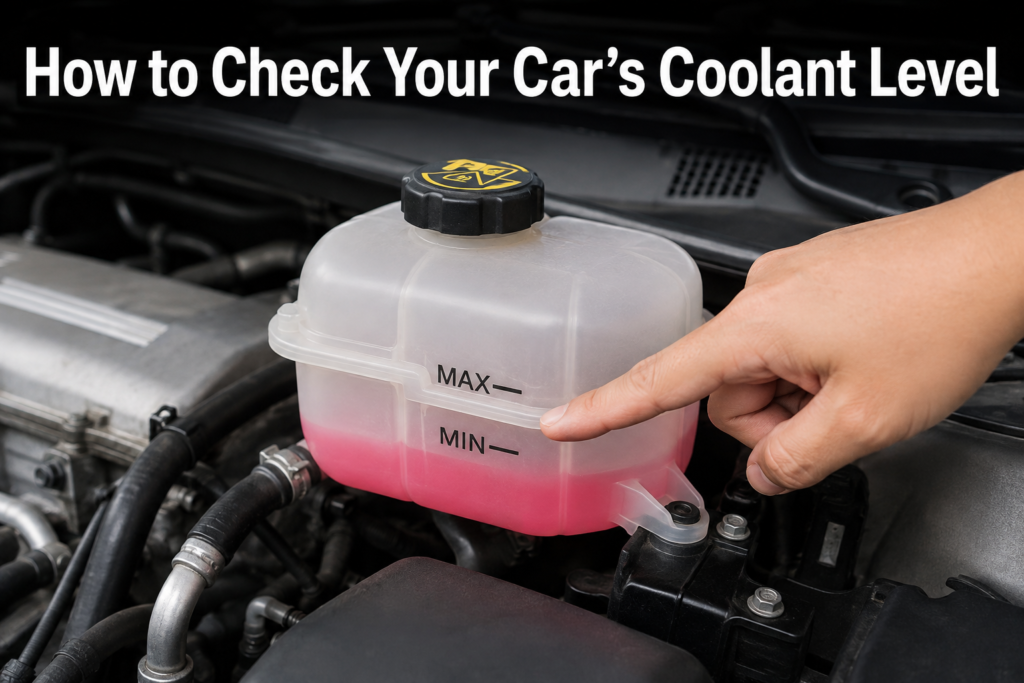
The coolant reservoir is usually a translucent plastic container, which allows you to see the fluid inside. Depending on the vehicle, its location and appearance can vary.
If you are unsure which container is the coolant reservoir, check your vehicle owner’s manual rather than guessing. There may be several fluid reservoirs under the hood, including the brake fluid reservoir and windshield washer fluid reservoir.
Find the MIN and MAX Marks
Look closely at the side of the coolant reservoir. Most vehicles have markings such as MIN and MAX, or LOW and FULL.
These markings show the recommended coolant level when the engine is cold. Ideally, the coolant should be between the minimum and maximum marks.
If the level is slightly below the maximum mark but still above the minimum mark, it may not require immediate attention. If the coolant is below the minimum mark, you should investigate further and add the correct coolant if necessary.
Inspect the Coolant Condition
While checking the level, take a moment to look at the coolant itself. The exact color depends on the type of coolant used by the manufacturer.
Coolant can be green, orange, pink, red, blue, yellow, or another color depending on its formulation. Color alone should not be used to decide which coolant your vehicle needs.
I would also look for visible dirt, oil, excessive particles, or an unusual appearance. If the coolant looks contaminated or very dirty, it may be worth having the cooling system inspected by a qualified mechanic.
How to Add Coolant
If the coolant level is below the recommended mark, you may need to add coolant.
First, make sure the engine is completely cool. Then check your owner’s manual to find the correct coolant specification for your vehicle. This is important because different vehicles require different coolant formulations.
Remove the reservoir cap carefully only when the engine is cold. Add the recommended coolant slowly until the level reaches the appropriate mark.
Do not overfill the reservoir. The cooling system needs room for the coolant to expand as it becomes hot.
If your vehicle requires a specific coolant mixture, follow the manufacturer’s instructions. Some products are ready to use, while others may need to be mixed with distilled water.
Can You Add Water Instead of Coolant?
This is a common question, especially when someone notices a low coolant level while away from home.
In an emergency situation, adding a suitable amount of water may help prevent immediate overheating, but it should not be considered a permanent replacement for the correct coolant mixture.
Plain water does not provide the same level of freeze protection, corrosion protection, and temperature performance as the proper coolant mixture.
If you have added water because of an emergency, I would have the cooling system checked and corrected as soon as reasonably possible.
What If the Coolant Level Keeps Dropping?
A coolant level that repeatedly drops deserves attention. Under normal conditions, you should not constantly need to refill the cooling system.
A leak could develop from a radiator hose, radiator, water pump, thermostat housing, reservoir, or another cooling system component. In some cases, a leak may be small enough that it is difficult to notice immediately.
You might see a puddle underneath the vehicle, wet areas around hoses, dried coolant residue, or a sweet smell around the engine compartment.
If you notice these signs, I recommend having the vehicle inspected rather than repeatedly adding coolant and continuing to drive.
Signs of Low Coolant
A low coolant level can produce several warning signs. The most obvious one may be an engine temperature gauge that rises higher than normal.
Some modern vehicles also display a coolant warning message or warning light on the dashboard.
Other possible symptoms include poor heater performance, an unusual smell, visible coolant underneath the vehicle, or the engine running hotter than usual.
If the temperature gauge reaches the overheating area, pull over safely and switch off the engine. Continuing to drive an overheating vehicle can cause severe engine damage.
Never Ignore an Overheating Engine
One thing I would never recommend is continuing to drive simply because the car still seems to be running.
If your engine overheats, stop somewhere safe and allow it to cool. Do not immediately open the radiator cap. The cooling system may still be under pressure.
Once the vehicle has cooled, you can inspect the coolant reservoir. If the coolant level is very low or you see signs of a leak, professional inspection may be necessary.
An overheating problem can sometimes be caused by more than low coolant. A faulty thermostat, radiator fan, water pump, radiator, or cooling system leak can also contribute to overheating.
How Often Should You Check Your Coolant?
There is no single interval that applies to every vehicle. I think it is a good habit to check the coolant level whenever you perform other basic maintenance checks.
For example, you can inspect it before a long road trip, during routine vehicle maintenance, or whenever you notice something unusual with the engine temperature.
It is especially useful to check coolant before long journeys during very hot weather because the cooling system may experience additional stress.
Your vehicle owner’s manual should always be the final reference for recommended coolant inspection and replacement intervals.
Common Mistakes to Avoid
One of the biggest mistakes is opening the radiator cap while the engine is hot. This can be extremely dangerous because hot coolant and steam may escape under pressure.
Another mistake is choosing coolant based only on its color. Different coolant technologies can have similar colors, while the same color can be used for different formulations.
I also recommend avoiding frequent topping up without finding out why the level is falling. A recurring low coolant level can indicate a leak or another mechanical problem.
Finally, do not overfill the coolant reservoir. Keep the level within the manufacturer’s recommended range.
Final Thoughts
Learning how to check your car’s coolant level is a simple but valuable part of vehicle maintenance. In my view, taking a few minutes to inspect the coolant can help you identify potential problems before they turn into expensive repairs.
The basic process is simple. Make sure the engine is completely cool, locate the coolant reservoir, check the MIN and MAX markings, inspect the condition of the fluid, and add the correct coolant if the level is too low.
Most importantly, pay attention to repeated coolant loss and signs of overheating. Coolant should not disappear regularly from a healthy cooling system. If you keep adding coolant or notice leaks, unusual temperatures, warning lights, or other symptoms, have the vehicle inspected by a qualified professional.
A few minutes of regular maintenance can make a big difference in keeping your engine running safely and reliably.