Related Articles

When I talk about regular car maintenance, wheel alignment is one of those things that is easy to ignore until the car starts behaving differently. Many drivers notice that their steering feels strange or their tires are wearing unevenly, but they do not immediately connect these problems with wheel alignment.
In my experience, paying attention to small changes in the way a car drives can help prevent bigger and more expensive problems. Proper wheel alignment helps your tires meet the road correctly, keeps the steering predictable, and can improve the overall driving experience.
In this article, I will explain the most common signs your car needs wheel alignment, why alignment becomes incorrect, and what you should do when you notice these warning signs.
What Is Wheel Alignment?
Wheel alignment is the process of adjusting the angles of a vehicle’s wheels according to the manufacturer’s specifications. The goal is to make sure the wheels are positioned correctly in relation to each other and the road.
A professional alignment normally involves checking important measurements such as camber, caster, and toe. These settings affect how the tires contact the road and how the vehicle responds when you turn the steering wheel.
Wheel alignment is different from tire balancing. Tire balancing corrects weight differences in a wheel and tire assembly, while alignment corrects wheel positioning and angles.
1. Your Car Pulls to One Side
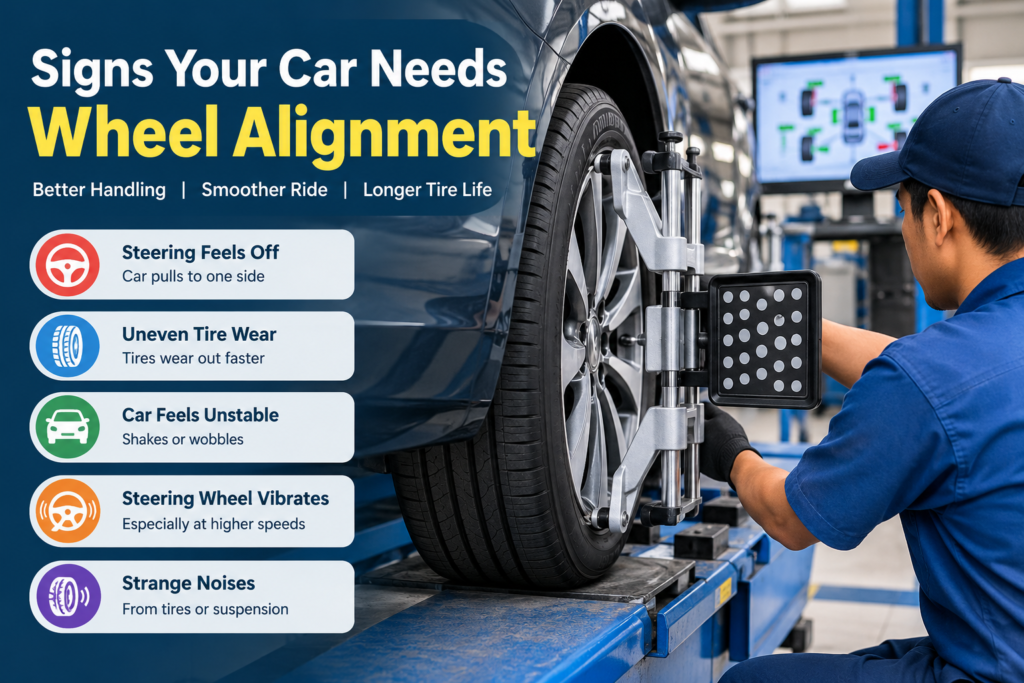
One of the most noticeable signs of bad wheel alignment is when your car pulls toward the left or right while you are driving on a reasonably level road.
If you have to keep correcting the steering to make your car travel straight, it is worth having the alignment checked. A small amount of movement can sometimes be caused by road conditions, but a consistent pull should not be ignored.
I recommend paying attention to whether the vehicle pulls strongly in one direction or only slightly. If the steering correction becomes constant, getting the wheels inspected can help identify the cause.
Keep in mind that tire pressure differences, tire problems, brake issues, or suspension components can also cause a vehicle to pull. That is why a proper inspection is important rather than assuming alignment is always the problem.
2. Your Steering Wheel Is Not Straight
Another common wheel alignment problem is a steering wheel that remains noticeably off center when the car is traveling straight.
For example, your vehicle may be moving straight ahead, but the steering wheel is sitting slightly to one side. This can indicate that the wheel alignment needs attention.
A crooked steering wheel does not always mean the alignment is definitely incorrect, but it is a useful warning sign. I would have the steering and suspension checked if this happens regularly.
3. Uneven Tire Wear
Your tires can tell you a lot about the condition of your car. One of the easiest signs your car needs wheel alignment to notice is uneven tire wear.
Normally, a properly maintained tire should wear relatively evenly across its tread. When alignment angles are incorrect, certain parts of the tire can experience more pressure against the road.
You may notice that the inside or outside edge of a tire is wearing faster than the center. In some cases, the tread can develop an irregular pattern.
Checking your tires regularly is something I consider a simple but valuable maintenance habit. If you notice unusual wear, do not simply replace the tire without finding out why it happened.
4. Your Car Feels Unstable
A car with alignment or suspension problems can sometimes feel less stable than normal. You might notice that the vehicle seems to wander or requires frequent steering corrections.
This can be especially noticeable when driving at higher speeds or on highways.
A vehicle should generally feel predictable when you are driving normally. If the car suddenly feels different, I would not ignore the change.
Wheel alignment may be responsible, but suspension wear, tire problems, or other steering components can create similar symptoms. A professional inspection can determine the actual cause.
5. The Steering Wheel Vibrates
A vibrating steering wheel can be another warning sign, although it is not always caused by wheel alignment.
If you feel vibration through the steering wheel, especially at certain speeds, possible causes can include tire imbalance, tire damage, wheel problems, suspension issues, or alignment concerns.
This is why I would avoid assuming that every steering vibration means you need an alignment. A mechanic can inspect the tires, wheels, suspension, and steering system together.
If the vibration is strong or suddenly appears, it is better to have the vehicle checked sooner rather than continuing to drive without investigating it.
6. Your Tires Make Unusual Noises
Sometimes alignment problems can contribute to unusual tire noise, especially when the tires are wearing unevenly.
You might hear a humming, rubbing, or irregular road noise that was not present before. However, tire noise can have many causes, including tread design, tire wear, road surface, tire pressure, and wheel bearing problems.
If unusual noise is combined with uneven tire wear or steering problems, I would consider having the alignment inspected.
7. The Car Feels Different After Hitting a Pothole
Potholes and rough roads can affect a vehicle’s wheels, tires, steering, and suspension components. A hard impact can sometimes change alignment settings or damage another component.
If your car hits a large pothole and you immediately notice that the steering feels different, the car pulls to one side, or the steering wheel is no longer centered, I would get it inspected.
This is especially important if you notice visible tire or wheel damage.
8. The Vehicle Does Not Handle Like It Used To
Drivers who use the same car regularly usually become familiar with how it feels. That makes changes in handling easier to notice.
If your car suddenly feels less precise while turning or requires more steering correction than before, there may be an issue with alignment, tires, steering, or suspension.
I think this is one of the most useful things drivers can do: pay attention to changes rather than waiting for a dashboard warning light.
Cars do not always provide a warning light for wheel alignment problems, so physical driving symptoms are important.
Why Does Wheel Alignment Go Bad?
There are several reasons a vehicle can lose proper alignment.
One common cause is hitting potholes or curbs. Rough roads can also contribute over time. Normal wear in suspension and steering components may affect alignment as well.
Accidents and significant impacts can cause more serious changes.
Installing new suspension components can also require an alignment check because changing suspension parts can affect wheel angles.
Because of these different causes, wheel alignment should be treated as part of overall vehicle maintenance rather than something that only matters when a problem becomes obvious.
How Often Should You Get a Wheel Alignment?
There is no single interval that works for every car. Some manufacturers provide specific recommendations, while others focus more on checking alignment when symptoms occur or after certain repairs.
I would always check the owner’s manual for your vehicle’s maintenance recommendations.
An alignment inspection can also make sense after hitting a major pothole, striking a curb, replacing certain suspension components, or noticing unusual tire wear.
If your vehicle drives normally and the tires are wearing evenly, there may not be a need for frequent alignment adjustments. However, regular inspections can help identify problems early.
Wheel Alignment vs Wheel Balancing
These two services are often confused.
Wheel alignment focuses on the angles and positioning of the wheels.
Wheel balancing focuses on distributing the weight of the tire and wheel assembly correctly.
If your steering wheel vibrates at a particular speed, wheel balancing may be involved. If your car pulls to one side or the steering wheel is off center, alignment may be worth checking.
Sometimes a vehicle can have both problems at the same time, so a complete inspection is useful.
What Happens During a Wheel Alignment?
During a professional car wheel alignment, a technician checks the wheel angles using specialized equipment. The measurements are compared with the manufacturer’s specifications for that particular vehicle.
If adjustments are needed and the vehicle’s design allows them, the technician makes the appropriate corrections.
A good alignment service should also involve checking related components. If a suspension or steering part is worn or damaged, adjusting alignment alone may not solve the underlying problem.
This is why I prefer proper diagnosis rather than simply asking for an alignment without explaining the symptoms.
How Wheel Alignment Can Protect Your Tires
Tires are an important part of safe driving and can also be an expensive part of vehicle ownership.
Incorrect alignment can contribute to irregular tire wear. When tires wear unevenly, their useful life may be reduced.
Maintaining correct alignment, keeping tires properly inflated, rotating them according to the manufacturer’s recommendations, and inspecting tread condition can help you get more consistent performance from your tires.
In my view, checking tire condition regularly is one of the easiest maintenance habits for any driver.
Final Thoughts
Knowing the signs your car needs wheel alignment can help you recognize problems before they become more expensive. Pulling to one side, an off center steering wheel, uneven tire wear, unstable handling, steering vibration, unusual tire noise, and changes after hitting potholes are all reasons to consider having your vehicle inspected.
At the same time, these symptoms do not always prove that alignment is the problem. Tires, brakes, suspension components, wheels, and steering parts can produce similar symptoms.
My approach is simple: when my car starts driving differently, I do not ignore the change. I check the tires first and arrange a proper inspection when necessary. Keeping your wheels correctly aligned is a small part of car maintenance, but it can make a noticeable difference in handling, tire wear, and driving comfort.