Related Articles



Replacing windshield wipers is one of those simple car maintenance jobs that I believe every car owner should know. You do not need advanced mechanical knowledge, expensive tools, or a visit to a repair shop. In most cases, changing windshield wiper blades takes only a few minutes when you have the correct replacement blades.
I consider good windshield wipers an important part of safe driving because they help keep the windshield clear during rain, dust, and other poor weather conditions. Old wipers can leave streaks, make annoying sounds, or fail to remove water properly. When that happens, replacing them is usually the easiest solution.
In this guide, I will explain how to replace windshield wipers on your car, how to choose the right blades, what signs indicate that your wipers need replacement, and what mistakes you should avoid.
Why Windshield Wipers Are Important
Windshield wipers may look like a small part of a car, but they have an important job. During rain, they remove water from the windshield so that you can see the road, other vehicles, traffic signs, and pedestrians more clearly.
From my point of view, visibility should never be taken for granted while driving. Even a small amount of water or dirt can make it harder to see clearly, especially at night when headlights reflect from a wet windshield.
Worn windshield wipers can create streaks and patches of water across the glass. Instead of improving visibility, they can actually make driving more difficult. This is why I recommend checking your wiper blades regularly.
Signs That Your Wiper Blades Need Replacement
Before learning how to replace windshield wipers, it helps to know when replacement is necessary.
One common sign is streaking. If the blades move across the windshield but leave lines of water behind, the rubber may have become worn or damaged.
Another sign is skipping. Sometimes the wiper blade does not maintain proper contact with the glass and jumps across the windshield. This can happen when the rubber becomes hard or when the blade frame is damaged.
You may also hear squeaking or chattering sounds while using the wipers. Some noise can be caused by dirt on the windshield, but persistent noise may indicate that the blades are becoming old.
Cracked or split rubber is another clear warning sign. I would not continue using a blade if the rubber is visibly damaged because it may not clean the windshield properly.
Choose the Correct Replacement Wipers
The first step in replacing windshield wipers is buying the correct replacement blades. Wiper blades come in different lengths and attachment styles, so you should not simply buy any blade that looks similar.
Check your vehicle owner’s manual for the recommended wiper sizes. You can also check the packaging of replacement blades because many manufacturers provide vehicle compatibility information.
Remember that the driver’s side and passenger’s side blades may be different lengths. Some cars also have a separate rear windshield wiper.
I recommend checking the size of each existing blade before buying replacements. If you are unsure, take the vehicle information to an auto parts store and ask for the correct fit.
What You Need
One of the best things about replacing windshield wipers is that you normally do not need special tools.
You mainly need the correct replacement windshield wiper blades and a clean working area.
I also like to keep a soft cloth nearby. It can be useful for cleaning the windshield or wiping dirt from the wiper arm.
Before starting, make sure your car is parked safely on a level surface. Turn the engine off and make sure the wipers are switched off.
Step 1: Lift the Wiper Arm
Start by gently lifting the wiper arm away from the windshield.
Most wiper arms are designed to lift upward so that the blade is separated from the glass. Do not force the arm if it does not move easily because some vehicles have special designs or limitations.
Once the arm is lifted, hold it firmly. The metal arm is spring loaded, which means it can move back toward the windshield.
This is one area where I always recommend being careful. Never allow the bare wiper arm to fall directly onto the windshield because it can cause damage to the glass.
Step 2: Find the Wiper Blade Connector
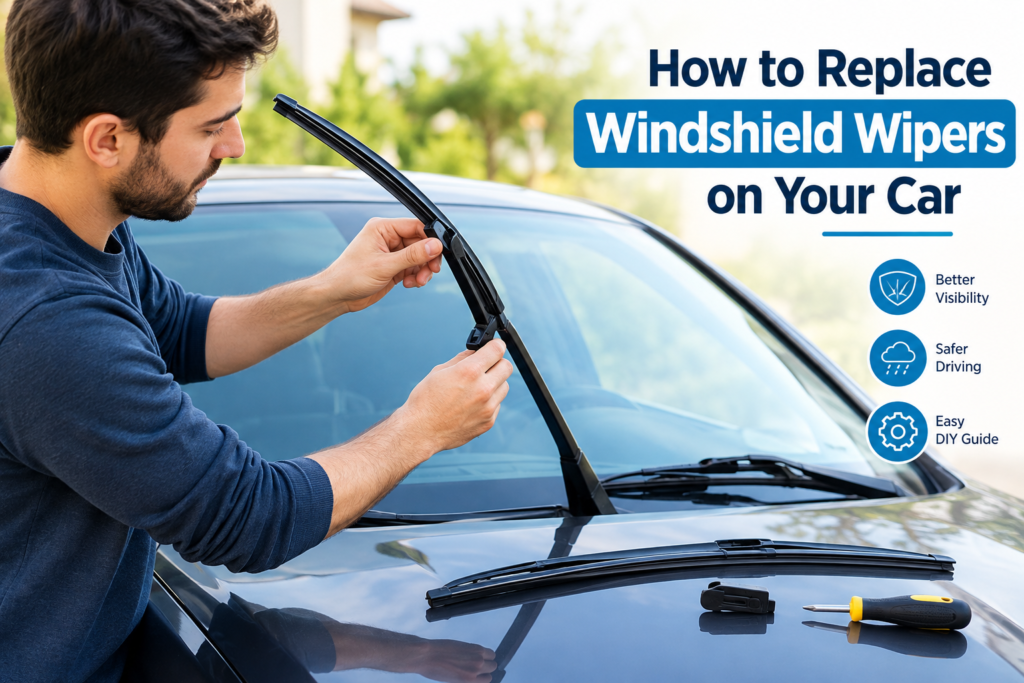
Look closely at the point where the wiper blade connects to the wiper arm.
Different vehicles use different connection systems. A common design uses a small plastic clip or locking tab. Other vehicles may use hook style connectors, push button systems, or side locking designs.
Take a moment to understand how the old blade is attached before trying to remove it. This makes the process much easier.
If your replacement blade includes instructions, I recommend reading them before installation.
Step 3: Remove the Old Wiper Blade
Release the locking mechanism and slide or pull the old blade away from the wiper arm according to its connector design.
Do not use excessive force. If the blade does not come off, check whether a small tab or button needs to be pressed first.
Once the old blade is removed, keep the wiper arm away from the windshield.
At this point, I like to place a soft cloth over the windshield underneath the arm as an additional precaution. The most important thing is to prevent the metal arm from accidentally dropping onto the glass.
Step 4: Compare the New and Old Blades
Before installing the new windshield wiper, compare it with the old one.
Check the overall length and connector style. This simple step can save you from installing the wrong blade.
Make sure the new blade has the correct adapter for your vehicle. Some replacement blades include several adapters because they are designed to fit different types of wiper arms.
If your blade comes with multiple adapters, use the one recommended for your vehicle.
Step 5: Attach the New Wiper Blade
Position the new wiper blade against the wiper arm and connect it using the appropriate attachment method.
You may hear a click when the locking mechanism is properly secured.
After attaching the blade, gently pull on it to make sure it is locked into place. It should not easily slide or come off the arm.
I think this small check is very important. You do not want to discover that a blade is loose when you are driving in heavy rain.
Step 6: Carefully Lower the Wiper Arm
Once the new blade is securely attached, carefully lower the wiper arm back onto the windshield.
Do not simply release it and allow it to drop. The spring tension can make the arm hit the glass with considerable force.
Lower it slowly and gently until the blade rests against the windshield.
Repeat the same process for the other front wiper.
Step 7: Test the New Wiper Blades
After installing both blades, test them.
Add windshield washer fluid to the glass and operate the wipers. Watch how the blades move across the windshield.
A properly installed wiper should move smoothly and maintain good contact with the glass.
Look for streaks, missed areas, unusual movement, or strange sounds. If something does not look right, turn the wipers off and inspect the installation.
Do not test dry wipers for a long period because using them on a completely dry windshield can create unnecessary friction.
Clean the Windshield Before Testing
Sometimes people replace their wipers and still notice streaks. In some cases, the problem is not the new blade. Dirt, oil, dust, or other residue on the windshield can affect cleaning performance.
I recommend cleaning the windshield before testing the new blades. A clean windshield allows the rubber edge to move smoothly across the glass.
Also check the rubber edge of the new blade for any protective cover or packaging material. If one is included, remove it before use.
How Often Should You Replace Windshield Wipers?
There is no single replacement schedule that works perfectly for every vehicle. The lifespan of a wiper blade depends on weather, sunlight, dust, usage, and blade quality.
Many drivers replace windshield wipers roughly once or twice a year, but I prefer to focus on their condition rather than relying only on a calendar.
If the blades begin leaving streaks, skipping, squeaking, or showing visible damage, it is probably time to replace them.
Hot weather and strong sunlight can also cause rubber to deteriorate faster. If your vehicle spends a lot of time outside, checking the blades regularly becomes even more useful.
Common Mistakes to Avoid
One common mistake is buying the wrong size. Always verify the correct size for your vehicle before purchasing replacement blades.
Another mistake is installing the blade without properly locking the connector. Always check that the blade is secure before driving.
Some people also forget to replace both front wipers. If one blade is badly worn, the other may be in similar condition. Replacing both at the same time can provide more consistent windshield cleaning.
Another mistake is allowing the bare wiper arm to fall onto the windshield. This can potentially damage the glass, so always handle the arm carefully.
Finally, do not ignore damaged wiper blades. Poor visibility during rain can create an unnecessary driving risk.
Tips for Keeping Wipers in Good Condition
There are a few simple habits that can help your windshield wipers last longer.
Keep the windshield clean so the blades do not constantly drag dirt across the glass.
Avoid using the wipers to remove heavy dirt or dry debris. If the windshield is dirty, use washer fluid or clean the glass first.
During very hot weather, inspect the rubber for signs of drying or cracking.
If your vehicle is parked outside for long periods, checking the wipers occasionally can help you notice problems before they become serious.
I also recommend keeping enough windshield washer fluid in the vehicle. Good wiper blades work much better when they have proper washer fluid available.
Final Thoughts
Learning how to replace windshield wipers on your car is a simple skill that can save time and money. More importantly, properly working wipers help maintain clear visibility when weather conditions become difficult.
In my opinion, this is one of the easiest car maintenance tasks to learn. Once you understand the connector and have the correct replacement blade, the actual installation can take only a few minutes.
The key is choosing the correct size, removing the old blade carefully, securing the new blade properly, and testing everything before driving.
I recommend checking your windshield wipers regularly instead of waiting until heavy rain reveals a problem. A small amount of attention can help keep your windshield clear and make everyday driving more comfortable and safer.