Related Articles

When I first started learning about car engines, one of the parts that seemed complicated was the fuel injector. It is a small component, but it has an important job in the engine. Without properly working fuel injectors, a modern gasoline or diesel engine cannot deliver the right amount of fuel at the right time.
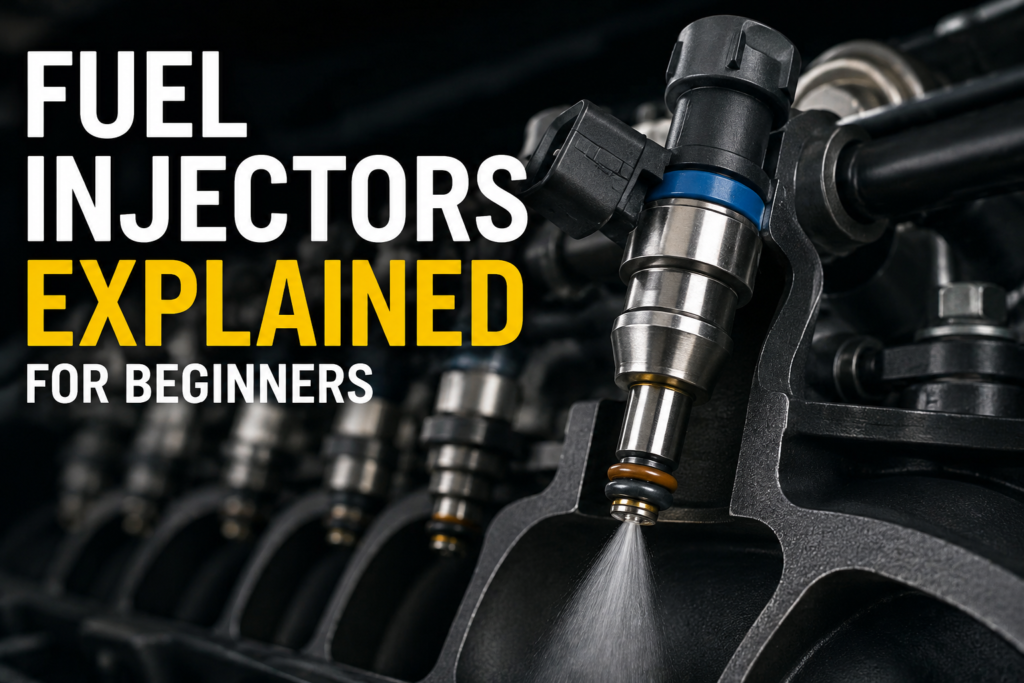
In simple words, a fuel injector is responsible for delivering fuel into the engine in a controlled way. The injector receives fuel under pressure and sprays it as a fine mist so that it can mix properly with air before combustion. The engine computer controls this process in most modern vehicles.
In this guide, I will explain what fuel injectors are, how fuel injectors work, the different types of fuel injectors, common fuel injector problems, symptoms of bad fuel injectors, and basic maintenance. I will keep everything beginner friendly so you can understand the purpose of this important engine component.
What Is a Fuel Injector?
A fuel injector is a mechanical and electrical component that delivers fuel into an engine. Its main purpose is to provide the correct amount of fuel for combustion.
Older engines commonly used carburetors to mix fuel with air. Modern vehicles mainly use electronic fuel injection systems because they provide much better control over fuel delivery.
A typical fuel injector has a small nozzle, an internal valve, electrical connections, and seals. When the engine control unit sends an electrical signal, the injector opens for a very short period. Pressurized fuel passes through the injector nozzle and enters the engine.
The amount of fuel depends partly on how long the injector remains open. This opening time can be extremely short, especially when the engine is running at higher speeds.
How Does a Fuel Injector Work?
Understanding how a fuel injector works becomes much easier when you look at the process step by step.
First, fuel is stored in the fuel tank. The fuel pump moves the fuel toward the engine and creates the pressure required by the fuel system.
The pressurized fuel then reaches the fuel injectors through the fuel rail or another fuel delivery arrangement, depending on the engine design.
The engine control unit monitors information from different sensors. These sensors can provide information about engine speed, engine temperature, throttle position, air flow, oxygen levels, and other operating conditions.
Using this information, the engine computer determines how much fuel the engine needs.
The computer then sends an electrical signal to the fuel injector. The injector opens for a specific amount of time and sprays fuel through its nozzle.
The fuel mixes with air and eventually enters the combustion process. The mixture is then ignited in a gasoline engine by the spark plug. In a diesel engine, fuel is injected into highly compressed air and ignition occurs because of the conditions inside the cylinder.
This process happens repeatedly and very quickly while the engine is running.
Why Are Fuel Injectors Important?
Fuel injectors are important because an engine needs a carefully controlled mixture of fuel and air to operate efficiently.
If too much fuel enters the engine, the mixture can become too rich. This can increase fuel consumption and may contribute to emissions and other running problems.
If too little fuel enters the engine, the mixture can become too lean. This may cause hesitation, poor performance, rough running, or other issues depending on the engine and operating conditions.
A properly functioning fuel injector helps the engine receive the amount of fuel it needs. This supports good engine performance, fuel economy, smooth operation, and controlled emissions.
In my view, this is why fuel injectors are much more important than their small size might suggest.
Types of Fuel Injectors
There are several fuel injection designs used in vehicles. The exact system depends on the engine and manufacturer.
Port Fuel Injectors
Port fuel injection is commonly found on many gasoline engines. The injector sprays fuel into the intake port near the intake valve.
The fuel then mixes with incoming air before entering the combustion chamber.
This design provides good control over fuel delivery and has been widely used in passenger vehicles.
Direct Fuel Injectors
Direct fuel injection sends fuel directly into the combustion chamber rather than into the intake port.
The system usually operates at much higher fuel pressures than traditional port injection. The injector must also be designed to work in the demanding environment inside or near the combustion chamber.
Direct injection can provide precise fuel control and can contribute to improved efficiency and performance when properly designed.
Throttle Body Injection
Throttle body injection is an older electronic fuel injection design. Instead of having a separate injector near each intake port, the injector or injectors are positioned around the throttle body.
This system is simpler than many modern designs but generally does not provide the same level of cylinder specific fuel control found in newer systems.
Common Fuel Injector Problems
Like other engine components, fuel injectors can develop problems over time.
One common issue is contamination. Dirt or deposits can affect the injector nozzle and change the fuel spray pattern.
An injector can also become partially clogged. In this situation, the injector may still deliver fuel, but the amount or spray pattern may not be correct.
Electrical problems are another possibility. Since modern fuel injectors are electronically controlled, damaged wiring, poor connections, or internal electrical faults can prevent an injector from operating correctly.
Fuel injector seals can also deteriorate. A damaged seal may cause a fuel leak or allow air to enter where it should not.
In some cases, an injector can become stuck open or stuck closed. Either situation can create serious engine running problems.
Symptoms of Bad Fuel Injectors
A faulty fuel injector can produce several different symptoms. However, these symptoms can also be caused by other engine problems, so testing is important before replacing parts.
Engine Misfires
A clogged or malfunctioning injector may prevent a cylinder from receiving the correct amount of fuel. This can cause the engine to misfire.
You may notice shaking, hesitation, or uneven engine operation.
Poor Fuel Economy
If an injector delivers too much fuel, fuel consumption can increase. A vehicle that suddenly starts using noticeably more fuel may have a fuel system problem, although other causes should also be considered.
Rough Idling
A properly running engine should normally maintain a relatively stable idle. If an injector is not delivering fuel correctly, the engine may idle roughly or feel like it is vibrating.
Loss of Engine Power
Fuel delivery problems can affect acceleration and overall engine performance. You may notice that the vehicle feels weaker than usual, especially when accelerating.
Difficulty Starting
If the injectors are not delivering the appropriate amount of fuel during starting, the engine may take longer to start or may fail to start.
Check Engine Light
Modern vehicles monitor many engine systems electronically. A fuel injector or fuel delivery problem can sometimes trigger a check engine light and store a diagnostic trouble code.
A diagnostic scanner can help identify whether the engine computer has detected an injector related fault.
What Causes Fuel Injectors to Get Dirty?
Fuel injectors operate in a demanding environment, and deposits can develop over time.
Poor fuel quality can contribute to contamination. Dirt or debris in the fuel system can also create problems if filtration is not working correctly.
Engine conditions can influence deposit formation as well. Direct injection engines, in particular, have their own deposit related considerations because of where fuel is introduced.
This does not mean every fuel injector needs frequent cleaning. The correct maintenance approach depends on the vehicle manufacturer’s recommendations and the actual condition of the fuel system.
How Can You Maintain Fuel Injectors?
One of the simplest things you can do is use good quality fuel from reliable sources.
It is also important to replace the fuel filter when the vehicle manufacturer recommends it, if the vehicle uses a serviceable filter.
Regular engine maintenance is useful because fuel system problems can sometimes be identified before they become major issues.
If you experience rough running, poor acceleration, unusual fuel consumption, or repeated engine misfires, it is better to diagnose the problem rather than immediately replacing the injectors.
Professional testing can determine whether an injector is clogged, leaking, electrically faulty, or functioning correctly.
Can Fuel Injectors Be Cleaned?
In some cases, fuel injectors can be cleaned rather than replaced.
Fuel system cleaning products are available for certain applications, but they should be used according to the vehicle and product instructions. A cleaning product cannot repair a mechanically damaged injector or an electrical fault.
For more serious contamination, professional injector cleaning and testing equipment may be used. This can allow technicians to examine injector flow and spray performance.
If an injector has internal damage or cannot maintain the required performance, replacement may be the better option.
Fuel Injector vs Carburetor
Fuel injection and carburetion both have the same basic purpose: supplying fuel to an engine.
The major difference is how the fuel delivery is controlled.
A carburetor relies mainly on mechanical principles to mix fuel and air. Fuel injection uses injectors and, in modern vehicles, electronic controls to regulate fuel delivery.
Electronic fuel injection generally provides more precise control. This can help manufacturers balance performance, fuel economy, emissions, and drivability.
That is one major reason fuel injection became standard in modern passenger vehicles.
Are Fuel Injectors Different in Gasoline and Diesel Engines?
Yes. Gasoline and diesel fuel injection systems can be significantly different.
Gasoline engines generally use fuel injectors designed for their specific injection method and operating pressure.
Diesel engines commonly use much higher injection pressures. Diesel injectors also need extremely precise control because the timing and quantity of fuel have a major effect on combustion.
Modern diesel injection systems can be highly sophisticated and are designed to deliver very precise amounts of fuel at specific times.
When Should Fuel Injectors Be Replaced?
There is no universal replacement interval for every fuel injector.
Some injectors can operate for a very long time when the fuel system is properly maintained. Others may develop problems earlier because of contamination, wear, electrical faults, or other conditions.
I would not recommend replacing fuel injectors simply because a vehicle has reached a certain mileage unless the manufacturer specifically recommends it.
Instead, replacement should generally be based on proper diagnosis and the condition of the injector.
Final Thoughts
Fuel injectors may look like small parts, but they play a major role in modern engine operation. Their job is to deliver the correct amount of fuel at the right time so the engine can produce power efficiently.
Once you understand the basic process, fuel injectors are not as complicated as they first appear. The fuel pump supplies pressurized fuel, the engine computer determines what the engine needs, and the injector delivers the fuel through a controlled spray.
If a fuel injector becomes dirty, clogged, damaged, or electrically faulty, you may notice symptoms such as rough idling, misfires, poor acceleration, increased fuel consumption, or starting problems.
The most important thing is not to assume that every engine problem is caused by the injectors. Proper diagnosis can save money and prevent unnecessary parts replacement.
For beginners who want to understand how a car engine works, learning about fuel injectors is a great starting point because it connects the fuel system, engine computer, air intake, combustion process, and overall engine performance together.