
Related Articles



When I talk about the important parts of a car engine, the intake manifold is one component that often does not get enough attention. Most people know about the engine, fuel injectors, air filter, and exhaust system, but the intake manifold is just as important for proper engine operation.
In simple words, an intake manifold is the part of an engine that carries air into the cylinders. In modern vehicles, it also plays an important role in distributing the air evenly between the cylinders and helping the engine control airflow. Its design can have a noticeable effect on engine performance, fuel economy, throttle response, and emissions.
In this article, I will explain what an intake manifold is, how it works, its main parts, common problems, and why keeping it in good condition matters.
What Is an Intake Manifold?
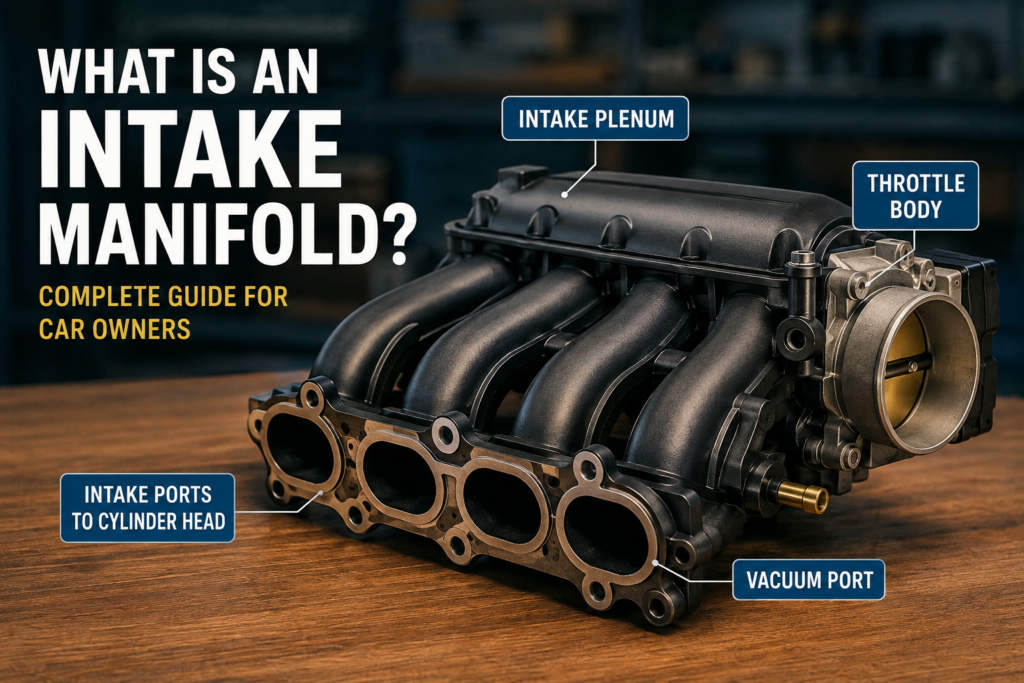
An intake manifold is a passage system connected between the throttle body and the cylinder head of an engine. Its main job is to distribute incoming air to the individual cylinders.
When you press the accelerator, the throttle opens and allows more air to enter the engine. That air travels through the intake system and reaches the intake manifold. The manifold then directs the air through separate passages called runners toward each cylinder.
In a gasoline engine, fuel is also introduced into the incoming air through fuel injectors. The engine control system manages the amount of fuel according to operating conditions.
I think of the intake manifold as an air distribution system for the engine. Just as a building needs properly designed passages to deliver air to different rooms, an engine needs properly designed intake runners to deliver air to each cylinder.
How Does an Intake Manifold Work?
The working process of an intake manifold is relatively simple, although the engineering behind its design can be quite advanced.
When the engine is running, the pistons move inside the cylinders. During the intake stroke, a piston moves downward and creates a pressure difference that helps draw air into the cylinder.
Air enters through the air filter and intake pipe. It then passes through the throttle body and reaches the intake manifold.
Inside the intake manifold, the air is divided between the individual runners. Each runner leads toward an intake port on the cylinder head.
The intake valve opens at the appropriate time, allowing air to enter the combustion chamber. In a gasoline engine, fuel is mixed with this incoming air before combustion.
The process happens repeatedly as the engine operates. The faster the engine runs, the more frequently this intake process takes place.
Main Parts of an Intake Manifold
Although intake manifold designs vary between engines, several important components are commonly found.
Intake Plenum
The plenum is the larger chamber inside the manifold where incoming air is collected before being distributed to the individual runners.
Its size and shape can affect how air flows through the manifold. Engineers carefully design the plenum to provide suitable airflow for the engine’s operating range.
Intake Runners
Runners are individual passages that carry air from the plenum toward each cylinder.
The length and shape of the runners are important. Longer runners can help improve airflow characteristics at lower engine speeds, while shorter runners can be useful for higher engine speeds.
Some modern engines use variable intake runner systems that can change airflow characteristics depending on engine speed and load.
Throttle Body Connection
The intake manifold is normally connected to the throttle body. The throttle body controls how much air enters the engine in response to accelerator input and engine control commands.
In modern vehicles, electronic throttle control is common. The engine computer can adjust the throttle opening based on several factors.
Vacuum Ports
Many intake manifolds have vacuum ports that connect to different engine systems. These may support systems such as the brake booster, crankcase ventilation, or other vacuum controlled components depending on the vehicle design.
A damaged vacuum connection can create an air leak and affect engine performance.
Why Is the Intake Manifold Important?
The intake manifold is important because the engine needs a controlled supply of air to produce power efficiently.
If the air distribution is poor, one cylinder may receive different airflow from another. Modern intake manifolds are therefore designed with airflow balance in mind.
A well designed intake manifold can contribute to:
• Better engine performance
• Improved throttle response
• More consistent combustion
• Better fuel efficiency
• Lower emissions
• Smoother engine operation
This is why the intake manifold is much more than a simple collection of pipes.
Intake Manifold and Engine Performance
One thing I find interesting about intake manifolds is how much their design can influence engine characteristics.
Engine manufacturers have to balance several factors when designing a manifold. They want enough airflow for high power, but they also want good performance at lower engine speeds.
The length and diameter of intake runners affect the movement of air. Airflow can also create pressure waves inside the intake system. Engineers can use these effects to improve cylinder filling at specific engine speeds.
Performance engines may use carefully tuned intake manifolds to improve power delivery. Some modern engines even use variable intake systems that change the effective runner length or airflow path.
This allows the engine to perform well across a wider range of driving conditions.
What Is a Variable Intake Manifold?
A variable intake manifold is designed to change the way air reaches the engine cylinders.
Some systems use valves or flaps inside the intake manifold to change the airflow path. At lower engine speeds, the system may use a longer airflow path to improve torque. At higher engine speeds, it may switch to a shorter path to support increased airflow.
The exact design depends on the manufacturer and engine.
The main idea is to give the engine suitable airflow characteristics at different speeds rather than relying on one fixed intake design.
Common Intake Manifold Problems
Like other engine components, an intake manifold can develop problems over time.
One common problem is an intake manifold vacuum leak. This can happen because of a damaged gasket, cracked manifold, loose connection, or deteriorated vacuum hose.
A vacuum leak can allow unmetered air to enter the engine. This may cause rough idling, poor acceleration, unusual engine behavior, or an illuminated check engine light.
Another possible problem is carbon buildup. Deposits can accumulate inside the intake system and affect airflow. This can be more noticeable in engines with certain fuel and emissions system designs.
Plastic intake manifolds can also develop cracks or damaged mounting points, especially after years of exposure to heat and engine vibration.
Symptoms of a Bad Intake Manifold
The symptoms depend on the type of problem, but some common signs include:
• Rough or unstable idle
• Poor acceleration
• Reduced engine performance
• Increased fuel consumption
• Engine misfires
• Hissing sounds from the engine area
• Check engine light
• Difficulty maintaining a stable idle
• Poor throttle response
If several of these symptoms appear together, the intake manifold and its related components should be inspected.
It is important not to assume that every engine problem is caused by the intake manifold. Similar symptoms can be produced by faulty sensors, ignition components, fuel system problems, or other vacuum leaks.
Intake Manifold Gasket
The intake manifold gasket is another important part of the system. It creates a seal between the intake manifold and the cylinder head.
If the gasket becomes damaged, air can leak into the engine. Coolant leaks are also possible on some engine designs because certain intake manifolds have internal coolant passages.
A failed gasket can lead to poor engine performance and, depending on the design, other problems.
For this reason, replacing a damaged intake manifold gasket is an important repair rather than something that should be ignored.
Can a Dirty Intake Manifold Affect Performance?
Yes, deposits inside the intake system can affect airflow.
When airflow passages become restricted or dirty, the engine may not breathe as efficiently as it should. The effect depends on the amount and location of the buildup and the particular engine design.
Some engines are more susceptible to intake deposits than others.
If you notice a gradual loss of performance, rough idle, or reduced throttle response, it is worth having the complete intake system inspected rather than immediately replacing expensive components.
How to Maintain an Intake Manifold
The intake manifold usually does not require frequent replacement. However, regular engine maintenance can help prevent related problems.
I recommend following the vehicle manufacturer’s maintenance schedule and paying attention to changes in engine behavior.
It is also useful to inspect vacuum hoses, intake connections, and visible components for cracks or loose fittings during routine maintenance.
Using the correct air filter and keeping the engine’s fuel and ignition systems properly maintained can also help the engine operate as intended.
If a check engine light appears, diagnostic testing is a better approach than guessing which component is responsible.
Intake Manifold vs Exhaust Manifold
The intake manifold and exhaust manifold perform opposite jobs.
The intake manifold carries fresh air toward the engine cylinders.
The exhaust manifold collects exhaust gases leaving the cylinders and directs them toward the exhaust system.
Both are connected to the cylinder head, but they handle completely different gases and operate in very different temperature environments.
The exhaust manifold normally experiences much higher temperatures because it carries hot combustion gases.
Do All Engines Have an Intake Manifold?
Most conventional internal combustion engines have some type of intake manifold or intake air distribution system.
However, the design varies considerably depending on the engine.
A naturally aspirated engine may use a relatively straightforward intake manifold, while a turbocharged or supercharged engine can have a different arrangement because compressed air is being supplied to the engine.
Direct injection engines can also have different airflow and fuel delivery arrangements compared with older port injection systems.
Final Thoughts
In my view, the intake manifold is one of those engine components that deserves more attention because it directly affects how efficiently an engine receives air.
Its main purpose is simple: to distribute incoming air to the engine cylinders. However, its design involves careful engineering to balance airflow, torque, power, fuel economy, and emissions.
A healthy intake manifold helps the engine breathe properly and operate smoothly. Problems such as vacuum leaks, damaged gaskets, cracks, or excessive deposits can affect engine performance and should not be ignored.
Understanding what an intake manifold does also makes it easier to understand many other engine systems. Once you know how air travels from the air filter through the throttle body and intake manifold into the cylinders, the basic operation of an internal combustion engine becomes much easier to understand.
For everyday drivers, the most important thing is to recognize unusual symptoms and follow the recommended maintenance schedule. A properly maintained intake system can help your engine deliver reliable performance for a long time.