Related Articles
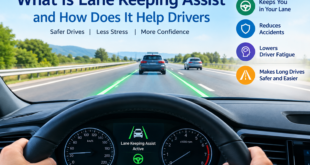
Modern cars are becoming smarter every year, and one of the features I find especially useful is Lane Keeping Assist. When driving on a highway or a long straight road, it is easy to move slightly away from the center of your lane without even noticing. Lane Keeping Assist is designed to help with exactly this situation.
In simple words, Lane Keeping Assist is a driver assistance feature that monitors the road and helps keep the vehicle inside its lane. Depending on the vehicle, the system may warn the driver when the car starts moving toward a lane marking or may gently adjust the steering to help the car return toward the center of the lane.
I think it is important to understand that Lane Keeping Assist is not a replacement for the driver. It is a safety feature that provides additional support when the driver accidentally moves out of the lane. The driver still needs to pay attention to the road and remain in control of the vehicle.
What Is Lane Keeping Assist?
Lane Keeping Assist, commonly called LKA, is an advanced driver assistance system found in many modern cars. It uses cameras and sometimes other sensors to identify lane markings on the road.
Once the system detects the lane boundaries, it monitors the position of the vehicle. If the car begins drifting toward a lane marking without an obvious steering input, the system can respond.
Some systems provide a warning through the steering wheel, dashboard, or speakers. Other systems can provide gentle steering assistance. More advanced systems may continuously help the vehicle stay closer to the center of the lane under suitable driving conditions.
The exact operation depends on the car manufacturer and model. This is why drivers should always check the vehicle manual to understand how their particular Lane Keeping Assist system works.
How Does Lane Keeping Assist Work?
The basic operation of Lane Keeping Assist is easier to understand than it may sound.
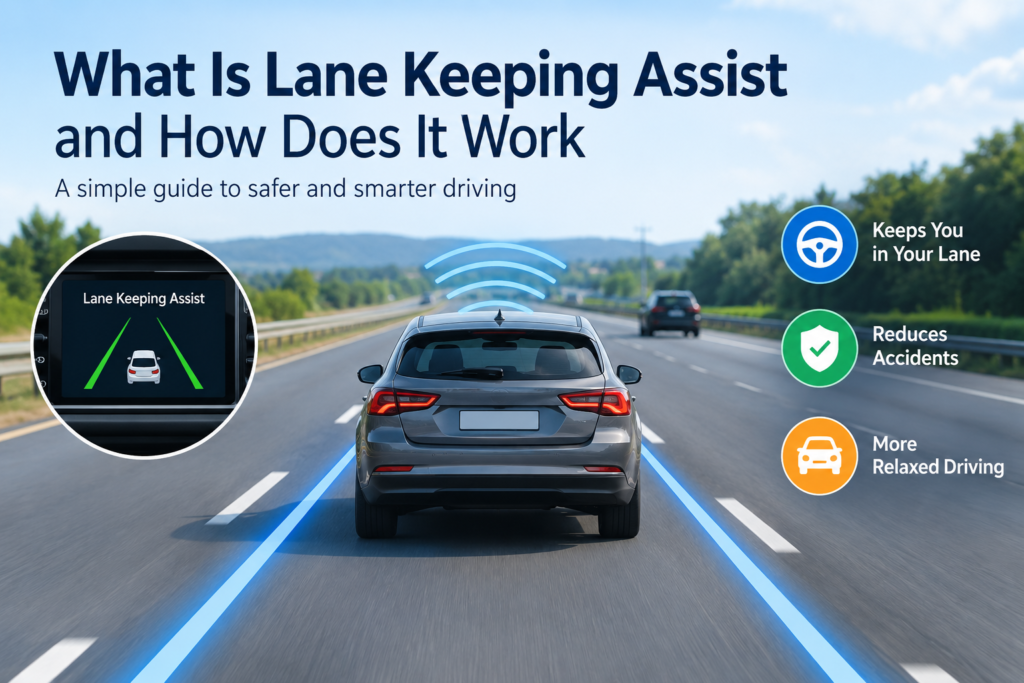
Most systems use a camera positioned near the top of the windshield. This camera watches the road ahead and looks for visible lane markings. The system processes the camera information and estimates where the lane boundaries are located.
The vehicle computer then compares the position of the car with those boundaries. If the system believes the vehicle is unintentionally moving toward the edge of the lane, it may activate a warning or steering assistance.
For example, imagine driving on a highway while looking straight ahead. If the vehicle slowly moves toward the right lane marking because of a small steering movement, the system can recognize this change. Depending on the vehicle, it may vibrate the steering wheel, display a warning, or provide a small steering correction.
The important thing to understand is that the system does not simply turn the steering wheel randomly. It uses information from sensors and vehicle systems to determine when assistance may be appropriate.
What Sensors Does Lane Keeping Assist Use?
The most important component in many Lane Keeping Assist systems is the forward facing camera. It watches the road and identifies lane markings.
Some vehicles combine camera information with other sensors and vehicle data. These can include steering angle information, wheel speed information, vehicle position information, and other driver assistance sensors.
Using several sources of information can help the vehicle understand what is happening around it more accurately.
However, Lane Keeping Assist depends heavily on road visibility. If lane markings are difficult to see, the system may not work correctly or may temporarily become unavailable.
Lane Departure Warning vs Lane Keeping Assist
Lane Departure Warning and Lane Keeping Assist are related, but they are not exactly the same.
Lane Departure Warning generally alerts the driver when the vehicle appears to be leaving its lane unintentionally. The warning can be visual, audible, or through steering wheel vibration.
Lane Keeping Assist can go one step further by providing steering assistance.
For example, if a vehicle begins moving toward the lane boundary, Lane Departure Warning may tell the driver that the vehicle is drifting. Lane Keeping Assist may provide a gentle steering correction in addition to the warning.
Some manufacturers use different names for these technologies, so it is always useful to check the specifications of a particular vehicle.
Why Is Lane Keeping Assist Useful?
From my point of view, one of the biggest benefits of Lane Keeping Assist is that it can provide an extra layer of safety during long drives.
Drivers can become tired or distracted for a short moment. Even a small steering movement can cause a vehicle to move toward another lane or toward the road edge.
Lane Keeping Assist may recognize this type of unintended movement and provide a warning or steering correction.
The feature can be particularly useful on highways where vehicles travel at relatively consistent speeds and clear lane markings are available.
It can also make long distance driving feel more comfortable because the driver receives additional support from the vehicle.
Still, I would never treat this system as permission to stop paying attention. It should be considered an assistance feature rather than an automatic driving system.
When Does Lane Keeping Assist Work Best?
Lane Keeping Assist generally works best when the road has clear and visible lane markings.
A dry road with clearly painted lines gives the camera better information. Good daylight can also make it easier for the system to recognize the road.
Highways and major roads are often suitable environments for this technology because lane markings are usually clearer.
However, performance can vary depending on the vehicle and its technology.
Sharp curves, construction areas, faded markings, poor weather, strong sunlight, snow, dirt, and blocked camera views can affect the system.
This is why drivers should never assume that Lane Keeping Assist will work perfectly in every situation.
What Happens When Lane Markings Are Not Visible?
One limitation of Lane Keeping Assist is its dependence on road markings.
If lane lines are faded, covered by snow, hidden by water, or missing completely, the system may have difficulty determining where the lane boundaries are.
The vehicle may display a message saying that the system is unavailable. In some situations, the feature may simply stop providing assistance until it can detect the lane markings again.
This is normal behavior and does not necessarily mean there is a problem with the vehicle.
Drivers should always be prepared to control the car themselves when the system cannot identify the road properly.
Can Lane Keeping Assist Steer the Car?
Yes, some Lane Keeping Assist systems can provide steering input. However, the amount of assistance varies considerably between vehicles.
The steering correction is usually designed to help guide the vehicle back toward the lane rather than completely control the car.
For example, if the vehicle starts drifting toward a lane marking, the system may gently adjust the steering. The driver can still steer against the assistance and take control.
This is why it is important to keep both attention and control focused on driving.
Some advanced driver assistance systems combine lane centering with adaptive cruise control. These systems can provide more continuous assistance, but they still require the driver to remain attentive and ready to take control.
Does Lane Keeping Assist Prevent Accidents?
Lane Keeping Assist can potentially reduce the risk associated with unintended lane departure, but no driver assistance system can guarantee accident prevention.
There are many reasons why a vehicle might leave its lane. A driver could become distracted, become tired, misjudge a turn, or encounter an unexpected road condition.
Lane Keeping Assist can provide an additional response in some of these situations.
However, the technology has limitations. It may not recognize every road marking, and it may not respond correctly in every driving environment.
For this reason, I believe the best way to use Lane Keeping Assist is as an additional safety layer rather than the main method of keeping the car on the road.
Is Lane Keeping Assist Safe?
When used correctly, Lane Keeping Assist can be a helpful safety technology. The most important factor is understanding its limitations.
Drivers should keep their eyes on the road, keep their hands ready to steer, and remain responsible for controlling the vehicle.
It is also important to know how to turn the system on and off and understand what warnings mean.
Some drivers may find steering corrections surprising when they first use the feature. Taking time to understand the system can make the driving experience more comfortable.
Can You Turn Lane Keeping Assist Off?
Many vehicles allow drivers to turn Lane Keeping Assist off or adjust its settings.
The available options depend on the manufacturer and vehicle model. Some cars may allow the driver to adjust warning sensitivity or steering assistance, while others provide fewer settings.
If you are unsure about the controls, I recommend checking the owner’s manual rather than guessing.
It is also worth remembering that some vehicles may automatically reactivate certain driver assistance features after the vehicle is restarted, depending on local regulations and manufacturer settings.
Lane Keeping Assist and the Future of Driving
Lane Keeping Assist is part of a larger group of technologies designed to make driving safer and more convenient.
Modern vehicles can combine cameras, radar, computers, and other sensors to understand parts of the driving environment.
As this technology continues to develop, driver assistance systems are becoming more capable. However, I believe drivers should always understand the difference between assistance and automation.
A system that helps with steering does not necessarily mean the car can safely drive itself. The driver remains responsible for paying attention and responding to changing road conditions.
Final Thoughts
Lane Keeping Assist is a useful modern car safety feature that can help drivers maintain better lane position. It works mainly by using cameras and vehicle information to detect lane markings and monitor the position of the car.
When the vehicle begins to drift toward a lane boundary, the system may provide a warning or gentle steering assistance depending on the vehicle.
In my opinion, the biggest advantage of Lane Keeping Assist is the extra layer of support it provides during everyday driving and long highway journeys. At the same time, drivers should never depend on it completely.
Clear road markings, good visibility, and suitable driving conditions can help the system work more effectively, while poor weather, faded markings, and complicated roads can reduce its performance.
Understanding how Lane Keeping Assist works allows drivers to use the technology more confidently and responsibly. It is not a replacement for safe driving, but when used correctly, it can be a valuable part of modern vehicle safety technology.