Related Articles
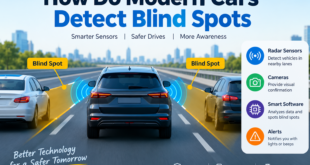
When I drive on a busy road, one of the things I always pay attention to is the area beside and slightly behind my car. This area is commonly called the blind spot. Even with properly adjusted mirrors, there can be a small section that is difficult to see. This is where car blind spot monitoring systems can become very useful.
In my opinion, blind spot monitoring is one of the most practical driver assistance technologies available in modern cars. It does not replace careful driving, but it can give the driver an extra warning when another vehicle is difficult to see. Understanding how this technology works can also help drivers use it correctly.
What Is a Car Blind Spot?
A car blind spot is an area around a vehicle that the driver cannot easily see through the mirrors or directly by looking around. The size of this area depends on the vehicle, mirror position, seating position, and surrounding traffic.
For example, imagine driving on a highway with another car traveling beside you. The other car may disappear from your side mirror while still being close enough to create a serious risk if you change lanes.
This is why checking mirrors and looking over your shoulder is still important. Blind spot monitoring systems are designed to provide an additional warning when another vehicle enters an area that may be difficult for the driver to see.
How Blind Spot Monitoring Works
Most modern blind spot monitoring systems use sensors installed around the vehicle. These sensors continuously observe areas beside and behind the car.
Many systems use radar sensors because radar can detect objects in different weather and lighting conditions. Depending on the vehicle, cameras or other sensors may also be involved.
When another vehicle enters the monitored area, the system analyzes information from the sensors. If the system determines that the vehicle is in a potentially dangerous position, it sends a warning to the driver.
The warning may appear as a small light in the side mirror, an indicator near the mirror, a sound inside the cabin, or a vibration. Some advanced systems can provide additional steering assistance in certain situations.
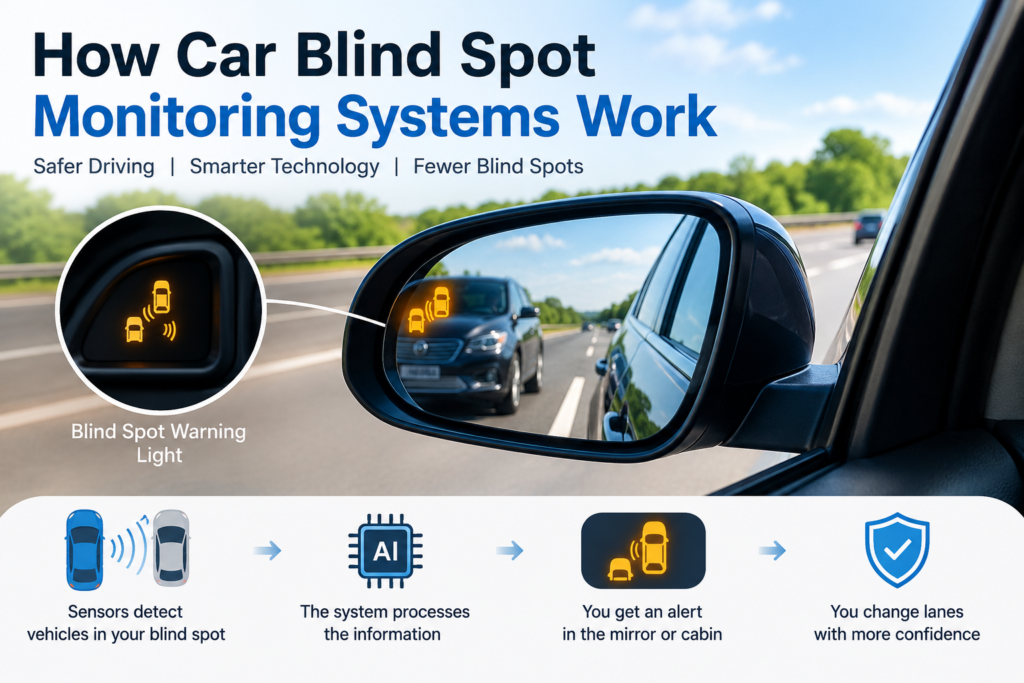
The basic process is quite simple. The sensors detect surrounding traffic, the vehicle computer analyzes the information, and the driver receives a warning when necessary.
Where Are the Sensors Located?
The sensors used by blind spot monitoring systems are usually positioned in areas that provide a clear view of the sides and rear of the vehicle.
On many cars, radar sensors are placed behind the rear bumper. Their location can vary depending on the manufacturer and vehicle design.
The sensors are designed to monitor areas that are difficult for the driver to see. They can detect vehicles approaching from behind and vehicles traveling alongside the car.
Because the sensors are usually hidden behind the bumper or other body panels, drivers may not even realize where the technology is installed.
What Happens When a Vehicle Enters the Blind Spot?
When another vehicle approaches from behind, the sensors monitor its position and movement. The vehicle computer then determines whether the object is inside the monitored area.
If the vehicle is close enough to be considered a potential concern, the blind spot warning light may turn on.
For example, a small light in the side mirror can tell me that another vehicle is currently beside my car. If I activate the turn signal while that vehicle is still there, some systems provide a stronger warning.
This is useful because the warning can appear at the exact moment when I am preparing to move into another lane.
Blind Spot Warning Lights
One of the most common features of blind spot monitoring is the warning light.
Many manufacturers place a small symbol or light inside the side mirror. When another vehicle enters the blind spot, the light becomes visible to the driver.
This system is designed to be simple. Instead of requiring the driver to understand complicated information, it provides a quick visual warning.
Some vehicles use different warning levels. A normal light may indicate that another vehicle is nearby, while a flashing light or sound may indicate that the driver is attempting a lane change while another vehicle is present.
The exact behavior depends on the vehicle manufacturer and model.
Can Blind Spot Monitoring Detect Motorcycles?
Many blind spot monitoring systems can detect motorcycles, but performance can vary.
A motorcycle is smaller than a typical car, so its detection may depend on its distance, speed, position, and the specific sensor system used by the vehicle.
This is one reason I would never depend completely on blind spot monitoring. A motorcycle can move quickly through traffic and may be difficult to detect in some situations.
Drivers should continue using mirrors and checking the surrounding area before changing lanes.
Can the System Detect Vehicles at Night?
One advantage of radar based technology is that it does not depend entirely on visible light.
This means a radar based blind spot monitoring system can continue working at night. It can detect vehicles even when visibility is lower than during the daytime.
However, this does not mean that the system works perfectly in every situation. Heavy rain, snow, dirt, damage to the bumper, or other conditions can affect sensor performance.
Drivers should always remain responsible for observing the road.
What Is the Difference Between Blind Spot Monitoring and Blind Spot Assist?
Blind spot monitoring generally warns the driver about vehicles in areas that may be difficult to see.
Blind spot assist can go a step further in some vehicles. Depending on the system, it may provide steering or braking assistance if the driver attempts to move toward another vehicle.
For example, if I activate my turn signal and begin moving toward an occupied lane, an advanced system may detect the potential collision and provide assistance.
The exact features vary significantly between vehicles. Some cars only provide warnings, while others offer additional driver assistance.
Does Blind Spot Monitoring Replace Checking Mirrors?
No. I consider blind spot monitoring an extra layer of safety rather than a replacement for normal driving habits.
Drivers should still check the rearview mirror, side mirrors, and surrounding traffic before changing lanes.
A useful approach is to think of blind spot monitoring as another set of eyes. It can alert the driver when something may have been missed, but the driver remains responsible for making the final decision.
This is particularly important because sensors have limitations and may not detect every object or situation.
What Can Cause False Warnings?
Sometimes a blind spot monitoring system may provide a warning even when the driver does not immediately see another vehicle.
This can happen because the sensors are monitoring surrounding objects and movement. Road barriers, large vehicles, motorcycles, and certain nearby objects may sometimes affect the system.
A warning does not necessarily mean that a collision is about to happen. It means the system has detected something that may require the driver’s attention.
In my view, understanding this behavior makes the technology much easier to use.
What Can Prevent the System From Working Properly?
Like other vehicle technology, blind spot monitoring systems need properly functioning sensors.
Dirt, mud, snow, ice, or damage around the sensor area can interfere with detection. If the rear bumper has been damaged or repaired incorrectly, sensor performance may also be affected.
Some vehicles display a warning message when the system becomes unavailable.
If this happens, I would not ignore the message. Cleaning the sensor area or having the vehicle inspected may be necessary.
Why Blind Spot Monitoring Is Useful
The biggest benefit of blind spot monitoring is awareness.
When driving on a busy highway, there can be many things happening at the same time. I may be checking traffic ahead, watching the vehicle in front of me, monitoring road signs, and preparing for a lane change.
A blind spot warning can provide an additional reminder that another vehicle is nearby.
This can be especially useful for new drivers, people driving larger vehicles, and anyone who frequently travels on highways.
However, the technology is most effective when combined with good driving habits.
How I Would Use Blind Spot Monitoring
If I were explaining this feature to a new driver, I would keep the process simple.
First, adjust the mirrors correctly before starting the journey. Then watch the traffic around the vehicle using the mirrors.
When preparing to change lanes, check the rearview mirror and side mirror. Look around the vehicle when appropriate and use the blind spot warning as an additional source of information.
If the warning light is active, I would wait until the nearby vehicle has passed before changing lanes.
This simple habit allows the technology to support safe driving instead of becoming something the driver depends on completely.
Final Thoughts
Car blind spot monitoring systems are a useful example of how modern vehicle technology can support drivers. Sensors monitor areas around the vehicle, computers process the information, and warning systems alert the driver when another vehicle enters a potentially dangerous area.
The technology can make highway driving more comfortable and can reduce some of the risks associated with changing lanes. At the same time, it is important to remember that blind spot monitoring is a driver assistance feature, not an automatic replacement for observation.
In my opinion, the best way to use this technology is to combine it with proper mirror adjustment, regular mirror checks, shoulder checks, and careful lane changes. When used correctly, blind spot monitoring can provide an extra layer of awareness and help drivers feel more confident behind the wheel.