Related Articles

When I think about the parts that make a car useful every day, the starter motor is one of the components that deserves more attention. Most drivers simply turn the key or press the start button and expect the engine to come alive. We rarely think about what happens during those first few seconds. In reality, the starter motor plays a very important role because it gives the engine the initial movement it needs to start running.
In my view, understanding the starter motor is useful for every car owner. It can help you recognize early warning signs, understand starting problems, and take better care of your vehicle. A starter motor may be a relatively small component compared with the entire engine, but without it, a conventional gasoline or diesel engine cannot normally start on its own.
What Is a Starter Motor?
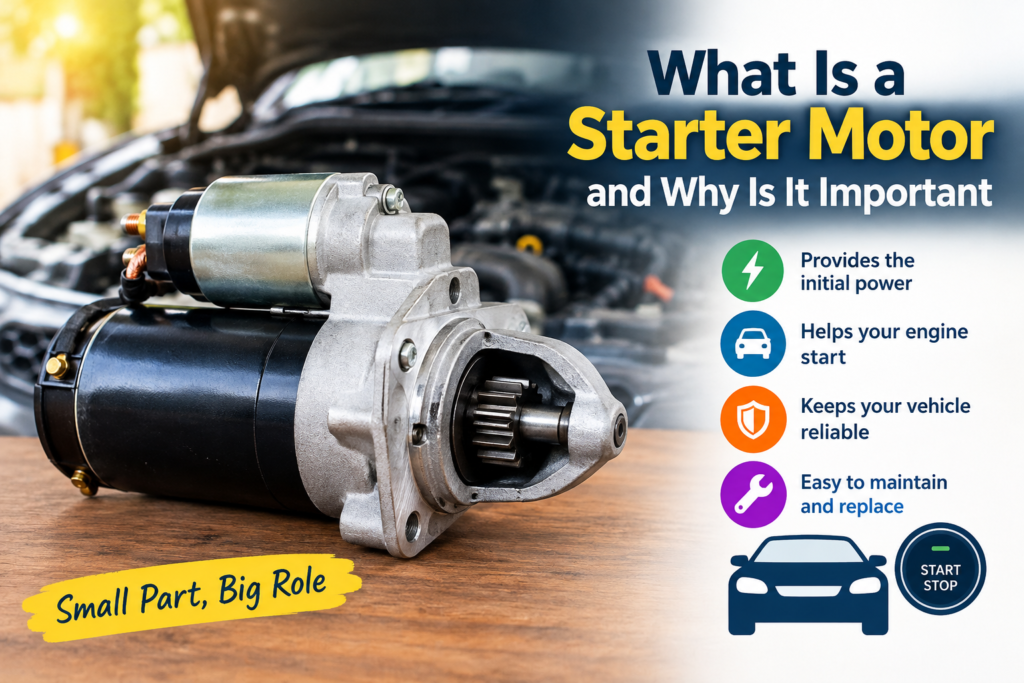
A starter motor is a powerful electric motor that turns the engine when you start your vehicle. The engine needs to rotate before it can begin its normal combustion cycle. The starter motor provides that initial rotation.
When you turn the ignition key or press the engine start button, electrical power from the battery reaches the starter system. The starter motor then engages with the engine’s flywheel or flexplate and rotates it. This movement turns the engine crankshaft and allows the engine to begin its normal operating cycle.
Once the engine starts and can keep itself running, the starter motor disengages. It does not continuously operate while you are driving.
From my point of view, the easiest way to understand a starter motor is to think of it as the component that gives your engine its first push.
How Does a Starter Motor Work?
The starter motor works through a combination of electrical and mechanical components. Although the complete system can look complicated, the basic process is relatively straightforward.
When you activate the ignition system, a small electrical signal is sent to the starter relay or solenoid. The solenoid helps connect the battery’s high current to the starter motor. At the same time, it moves the starter drive gear into position so it can engage with the engine’s flywheel or flexplate.
The starter motor then receives a large amount of electrical current from the battery. Its internal motor converts this electrical energy into mechanical movement.
The starter gear turns the flywheel, which rotates the engine crankshaft. As the crankshaft moves, the pistons begin traveling inside the cylinders. The engine can then complete the processes needed for combustion and start running under its own power.
After the engine starts, the starter drive gear disengages. This is important because the starter motor is not designed to operate at engine speed while the vehicle is running.
Main Parts of a Starter Motor
A typical starter motor contains several important components. Each part has a specific job, and a problem with one component can affect the entire starting system.
Electric Motor
The electric motor is responsible for producing the rotational force needed to turn the engine. It uses electricity from the battery and converts it into mechanical energy.
Starter Solenoid
The starter solenoid acts as an electrical switch and also helps move the starter drive into engagement. When you start the vehicle, the solenoid allows high current to reach the starter motor.
Starter Drive Gear
The starter drive gear connects the starter motor to the engine’s flywheel or flexplate. It transfers the starter motor’s rotational force to the engine.
Flywheel or Flexplate
The flywheel or flexplate is attached to the engine crankshaft. The starter gear engages with its teeth to rotate the engine during startup.
Brushes and Commutator
Traditional starter motors use brushes and a commutator to transfer electrical current inside the motor. These parts can wear over time because they are involved in the motor’s operation.
Why Is the Starter Motor Important?
The importance of a starter motor becomes obvious when it stops working. A healthy starter motor allows the engine to crank quickly and consistently whenever you need to start the vehicle.
Without a functioning starter motor, the engine may not turn over. Even if the battery is fully charged and the fuel system is working correctly, the vehicle may still fail to start because the engine is not receiving the initial mechanical movement it needs.
I believe this is why the starter motor should not be considered just another electrical component. It is an essential part of the starting system and directly affects the everyday reliability of a vehicle.
Signs of a Bad Starter Motor
A failing starter motor can show several warning signs. Recognizing these symptoms early can sometimes prevent an unexpected breakdown.
One common symptom is a clicking sound when you try to start the vehicle. A single click or repeated clicking can have several causes, including a weak battery, poor electrical connections, or a starter problem. Therefore, it is important not to assume that every clicking noise means the starter motor is bad.
Another sign is slow engine cranking. If the engine turns much more slowly than normal despite having a healthy battery, the starter motor may be experiencing a problem.
Sometimes the starter motor may make a grinding sound. This can indicate that the starter gear is not engaging correctly with the flywheel or flexplate.
Another warning sign is an intermittent starting problem. The vehicle may start normally one time and fail to crank the next time. Intermittent problems can be particularly frustrating because they may become more frequent over time.
In some cases, you may hear the starter motor spinning without the engine turning. This can happen when the starter drive mechanism is not properly engaging the engine.
Starter Motor Problems and the Battery
One mistake I often see people make is blaming the starter motor immediately when a vehicle does not start. The battery should also be checked because the starter motor requires a large amount of electrical current.
A weak or discharged battery can cause symptoms that look similar to a starter problem. For example, you might hear rapid clicking, experience slow cranking, or get no response at all.
Battery terminals should also be inspected. Corrosion or loose connections can restrict electrical current and prevent the starter motor from receiving enough power.
For this reason, proper diagnosis is important. A technician can test the battery, electrical connections, starter relay, solenoid, and starter motor before deciding which component needs attention.
How Long Does a Starter Motor Last?
There is no single mileage figure that guarantees when a starter motor will fail. Its lifespan depends on the vehicle, driving conditions, starting frequency, electrical system condition, and the quality of the starter itself.
A vehicle that is started many times every day may put more operating cycles on its starter than a vehicle that is used occasionally. Extreme temperatures can also place additional demands on the vehicle’s electrical and mechanical systems.
In my opinion, the best approach is not to replace a starter motor simply because it has reached a particular age. Instead, pay attention to starting performance and investigate unusual symptoms early.
How Can You Take Care of the Starter System?
The starter motor itself usually does not require frequent maintenance like engine oil or filters. However, maintaining the surrounding electrical system can help prevent starting problems.
Keep the battery terminals clean and properly connected. Make sure the battery is in good condition and capable of delivering sufficient current. If you notice repeated starting difficulties, have the charging and starting systems inspected.
It is also a good idea to avoid holding the starter engaged after the engine has already started. Modern vehicles generally disengage the starter automatically, but if you notice unusual behavior from the starting system, it should be checked.
Regular vehicle inspections can also help identify wiring problems, corrosion, or other electrical issues before they leave you unable to start the car.
Can a Bad Starter Motor Be Repaired?
In some situations, a starter motor can be repaired. Components such as brushes, bushings, solenoids, or other internal parts may be replaceable depending on the design and condition of the starter.
However, replacement is often chosen when the starter motor has significant internal wear or when repair is not practical. The correct decision depends on the vehicle, the starter design, repair costs, and the quality of the available replacement part.
I would always recommend proper testing before purchasing a new starter motor. Replacing an expensive component without confirming the actual problem can waste money.
Starter Motor vs Starter Solenoid
The starter motor and starter solenoid are related but different components. The starter motor creates the mechanical rotation required to turn the engine. The solenoid controls the high current connection and helps engage the starter drive.
Because they work together, a problem with either component can produce starting symptoms. This is another reason why diagnosis is more reliable than simply replacing parts based on a single symptom.
Why a Healthy Starter Motor Matters for Daily Driving
For me, one of the biggest benefits of a healthy starter motor is convenience. We expect our cars to start when we need them, whether we are leaving for work, taking the family somewhere, or heading home after a long day.
A weak starter can turn a normal trip into an unexpected problem. It can also become particularly inconvenient when the vehicle refuses to start in an unfamiliar location.
Keeping the battery and starting system in good condition is therefore a simple part of responsible vehicle ownership.
Final Thoughts
The starter motor is one of those vehicle components that most people notice only when something goes wrong. Its job is simple to describe but extremely important. It uses electrical energy from the battery to create the initial mechanical movement that allows the engine to start.
From my point of view, understanding how a starter motor works makes vehicle ownership easier. If you know the common signs of starter problems, you can react sooner instead of waiting for a complete failure.
Remember that slow cranking, clicking sounds, grinding noises, intermittent starting, or a starter that spins without turning the engine can all indicate a problem. However, these symptoms can also come from the battery, wiring, solenoid, or other parts of the starting system.
The best approach is to have the complete starting system tested before replacing components. With proper attention to the battery, electrical connections, and starting system, you can reduce the chance of being surprised by a vehicle that refuses to start when you need it most.