
Related Articles


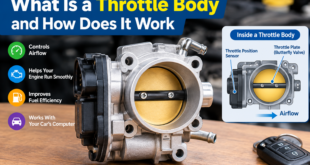
When I think about the parts that help a modern car run smoothly, the throttle position sensor is one component that deserves more attention than it usually gets. It is a small sensor, but it plays an important role in how the engine responds when I press the accelerator pedal. If the throttle position sensor is working correctly, the engine can receive accurate information about throttle opening and adjust its operation accordingly.
In this article, I will explain what a throttle position sensor is, how it works, what it does, common symptoms of a bad throttle position sensor, and why this small component matters for engine performance.
What Is a Throttle Position Sensor?
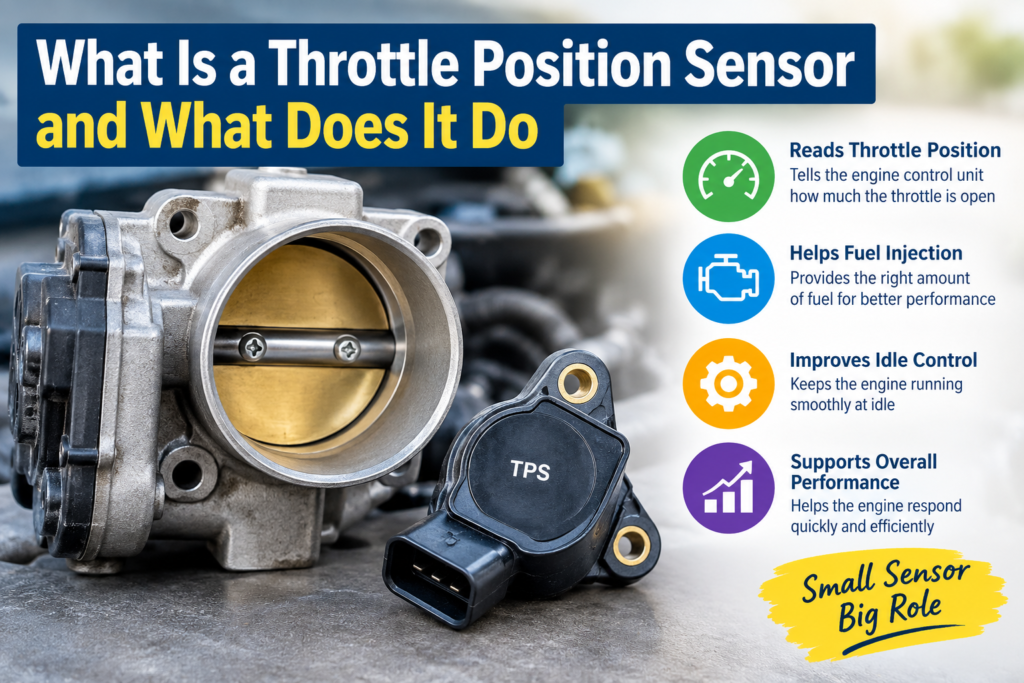
A throttle position sensor, commonly called a TPS, is an electronic sensor connected to the throttle body of an engine. Its main job is to monitor the position of the throttle valve and send this information to the engine control unit.
The throttle valve controls how much air enters the engine. When I press the accelerator pedal, the throttle opens to allow more air into the engine. The throttle position sensor detects this movement and tells the engine computer how far the throttle is open.
The engine control unit uses this information along with data from other sensors to control fuel injection, ignition timing, idle operation, and other engine functions.
In simple terms, I can think of the throttle position sensor as a communication link between the throttle and the engine computer.
How Does a Throttle Position Sensor Work?
The basic operation of a TPS is fairly simple. The sensor is mounted on or near the throttle body and is connected to the throttle shaft.
As the throttle valve moves, the sensor detects its position. Depending on the vehicle design, the TPS may use a variable resistor, magnetic sensing technology, or another electronic method to determine throttle position.
The sensor produces an electrical signal that changes as the throttle opens or closes. The engine control unit reads this signal and determines what the driver is asking the engine to do.
For example, when I gently press the accelerator, the throttle may open slightly. The TPS reports this position to the engine computer. If I press the accelerator harder, the throttle opens further and the sensor sends a different signal.
This information helps the engine computer respond appropriately.
What Does a Throttle Position Sensor Do?
The main function of a throttle position sensor is to tell the engine control unit how open or closed the throttle is. However, this information affects several important engine operations.
One of the most important functions is helping control fuel delivery. When the throttle opens, the engine generally needs more air and fuel. The computer uses TPS information along with readings from other sensors to calculate the appropriate engine response.
The TPS also helps with acceleration. When I press the accelerator, the engine needs to respond quickly and smoothly. Accurate throttle position information allows the engine computer to recognize changes in driver demand.
Another important function is idle control. When the throttle is nearly closed, the engine computer needs to understand that the engine is operating under low throttle conditions. A correct TPS signal can help the vehicle maintain stable engine operation.
The sensor can also influence transmission behavior in vehicles with automatic transmissions. The transmission control system may use throttle information when deciding when to shift gears.
Why Is the Throttle Position Sensor Important?
I consider the TPS important because modern engines depend heavily on accurate electronic information. The engine computer does not simply rely on the accelerator pedal itself. It uses information from several sensors to determine how the engine should operate.
If the throttle position sensor provides accurate information, the engine can respond more effectively to changes in throttle position.
A healthy TPS can contribute to smooth acceleration, stable engine operation, proper fuel control, and predictable throttle response.
If the sensor starts sending incorrect or inconsistent information, the engine computer may make incorrect decisions. This can lead to noticeable driving problems.
Common Symptoms of a Bad Throttle Position Sensor
A failing throttle position sensor can cause several different symptoms. In my experience, the exact symptoms can vary depending on the vehicle and the way the sensor fails.
Poor Acceleration
One common symptom is poor or inconsistent acceleration. I may press the accelerator, but the engine does not respond as expected. Sometimes there can be hesitation before the engine accelerates.
This happens because the engine computer may not receive an accurate signal about how much the throttle has opened.
Engine Stalling
A faulty TPS can sometimes contribute to engine stalling, particularly when the throttle position changes quickly or when the engine returns to idle.
If the computer receives an incorrect throttle reading, it may struggle to maintain the correct engine operating conditions.
Rough or Unstable Idle
Another possible symptom is an unstable idle. The engine may run unevenly when the vehicle is stopped, or the idle speed may move up and down.
However, I would not immediately blame the TPS for an idle problem because several other engine components can create similar symptoms.
Check Engine Light
A problem with the throttle position sensor can trigger the check engine light. The vehicle computer may detect a signal that is outside the expected range or does not match information from other sensors.
A diagnostic scan can help identify whether the TPS is actually responsible.
Transmission Shifting Problems
In some vehicles, incorrect throttle position information can affect automatic transmission behavior. I may notice unusual shifting, delayed shifts, or changes in shift timing.
Again, transmission problems can have many causes, so proper diagnosis is important.
Increased Fuel Consumption
A faulty throttle position sensor may also contribute to poor fuel economy if the engine computer receives inaccurate information and adjusts fuel delivery incorrectly.
Fuel consumption can be affected by many factors, so this symptom alone does not confirm a TPS problem.
What Causes a Throttle Position Sensor to Fail?
Like many electronic components, a TPS can eventually wear out or develop an electrical problem.
On older sensor designs, internal electrical contacts can wear because of repeated throttle movement. Dirt, moisture, corrosion, wiring damage, and connector problems can also affect the sensor signal.
Sometimes the sensor itself is not the real problem. A damaged wire or loose electrical connection can create symptoms that look like a bad TPS.
This is why I think it is better to diagnose the complete circuit rather than replacing the sensor immediately.
How Is a Throttle Position Sensor Tested?
A mechanic can use several methods to test a throttle position sensor. A diagnostic scanner can be useful because it may show throttle position data while the throttle is opened and closed.
The technician can observe whether the sensor signal changes smoothly. If the signal suddenly drops, jumps, or behaves inconsistently, the sensor or its wiring may require further inspection.
A digital multimeter can also be used on some vehicles to check electrical signals according to the manufacturer’s specifications.
The exact testing procedure depends on the vehicle, so I would always recommend checking the correct service information before testing or replacing the sensor.
Can You Drive With a Bad Throttle Position Sensor?
Whether I can safely drive with a bad TPS depends on how serious the problem is and how the vehicle behaves.
If the engine is hesitating badly, stalling, accelerating unpredictably, or entering a reduced power mode, continuing to drive can be unsafe. In that situation, getting the vehicle inspected is the better choice.
If the check engine light is on but the vehicle seems to operate normally, I would still arrange a diagnostic check rather than ignoring the problem.
A throttle related fault can become more noticeable over time.
How Much Does a Throttle Position Sensor Cost?
The cost of replacing a throttle position sensor varies considerably depending on the vehicle, sensor design, parts availability, and labor rates.
On some vehicles, the TPS is available as a separate component and replacement can be relatively straightforward. On other vehicles, the sensor may be integrated into the throttle body, which can make the repair more expensive.
Before buying a replacement sensor, I would confirm the exact vehicle specifications and part number. Using the wrong component can create additional problems.
Can a Throttle Position Sensor Be Cleaned?
Cleaning depends on the specific problem and vehicle design. Sometimes dirt around the throttle body can contribute to throttle related problems, but cleaning the throttle body is not the same thing as repairing a defective TPS.
I would avoid spraying random chemicals directly into an electronic sensor unless the vehicle manufacturer specifically allows that procedure.
If the sensor has an internal electrical fault, cleaning it will generally not repair the damaged electronics.
Throttle Position Sensor vs Accelerator Pedal Sensor
It is easy to confuse the throttle position sensor with an accelerator pedal position sensor.
They perform different jobs. The accelerator pedal sensor monitors the position of the accelerator pedal, while the TPS monitors the actual position of the throttle.
In many modern vehicles with electronic throttle control, the engine computer receives information from the accelerator pedal sensors and uses that information to control the throttle electronically.
The TPS then provides information about the actual throttle position.
Having both types of information can help the vehicle computer monitor and control the electronic throttle system.
How to Prevent Throttle Related Problems
There is no guaranteed way to prevent a TPS from eventually failing, but regular vehicle maintenance can help reduce related problems.
I recommend keeping the engine bay reasonably clean and paying attention to damaged wiring, loose connectors, and signs of corrosion.
Following the manufacturer’s maintenance schedule is also important. If the vehicle develops hesitation, poor acceleration, unstable idle, or a check engine light, getting the problem diagnosed early can prevent unnecessary troubleshooting later.
It is also important not to replace parts based only on symptoms. A professional diagnostic check can determine whether the TPS, throttle body, wiring, or another component is causing the problem.
Final Thoughts
The throttle position sensor may be small, but it has an important role in modern engine management. Its main responsibility is to monitor throttle position and provide this information to the engine control unit.
From fuel control and acceleration to idle operation and, in some vehicles, transmission behavior, the TPS can influence several parts of the driving experience.
If I notice hesitation, poor acceleration, rough idle, stalling, unusual transmission behavior, or a check engine light, I would consider the throttle position sensor as one possible cause. However, I would not assume that the sensor is automatically defective because many other components can create similar symptoms.
Understanding what a throttle position sensor does makes it easier to recognize potential problems and communicate with a mechanic. Regular maintenance, proper diagnosis, and using the correct replacement parts are the best ways to keep the throttle system working properly.
For such a small component, the throttle position sensor has a surprisingly important job. It helps the engine understand what I am asking it to do, making it an essential part of smooth and responsive vehicle operation.