Related Articles
A car battery is one of those parts that most people never think about until it suddenly stops working. I have learned that ignoring small warning signs often leads to bigger problems, especially when I need my car the most. A healthy battery keeps the engine starting smoothly and powers many electrical components. Once the battery begins to fail, the entire driving experience becomes unreliable.
Knowing the signs your car battery needs replacement can save time, money, and unnecessary stress. Instead of waiting for a complete breakdown, I always recommend paying attention to early symptoms. Replacing a weak battery before it fails completely is much easier than getting stranded in a parking lot or on the side of the road.
Why Your Car Battery Is Important
The battery provides the electrical power needed to start the engine. It also supports important systems such as headlights, dashboard displays, power windows, infotainment systems, and many electronic features found in modern vehicles.
Even though the alternator charges the battery while the engine is running, every battery has a limited lifespan. Most car batteries last between three and five years depending on driving habits, weather conditions, and maintenance.
Once the battery begins to wear out, its performance gradually decreases. The good news is that it usually gives several warning signs before it completely stops working.
Slow Engine Crank
One of the first things I notice when a battery starts getting weak is a slow engine crank. Instead of starting quickly, the engine takes a little longer to turn over.
If you hear the engine struggling before it starts, the battery may not have enough power to deliver the strong electrical current required by the starter motor.
Many drivers ignore this sign because the car eventually starts. However, a slow crank often becomes worse over time until the vehicle refuses to start altogether.
Dashboard Battery Warning Light
Modern vehicles include a battery warning light on the dashboard.
If this light stays on while driving, it could indicate several electrical problems including:
Poor battery condition
Charging system issues
Alternator problems
Loose battery connections
Although the warning light does not always mean the battery needs replacement, it should never be ignored. I always recommend checking the battery as soon as possible whenever this light appears.
Dim Headlights
Bright headlights depend on a strong battery and charging system.
If the headlights suddenly appear dim while starting the vehicle or when the engine is idling, the battery may be losing its ability to provide sufficient power.
You may also notice:
Interior lights becoming dim
Dashboard lights fading
Power windows moving slower
Radio display becoming weaker
These symptoms often point toward a battery that is reaching the end of its life.
Clicking Sound When Starting
A rapid clicking noise when turning the key or pressing the start button is another common warning sign.
This happens because the starter motor is trying to receive enough electrical power, but the battery cannot supply it.
Sometimes the car starts after several attempts. Other times it only produces clicking sounds without starting.
Repeated clicking usually means the battery needs immediate testing.
Frequent Jump Starts
Needing one jump start after accidentally leaving the lights on is understandable.
However, if you find yourself asking for jump starts every few days or weeks, the battery is likely no longer holding a proper charge.
A healthy battery should continue working after being fully recharged. If it repeatedly loses power, replacement is often the best solution.
Swollen Battery Case
Extreme heat is one of the biggest enemies of car batteries.
High temperatures can cause the battery case to swell or become misshapen.
If you open the hood and notice that the battery looks bloated or deformed, it should be replaced immediately.
A swollen battery cannot function properly and may become unsafe if ignored.
Corrosion Around Battery Terminals
Battery corrosion appears as a white, blue, or green powder around the terminals.
Small amounts of corrosion can sometimes be cleaned, but heavy buildup often indicates battery aging or leakage.
Corrosion reduces electrical flow between the battery and the vehicle.
If cleaning the terminals does not solve starting problems, the battery itself may be failing.
Bad Smell Coming From the Battery
A damaged battery can sometimes leak gas that produces a strong sulfur smell similar to rotten eggs.
This odor should never be ignored.
Battery leaks can damage nearby engine components and create safety risks.
If you notice this smell, inspect the battery carefully or have it checked by a professional.
Electrical Accessories Stop Working Properly
Modern vehicles depend heavily on electrical systems.
A weak battery can affect features such as:
Power seats
Touchscreen displays
Navigation systems
USB charging ports
Power mirrors
Central locking
While these problems may have other causes, multiple electrical issues happening together often suggest a weak battery.
Battery Is More Than Three Years Old
Age alone does not always mean replacement is necessary.
However, once a battery reaches three to five years of service, I begin monitoring it more closely.
Older batteries become less reliable, especially during very hot summers or freezing winters.
Testing an older battery during routine maintenance helps avoid unexpected failures.
Trouble Starting During Cold Weather
Cold temperatures reduce battery performance.
If the vehicle struggles to start every winter morning, the battery may no longer provide enough cold cranking power.
Even batteries that seem fine during warm weather can fail once temperatures drop.
Replacing an aging battery before winter begins is often a smart decision.
Engine Starts Then Dies Quickly
Sometimes the engine starts but immediately shuts off.
Although several mechanical problems can cause this, a severely weakened battery may not provide enough voltage for the vehicle’s electronic systems.
If this symptom appears together with other battery warning signs, battery testing should be one of the first steps.
How to Test a Car Battery
I believe regular testing is one of the easiest ways to avoid unexpected battery failure.
Several testing methods include:
Using a digital multimeter
Battery load testing
Visiting an auto repair shop
Free battery testing offered by many auto parts stores
A healthy battery typically measures around 12.6 volts when fully charged and the engine is turned off.
Lower voltage readings may indicate the battery is losing capacity.
What Causes Battery Failure
Many factors shorten battery life.
Some of the most common causes include:
Extreme heat
Very cold weather
Frequent short trips
Leaving lights on
Loose battery connections
Faulty alternator
Old battery age
Long periods without driving
Understanding these causes helps extend battery life through better maintenance.
Tips to Make Your Car Battery Last Longer
Although every battery eventually wears out, proper care can increase its lifespan.
I follow several simple habits that help keep my battery in good condition.
Keep battery terminals clean.
Drive the vehicle regularly.
Turn off lights before leaving the car.
Avoid unnecessary electrical accessories when the engine is off.
Secure the battery properly.
Have the charging system inspected during routine maintenance.
Replace an aging battery before complete failure.
These simple practices reduce the chances of unexpected starting problems.
When Should You Replace Your Car Battery
If several warning signs appear together, replacing the battery is usually the safest choice.
For example, a battery that is four years old, struggles to start the engine, requires frequent jump starts, and shows terminal corrosion is very likely reaching the end of its service life.
Waiting until complete failure often creates unnecessary inconvenience.
Preventive replacement is usually less stressful than dealing with an emergency breakdown.
Choosing the Right Replacement Battery
Not every battery fits every vehicle.
Before buying a replacement, check:
Correct battery size
Required cold cranking amps
Reserve capacity
Manufacturer recommendations
Warranty period
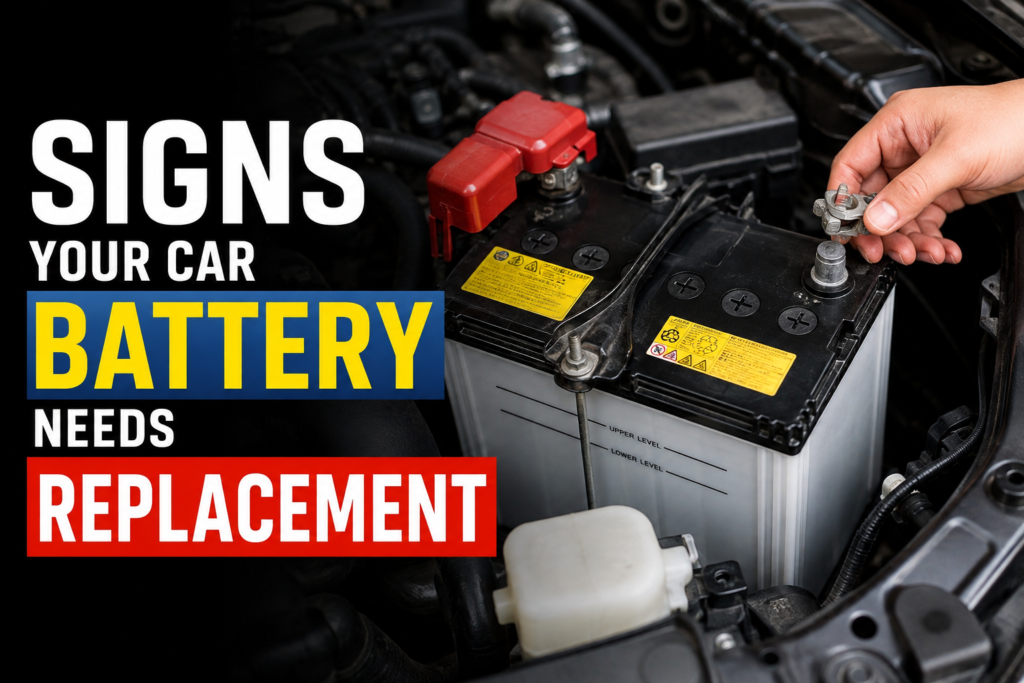
Buying a quality battery from a trusted brand often provides better long term reliability.
Final Thoughts
Recognizing the signs your car battery needs replacement can prevent unexpected breakdowns and expensive towing bills. I always believe that paying attention to small warning signs is much better than waiting for complete battery failure. Slow engine cranking, dim headlights, frequent jump starts, corrosion, dashboard warning lights, and an aging battery are all signals that should never be ignored.
Regular battery inspections and simple maintenance go a long way toward keeping any vehicle dependable. When multiple warning signs appear at the same time, replacing the battery before it completely fails is often the smartest decision. A reliable battery gives peace of mind, improves everyday driving, and helps ensure the car starts whenever it is needed.