Related Articles

When we talk about a car suspension system, most people think about shock absorbers, springs, control arms, or steering components. However, there are several smaller parts that are just as important for keeping a vehicle stable and safe. One of these important components is the ball joint.
A ball joint connects the control arm to the steering knuckle and allows the wheel assembly to move smoothly while the vehicle is being driven. In simple terms, it works somewhat like a flexible connection between the suspension and steering system. Without properly working ball joints, a car can develop steering problems, uneven tire wear, strange noises, and serious handling issues.
In my view, ball joints are one of those car parts that drivers usually do not think about until something starts going wrong. Understanding what ball joints do and knowing the common signs of failure can help you take better care of your vehicle.
What Is a Ball Joint?
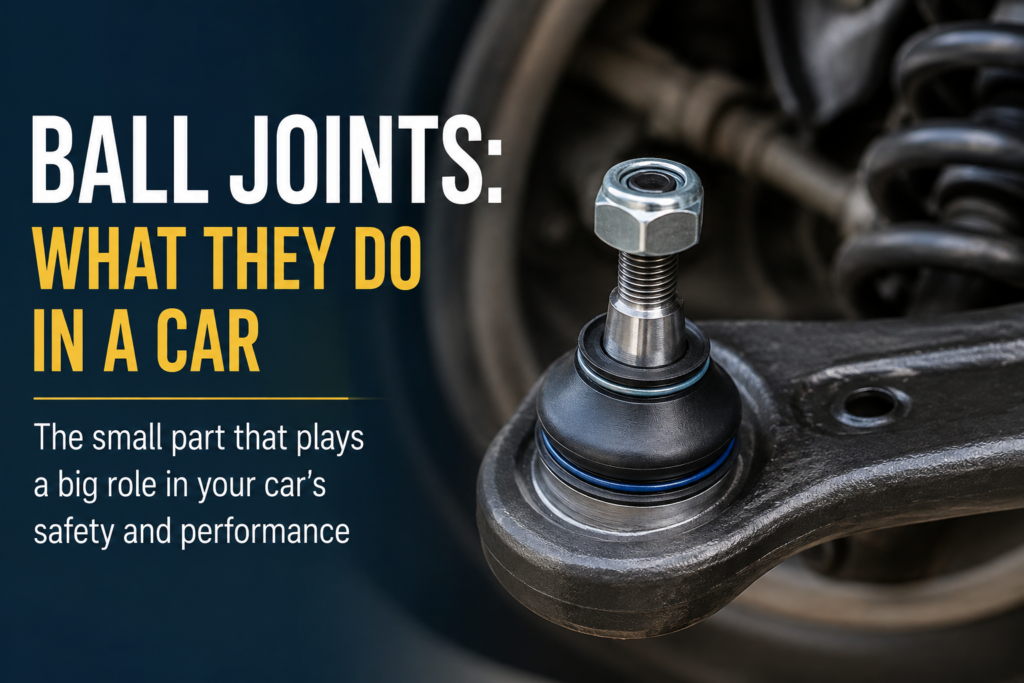
A ball joint is a mechanical component used in a vehicle’s suspension system. It usually consists of a hardened metal ball and socket design that allows controlled movement in several directions.
The ball joint connects the control arm with the steering knuckle. This connection is important because the wheel needs to move up and down as the suspension responds to bumps, while also moving from side to side when the driver turns the steering wheel.
The ball and socket design gives the suspension enough flexibility to perform both movements. At the same time, the ball joint keeps the wheel assembly properly connected to the vehicle.
Most modern cars use ball joints on the front suspension, although the exact design and number of ball joints can vary depending on the vehicle.
What Do Ball Joints Do in a Car?
The main job of a ball joint is to provide a flexible connection between the control arm and steering knuckle. This sounds simple, but it plays a major role in the way a car drives.
When you drive over a bump, the wheel needs to move upward and downward without forcing the entire vehicle body to move in the same way. The ball joint allows this suspension movement.
At the same time, when you turn the steering wheel, the steering knuckle needs to rotate so the wheels can change direction. The ball joint allows the necessary movement while keeping the suspension connected.
This means ball joints support both suspension movement and steering movement. They help maintain proper wheel alignment and contribute to stable handling.
How Does a Ball Joint Work?
A typical ball joint has a ball shaped stud that sits inside a socket. The socket is designed to hold the ball securely while still allowing it to rotate and move within controlled limits.
The joint is usually protected by a rubber or synthetic dust boot. This boot helps keep dirt, water, and road debris away from the internal moving surfaces. Some ball joints are lubricated during manufacturing, while others may have a grease fitting that allows additional lubrication during maintenance.
As the suspension moves, the ball rotates inside the socket. This movement allows the control arm and steering knuckle to change position without placing excessive stress on the surrounding suspension components.
The design is relatively simple, but it has to withstand constant movement, road shocks, vehicle weight, and changing driving conditions.
Types of Ball Joints
There are several different types of ball joints used in automotive suspension systems. The design depends on the vehicle’s suspension layout and manufacturer.
Upper Ball Joints
Upper ball joints are found in suspension systems that use both upper and lower control arms. They connect the upper control arm to the steering knuckle.
Lower Ball Joints
Lower ball joints connect the lower control arm to the steering knuckle. In many vehicles, the lower ball joint carries a significant portion of the suspension load.
Because of the weight and forces involved, a worn lower ball joint can create serious handling problems.
Load Carrying Ball Joints
Some ball joints are designed to support a significant amount of the vehicle’s weight. These are known as load carrying ball joints.
Their design and construction are intended to handle substantial forces while still allowing the necessary suspension movement.
Follower Ball Joints
Follower ball joints mainly guide suspension movement rather than carrying the primary vehicle load. They still need to remain in good condition because excessive play can affect steering and wheel alignment.
Why Are Ball Joints Important?
Ball joints are important because they connect major parts of the suspension and steering system. If this connection becomes loose or damaged, the wheel may no longer remain properly controlled.
A healthy ball joint helps maintain proper wheel positioning. This can contribute to predictable steering, stable handling, and even tire wear.
I consider ball joints especially important because their condition can affect several other suspension components. A small amount of wear may initially be difficult to notice, but the problem can become more obvious as the joint continues to deteriorate.
Regular suspension inspections can help identify wear before it becomes a major problem.
Common Signs of Bad Ball Joints
A failing ball joint can produce several warning signs. Some symptoms may also be caused by other suspension or steering components, so proper inspection is important.
Clunking or Knocking Noise
One of the most common symptoms is a clunking or knocking sound from the suspension area. You may notice it when driving over potholes, speed bumps, or uneven roads.
This noise can indicate excessive movement in the ball joint.
Loose or Unstable Steering
A worn ball joint can affect steering feel. The vehicle may feel less stable, especially when driving over uneven surfaces.
You might also notice that the steering does not feel as precise as it normally does.
Uneven Tire Wear
Bad ball joints can contribute to wheel alignment problems. If the wheel is not held in the correct position, the tire may wear unevenly.
If you notice unusual wear on the inside or outside edge of a tire, it is worth having the suspension and alignment checked.
Steering Wheel Vibration
In some cases, worn suspension components can cause vibrations that are felt through the steering wheel. Although wheel balance, tires, and other components can also cause vibration, ball joints should be inspected when suspension wear is suspected.
Vehicle Pulling
A vehicle that pulls to one side can have several possible causes, including tire pressure, alignment, brakes, or suspension problems. A damaged ball joint may contribute to poor wheel positioning and handling.
For this reason, pulling should not automatically be blamed on the ball joint without a proper inspection.
What Causes Ball Joints to Wear Out?
Ball joints are exposed to demanding conditions. They deal with road impacts, suspension movement, dirt, moisture, and vehicle weight every time you drive.
One common cause of premature wear is a damaged dust boot. Once the protective boot cracks or tears, dirt and moisture can enter the joint. This can contaminate the lubricant and increase wear on the internal surfaces.
Poor road conditions can also accelerate suspension wear. Frequent driving over potholes, rough roads, and uneven surfaces places additional stress on ball joints.
Vehicle mileage is another factor. Like many suspension components, ball joints can eventually wear as the vehicle accumulates miles.
Can Ball Joints Be Lubricated?
Some ball joints are designed with grease fittings and can be lubricated as part of regular maintenance. Other modern ball joints are sealed and do not require routine lubrication.
If your vehicle uses greaseable ball joints, using the correct lubricant and following the manufacturer’s maintenance recommendations can help support proper operation.
However, lubrication cannot repair a ball joint that already has excessive wear or physical damage. A worn joint generally needs to be replaced.
How Are Ball Joints Checked?
A mechanic can inspect ball joints for signs of looseness, damage, corrosion, or excessive movement. The exact inspection procedure depends on the suspension design.
The vehicle may need to be safely lifted so the wheel and suspension components can be checked. A technician can then inspect the joint and surrounding parts for abnormal movement.
The dust boot should also be checked for cracks, tears, or signs of contamination.
If there is noticeable play in the ball joint, replacement may be necessary. Because ball joints are part of the steering and suspension system, I would not recommend ignoring a suspected problem.
Can You Drive With Bad Ball Joints?
Driving with worn ball joints is not something I would take lightly. A slightly worn joint may initially produce only noise or minor handling changes, but continued driving can allow the wear to become worse.
A severely damaged ball joint can compromise the connection between the suspension and wheel assembly. In extreme cases, the joint can separate and cause a major loss of wheel control.
If you notice strong knocking, excessive steering looseness, abnormal tire wear, or other serious suspension symptoms, it is better to have the vehicle inspected as soon as possible.
Ball Joint Replacement
When a ball joint is worn beyond its service limit, replacement is normally the appropriate repair. Depending on the vehicle, the ball joint may be available as a separate replacement part or may be integrated with another suspension component.
The replacement process can involve removing suspension components and using specialized tools. Because the ball joint is connected to important steering and suspension parts, correct installation is extremely important.
After suspension work, a wheel alignment may also be recommended depending on the vehicle and the components that were removed.
How Long Do Ball Joints Last?
There is no single mileage number that applies to every ball joint. Their service life depends on vehicle design, driving conditions, road quality, load, maintenance, and the quality of the replacement part.
A car that spends most of its time on smooth roads may experience different suspension wear compared with a vehicle regularly driven on rough roads.
Instead of relying only on mileage, I believe it is better to pay attention to symptoms and have the suspension inspected during routine vehicle maintenance.
Final Thoughts
Ball joints may be small compared with other suspension components, but their role in a car is extremely important. They allow the suspension and steering systems to work together while keeping the wheel assembly properly connected to the vehicle.
A good ball joint allows controlled movement, supports proper wheel positioning, and contributes to stable steering and handling. When it becomes worn, you may notice knocking noises, loose steering, uneven tire wear, vibrations, or other changes in driving behavior.
The most important thing is not to ignore these warning signs. Ball joints are directly related to the suspension and steering system, so their condition should be taken seriously.
From my point of view, regular inspection is one of the easiest ways to catch ball joint problems before they become expensive or dangerous. Paying attention to unusual noises and changes in steering can also help you identify suspension problems early.
If you understand what ball joints do in a car, you can make better maintenance decisions and have a clearer idea of why this small component matters so much to the overall performance and safety of your vehicle.
Primary SEO Keyword: Ball Joints
Secondary Keywords: What do ball joints do, ball joint symptoms, bad ball joints, car suspension, ball joint replacement, front suspension, suspension system, signs of bad ball joints