Related Articles

A car battery is one of those parts that most drivers do not think about until the car refuses to start. I believe understanding the battery is important for every car owner because it is not only responsible for starting the engine, but it also supports many electrical systems in the vehicle. Knowing how a car battery works, how to recognize a weak battery, and when to replace it can save you from unexpected trouble.
In this beginner friendly car battery guide, I will explain the basic functions of a car battery, different battery types, common warning signs, maintenance tips, and the right way to choose a replacement.
What Is a Car Battery?
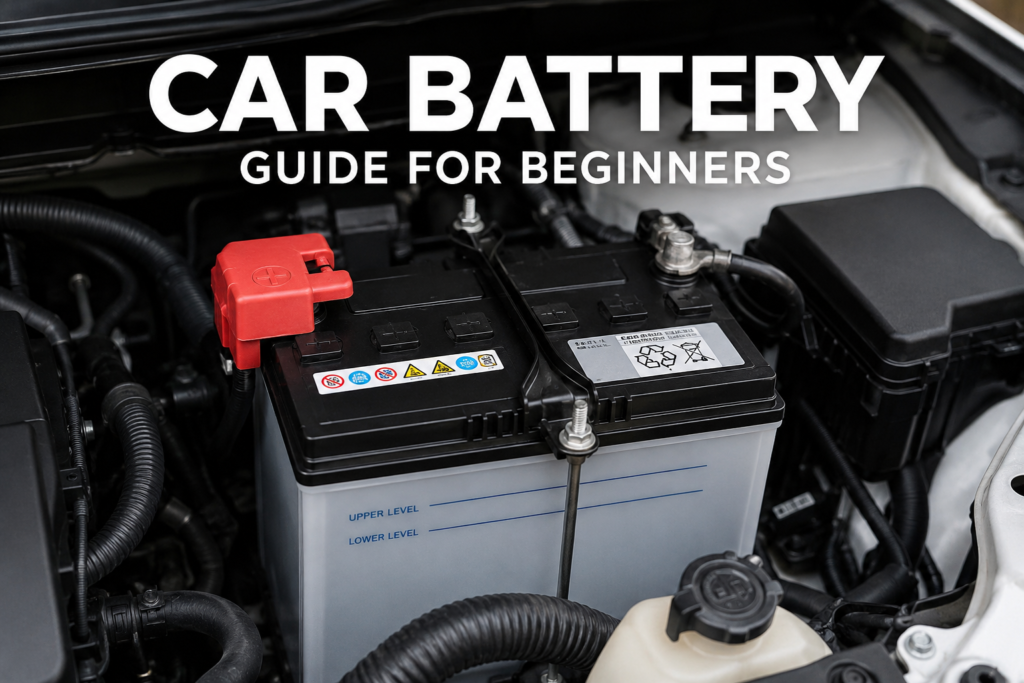
A car battery is a rechargeable electrical device that stores energy and supplies power to the vehicle when needed. In most traditional cars, the battery is a 12 volt unit. Its main job is to provide the strong burst of electrical power required by the starter motor when you turn the ignition key or press the start button.
The battery also supplies electricity to different systems when the engine is not running. This can include headlights, interior lights, the radio, security systems, and various electronic controls.
Once the engine starts, the alternator takes over most of the electrical load and recharges the battery. This means the battery and alternator work together to keep the vehicle’s electrical system operating properly.
How Does a Car Battery Work?
Most conventional car batteries use lead plates and an electrolyte solution to create an electrical reaction. This reaction produces electrical energy that can be used by the vehicle.
When you start the car, the battery sends current to the starter motor. The starter turns the engine until combustion begins. Once the engine is running, the alternator generates electricity and sends some of it back to the battery.
I like to think of the battery as the electrical reserve of the car. It provides the initial power needed to wake everything up, while the alternator keeps the electrical system supplied after the engine starts.
Modern vehicles can place even more demands on the battery because they contain many electronic features. Automatic start stop systems, infotainment systems, sensors, cameras, and electronic control modules can all increase electrical demand.
Main Types of Car Batteries
There are several types of car batteries available today. The correct choice depends on the vehicle and its electrical requirements.
Flooded Lead Acid Battery
The flooded lead acid battery is one of the most common traditional battery types. It is generally affordable and has been used in vehicles for many years.
Some older designs require checking electrolyte levels, while modern maintenance free versions are designed to reduce this need.
AGM Battery
AGM stands for Absorbent Glass Mat. These batteries are designed to handle higher electrical demands and repeated charging and discharging.
AGM batteries are commonly found in vehicles equipped with start stop technology and many electrical accessories. They are usually more expensive than conventional batteries, but they can provide excellent performance when the vehicle requires them.
EFB Battery
EFB stands for Enhanced Flooded Battery. It is an improved version of the traditional flooded battery and is often used in vehicles with basic start stop systems.
An EFB battery can offer better cycling performance than a standard flooded battery while usually costing less than an AGM battery.
Lithium Ion Battery
Lithium ion batteries are becoming more common in electric and hybrid vehicles. They are different from traditional lead acid batteries and are designed for specific applications.
If you own an electric or hybrid vehicle, always follow the manufacturer’s recommendations instead of assuming that a conventional car battery is suitable.
Signs of a Weak Car Battery
One of the easiest ways to avoid a dead battery is to recognize the warning signs early.
A slow engine crank is one of the most common symptoms. If the engine takes noticeably longer to start than it normally does, the battery may be losing its ability to deliver sufficient starting power.
Dim headlights can also be a warning sign, especially when the engine is off. However, dim lights can have other causes, so they should not automatically be blamed on the battery.
Another common symptom is clicking when you try to start the vehicle. A rapid clicking sound can indicate that the battery does not have enough power to operate the starter properly.
Electrical accessories may also behave strangely when battery voltage is low. You might notice that the interior lights become weak or certain electronic features do not operate normally.
A battery warning light on the dashboard should also be taken seriously. In some vehicles, this warning can indicate an issue with the charging system rather than the battery itself.
How Long Does a Car Battery Last?
The average car battery can often last several years, but there is no exact replacement date that works for every vehicle. Battery life depends on climate, driving habits, vehicle design, maintenance, and battery quality.
Extreme temperatures can affect battery performance. Very hot conditions can accelerate battery deterioration, while cold weather makes it harder for a weak battery to start the engine.
Short trips can also be demanding because the alternator may not have enough time to fully replace the energy used during starting.
If your battery is several years old and you are beginning to notice starting problems, it is sensible to have it tested before it completely fails.
Why Car Battery Maintenance Matters
Even maintenance free batteries deserve some attention. I recommend checking the battery area during routine vehicle inspections.
Look for corrosion around the terminals. White, blue, or greenish buildup can interfere with electrical connections. The battery terminals should be clean and properly secured.
Also check whether the battery is firmly held in place. A loose battery can vibrate while driving, which may damage the battery or its connections.
Inspect the battery case for cracks, swelling, or other visible damage. A damaged battery should not simply be ignored.
Always follow the vehicle manufacturer’s instructions when inspecting or servicing the battery.
How to Choose the Right Car Battery
Choosing a replacement battery is not simply about buying the biggest or most expensive option. The battery needs to match the vehicle’s specifications.
Start by checking the owner’s manual. It will normally provide information about the recommended battery size, capacity, starting power, and battery type.
Battery size is important because the replacement must physically fit in the battery tray and have the correct terminal arrangement.
Cold cranking amps, commonly called CCA, describe the battery’s ability to provide starting power under cold conditions. A suitable CCA rating is important for reliable starting.
Reserve capacity is another specification that tells you how long the battery can provide power under certain conditions if the charging system is not supplying electricity.
If your vehicle originally uses an AGM battery, replacing it with an unsuitable conventional battery may cause problems, particularly in vehicles with start stop technology.
How to Test a Car Battery
A battery can be tested with specialized equipment that measures its voltage and starting performance.
A basic voltage check can provide useful information, but voltage alone does not always tell the complete story. A battery can show an acceptable voltage reading while still being unable to provide enough power to start the engine.
For this reason, a proper battery test is a better option when you suspect the battery is becoming weak.
Many automotive workshops and battery shops can perform a battery test. Testing is especially useful if the vehicle has started slowly or if you are planning a long journey.
Can a Dead Car Battery Be Recharged?
Sometimes a discharged battery can be recharged. If you accidentally leave the headlights or interior lights on, for example, the battery may simply have lost its charge.
However, a battery that repeatedly goes flat may have a deeper problem. The battery itself could be deteriorated, or the vehicle may have an electrical drain or charging system problem.
If a battery is old and repeatedly requires charging, replacing it may be more practical than continuously trying to recharge it.
Jump starting can get the vehicle running temporarily, but it does not necessarily fix the reason why the battery became weak.
Common Car Battery Problems
Battery corrosion is a common problem. Corrosion can create resistance at the terminals and prevent proper electrical flow.
Another issue is a discharged battery. This can happen when electrical accessories are left operating while the engine is off.
A failing alternator can also create symptoms that appear to be caused by the battery. If the alternator is not charging correctly, even a new battery can eventually become discharged.
Parasitic electrical drains are another possible cause. These occur when something continues consuming electrical power after the vehicle has been switched off.
This is why replacing the battery is not always the complete solution. If a new battery keeps losing power, the charging and electrical systems should also be checked.
Safety Tips When Working With a Car Battery
Car batteries can deliver a large amount of electrical current, so safety should always come first.
Keep metal tools away from the battery terminals because accidentally connecting the terminals can cause sparks and potentially damage components.
Wear suitable eye protection when working around a conventional battery, and avoid smoking or creating flames near the battery.
When disconnecting or installing a battery, follow the vehicle manufacturer’s instructions. Modern cars can have sensitive electronic systems, so incorrect procedures can sometimes create additional problems.
If you are not comfortable working with electrical components, it is better to ask a qualified technician for assistance.
When Should You Replace Your Car Battery?
There are several reasons to consider replacing a car battery. Age is one factor, especially if the battery has already reached the typical service period for your climate and vehicle.
Repeated starting problems are another important warning sign. If the battery tests weak, replacement may prevent an unexpected breakdown.
Visible swelling, cracks, leaks, or severe damage are also reasons to stop using the battery and have it inspected or replaced by a professional.
I personally believe preventive replacement can sometimes be better than waiting for complete failure, especially if you depend on your vehicle every day or regularly travel long distances.
Final Thoughts
A car battery may look like a simple component, but it plays a major role in keeping a vehicle reliable. It provides the starting power needed to crank the engine and supports electrical systems when the engine is not running.
Understanding the basic signs of battery failure can help you deal with problems before they leave you stuck somewhere. Regular inspection, clean terminals, proper charging, and choosing the correct replacement battery can make a noticeable difference.
For beginners, the most important thing to remember is that the battery and charging system work together. If your car has starting problems, do not automatically assume the battery is the only problem. A proper inspection can determine whether the battery, alternator, connections, or another electrical component needs attention.
With a little basic knowledge and regular care, you can keep your car battery working reliably and reduce the chances of an unexpected starting problem.