Related Articles

When people talk about a car’s performance, they usually focus on the engine, transmission, or fuel efficiency. In my experience, one of the most important parts of any vehicle is the alternator, yet it often gets overlooked. Without a properly working alternator, your car would not be able to keep the battery charged or power many of its electrical systems. Even if the battery is brand new, a faulty alternator can leave you stranded.
Understanding how car alternators work helps every driver appreciate how this small but powerful component keeps a vehicle running smoothly. I believe knowing the basics also makes it easier to recognize warning signs before they turn into expensive repairs.
What Is a Car Alternator
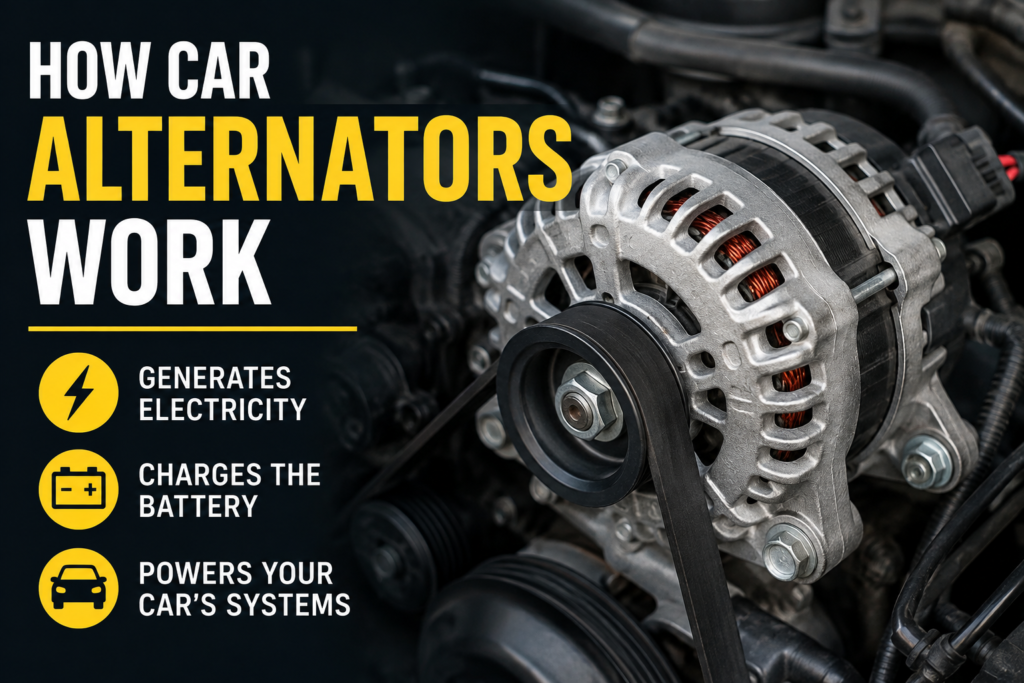
A car alternator is an electrical generator that produces electricity while the engine is running. Its main job is to convert mechanical energy from the engine into electrical energy.
The alternator powers important electrical systems throughout the vehicle while also recharging the battery. Without it, the battery would quickly lose its charge because it would be supplying electricity without being recharged.
Modern vehicles rely heavily on electrical components, making the alternator more important than ever before.
Why the Alternator Is Important
The alternator works continuously whenever the engine is running. It supplies electricity to various systems including headlights, dashboard displays, power windows, air conditioning controls, infotainment systems, windshield wipers, and charging ports.
It also ensures the battery stays fully charged so the engine can start the next time you drive.
Without a functioning alternator, even a fully charged battery would eventually become empty after powering these electrical systems.
How Car Alternators Work
Many people assume the battery provides electricity while driving, but that is only partially true.
When you start the engine, the battery supplies the initial electrical power needed to crank the starter motor. Once the engine starts, the alternator takes over.
The engine spins a belt connected to the alternator pulley. As the pulley rotates, it turns internal components inside the alternator that generate electricity.
This electricity powers the vehicle’s electrical systems while simultaneously charging the battery.
The process happens automatically and continuously while the engine remains running.
Mechanical Energy Becomes Electrical Energy
One of the most interesting things about an alternator is how it converts one type of energy into another.
The engine creates mechanical energy through combustion.
A drive belt transfers that energy to the alternator.
Inside the alternator, rotating magnets create a magnetic field around copper windings.
This movement generates alternating current, commonly called AC electricity.
Since vehicles operate using direct current, known as DC electricity, the alternator includes components that convert AC into usable DC power.
This entire process happens thousands of times every minute without the driver even noticing.
Main Parts of a Car Alternator
Although alternators vary between vehicles, most contain several important components.
Pulley
The pulley connects to the engine through a serpentine belt.
As the engine turns, the pulley rotates the alternator’s internal components.
Rotor
The rotor spins rapidly inside the alternator.
It creates the magnetic field required to generate electricity.
Stator
The stator surrounds the rotor.
As the magnetic field rotates, electrical current is produced inside the stator windings.
Rectifier
The rectifier converts alternating current into direct current.
This step is essential because the vehicle’s electrical system requires DC power.
Voltage Regulator
The voltage regulator controls the amount of electricity produced.
It prevents overcharging and undercharging by maintaining a steady voltage output.
How the Alternator Charges the Battery
The battery loses a small amount of power every time the engine starts.
Once the engine begins running, the alternator immediately starts replacing that lost energy.
It sends electricity back into the battery until it reaches its proper charge level.
After the battery is charged, the alternator continues supplying power to the vehicle’s electrical systems while keeping the battery ready for the next engine start.
This charging cycle continues every time you drive.
Difference Between the Battery and Alternator
Many drivers confuse these two components.
The battery stores electrical energy.
The alternator creates electrical energy.
The battery is mainly responsible for starting the engine.
The alternator keeps the battery charged and powers electrical accessories after the engine starts.
If either component fails, the vehicle can experience starting problems or electrical malfunctions.
Signs of a Failing Alternator
Alternators usually provide warning signs before they completely stop working.
Recognizing these symptoms early can prevent unexpected breakdowns.
Some of the most common warning signs include:
Dim or flickering headlights
Battery warning light on the dashboard
Electrical accessories operating slowly
Dead battery even after replacement
Difficulty starting the vehicle
Burning smell from the engine compartment
Strange whining or grinding noises
Frequent stalling while driving
If several of these symptoms appear together, the alternator should be inspected as soon as possible.
Common Causes of Alternator Failure
Like every mechanical component, alternators eventually wear out.
Several factors can shorten their lifespan.
These include:
Worn bearings
Damaged drive belt
Electrical overload
Excessive engine heat
Moisture damage
Old age
Faulty voltage regulator
Poor maintenance
Most alternators last between 80,000 and 150,000 miles depending on driving conditions and maintenance.
What Happens If the Alternator Stops Working
If the alternator fails while driving, the battery becomes the only source of electrical power.
At first, the vehicle may continue operating normally.
As the battery loses its charge, electrical systems begin shutting down one by one.
Headlights become dim.
Dashboard warning lights appear.
Power steering may become harder to operate in some vehicles.
Eventually, the engine may stall completely because the ignition system no longer receives enough electricity.
At that point, restarting the vehicle becomes impossible until the charging problem is repaired.
Can You Drive With a Bad Alternator
Technically, a vehicle may continue driving for a short distance after alternator failure if the battery still has enough charge.
However, I never recommend relying on this.
The remaining battery power is unpredictable and may last only a few minutes or a short distance.
Driving with a faulty alternator increases the risk of sudden engine shutdown, especially at night or in heavy traffic.
Repairing the issue quickly is always the safest choice.
How Mechanics Test an Alternator
Professional technicians use several methods to determine whether an alternator is working properly.
They often perform:
Battery voltage testing
Charging system analysis
Load testing
Belt inspection
Electrical output measurement
A healthy alternator generally produces between 13.5 and 14.8 volts while the engine is running.
Readings outside this range may indicate charging problems.
Tips to Extend Alternator Life
Although alternators eventually wear out, proper maintenance can help them last longer.
I follow a few simple habits to reduce unnecessary stress on the charging system.
Inspect the serpentine belt regularly.
Keep battery terminals clean.
Replace weak batteries before they damage the alternator.
Avoid adding excessive aftermarket electrical accessories.
Repair oil or coolant leaks quickly.
Have the charging system checked during routine servicing.
These simple maintenance habits can significantly improve alternator reliability.
Can a Bad Battery Damage the Alternator
Yes, it can.
When a battery becomes weak or damaged, the alternator works harder to keep it charged.
This additional workload creates extra heat and increases wear on internal components.
Replacing an old battery at the right time helps reduce stress on the alternator and extends its service life.
Choosing the Right Replacement Alternator
If replacement becomes necessary, selecting the correct alternator is important.
Always choose a unit that matches the manufacturer’s specifications.
Factors to consider include:
Electrical output capacity
Vehicle compatibility
Warranty coverage
Build quality
Trusted brand reputation
Using the wrong alternator may lead to charging issues or electrical problems.
Modern Alternators and Advanced Vehicles
Today’s vehicles contain far more electronics than older models.
Features such as adaptive cruise control, large infotainment screens, heated seats, advanced lighting systems, parking sensors, and multiple charging ports all depend on a reliable electrical system.
Modern alternators are designed to handle these higher electrical demands while improving fuel efficiency and overall performance.
Some newer vehicles even use smart charging systems that adjust alternator output based on driving conditions and battery needs.
Final Thoughts
Learning how car alternators work has helped me understand just how important this component is for every vehicle. While the battery starts the engine, the alternator keeps everything running by generating electricity and maintaining the battery’s charge. Without it, even the most powerful engine would soon come to a stop because modern vehicles depend heavily on electrical power.
Paying attention to warning signs such as dim headlights, dashboard battery lights, unusual noises, or repeated battery problems can prevent unexpected breakdowns. Regular maintenance, timely inspections, and replacing worn components when necessary will help keep the alternator working efficiently for years. A healthy alternator means a reliable vehicle, fewer electrical problems, and greater confidence every time I get behind the wheel.