Related Articles
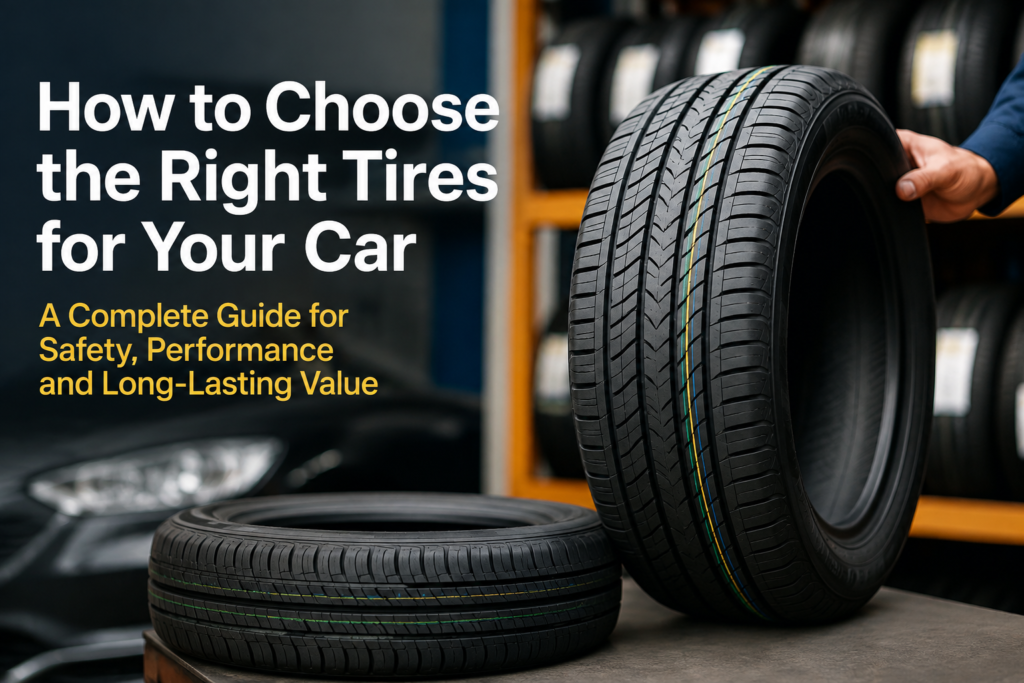
Choosing the right tires for your car is one of those decisions that can have a bigger impact than many drivers realize. Tires are the only part of your vehicle that actually touches the road, so their condition, size, design, and quality directly affect safety, handling, braking, comfort, and fuel economy.
In my opinion, buying tires should never be based only on price or appearance. A tire may look great and fit your wheels, but that does not necessarily mean it is the right choice for your car. Before buying a new set, I always think about the vehicle, the roads I normally drive on, the weather conditions, and the type of driving I do.
If you are wondering how to choose the right tires for your car, this guide will help you understand the most important things to consider.
Start With Your Car’s Recommended Tire Size
The first and most important step is finding the correct tire size for your vehicle. Your car manufacturer recommends a specific tire size based on the vehicle’s weight, suspension, braking system, handling characteristics, and wheel design.
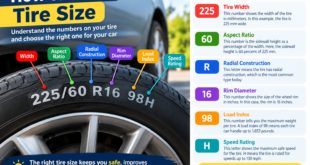
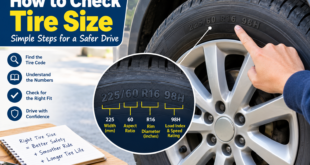
You can usually find the recommended tire size on a sticker inside the driver’s door, in the owner’s manual, or sometimes on the fuel door. The size may look something like 205/55R16.
Each part of this number has a meaning. The first number represents the tire width in millimeters. The second number represents the sidewall height as a percentage of the tire width. The letter R means radial construction, which is standard for modern passenger cars. The final number represents the wheel diameter in inches.
Getting this information correct is essential. Installing an incorrect tire size can affect speedometer readings, handling, clearance, and overall vehicle performance.
Understand Tire Size Numbers
Understanding tire size makes shopping for tires much easier.
For example, if your tire says 225/50R17, the 225 means the tire is 225 millimeters wide. The 50 means the sidewall height is 50 percent of the tire width. The R indicates radial construction, while 17 means the tire fits a 17 inch wheel.
I recommend checking the original tire size before considering any changes. Some vehicles can safely use alternative sizes, but this should be confirmed using reliable fitment information or advice from a qualified tire professional.
Changing tire size without understanding the consequences can create problems with steering, suspension clearance, braking, and electronic systems.
Consider the Weather Where You Drive
Weather is another major factor when choosing the right tires for your car.
If you live in an area with mostly warm weather and occasional rain, all season or summer tires may be suitable depending on your vehicle and driving conditions. If you regularly experience snow and freezing temperatures, dedicated winter tires may provide better traction.
For many drivers, all season tires are a practical choice because they are designed to perform reasonably well across different conditions. However, they are not necessarily the best option for every climate.
When I choose tires, I think about the conditions I will actually encounter rather than simply buying the most expensive option. A tire designed for severe winter conditions may not make sense for someone who drives almost exclusively on dry roads in a warm climate.
Think About Your Driving Style
Your driving habits should also influence your tire choice.
If you mostly drive around town, commute to work, and occasionally take longer trips, you may want tires that focus on comfort, quietness, durability, and fuel efficiency.
If you enjoy responsive handling and spirited driving, performance tires may be more appropriate. These tires can provide better cornering and steering response, although they may wear faster and sometimes produce more road noise.
For highway drivers, I usually consider tires that offer good stability, braking performance, long tread life, and low road noise.
There is no single tire that is perfect for every driver. The right choice depends on what you expect from your car.
Check the Tire Load Rating
The load rating tells you how much weight a tire can safely support under specified conditions.
This is particularly important for larger vehicles, SUVs, trucks, and cars that regularly carry passengers or heavy luggage. You should never choose a tire with a load rating below the manufacturer’s recommendation.
Even if the tire fits your wheel physically, an unsuitable load rating can create safety concerns and affect handling.
When comparing different tires, I always make sure the replacement tire meets or exceeds the vehicle manufacturer’s requirements.
Pay Attention to the Speed Rating
Tires also have a speed rating that indicates the maximum speed capability of the tire under specified conditions.
You may see letters such as H, V, W, or Y on the tire specification. The exact meaning depends on the tire rating system.
For everyday driving, you do not necessarily need the highest speed rating available. However, the replacement tires should meet the manufacturer’s recommended rating.
It is better to choose tires based on the complete specification rather than focusing on one number. Tire size, load rating, speed rating, construction, and intended use all matter.
Compare Tread Patterns
The tread pattern affects how a tire behaves on the road.
Some tread designs are optimized for wet conditions, while others focus more on dry handling, highway comfort, or off road traction. Directional and asymmetric tread patterns can also have specific installation requirements.
For normal road driving, I prefer a tread design that provides a good balance between wet grip, dry handling, comfort, and tread life.
Look at the grooves and channels in the tread as well. Effective water evacuation can help maintain traction on wet roads and reduce the risk of losing grip during heavy rain.
Consider Wet Weather Performance
Wet roads can dramatically reduce tire grip, which is why wet weather performance deserves serious attention.
A good tire should be able to move water away from the contact area and maintain traction during braking and cornering.
If you frequently drive in areas that receive heavy rainfall, I would prioritize wet grip instead of choosing tires based only on appearance or price.
Checking independent tire testing and manufacturer information can also help you compare wet braking performance.
Think About Ride Comfort and Road Noise
Tires do more than provide grip. They also influence how your car feels inside the cabin.
Some tires are designed to provide a softer and quieter ride, while performance focused tires can feel firmer and generate more road noise.
If your car is mainly used for commuting or family travel, comfort may be more important than aggressive handling.
I think this is one of the most overlooked factors when buying tires. A tire can have excellent performance but still be frustrating if it makes your daily drive noisy and uncomfortable.
Check Tread Life and Warranty
Tread life is another important consideration.
Some tires are designed to last many miles under normal driving conditions, while high performance tires may wear more quickly because of their softer compounds and performance focused construction.
Many tire manufacturers provide treadwear warranties on certain models. These warranties can give you useful information when comparing products, although actual tire life depends on alignment, inflation pressure, driving habits, road conditions, vehicle weight, and maintenance.
A cheaper tire that wears quickly may not actually save money over time. Sometimes spending a little more on a quality tire can provide better long term value.
Do Not Ignore Tire Age
Tires can age even when they have plenty of tread remaining.
Rubber compounds naturally change over time because of exposure to heat, sunlight, oxygen, and environmental conditions. That is why checking the tire’s manufacturing date can be useful when purchasing new tires.
If you are buying tires that have been sitting in storage for some time, ask the seller about their manufacturing date and storage conditions.
I would rather know the age of the tires before purchasing them than discover later that they have been sitting unused for a long period.
Check Your Budget Carefully
Price is obviously important, but I would not make it the only deciding factor.
There are usually budget, mid range, and premium tires available for most popular vehicle sizes. A premium tire may offer advantages in braking, wet grip, comfort, tread life, or overall refinement. On the other hand, a less expensive tire can sometimes be perfectly adequate for a driver with simple commuting needs.
The goal is to find the best balance between price, safety, performance, and expected lifespan.
Instead of asking, “What is the cheapest tire?” I think a better question is, “Which tire gives me the best value for the way I drive?”
Buy Tires in the Correct Set
Ideally, tires should be replaced as a complete set when possible. This helps maintain consistent handling and traction.
If replacing all four tires is not possible, follow the vehicle and tire manufacturer’s recommendations. In many situations, when only two tires are replaced, the newer tires are installed on the rear axle to help maintain stability, but the exact recommendation should be confirmed for your vehicle and tire setup.
Mixing different tire types or models can also change how the vehicle handles. For this reason, I prefer using matching tires whenever practical.
Check Tire Pressure Regularly
Even the best tires will not perform properly if they are incorrectly inflated.
Your recommended tire pressure can usually be found on the vehicle information label or in the owner’s manual. It is important to use the vehicle manufacturer’s recommended pressure rather than the maximum pressure printed on the tire sidewall.
Underinflation can increase rolling resistance, heat buildup, and uneven wear. Overinflation can affect ride comfort and the tire’s contact with the road.
I recommend checking tire pressure regularly, especially before long trips and when temperatures change significantly.
Do Not Forget Wheel Alignment and Balancing
New tires cannot solve every tire related problem.
If your wheels are out of alignment, your new tires may develop uneven wear. If the wheels are not properly balanced, you may experience vibration at certain speeds.
Before or during tire replacement, it is worth checking alignment, balancing, suspension components, and tire pressure.
This can help your new tires perform properly and potentially last longer.
Final Thoughts
Learning how to choose the right tires for your car does not have to be complicated. Start with the correct tire size, then consider your climate, driving style, road conditions, load requirements, speed rating, tread design, comfort, tread life, and budget.
In my view, the best tire is not necessarily the most expensive tire on the market. It is the tire that matches your vehicle and your real driving needs.
Before buying, take a few minutes to check your manufacturer’s recommendations and compare several suitable options. Think about where you drive, how often you drive, and what matters most to you.
The right tires can improve traction, braking, comfort, handling, and confidence behind the wheel. Since tires are such an important part of vehicle safety, choosing them carefully is one of the smartest decisions you can make for your car.