Related Articles
When I first started learning about cars, I used to think that understanding car parts was only for mechanics. I believed that as long as my car started every morning and took me where I wanted to go, I did not need to know anything else. Over time, I realized how useful it is to understand the basic components of a vehicle. Even a little knowledge can help save money, avoid unnecessary repairs, and make better decisions when buying replacement parts.
In my opinion, every car owner should know the purpose of the essential parts inside a vehicle. You do not have to become an expert mechanic. Simply knowing what each part does can make you more confident when visiting a workshop or discussing repairs with a technician.
In this beginner’s guide, I will explain the most important car parts in simple language so anyone can understand them.
Why Learning About Car Parts Matters
Many people drive every day without knowing what is happening under the hood. While there is nothing wrong with that, learning the basics gives you a better understanding of your vehicle.
I have found that knowing the essential car parts helps me notice problems earlier. Strange noises, warning lights, or poor performance become easier to understand. Instead of feeling confused, I have a better idea of what might be causing the issue.
This basic knowledge also helps avoid unnecessary expenses because you can ask informed questions before approving repairs.
The Engine
The engine is often called the heart of the car because it produces the power needed to move the vehicle. Without the engine, the car simply cannot operate.
Inside the engine, fuel mixes with air and burns to create energy. This energy moves the pistons, which eventually turn the wheels.
Modern engines are designed to be more fuel efficient and environmentally friendly than older models. Regular oil changes and proper maintenance keep the engine running smoothly for many years.
The Battery
The battery provides electrical power to start the engine and operate many electronic systems.
Whenever I turn the key or press the start button, the battery supplies the initial power needed to start the vehicle.
A weak battery may cause slow starting, dim headlights, or complete failure to start the car. Most car batteries last between three and five years depending on weather conditions and driving habits.
Keeping the battery terminals clean also improves performance.
Alternator
Once the engine starts, the alternator takes over.
Its job is to recharge the battery while also supplying electricity to the lights, air conditioning, infotainment system, power windows, and other electrical components.
If the alternator fails, the battery slowly loses power until the car eventually stops running.
Common warning signs include a battery warning light, flickering headlights, or electrical accessories working poorly.
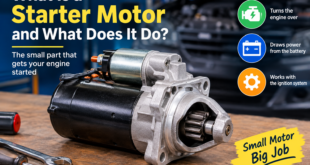
Starter Motor
The starter motor works together with the battery.
When you start the car, the starter motor rotates the engine until it begins running on its own.
A faulty starter may produce clicking sounds or prevent the engine from starting completely.
Fortunately, this part only operates for a few seconds during each engine start, but it is absolutely essential.
Transmission
The transmission transfers engine power to the wheels.
It also changes gears according to vehicle speed and driving conditions.
Some vehicles have manual transmissions that require the driver to change gears, while others use automatic transmissions that shift gears without driver input.
Smooth gear changes usually indicate that the transmission is working properly.
Changing transmission fluid at recommended intervals helps extend its life.
Clutch
Cars with manual transmissions use a clutch.
The clutch temporarily disconnects the engine from the transmission whenever the driver changes gears.
A worn clutch may cause slipping, difficulty shifting, or reduced acceleration.
Driving carefully and avoiding unnecessary clutch use can help increase its lifespan.
Braking System
The braking system is one of the most important safety features in any vehicle.
Whenever I drive, I always pay attention to how the brakes feel because reliable braking is essential for avoiding accidents.
The braking system includes brake pads, brake discs, brake calipers, brake fluid, and several other components working together.
Brake pads naturally wear out over time and should be replaced before they become too thin.
Ignoring worn brakes can damage other expensive parts and reduce safety.
Suspension System
The suspension system improves ride comfort and vehicle stability.
It absorbs bumps, potholes, and uneven road surfaces while keeping the tires in contact with the road.
Major suspension components include shock absorbers, struts, springs, and control arms.
If the suspension becomes worn, the vehicle may bounce excessively, feel unstable, or produce unusual noises.
Good suspension not only improves comfort but also helps maintain better control during turns and emergency braking.
Steering System
The steering system allows the driver to control the direction of the vehicle.
Modern cars usually have power steering, making the steering wheel much easier to turn.
If steering feels unusually heavy or loose, it could indicate a problem that needs inspection.
Proper wheel alignment also plays an important role in steering performance and tire life.
Tires
Tires are the only parts of the car that directly touch the road.
In my opinion, many drivers underestimate how important good tires really are.
Quality tires improve braking distance, cornering ability, fuel efficiency, and driving comfort.
Checking tire pressure every few weeks is one of the easiest maintenance tasks any driver can perform.
Driving with incorrect tire pressure increases fuel consumption and causes uneven tire wear.
Rotating the tires regularly also helps them wear evenly.
Wheels
The wheels support the tires and connect them to the vehicle.
They must remain properly balanced to ensure smooth driving.
Bent or damaged wheels may cause vibrations, uneven tire wear, and poor handling.
Keeping wheels clean also helps prevent corrosion and maintains their appearance.
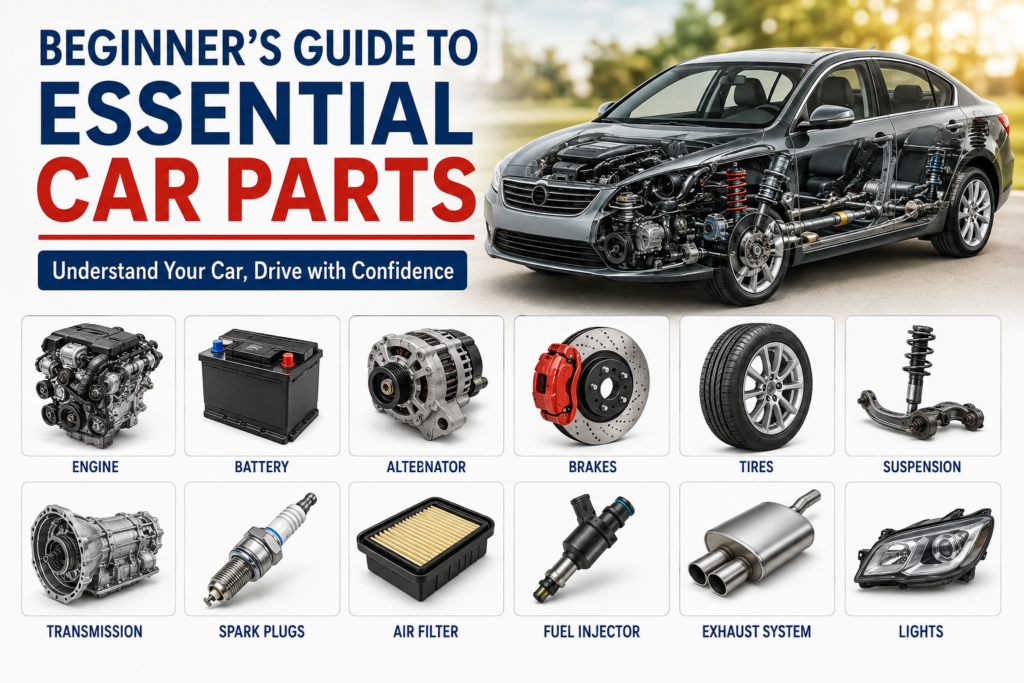
Beginner’s Guide to Essential Car Parts
Part 2
Cooling System
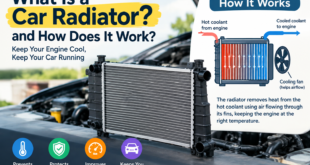
The cooling system keeps the engine operating at the correct temperature. An engine produces a huge amount of heat while running, and without proper cooling, it can overheat within a short time.
The cooling system circulates coolant through the engine to absorb excess heat. The heated coolant then flows to the radiator, where the heat is released into the air before the coolant returns to the engine.
I always make it a habit to check the coolant level regularly because preventing overheating is much easier than repairing a damaged engine.
Radiator
The radiator is one of the main parts of the cooling system. It works like a heat exchanger by cooling the hot coolant before it goes back into the engine.
A damaged or clogged radiator can reduce cooling efficiency and increase the risk of overheating.
If you notice coolant leaking under your car or see the temperature gauge rising higher than normal, the radiator should be inspected as soon as possible.
Keeping the radiator clean from dirt and insects also helps improve airflow.
Water Pump
The water pump is responsible for moving coolant throughout the cooling system.
Without it, coolant would remain still, causing the engine temperature to rise rapidly.
A failing water pump may produce unusual noises or coolant leaks around the engine.
Replacing a worn water pump before it completely fails can help prevent serious engine damage.
Air Filter
The engine needs clean air to burn fuel efficiently.
The air filter removes dust, dirt, and debris before air enters the engine.
Whenever the air filter becomes dirty, airflow decreases, which can reduce engine performance and fuel economy.
Replacing the air filter is one of the easiest and most affordable maintenance tasks.
In my experience, a clean air filter helps the engine breathe better and run more smoothly.
Fuel Pump
The fuel pump transfers fuel from the fuel tank to the engine.
Modern vehicles rely on a steady fuel supply to maintain smooth acceleration and efficient combustion.
A weak fuel pump may cause poor acceleration, engine hesitation, difficulty starting, or unexpected stalling.
Although fuel pumps usually last many years, using clean fuel and avoiding driving with an almost empty fuel tank may help extend their lifespan.
Fuel Injectors
Fuel injectors spray a precise amount of fuel into the engine.
Unlike older carburetors, fuel injectors deliver fuel much more accurately, improving fuel efficiency and reducing emissions.
Dirty injectors may cause rough idling, poor fuel economy, and reduced engine performance.
Using quality fuel and occasionally cleaning the fuel system can help keep injectors working properly.
Spark Plugs
Spark plugs create the spark that ignites the air and fuel mixture inside gasoline engines.
Even though they are small, they play a huge role in engine performance.
Worn spark plugs can lead to difficult starting, rough idling, engine misfires, and lower fuel efficiency.
Replacing spark plugs according to the manufacturer’s maintenance schedule keeps the engine running smoothly.
Exhaust System
After combustion takes place, exhaust gases need to leave the engine safely.
The exhaust system directs these gases away from the engine and passenger cabin while reducing noise.
It consists of several components, including exhaust pipes, the muffler, and the catalytic converter.
If the exhaust system develops leaks, the vehicle may become noisy and harmful gases could enter the cabin.
Catalytic Converter
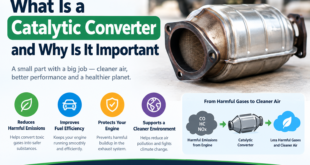
The catalytic converter helps reduce harmful emissions before they leave the exhaust system.
It converts dangerous gases into less harmful substances, making vehicles more environmentally friendly.
A damaged catalytic converter may reduce engine performance, increase fuel consumption, and trigger the check engine light.
Replacing this component can be expensive, so preventing engine problems that may damage it is always a smart idea.
Timing Belt
The timing belt keeps the engine’s internal components moving in perfect synchronization.
It ensures that the valves and pistons operate at exactly the right time.
If the timing belt breaks while the engine is running, serious engine damage can occur.
That is why I always recommend replacing the timing belt according to the maintenance schedule provided by the vehicle manufacturer.
Serpentine Belt
The serpentine belt powers several important accessories, including the alternator, power steering pump, air conditioning compressor, and sometimes the water pump.
A worn or cracked belt may begin making squealing noises.
Replacing it before it breaks helps avoid unexpected breakdowns.
Headlights and Taillights
Lighting is another essential part of every vehicle.
Headlights improve visibility at night and during bad weather, while taillights help other drivers see your vehicle.
Whenever I notice a burned out bulb, I replace it immediately because good visibility improves safety for everyone on the road.
Windshield Wipers
Windshield wipers may seem like simple parts, but they become extremely important during rain or dusty weather.
Old wiper blades often leave streaks on the windshield, reducing visibility.
Replacing worn blades every year or whenever they stop cleaning properly helps maintain a clear view of the road.
Common Signs That Car Parts Need Replacement
Most vehicles provide warning signs before a part completely fails.
Some common symptoms include unusual noises, warning lights, vibrations, reduced fuel economy, difficulty starting, fluid leaks, poor braking performance, overheating, rough engine operation, or strange smells.
Ignoring these signs usually makes repairs more expensive.
Whenever something feels different while driving, I believe it is better to inspect the vehicle early rather than waiting for a major breakdown.
Simple Maintenance Tips
Proper maintenance keeps essential car parts working efficiently for many years.
Check engine oil regularly and replace it on schedule.
Maintain the correct coolant level.
Inspect tire pressure every month.
Replace air filters when they become dirty.
Check brake pads for wear.
Keep the battery terminals clean.
Listen for unusual sounds while driving.
Fix small problems before they become large repairs.
Follow the maintenance schedule recommended by your vehicle manufacturer.
These simple habits can significantly increase the lifespan of your car while reducing repair costs.
Final Thoughts
When I first became interested in cars, I assumed understanding car parts would be difficult. After learning the basics, I realized that every driver can understand the essential components without needing advanced mechanical knowledge.
Knowing how the engine, battery, brakes, transmission, suspension, cooling system, and other important parts work together makes driving less stressful and vehicle maintenance much easier. It also helps me communicate more confidently with mechanics and avoid unnecessary repair expenses.
In my opinion, learning about essential car parts is one of the smartest things any car owner can do. You do not need to memorize every technical detail. Simply understanding the purpose of each major component allows you to take better care of your vehicle, improve safety, increase reliability, and enjoy many years of dependable driving. With regular maintenance and a little knowledge, your car can continue performing at its best for a long time.