Related Articles

When I think about basic car maintenance, the engine air filter is one of those small parts that often gets ignored. Many car owners regularly check the engine oil, coolant, tires, and battery, but they may forget about the air filter sitting inside the engine air intake system. In my opinion, this is a mistake because a clean engine air filter plays an important role in keeping the engine running properly.
The engine needs a steady supply of clean air to burn fuel efficiently. Before air reaches the engine, it passes through the engine air filter. The filter catches dust, dirt, sand, insects, and other small particles that could otherwise enter the engine. Over time, the filter becomes dirty and can restrict airflow.
Understanding what an engine air filter does, how to recognize a dirty filter, and when to replace it can help you maintain your vehicle and avoid unnecessary engine problems.
What Is an Engine Air Filter?
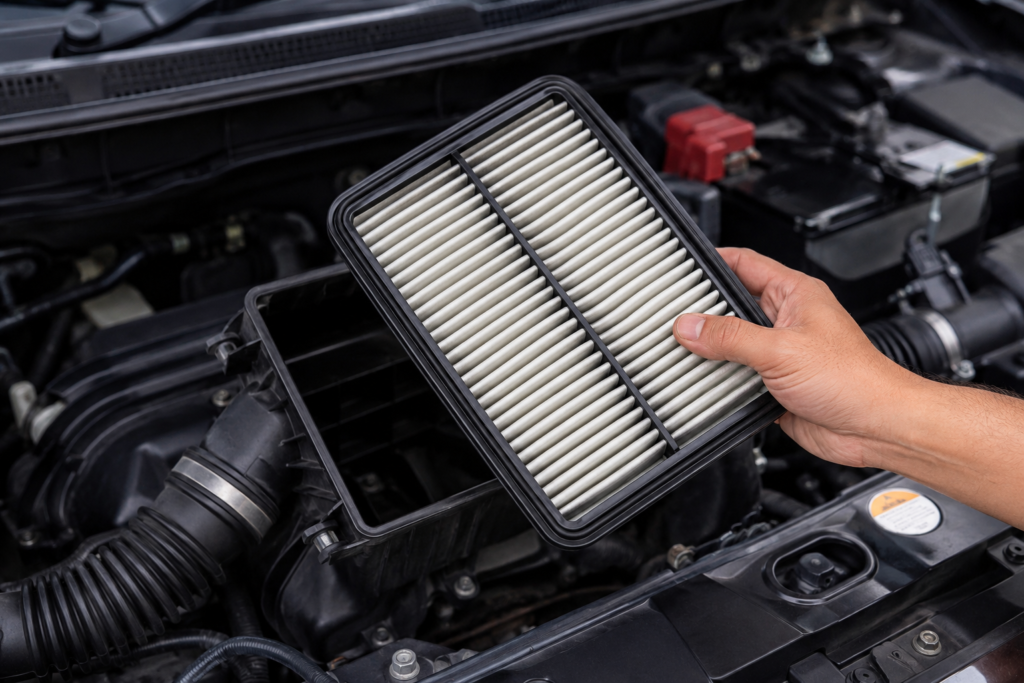
An engine air filter is a component designed to clean the air before it enters the engine. It is normally located inside a plastic air filter housing under the hood. Depending on the vehicle, the housing may be positioned near the top or side of the engine.
Most modern cars use a paper based pleated filter. The pleats provide a large filtering surface inside a relatively small space. Some vehicles may use different types of filters, but their basic purpose remains the same.
The engine requires air for combustion. However, outside air is never perfectly clean. It can contain road dust, dirt, pollen, sand, and tiny particles. If these contaminants enter the engine, they can contribute to wear on sensitive internal components.
This is why I consider the engine air filter a simple but important protective barrier between the outside environment and the engine.
What Does an Engine Air Filter Do?
The main job of an engine air filter is to allow clean air into the engine while stopping harmful particles from entering.
When you start your car, the engine draws air through the intake system. That air passes through the engine air filter before continuing toward the engine. The filter traps unwanted particles while allowing air to move through.
A healthy air filter therefore performs two important jobs. It protects the engine from contaminants and helps maintain proper airflow.
The engine control system uses information from different sensors to manage the air and fuel mixture. If airflow becomes restricted because of a heavily clogged filter, engine performance can be affected.
A clean filter does not make an ordinary car dramatically more powerful, but it helps the engine receive the air it needs to operate as designed.
Why Is the Engine Air Filter Important?
I believe the importance of an engine air filter becomes easier to understand when you consider the environment in which most cars operate. Roads can be dusty, construction areas can create airborne particles, and rural roads can expose vehicles to dirt and sand.
Without proper filtration, these particles could enter the engine intake system.
A dirty engine air filter can also reduce airflow. When the filter becomes heavily covered with dirt, the engine may have to work harder to draw air through it. Depending on the vehicle and how restricted the filter is, you may notice weaker acceleration, rougher performance, or changes in fuel economy.
The filter is also relatively inexpensive compared with major engine components. For that reason, replacing it at the appropriate time is one of the easier maintenance jobs that can help protect your vehicle.
Signs of a Dirty Engine Air Filter
One of the easiest ways to understand whether your engine air filter needs attention is to look for symptoms. A dirty filter does not always cause obvious problems immediately, but several signs can appear as it becomes increasingly restricted.
Reduced Engine Performance
If your car feels less responsive when accelerating, the air intake system is one area worth checking. A severely restricted air filter can reduce the amount of air reaching the engine.
However, reduced performance can have many causes, so the air filter should not automatically be blamed.
Poor Fuel Economy
A change in fuel consumption may sometimes be associated with an engine air filter that is excessively dirty. Modern engines can compensate for various changes in operating conditions, so the effect depends on the vehicle and the condition of the filter.
If your fuel economy suddenly changes, I would check the air filter along with other maintenance items.
Unusual Engine Behavior
A very dirty filter can sometimes contribute to rough running or sluggish acceleration. Again, these symptoms can be caused by other problems, including spark plugs, sensors, fuel system issues, or ignition components.
Visibly Dirty Filter
The simplest method is often a visual inspection. Remove the filter according to the vehicle manufacturer’s instructions and examine the filtering material.
If it is heavily covered with dirt, dust, or debris, replacement may be appropriate.
A filter does not have to look completely black before it needs replacement. The correct replacement interval depends on the vehicle, driving conditions, and manufacturer’s recommendations.
When Should You Replace the Engine Air Filter?
There is no single replacement interval that works perfectly for every car. Many manufacturers provide a recommended inspection or replacement schedule in the owner’s manual.
Some vehicles may require replacement around a particular mileage, while others may have a longer interval. The actual condition of the filter is also important.
If you frequently drive on dusty roads, unpaved roads, or in areas with heavy air pollution, your engine air filter may become dirty faster than one used mainly on clean paved roads.
For this reason, I prefer to think about the replacement schedule as a combination of mileage, time, and driving conditions.
If the owner’s manual recommends inspecting the filter at a certain service interval, follow that recommendation. If the filter is visibly clogged before the scheduled replacement, it makes sense to have it checked sooner.
How Driving Conditions Affect the Air Filter
Your driving environment can make a significant difference.
For example, someone who drives mostly on highways in relatively clean conditions may not expose the air filter to the same amount of dust as someone who regularly drives on unpaved roads.
Dusty roads are particularly important because fine particles can quickly collect in the filter material. Construction zones, agricultural areas, desert environments, and roads with loose dirt can also increase contamination.
This is why two cars with the same mileage may not necessarily need an engine air filter replacement at exactly the same time.
Can You Clean an Engine Air Filter?
This depends on the type of filter.
Many standard paper engine air filters are designed to be replaced rather than washed. Trying to clean a disposable paper filter with water can damage the filtering material.
Some people use compressed air to blow dirt from a filter, but I would be careful with this approach. Excessive pressure can damage the filter material and potentially create gaps that allow contaminants to pass through.
Reusable filters are different and should be cleaned according to their manufacturer’s instructions.
For a standard disposable filter, replacing it with the correct new filter is usually the safest and simplest option.
How to Replace an Engine Air Filter
Replacing an engine air filter is often a straightforward maintenance task, although the exact procedure varies between vehicles.
First, make sure the engine is turned off and has cooled down if necessary. Locate the air filter housing under the hood. It is usually connected to the engine intake system.
Open the housing carefully and note how the old filter is positioned. Remove the old filter and inspect the housing for leaves, dirt, or debris.
Before installing the new filter, make sure the housing is reasonably clean. Avoid allowing dirt to fall into the intake opening.
Install the new filter in the same orientation as the old one. Make sure it sits correctly around the edges so there are no visible gaps.
Finally, close and secure the air filter housing properly. A poorly sealed housing can allow unfiltered air to enter the engine intake system.
If you are unsure about the location or replacement procedure, checking the owner’s manual is the best option.
Does a New Air Filter Improve Fuel Economy?
This is a common question among car owners.
A new engine air filter can help restore proper airflow when the old filter is significantly dirty or restricted. However, replacing a filter that is only slightly dirty should not be expected to create a dramatic increase in fuel economy.
In my view, the main reason to replace the engine air filter is proper maintenance and protection rather than expecting a major performance upgrade.
If your vehicle has a severely clogged filter, replacing it may help the engine operate more normally. But fuel economy is affected by many other factors, including tire pressure, driving habits, traffic, engine condition, vehicle load, and fuel quality.
Engine Air Filter vs Cabin Air Filter
It is important not to confuse the engine air filter with the cabin air filter.
The engine air filter protects the engine by filtering air entering the combustion system. The cabin air filter, on the other hand, filters air entering the passenger compartment through the heating and air conditioning system.
Both filters are important, but they have completely different jobs.
If you are performing routine vehicle maintenance, check both filters according to the manufacturer’s recommended schedule.
Why I Recommend Regular Inspection
From my point of view, regular inspection is more useful than simply waiting until you notice a problem. An engine air filter is inexpensive compared with many engine components, and checking it usually does not take much time.
Even if the filter still looks usable, knowing its condition gives you a better idea of your vehicle’s maintenance needs.
I also recommend keeping a record of when the filter was replaced. This makes it easier to follow your maintenance schedule and prevents you from forgetting when the last replacement was performed.
Final Thoughts
The engine air filter may look like a simple piece of pleated material, but its job is important. It protects the engine from dust and other contaminants while allowing the engine to receive the air it needs for combustion.
A dirty engine air filter can restrict airflow and may contribute to reduced performance or other symptoms when it becomes severely clogged. The best time to replace an engine air filter depends on your vehicle manufacturer’s recommendations, mileage, filter condition, and driving environment.
In my opinion, checking the engine air filter should be a normal part of basic car maintenance. It is a small task that can help you keep your engine intake system clean and your vehicle operating as it should.
If you are unsure whether your filter needs replacement, inspect it or ask a qualified mechanic to check it during your next service. A little attention to simple maintenance can go a long way toward keeping your car reliable.