Related Articles

When I think about a car engine, I see it as the heart of the vehicle. Just like the human heart keeps blood moving through the body, the engine produces the power that allows a car to move. For someone who is new to cars, the engine can look complicated because it contains many metal components, pipes, wires, belts, and other parts working together. However, once you understand the main parts of a car engine and what each one does, the whole system becomes much easier to understand.
In this article, I will explain the most important engine components in simple language. My goal is to help beginners understand how a car engine works and why regular engine maintenance is important for reliable performance.
What Is a Car Engine?
A car engine is a machine that converts fuel into mechanical energy. In most traditional petrol and diesel cars, this happens through internal combustion. Fuel mixes with air inside the engine, and the mixture burns to create pressure. That pressure moves internal components and eventually turns the wheels through the vehicle’s drivetrain.
Modern engines are designed to work efficiently while producing less pollution and better fuel economy. Although different engines can have different designs, the basic purpose remains the same: produce controlled power and transfer that power to the wheels.
1. Engine Block
The engine block is one of the largest and most important parts of a car engine. I like to think of it as the main body of the engine because many other components are mounted inside or around it.
The engine block contains the cylinders where the pistons move up and down. It also contains passages for engine oil and coolant. These passages are important because the engine creates a lot of heat while operating.
Engine blocks are commonly made from cast iron or aluminum. Aluminum is popular in modern vehicles because it is lightweight and helps reduce the overall weight of the car.
2. Cylinders
The cylinders are the spaces inside the engine block where combustion takes place. The number of cylinders depends on the engine design. A car may have three, four, six, eight, or even more cylinders.
Each cylinder contains a piston. During engine operation, the piston moves up and down inside the cylinder. The combustion process pushes the piston downward, creating the movement needed to produce engine power.
When people talk about a four cylinder or six cylinder engine, they are referring to the number of cylinders inside the engine.
3. Pistons
Pistons are another essential part of the engine. They fit inside the cylinders and move up and down thousands of times while the engine is running.
The piston receives pressure from the burning air and fuel mixture. This force pushes the piston downward. The piston is connected to a connecting rod, which transfers its movement to the crankshaft.
Piston rings are fitted around the piston. These rings help maintain compression and control engine oil. If piston rings become worn, an engine may start consuming excessive oil or producing blue smoke.
4. Connecting Rods
Connecting rods connect the pistons to the crankshaft. Their job is to transfer the movement of the piston to the crankshaft.
As the piston moves up and down, the connecting rod moves with it. The connecting rod then helps convert this straight movement into the rotating movement of the crankshaft.
Because these parts operate under high pressure and speed, proper lubrication is extremely important. Low engine oil levels can increase friction and may cause serious internal engine damage.
5. Crankshaft
The crankshaft is one of the most important engine components because it converts the pistons’ up and down movement into rotational movement.
The connecting rods are attached to the crankshaft. When the pistons move, they turn the crankshaft. This rotation is then transferred through the drivetrain and eventually reaches the wheels.
The crankshaft also helps maintain smooth engine operation. A heavy rotating component called the flywheel or flexplate is connected to the crankshaft depending on the vehicle’s transmission system.
6. Cylinder Head
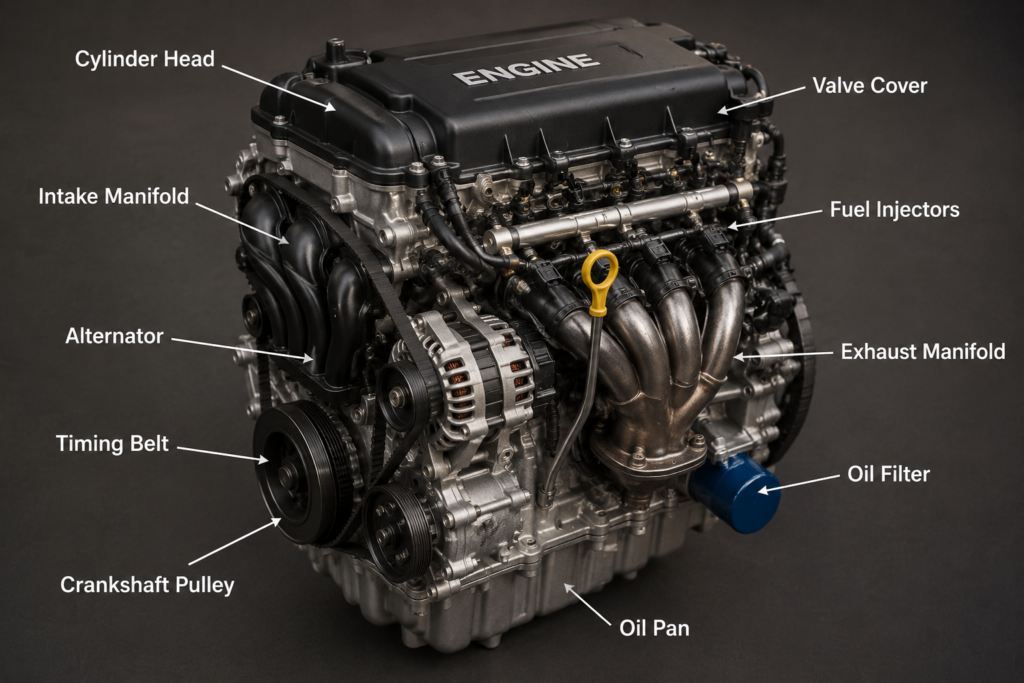
The cylinder head sits on top of the engine block. It contains several important components, including valves, camshafts in many engine designs, and passages for air, fuel, oil, and coolant.
The cylinder head plays a major role in controlling the combustion process. It seals the top of the cylinders and helps create the correct environment for combustion.
A damaged cylinder head gasket can cause coolant and oil to mix or allow combustion gases to escape. This is why overheating should never be ignored.
7. Valves
Engine valves control the movement of air, fuel, and exhaust gases. Intake valves allow the air and fuel mixture or air into the combustion chamber, depending on the engine design. Exhaust valves allow burned gases to leave the cylinder.
The valves must open and close at precisely the right time. Even a small timing problem can affect engine performance.
When valves do not operate correctly, drivers may notice rough idling, reduced power, unusual noises, or poor fuel economy.
8. Camshaft
The camshaft controls when the engine valves open and close. It has specially shaped sections called cam lobes that push the valve mechanism at specific points during engine operation.
The camshaft must remain synchronized with the crankshaft. This synchronization is managed by the timing belt or timing chain.
Modern engines can have different camshaft arrangements. Some have a single camshaft, while others use multiple camshafts to improve engine performance and efficiency.
9. Timing Belt or Timing Chain
The timing system keeps the crankshaft and camshaft synchronized. Depending on the engine, this can be done with a timing belt or timing chain.
The correct timing is extremely important because the pistons and valves need to move in coordination. If the timing becomes incorrect, the engine may run poorly or suffer serious internal damage.
Timing belts have a recommended replacement interval in many vehicles. Timing chains are generally designed for longer service life, but they can also wear and develop problems.
10. Intake Manifold
The intake manifold distributes air to the engine cylinders. In petrol engines, it can also be part of the system that manages the air and fuel mixture depending on the engine design.
A properly functioning intake system is important for combustion and engine performance. Problems with the intake manifold or its seals can sometimes cause air leaks, rough idling, or reduced performance.
The shape and design of the intake manifold can also influence how efficiently air reaches the cylinders.
11. Fuel Injectors
Fuel injectors deliver fuel into the engine in a controlled manner. Modern vehicles use electronic fuel injection systems that can precisely control how much fuel enters the combustion process.
Clean and properly functioning fuel injectors help the engine maintain good performance and fuel economy.
Dirty or faulty fuel injectors can cause symptoms such as rough running, poor acceleration, increased fuel consumption, and difficulty starting the engine.
12. Spark Plugs
Spark plugs are used in petrol engines to ignite the air and fuel mixture inside the cylinders. They produce a small electrical spark at the correct moment.
A worn or damaged spark plug can cause misfires and poor engine performance. That is why spark plug replacement is an important part of routine maintenance on petrol vehicles.
Diesel engines work differently and normally do not use spark plugs for ignition. Instead, diesel engines rely on compression ignition.
13. Exhaust Manifold
After combustion, the engine produces exhaust gases. The exhaust manifold collects these gases from the cylinders and directs them toward the exhaust system.
The exhaust manifold operates at very high temperatures. Cracks or leaks can create problems such as unusual noises, reduced performance, or exhaust fumes entering areas where they should not.
A healthy exhaust system is important not only for engine performance but also for emissions control.
14. Oil Pan
The oil pan is located at the bottom of the engine. It stores engine oil when the engine is not circulating it through the lubrication system.
The oil pump draws oil from the oil pan and sends it through the engine to lubricate moving parts. Engine oil reduces friction and helps carry heat away from internal components.
Checking the engine oil level regularly is one of the simplest things a car owner can do. In my opinion, it is also one of the most important habits for protecting an engine.
15. Oil Filter
Engine oil collects tiny particles and contaminants as it circulates. The oil filter helps remove these contaminants before the oil continues through the engine.
A blocked or old oil filter can reduce lubrication efficiency. This is why the oil filter is normally replaced during an engine oil service.
Using the correct engine oil and changing it according to the manufacturer’s recommended schedule can help extend engine life.
16. Alternator
The alternator is mounted to the engine and is driven by a belt. Its main job is to generate electrical power while the engine is running.
It also helps recharge the car battery and provides electricity for systems such as lights, electronics, and other vehicle accessories.
If the alternator develops a problem, the battery warning light may appear on the dashboard. Electrical components may also stop working correctly, especially if the battery becomes discharged.
17. Cooling System
An engine produces a large amount of heat. Without an effective cooling system, temperatures can rise high enough to cause serious damage.
The cooling system includes components such as the radiator, water pump, thermostat, coolant passages, and cooling fan. Coolant moves through the engine and carries heat toward the radiator, where that heat is released.
Keeping the coolant at the correct level and maintaining the cooling system can help prevent overheating.
How These Engine Parts Work Together
The interesting thing about a car engine is that no single component creates useful power by itself. Every major engine component has a specific job.
Air enters through the intake system. Fuel is delivered by the fuel system. The mixture or compressed air supports combustion inside the cylinder. The combustion process pushes the piston downward. The connecting rod transfers that movement to the crankshaft. The crankshaft converts the movement into rotation, which eventually helps turn the vehicle’s wheels.
At the same time, the valves control gas flow, the camshaft controls valve timing, the timing system keeps everything synchronized, the oil system reduces friction, and the cooling system controls temperature.
This cooperation between engine parts is what makes the entire engine work as one machine.
Why Understanding Engine Parts Matters
I believe every car owner should have at least a basic understanding of the main parts of a car engine. You do not need to become a professional mechanic, but knowing the basics can help you recognize problems earlier.
For example, if you understand the purpose of engine oil, you are more likely to check the oil level regularly. If you know what the cooling system does, you may take an overheating warning more seriously. If you understand the importance of timing, you will know why scheduled timing belt maintenance should not be ignored.
Basic knowledge can also make conversations with mechanics easier because you can better understand what they are explaining.
Final Thoughts
Understanding the main parts of a car engine does not have to be difficult. The engine may look complicated at first, but each component has a specific purpose. The engine block provides the main structure, pistons create movement, connecting rods transfer that movement, and the crankshaft converts it into rotation. The cylinder head, valves, camshaft, fuel injectors, intake system, exhaust system, lubrication system, and cooling system all work together to keep the engine operating properly.
From my point of view, learning about engine components is one of the best ways for a new car owner to become more confident with vehicle maintenance. Once you understand how these parts work together, you can better appreciate what happens every time you start your car.
Regular oil changes, proper coolant levels, timely filter replacement, and following the manufacturer’s maintenance schedule can make a major difference in engine reliability. A little knowledge and regular care can go a long way toward keeping a car engine running smoothly for many years.