Related Articles
When people talk about regular car maintenance, they usually think about engine oil, brake pads, tires, or the engine air filter. One part that often gets overlooked is the cabin air filter. In my opinion, this small filter deserves much more attention because it directly affects the air we breathe inside the car.
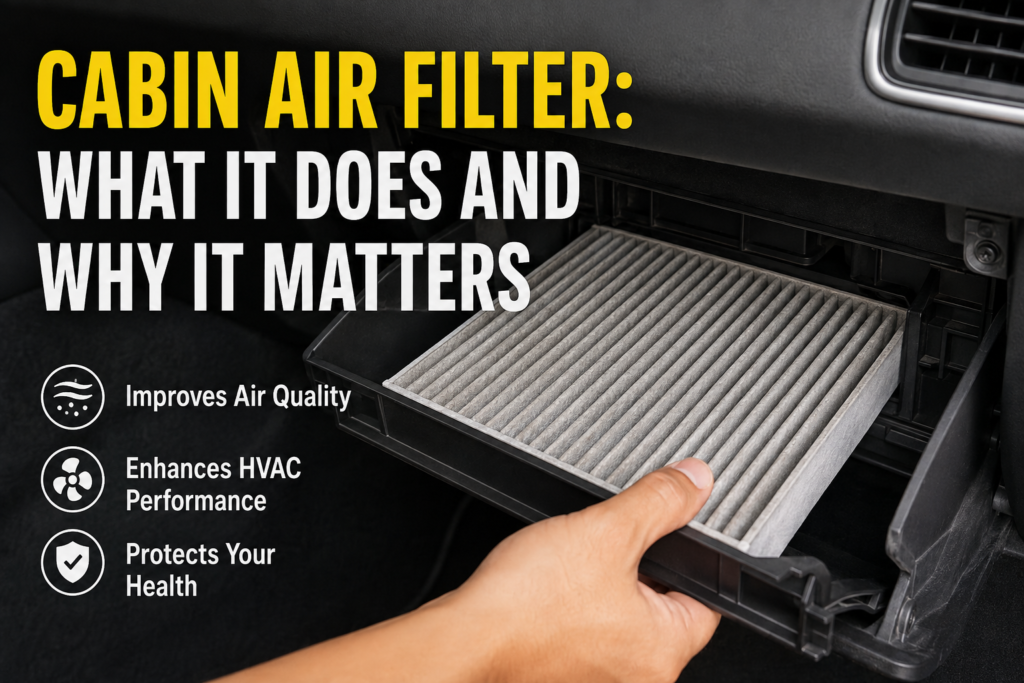
A cabin air filter is designed to clean the air before it enters the passenger compartment through the heating, ventilation, and air conditioning system. It helps reduce dust, pollen, dirt, and other airborne particles that can otherwise circulate inside the vehicle.
If you spend a lot of time driving, especially in cities with dusty roads, heavy traffic, or poor air quality, the condition of your cabin air filter can make a noticeable difference. A clean filter can help keep the interior air fresher while also allowing the vehicle’s HVAC system to work more efficiently.
What Is a Cabin Air Filter?
The cabin air filter is a filter located within the vehicle’s HVAC system. In many cars, it is positioned behind the glove compartment, although its exact location depends on the make and model.
Its main job is simple. Outside air enters the vehicle and passes through the cabin air filter before reaching the interior. The filter catches unwanted particles so that cleaner air can reach the passengers.
Most cabin air filters have a pleated material that provides a large filtering surface in a relatively small space. Some basic filters mainly capture dust and larger particles, while higher quality filters can also help reduce smaller airborne particles and unpleasant odors.
Some vehicles use activated carbon cabin air filters. These filters contain carbon material that can help reduce certain odors and gases from the air. For drivers who regularly travel through busy traffic, a carbon filter can be a useful option.
Why Does a Cabin Air Filter Matter?
The most important reason a cabin air filter matters is the quality of the air inside your vehicle.
We often assume that sitting inside a car automatically protects us from outside pollution. That is not always true. When the ventilation system brings outside air into the cabin, that air can contain dust, pollen, road particles, and other contaminants.
A properly maintained cabin air filter helps reduce the amount of these particles entering the passenger area.
I personally think this is one of those inexpensive maintenance items that can be easy to ignore because you cannot see it during normal driving. However, once a cabin air filter becomes dirty, you may start noticing changes in the ventilation system.
How Does a Cabin Air Filter Work?
The working process of a cabin air filter is quite straightforward.
When you turn on the ventilation, heating, or air conditioning system, air moves through the HVAC system. Before reaching the cabin, the air passes through the filter.
The filter material traps particles as air moves through it. Dust and debris remain on the filter while cleaner air continues toward the vents.
Over time, the filter collects more and more particles. As the filter becomes dirty, airflow can become restricted. This is why replacing the filter at the recommended interval is important.
A filter is not designed to last forever. Even if it looks reasonably clean from a distance, it may still contain a significant amount of fine dust and debris.
Signs of a Dirty Cabin Air Filter
One of the easiest ways to know that your cabin air filter may need attention is to observe how your HVAC system behaves.
A noticeable reduction in airflow from the vents can be one of the first signs. You may turn the fan to a higher setting but still feel that the air coming through the vents is weaker than usual.
Another common sign is an unusual smell when you turn on the air conditioning or ventilation system. A dirty or damp filter can sometimes contribute to unpleasant odors.
You may also notice more dust around the dashboard and interior surfaces. This does not automatically mean the cabin air filter is the problem, but it can be a reason to inspect it.
If your windows also seem to fog more easily or the ventilation system does not perform as well as it normally does, checking the cabin air filter is a sensible maintenance step.
When Should You Replace a Cabin Air Filter?
The replacement interval depends on the vehicle, driving conditions, and type of filter. Many manufacturers recommend replacement at a specific mileage or time interval, so the owner’s manual should be your first source of information.
However, driving conditions can make a difference.
If you frequently drive on dusty roads, construction areas, unpaved roads, or in heavy traffic, your cabin air filter may become dirty faster than one used mainly on clean highways.
In my experience, it is better not to wait until the HVAC system becomes noticeably weak before thinking about the filter. Checking it during routine maintenance can help you decide whether it is still in good condition.
Can a Dirty Cabin Air Filter Affect Air Conditioning?
Yes, a dirty cabin air filter can affect the performance of the air conditioning system.
The air conditioning system needs proper airflow to cool the cabin effectively. When a filter becomes heavily clogged, it can restrict the amount of air moving through the HVAC system.
You might notice that the air conditioner takes longer to cool the cabin or that the airflow feels weak even when the fan is running at a higher speed.
Replacing a severely clogged cabin air filter can restore proper airflow. However, it is important to remember that weak air conditioning can have many other causes, including low refrigerant, blower problems, blocked vents, or other HVAC issues.
So, changing the filter is a simple first check, but it should not be considered a solution to every air conditioning problem.
Cabin Air Filter vs Engine Air Filter
People sometimes confuse the cabin air filter with the engine air filter because both filters clean air.
The difference is where that air goes.
The engine air filter protects the engine by filtering the air that enters the engine for combustion. The cabin air filter, on the other hand, filters air entering the passenger compartment.
Both are important, but they serve completely different purposes.
The engine air filter is important for proper engine operation, while the cabin air filter is important for passenger comfort, interior air quality, and HVAC airflow.
Understanding this difference can help car owners avoid forgetting one of these important maintenance items.
How to Choose the Right Cabin Air Filter
Choosing the correct cabin air filter is important because filters are not universal. Different vehicles require different sizes and designs.
Before buying a replacement, check your vehicle’s owner’s manual or use the correct part number for your specific make, model, engine configuration, and model year.
There are several types of cabin air filters available.
A standard particulate filter is designed mainly to capture dust and airborne particles. A carbon or activated carbon filter can provide additional odor reduction and may be a better choice for people who frequently drive in busy urban areas.
I recommend choosing a reputable filter that matches the vehicle manufacturer’s specifications rather than simply buying the cheapest option available.
Can You Change the Cabin Air Filter Yourself?
In many vehicles, changing the cabin air filter is a relatively simple maintenance job. However, the difficulty varies between models.
Some vehicles provide easy access behind the glove compartment. Others may require the removal of additional panels or covers.
If you decide to replace it yourself, always follow the instructions for your specific vehicle. Pay attention to the airflow direction marked on the filter because installing it incorrectly can reduce its effectiveness.
If you are not comfortable working around the glove compartment or HVAC system, having a qualified mechanic replace it is a simple alternative.
Why Regular Cabin Air Filter Replacement Is Worth It
A cabin air filter is not one of the most expensive parts of a vehicle, but it can have an important effect on everyday driving comfort.
A clean filter supports better airflow, helps reduce dust entering the cabin, and allows the HVAC system to operate without unnecessary restriction caused by a clogged filter.
For me, this is a good example of why small maintenance tasks should not be ignored. A vehicle has many components that are easy to forget because they do not produce obvious problems until they become badly worn or dirty.
The cabin air filter is one of those parts.
Final Thoughts
The cabin air filter may be a small component, but its role is important. It helps filter air before it enters the passenger compartment and can contribute to cleaner interior air, better airflow, and more comfortable driving.
If you notice weak airflow, unusual smells, or reduced HVAC performance, checking the cabin air filter is a sensible place to start. Even when there are no obvious symptoms, following the replacement schedule recommended for your vehicle can help keep the ventilation system working properly.
From my point of view, taking care of a cabin air filter is a simple part of responsible car ownership. It does not require a huge investment, but it can make everyday driving more pleasant.
The next time you are having your car serviced, do not focus only on the engine and tires. Ask about the cabin air filter too. Keeping this small component clean is an easy way to support your vehicle’s HVAC system and maintain a more comfortable cabin for everyone inside.