Related Articles

When I think about basic car maintenance, the oil filter is one of the parts that deserves much more attention than it usually gets. Engine oil is responsible for lubricating the moving parts inside the engine, but the oil filter helps keep that oil clean enough to do its job properly. A good oil filter removes dirt, metal particles, carbon deposits, and other contaminants that can circulate through the engine.
In my opinion, changing the engine oil without paying attention to the oil filter is an incomplete maintenance job. Fresh oil can quickly become contaminated if the old or damaged filter is left in place. That is why understanding oil filter types, functions, replacement intervals, and signs of a bad filter can help you protect your engine and avoid unnecessary repair costs.
What Is an Oil Filter?
An oil filter is a component of the engine lubrication system designed to remove unwanted particles from engine oil. As oil circulates through the engine, it can collect dust, tiny metal particles, carbon, sludge, and other contaminants.
The oil filter catches many of these particles before the oil returns to important engine components. This simple process helps maintain cleaner oil and supports smoother engine operation.
Most modern vehicles use a filter made from a special filtering material arranged inside a metal or plastic housing. The exact design depends on the vehicle and engine.
Why Is an Oil Filter Important?
Engine oil does more than reduce friction. It also helps cool engine components, carries away contaminants, protects against corrosion, and supports the overall lubrication system.
As the engine runs, normal wear can produce microscopic metal particles. Oil can also become contaminated with combustion byproducts and other debris. If these contaminants continue circulating, they may increase wear on internal engine components.
This is where the oil filter becomes important.
A properly functioning oil filter helps trap harmful particles while allowing clean oil to continue flowing through the lubrication system. In my view, this makes the oil filter one of the smallest parts of the engine with a very important responsibility.
Main Functions of an Oil Filter
The primary function of an oil filter is filtration, but it performs several important tasks as part of the engine lubrication system.
Removing Contaminants
The filter captures dirt, dust, metal particles, carbon deposits, and other contaminants suspended in the oil. Keeping these materials out of sensitive engine areas can help reduce unnecessary wear.
Supporting Clean Engine Oil
Oil naturally becomes dirty as it works inside an engine. A good filter helps maintain the cleanliness of the oil for as long as possible.
Protecting Engine Components
Engine parts such as bearings, pistons, camshafts, and other moving components depend on proper lubrication. Contaminated oil can increase friction and wear. Effective filtration helps provide cleaner oil to these components.
Maintaining Proper Oil Flow
An oil filter must remove contaminants without restricting oil flow excessively. Modern filters are designed to balance filtration efficiency with the amount of oil the engine needs.
Different Types of Oil Filters
There is no single oil filter design used in every vehicle. Manufacturers use different types depending on engine design, available space, and maintenance requirements.
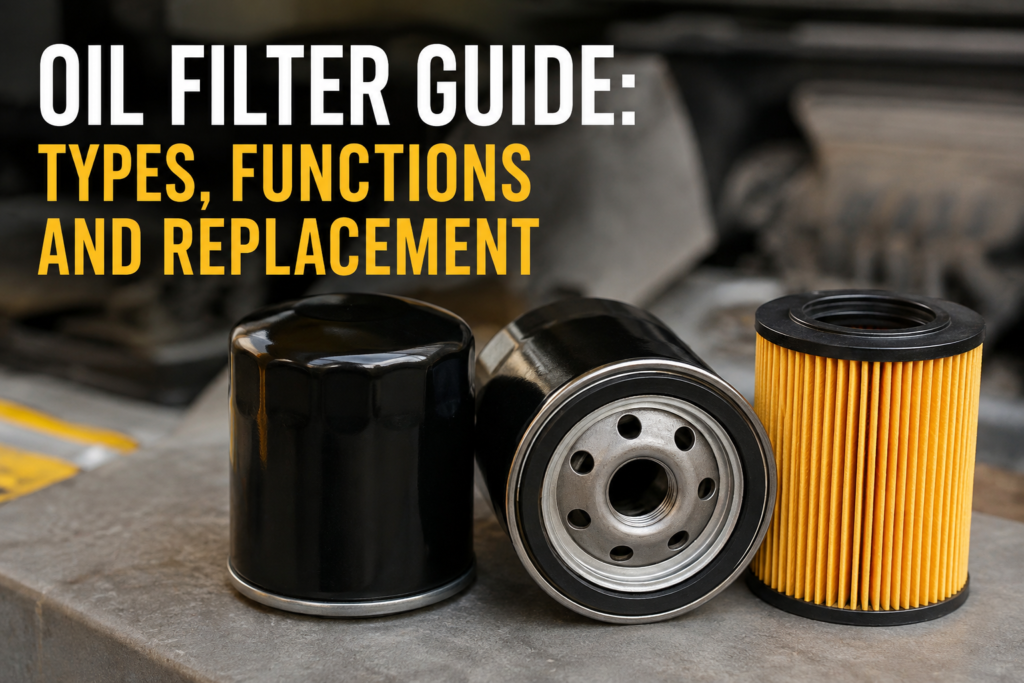
Spin On Oil Filters
Spin on oil filters are among the most common designs found in passenger vehicles. The entire filter is contained inside a metal housing and screws directly onto the engine.
They are relatively simple to replace. During an oil change, the old filter is removed and a new filter is installed.
Cartridge Oil Filters
Cartridge oil filters use a replaceable filtering element that sits inside a separate housing. Instead of replacing the complete housing, the filter element is replaced during maintenance.
Many modern vehicles use cartridge filters because they can reduce waste and allow manufacturers to design the filter housing specifically for the engine.
Primary Oil Filters
The primary oil filter is the main filter responsible for removing contaminants from the engine oil during normal circulation. Most passenger vehicles rely on this type of filtration.
Secondary or Bypass Oil Filters
Some engines and specialized applications use bypass filtration. A bypass filter processes a smaller amount of oil through a highly efficient filtering medium.
These systems are more common in certain heavy duty, commercial, industrial, or specialized applications than in ordinary passenger cars.
How Does an Oil Filter Work?
The process is fairly simple. Engine oil is pumped through the lubrication system, and contaminated oil reaches the filter.
Inside the filter is a filtering medium containing many small passages. Oil can pass through these passages while many larger contaminants are trapped.
The filtered oil then continues toward the engine components that require lubrication.
Most quality oil filters also include other components designed to support reliable operation. Depending on the design, these may include an anti drainback valve and a pressure relief or bypass valve.
The anti drainback valve helps prevent oil from draining out of the filter when the engine is switched off. This can help maintain oil availability when the engine starts again.
A bypass valve can allow oil to continue circulating if the filter becomes heavily restricted. This is important because maintaining oil flow is critical for engine protection.
When Should You Replace an Oil Filter?
The correct oil filter replacement interval depends on the vehicle, engine, oil type, driving conditions, and manufacturer’s maintenance recommendations.
In many cases, the safest approach is to replace the oil filter whenever you change the engine oil. This gives the new oil a clean filter to work with.
Some vehicles have longer maintenance intervals, while others may require more frequent service. If you regularly drive in heavy traffic, dusty conditions, extreme temperatures, or make many short trips, your engine may experience more demanding operating conditions.
I recommend checking the vehicle owner’s manual rather than relying only on a generic mileage figure.
Signs of a Bad or Clogged Oil Filter
An oil filter does not always fail in an obvious way. However, certain symptoms can indicate that the lubrication system needs attention.
Low Oil Pressure Warning
A low oil pressure warning light should never be ignored. It can have several causes, including low oil level, a failing oil pump, an oil leak, or a restricted filter.
If the warning light appears, it is better to stop safely and investigate the problem instead of continuing to drive normally.
Dirty Engine Oil
Engine oil naturally becomes darker as it is used, so dark oil alone does not prove that the filter is bad. However, excessive contamination, sludge, or visible particles may indicate a maintenance problem.
Reduced Engine Performance
A severely restricted filter can affect oil circulation. In some situations, poor lubrication may contribute to unusual engine behavior or increased mechanical resistance.
Unusual Engine Noise
Engine components depend on proper oil pressure and lubrication. Knocking, ticking, or other unusual noises should be taken seriously because they can indicate several different engine problems.
Oil Filter Leaks
Oil around the filter can indicate an improperly installed filter, damaged seal, incorrect filter, or another lubrication system issue. Any oil leak should be inspected promptly.
How to Replace an Oil Filter
Replacing an oil filter is usually straightforward, but it should be done carefully.
First, park the vehicle on a level surface and make sure the engine is safely positioned for maintenance. If the vehicle needs to be raised, use proper lifting equipment and never rely only on a jack.
Drain the old engine oil according to the vehicle’s service procedure. Then locate the oil filter.
Remove the old filter using the appropriate tool if necessary. Before installing the new filter, clean the mounting area and make sure the old gasket has not remained stuck to the engine.
For a spin on filter, lightly coat the new rubber gasket with clean engine oil before installation. Install the filter according to the manufacturer’s instructions. Avoid overtightening because excessive force can damage the gasket or filter housing.
For a cartridge filter, replace the filter element and any required sealing rings according to the vehicle’s service instructions.
After installation, add the correct amount and type of engine oil. Start the engine for a short period, switch it off, and check for leaks. Finally, check the oil level and adjust it if necessary.
How to Choose the Right Oil Filter
Choosing the correct oil filter is extremely important. I would never recommend selecting a filter based only on its appearance or size.
Always use the vehicle manufacturer’s recommended filter specification or a reputable equivalent. Check the part number carefully because filters that look similar may have different thread sizes, gasket dimensions, pressure ratings, or filtration characteristics.
A quality oil filter is worth the small additional cost when compared with the potential expense of engine repairs.
Can You Change the Oil Without Changing the Filter?
Technically, it may be possible in certain situations, but I do not consider it a good routine maintenance practice.
If you install fresh oil while leaving an old filter in place, the new oil immediately has to work with a filter that already contains contaminants. The old filter may also be approaching its service limit.
Replacing the oil filter with the engine oil gives the lubrication system a fresh starting point.
Common Oil Filter Mistakes
One common mistake is using the wrong filter. Another is installing the filter without properly checking the old gasket.
Overtightening is also a frequent problem. Many people assume tighter is always better, but excessive tightening can damage the seal and make the next replacement unnecessarily difficult.
Another mistake is ignoring the recommended oil filter replacement interval. Even if the vehicle seems to run normally, routine filtration is still important for long term engine care.
Using poor quality filters can also be a false economy. A filter is relatively inexpensive compared with the cost of repairing an engine affected by poor lubrication.
Final Thoughts
The oil filter may look like a simple component, but it plays an important role in protecting the engine. Its job is to help remove contaminants from the oil while maintaining the flow needed for proper lubrication.
Understanding the different oil filter types, knowing when to replace an oil filter, and choosing the correct replacement can make a real difference in vehicle maintenance.
From my point of view, replacing the oil filter whenever the engine oil is changed is one of the easiest maintenance habits a car owner can develop. It costs relatively little, takes limited time, and helps give the engine cleaner oil to work with.
A vehicle’s engine is made up of many precision components that depend on proper lubrication. Keeping the oil clean is therefore not something I would treat as optional. A good quality oil filter, the correct engine oil, and regular maintenance together can help support reliable engine performance and potentially extend the useful life of the engine.