Related Articles

When we talk about regular car maintenance, most people think about engine oil, air filters, tires, and brakes. The fuel filter often gets less attention, even though it plays an important role in keeping the engine running properly. In my experience, a clean fuel system can make a noticeable difference in how smoothly a vehicle starts, accelerates, and performs.
The fuel filter is a relatively small component, but its job is very important. It helps remove dirt, rust, dust, and other unwanted particles from the fuel before that fuel reaches sensitive parts of the engine. If the filter becomes clogged, the engine may not receive the proper amount of fuel, which can lead to several performance problems.
In this article, I will explain what a fuel filter does, why it matters, the common signs of a bad fuel filter, and when you should consider changing it.
What Is a Fuel Filter?
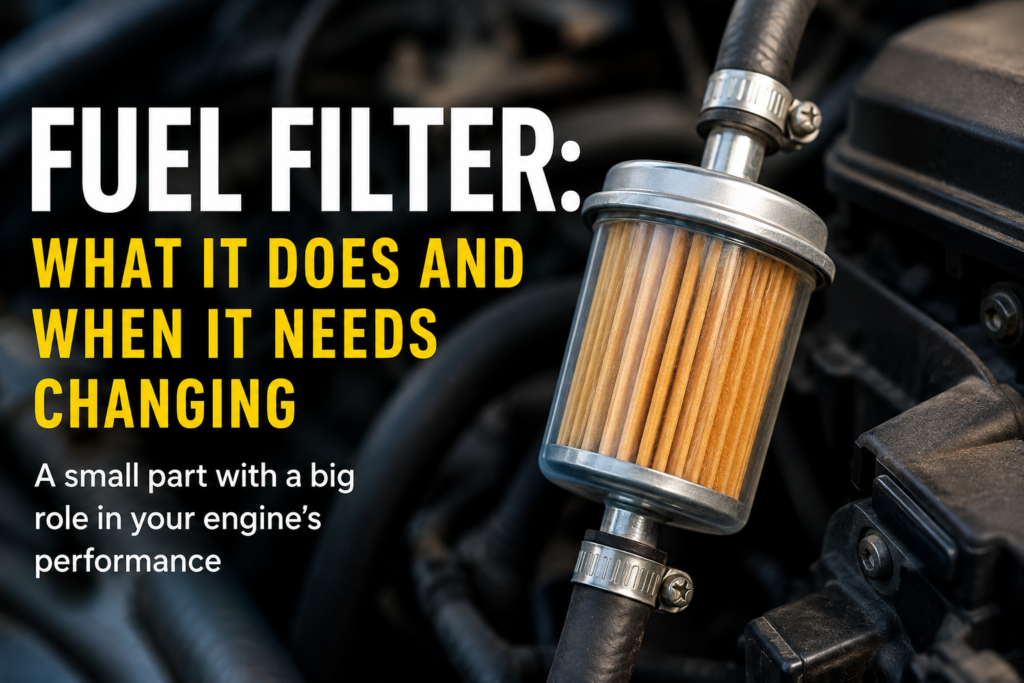
A fuel filter is a component in a vehicle’s fuel system that cleans the fuel before it reaches the engine. Fuel can sometimes contain small particles or contaminants, especially when the fuel tank is old, dirty, or exposed to moisture and corrosion.
The filter catches these unwanted particles and prevents them from traveling through the fuel lines. This helps protect important components such as fuel injectors, the fuel pump, and other parts of the fuel delivery system.
Different vehicles use different types of fuel filters. Some are installed along the fuel line, while others are located inside or near the fuel tank. The exact location and replacement procedure depend on the vehicle.
What Does a Fuel Filter Do?
The main job of a fuel filter is simple. It keeps contaminants away from the engine’s fuel system.
When fuel leaves the tank, it travels through the fuel system toward the engine. Before reaching the injectors or other fuel delivery components, the fuel passes through the filter. The filter traps particles that could otherwise cause damage or interfere with proper fuel delivery.
A clean fuel filter allows fuel to flow properly. A clogged fuel filter restricts that flow.
This is why I consider the fuel filter an important part of preventive maintenance. It may not be as visible as the engine oil or tires, but it quietly protects expensive engine components every time the vehicle is running.
Why Is a Fuel Filter Important?
Modern engines depend on precise fuel delivery. Fuel injectors need clean fuel to operate correctly, and the fuel pump needs adequate fuel flow to maintain proper pressure.
If contaminants reach these components, they can contribute to poor performance and premature wear. A restricted fuel filter can also make the fuel pump work harder because it has to push fuel through a blockage.
Keeping the fuel filter clean can therefore help support proper fuel flow and protect the fuel system.
From my point of view, replacing a fuel filter when required is much better than waiting until a fuel delivery problem becomes serious. A relatively inexpensive maintenance part can help prevent more expensive repairs.
Signs of a Clogged Fuel Filter
One of the most common questions drivers ask is how they can tell whether the fuel filter needs changing. There are several warning signs to watch for.
Difficulty Starting the Engine
A vehicle with a restricted fuel filter may have trouble starting because the engine is not receiving enough fuel. You may notice that the engine takes longer than usual to start.
However, starting problems can have many causes, including a weak battery, fuel pump problems, ignition issues, or faulty sensors. Therefore, a fuel filter should not automatically be blamed without proper inspection.
Poor Acceleration
If your vehicle feels weak when you press the accelerator, a restricted fuel filter could be one possible cause.
During acceleration, the engine needs more fuel. If the filter is heavily clogged, the fuel system may struggle to provide enough fuel when demand increases.
You might notice the vehicle hesitating or feeling less responsive, especially when accelerating uphill or carrying extra weight.
Engine Misfires
A restricted fuel supply can sometimes contribute to engine misfires. The engine may feel rough or unstable, particularly when you are accelerating.
Misfires can also be caused by spark plugs, ignition coils, injectors, sensors, and other problems. If the check engine light appears, proper diagnosis is important.
Engine Stalling
In more severe cases, insufficient fuel flow can cause the engine to stall. This may happen when the vehicle is under load or when the engine needs more fuel than the restricted filter can provide.
If your vehicle repeatedly stalls, it is important to have the fuel system inspected rather than simply replacing parts based on symptoms.
Reduced Fuel Economy
A clogged fuel filter can affect engine performance and fuel delivery. In some situations, this may contribute to poor fuel economy.
However, fuel consumption can change for many reasons. Tire pressure, driving habits, traffic, engine condition, air filters, spark plugs, and fuel quality can all affect fuel economy.
For this reason, reduced fuel economy alone is not enough to confirm that the fuel filter is bad.
When Should a Fuel Filter Be Changed?
There is no single replacement interval that applies to every vehicle. Some manufacturers recommend replacing the fuel filter at a specific mileage or service interval. Other vehicles use fuel filters designed to last much longer.
The best approach is to check your vehicle owner’s manual or follow the manufacturer’s maintenance schedule.
The replacement interval can also depend on driving conditions and fuel quality. Vehicles that regularly operate in dusty environments or use questionable fuel sources may experience more contamination than vehicles operating under cleaner conditions.
If you do not know when your fuel filter was last replaced, checking the vehicle’s maintenance history is a good starting point.
Can a Fuel Filter Last Too Long?
Yes. Like many filters, a fuel filter collects contaminants over time. Eventually, the filtering material can become restricted.
A filter that has been in service for a very long time may not allow fuel to flow as efficiently as it should. This can put additional strain on the fuel system and contribute to performance problems.
That is why I prefer following the recommended maintenance schedule instead of waiting for symptoms to appear. Preventive maintenance is usually easier and less expensive than dealing with a breakdown.
What Happens If You Ignore a Bad Fuel Filter?
Ignoring a clogged fuel filter can allow a small maintenance issue to develop into a larger fuel system problem.
Restricted fuel flow can affect engine performance and may increase the workload on the fuel pump. If the fuel pump is already weak, additional restriction may make the problem more noticeable.
A vehicle may also become difficult to start or lose power under certain driving conditions.
It is important to understand that a bad fuel filter does not always cause obvious symptoms immediately. A vehicle can continue running while the filter gradually becomes more restricted.
Fuel Filter and Fuel Pump Relationship
The fuel filter and fuel pump work together as part of the fuel delivery system.
The fuel pump moves fuel from the tank toward the engine, while the filter helps remove contaminants from that fuel. If the filter becomes severely restricted, the pump may have to work harder to move fuel through the system.
This is one reason regular fuel system maintenance matters. Protecting the fuel pump can be especially important because fuel pump replacement can be considerably more expensive than replacing a routine filter.
Can You Change a Fuel Filter Yourself?
The answer depends on the vehicle and the location of the filter.
Some older vehicles have an easily accessible external fuel filter. On those vehicles, replacement may be relatively straightforward for someone with the correct tools and mechanical experience.
Modern vehicles can be more complicated. Some fuel filters are integrated with the fuel pump assembly inside the fuel tank. Accessing these components may require additional work.
Fuel is also flammable, so safety should always come first. If you are not comfortable working around fuel, I recommend having the job completed by a qualified mechanic.
The correct filter must also be used for the specific vehicle. Installing the wrong part or fitting it incorrectly can cause fuel leaks or other problems.
How Much Does a Fuel Filter Replacement Cost?
The cost of replacing a fuel filter depends on the vehicle, filter design, labor rates, and whether the filter is a separate component or part of a larger fuel pump assembly.
For a vehicle with an easily accessible external filter, the job may be relatively inexpensive. If the filter is located inside the fuel tank and integrated with the fuel pump assembly, the repair can be more expensive.
Instead of focusing only on the price of the filter, I think it is better to consider the overall condition of the fuel system and follow the manufacturer’s recommended service procedure.
How to Keep Your Fuel System Healthy
There are several simple habits that can help maintain a healthy fuel system.
First, use fuel from reliable stations whenever possible. Good fuel quality can help reduce the chance of excessive contamination.
Second, follow the vehicle manufacturer’s maintenance schedule. Do not assume that every car needs the fuel filter changed at the same mileage.
Third, pay attention to changes in engine performance. Difficulty starting, hesitation, poor acceleration, stalling, or unusual engine behavior should not be ignored.
Finally, keep records of maintenance. Knowing when the fuel filter was last changed makes future service decisions much easier.
Final Thoughts
The fuel filter may not be one of the most talked about car parts, but it has an important job. It helps keep dirt and other contaminants away from the fuel system and supports proper fuel delivery to the engine.
A clogged fuel filter can contribute to difficult starting, poor acceleration, hesitation, stalling, and other performance concerns. At the same time, these symptoms can have many different causes, so proper diagnosis is important before replacing parts.
In my opinion, the best way to deal with a fuel filter is to treat it as part of normal vehicle maintenance rather than waiting for a major problem. Check your owner’s manual, follow the recommended replacement schedule, and use the correct filter for your vehicle.
A small amount of regular maintenance can go a long way toward keeping the fuel system working properly and helping your engine deliver the performance you expect.