
Related Articles



When I think about the small parts that have a big effect on engine performance, spark plugs are always near the top of the list. A spark plug may look like a simple component, but it plays a very important role inside a gasoline engine. Without a properly working spark plug, the engine cannot burn the air and fuel mixture correctly.
In my experience, many car owners do not pay much attention to spark plugs until they notice problems such as difficult starting, rough idling, poor acceleration, or reduced fuel economy. Understanding how spark plugs work and knowing the different types can help you recognize problems early and make better maintenance decisions.
In this guide, I will explain what spark plugs are, how they work, the main types of spark plugs, their functions, common symptoms of failure, and when they should be replaced.
What Is a Spark Plug?
A spark plug is a component used in gasoline engines to ignite the mixture of air and fuel inside the combustion chamber. It is installed in the cylinder head and receives a high voltage electrical charge from the ignition system.
When the electrical voltage reaches the spark plug, it creates a spark across a small gap between the electrodes. This spark ignites the compressed air and fuel mixture. The resulting combustion pushes the piston downward and produces the power needed to move the vehicle.
Although the basic job sounds simple, a spark plug must operate under extreme conditions. It deals with high temperatures, pressure, electrical voltage, and combustion gases thousands of times during normal driving.
How Do Spark Plugs Work?
The working principle of a spark plug is quite straightforward. The ignition system sends a high voltage current through the spark plug. The current travels toward the center electrode and attempts to cross the gap to the ground electrode.
Because there is a small space between the electrodes, the electrical energy creates a spark. That spark ignites the compressed fuel and air mixture in the cylinder.
The timing of this spark is extremely important. It must occur at the correct moment for the engine to produce efficient combustion. Modern engines use electronic systems to control ignition timing very precisely.
If the spark occurs too early or too late, engine performance can suffer. This is one reason why the correct spark plug and proper installation are so important.
Main Functions of Spark Plugs
The primary function of a spark plug is ignition, but there is more to its role than simply creating a spark.
Igniting the Air and Fuel Mixture
The most important function is to ignite the compressed mixture inside the combustion chamber. This creates the controlled explosion that produces engine power.
Supporting Engine Performance
A healthy spark plug helps the engine burn fuel efficiently. When the spark is strong and occurs at the correct time, combustion can be smoother and more consistent.
Helping Maintain Fuel Economy
Proper combustion can also support better fuel economy. Worn or damaged spark plugs may cause incomplete combustion, which can result in increased fuel consumption.
Supporting Easy Engine Starting
Spark plugs are especially important when starting the engine. If they are worn, dirty, or damaged, the engine may take longer to start or may struggle to start at all.
Reducing Misfires
A good spark plug produces a reliable spark for every combustion cycle. This helps reduce engine misfires and keeps the engine running smoothly.
Types of Spark Plugs
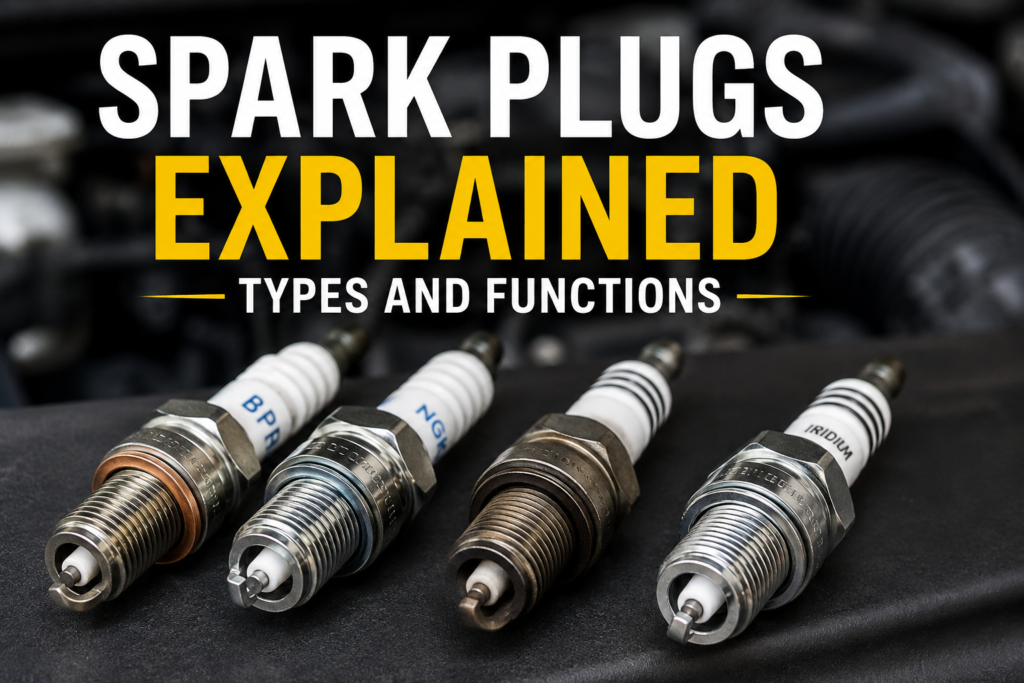
There are several types of spark plugs available, and they are not all designed in the same way. The main differences usually involve the electrode material, construction, heat range, and design.
Choosing the correct type depends on the vehicle manufacturer’s specifications and the engine design.
Copper Spark Plugs
Copper spark plugs are among the traditional types used in many gasoline engines. They usually have a copper core with a nickel alloy electrode.
One advantage of copper spark plugs is their excellent electrical conductivity. They can provide reliable performance in engines designed to use them.
However, the electrode material is relatively soft compared with some modern alternatives. This means copper spark plugs generally have a shorter service life.
I would always recommend checking the vehicle manufacturer’s recommended replacement interval rather than assuming that every copper spark plug needs to be replaced at the same mileage.
Platinum Spark Plugs
Platinum spark plugs use platinum on the electrode area. Platinum is harder and more resistant to wear than traditional nickel materials.
Because of this, platinum spark plugs can usually last longer than conventional copper spark plugs. They also maintain their performance for a longer period under normal operating conditions.
Platinum spark plugs are commonly found in vehicles that require longer service intervals. They can be a good choice when the engine manufacturer specifically recommends them.
Iridium Spark Plugs
Iridium spark plugs are considered a premium option for many modern gasoline engines. Iridium is a very hard material that can withstand high temperatures and wear.
The center electrode can be made very fine, which allows the spark to form efficiently. The result can be reliable ignition and long service life when the spark plug is correctly matched to the engine.
In my view, iridium spark plugs are particularly useful for modern engines designed around them. However, buying the most expensive spark plug is not automatically better. The correct specification for the engine should always come first.
Double Platinum Spark Plugs
Double platinum spark plugs use platinum on both the center and ground electrodes. This design can provide improved resistance to electrode wear compared with conventional spark plugs.
They are often used in engines that have specific ignition system requirements. Again, the important thing is to follow the manufacturer’s recommendation rather than choosing a spark plug based only on its material.
Spark Plug Heat Range
Another important feature of a spark plug is its heat range. This does not simply mean how hot the spark plug becomes. Instead, it refers to how quickly the plug can transfer heat from its firing end into the cylinder head.
A spark plug with an incorrect heat range may cause problems. A plug that runs too hot can increase the risk of abnormal combustion or overheating at the firing end. A plug that runs too cold may become contaminated more easily.
This is why using the correct heat range is essential. The heat range should be selected according to the engine manufacturer’s specifications.
Common Signs of Bad Spark Plugs
Spark plugs gradually wear out, and several symptoms can indicate that they need attention.
Difficult Starting
If your vehicle becomes harder to start than usual, worn spark plugs can sometimes be responsible. The engine may crank normally but take longer to actually start.
Rough Idling
A healthy engine should normally idle smoothly. If the engine shakes, vibrates, or feels uneven while idling, a spark related problem could be one possible cause.
Poor Acceleration
If the vehicle feels weak when accelerating, worn spark plugs may contribute to poor combustion. However, other engine and fuel system problems can produce similar symptoms.
Reduced Fuel Economy
Bad spark plugs can cause incomplete combustion. If the engine is not burning fuel efficiently, fuel consumption may increase.
Engine Misfires
A misfire occurs when combustion does not happen correctly in one or more cylinders. Faulty spark plugs are one possible cause of misfires.
Check Engine Light
Modern vehicles can detect certain ignition and combustion problems. A faulty spark plug can contribute to a check engine warning, especially when it causes repeated misfires.
What Causes Spark Plugs to Wear Out?
Spark plugs operate in an extremely demanding environment, so wear is normal over time.
One common cause is electrode wear. The electrodes gradually change shape as they are exposed to repeated electrical sparks and combustion temperatures.
Carbon deposits can also build up on the firing end. These deposits may interfere with normal ignition.
Oil contamination can be another issue. If engine oil reaches the combustion chamber because of an underlying engine problem, it can contaminate the spark plug.
Incorrect fuel mixture, ignition problems, overheating, and other engine issues can also affect spark plug condition.
For this reason, simply replacing the spark plugs may not always solve the problem. If a new plug becomes contaminated quickly, it is important to investigate the underlying cause.
When Should Spark Plugs Be Replaced?
There is no single replacement interval that applies to every vehicle. The recommended service life depends on the spark plug type, engine design, driving conditions, and manufacturer specifications.
Some conventional spark plugs require replacement relatively often, while platinum and iridium spark plugs can last significantly longer.
I recommend checking the vehicle owner’s manual for the correct replacement interval. If the vehicle is experiencing symptoms such as misfires, difficult starting, or poor performance, the spark plugs should also be inspected even if the normal service interval has not been reached.
Why Correct Spark Plug Installation Matters
Installing the correct spark plug is just as important as choosing the correct type. Spark plugs have specific dimensions, thread sizes, electrode designs, and heat ranges.
Using the wrong plug can cause serious engine problems. Installation also requires the correct tightening procedure. If a spark plug is installed too tightly, it can damage the threads or cylinder head. If it is too loose, heat transfer and sealing may be affected.
The spark plug gap is another important consideration. The gap determines the distance the spark must cross between the electrodes. Some plugs come pre gapped, but the specified gap should always be confirmed for the particular engine.
How to Keep Spark Plugs in Good Condition
Regular engine maintenance is one of the best ways to support spark plug life. Keeping the ignition system, fuel system, and engine in good condition can reduce unnecessary contamination and wear.
Using the recommended fuel and following the manufacturer’s maintenance schedule can also help.
When inspecting spark plugs, their appearance can provide useful information about engine operation. Heavy deposits, unusual discoloration, damaged electrodes, or oil contamination may indicate a problem that needs further investigation.
Final Thoughts
Spark plugs may be small, but they are essential for the operation of a gasoline engine. Their main job is to create the spark that ignites the air and fuel mixture, but their condition can also influence starting, acceleration, fuel economy, smoothness, and overall engine performance.
Copper, platinum, double platinum, and iridium spark plugs all have different characteristics. The best spark plug is not necessarily the most expensive one. The right choice is the spark plug that matches the engine manufacturer’s specifications.
From my point of view, one of the easiest ways to avoid unnecessary engine problems is to take spark plug maintenance seriously. If your vehicle develops rough idling, difficult starting, poor acceleration, or repeated misfires, checking the spark plugs is a sensible part of the diagnostic process.
A little attention to these small components can help keep the engine running smoothly and efficiently for a long time.
Frequently Asked Questions
How often should spark plugs be changed?
The replacement interval depends on the vehicle and spark plug type. Always follow the interval recommended in the owner’s manual.
Are iridium spark plugs better than copper spark plugs?
Iridium spark plugs generally offer longer service life and strong performance, but the correct spark plug depends on the engine. Always use the type specified by the manufacturer.
Can bad spark plugs affect fuel economy?
Yes. Worn or contaminated spark plugs can contribute to incomplete combustion, which may reduce fuel efficiency.
Can I replace spark plugs myself?
Spark plug replacement can be a manageable maintenance task for people with the correct tools and experience. However, the correct plug specification, gap, and tightening procedure must be followed carefully.
What are the main symptoms of bad spark plugs?
Common symptoms include difficult starting, rough idling, poor acceleration, engine misfires, reduced fuel economy, and sometimes a check engine light.