Related Articles


When I think about a vehicle’s suspension system, control arms are one of the parts that deserve more attention than they usually get. Many drivers know about shocks, struts, springs, and tires, but the control arm is often overlooked. In reality, control arms play an important role in keeping the wheel properly positioned while allowing the suspension to move up and down.
A good suspension system is not only about making the ride comfortable. It also helps the vehicle maintain stability, steering control, and proper tire contact with the road. This is where control arms become important.
In this article, I will explain what control arms are, how they work, the different types of control arms, common problems, and the signs that can tell you when they may need attention.
What Is a Control Arm?
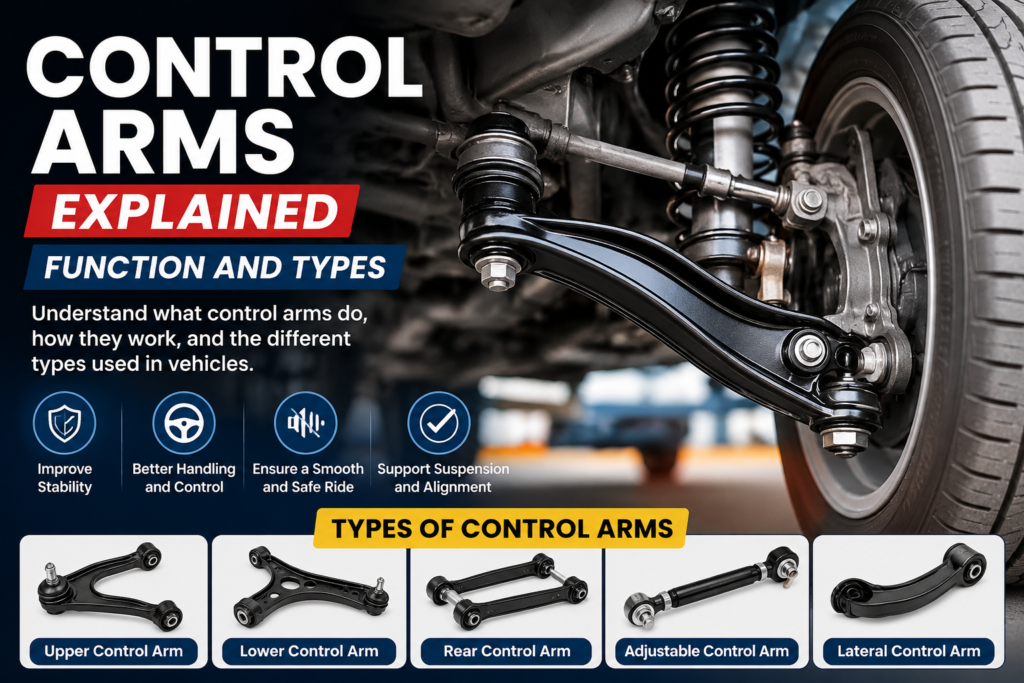
A control arm is a suspension component that connects the vehicle’s wheel hub or steering knuckle to the vehicle’s frame or chassis. It acts as a link between the moving wheel assembly and the main body of the vehicle.
Most control arms are designed to allow controlled suspension movement. As the vehicle travels over bumps, dips, and uneven roads, the wheel needs to move vertically without moving too far forward, backward, or sideways. The control arm helps guide this movement.
Control arms are commonly made from stamped steel, cast aluminum, or forged materials. Their exact design depends on the vehicle’s suspension layout, weight, performance requirements, and manufacturer specifications.
In my view, the easiest way to understand a control arm is to think of it as a strong guiding link. It gives the wheel enough freedom to move with the suspension while keeping that movement controlled.
What Does a Control Arm Do?
The main function of a control arm is to control the movement and position of the wheel. It performs several important jobs at the same time.
First, it connects the wheel assembly to the vehicle chassis. This connection allows the suspension to move while keeping the wheel within its intended range.
Second, the control arm helps maintain proper wheel alignment. Alignment angles such as camber and caster can be affected when suspension components become worn or damaged.
Third, control arms help absorb and manage forces created during driving. Braking, acceleration, cornering, and hitting road imperfections all place loads on the suspension.
Another important function comes from the bushings and ball joints attached to the control arm. These components allow movement while reducing unwanted vibration and harshness.
Without properly working control arms, the suspension could lose some of its ability to keep the wheel stable and correctly positioned.
Main Parts of a Control Arm
A control arm assembly normally includes several important components.
Control Arm Body
The main arm is the structural part. It is usually made from steel or aluminum and is designed to handle suspension loads.
Bushings
Control arm bushings are flexible components located where the control arm attaches to the chassis. They allow controlled movement while helping isolate vibration and road noise.
Bushings can wear out over time because they are constantly exposed to movement, heat, moisture, and road conditions.
Ball Joint
The ball joint provides a flexible connection between the control arm and steering knuckle. It allows the wheel to move and steer while remaining connected to the suspension.
A worn ball joint can become a serious suspension concern because excessive movement can affect steering and wheel control.
Types of Control Arms
There are several types of control arms used in modern vehicles. The design depends largely on the suspension system.
Upper Control Arm
An upper control arm is positioned above the wheel hub in suspension systems that use both upper and lower arms.
It helps control the upper portion of the steering knuckle and plays an important role in maintaining suspension geometry.
Upper control arms are common in many truck, SUV, and performance suspension designs.
Lower Control Arm
The lower control arm is one of the most common control arms found in vehicles.
It is positioned below the wheel hub and is often connected to the chassis through bushings and to the steering knuckle through a ball joint.
Because the lower control arm carries significant suspension loads, its condition is particularly important for handling and ride quality.
Rear Control Arm
Control arms are not limited to the front suspension. Many vehicles also use control arms at the rear.
Rear control arms help locate the rear wheels and control their movement. Depending on the suspension design, a vehicle may have multiple rear suspension links that perform similar positioning functions.
Adjustable Control Arm
Adjustable control arms are commonly found in performance vehicles and modified suspension systems.
Their length can be adjusted to change suspension geometry. This can be useful when a vehicle has been lowered, lifted, or modified for specific driving conditions.
However, adjustable control arms need to be installed and adjusted correctly. Incorrect adjustment can create alignment and handling problems.
Lateral Control Arm
A lateral control arm is designed to help control side to side movement of the axle or wheel assembly.
These components are especially relevant in certain rear suspension designs. Their job is to keep the axle properly positioned relative to the vehicle body.
Control Arms and Vehicle Handling
One thing I have noticed when learning about suspension systems is that handling depends heavily on how well all the suspension components work together.
Control arms help keep the wheel in the correct position during cornering. When you turn the steering wheel, the suspension geometry changes as the vehicle moves. The control arm helps keep those movements predictable.
If the control arm or its bushings become worn, the wheel may move more than it should. This can make the vehicle feel less precise during turns.
A vehicle with healthy suspension components generally feels more stable and predictable. That is why control arm condition should not be ignored when diagnosing handling problems.
Signs of a Bad Control Arm
Control arms can last for many years, but they are not permanent components. Their lifespan depends on road conditions, driving habits, vehicle weight, and the quality of the suspension parts.
Some common warning signs include unusual noises from the suspension, uneven tire wear, steering instability, vibration, and poor handling.
A clunking or knocking sound when driving over bumps can sometimes be related to worn control arm bushings or ball joints.
You may also notice that the vehicle feels loose or less stable when turning. In some cases, the steering may not feel as accurate as it normally does.
Uneven tire wear can also indicate an alignment or suspension problem. It does not automatically mean the control arm is faulty, but it is a reason to have the suspension inspected.
What Causes Control Arms to Wear?
Control arms themselves are strong, but their attached components can wear with time.
One of the biggest causes is rough road conditions. Potholes, broken pavement, speed bumps, and repeated impacts can place significant stress on suspension components.
Bushings can also deteriorate because of age, heat, moisture, and constant movement.
Corrosion is another possible issue, especially in areas where vehicles are exposed to moisture and road salt.
Accidents and hard impacts can bend a control arm. Even if the damage does not look dramatic, a bent arm can affect wheel alignment and suspension geometry.
Can You Drive With a Bad Control Arm?
I would not recommend ignoring a suspected control arm problem.
The level of risk depends on what has failed. A slightly worn bushing is different from a severely damaged ball joint or bent control arm.
If there is excessive suspension movement, serious clunking, steering instability, or visible damage, the vehicle should be inspected as soon as possible.
Suspension components directly influence wheel control, so delaying repairs can potentially create additional problems with tires, alignment, and other suspension parts.
Control Arm Replacement
When a control arm becomes damaged or its bushings and ball joints are significantly worn, replacement may be necessary.
Some control arms are sold as complete assemblies with bushings and ball joints already installed. Others allow individual components to be replaced.
The correct choice depends on the vehicle design and the condition of the parts.
After replacing a control arm, a wheel alignment is often recommended because suspension geometry can change when suspension components are removed and installed.
I always consider alignment an important part of suspension repair rather than something to overlook. A properly installed control arm cannot deliver the expected result if the wheel alignment is incorrect.
How to Make Control Arms Last Longer
There is no way to prevent normal suspension wear completely, but good driving habits can help.
Avoid hitting potholes and road obstacles at high speed whenever possible. Keep tires properly inflated because tire pressure can affect how impacts are transmitted through the suspension.
Regularly inspect the suspension if you notice unusual noises, steering changes, or uneven tire wear.
It is also important to use quality replacement components. A cheap part may look similar to a better quality control arm, but material strength, bushing quality, and manufacturing standards can make a significant difference.
Final Thoughts
Control arms may not be the most visible parts of a vehicle, but they are an important part of the suspension system. They connect the wheel assembly to the chassis, guide suspension movement, support proper wheel alignment, and contribute to stable handling.
Understanding the different types of control arms also makes it easier to understand how a vehicle’s suspension works. Upper control arms, lower control arms, rear control arms, adjustable control arms, and lateral control arms can all serve different purposes depending on the vehicle.
From my point of view, the most important thing is not to wait until a suspension problem becomes severe. If you notice clunking noises, unusual tire wear, steering changes, or instability, having the control arms and other suspension components inspected can help identify the problem early.
A healthy control arm system contributes to better handling, predictable steering, improved suspension performance, and a more comfortable driving experience. For something that often goes unnoticed, control arms have a surprisingly important job.