Related Articles
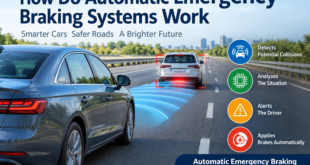
Modern cars are becoming smarter every year, and one of the technologies I find particularly useful is the traffic sign recognition system. This feature is designed to help drivers notice important road signs without constantly trying to remember every sign they pass. It can recognize speed limits, no entry signs, stop signs, warning signs, and other traffic information, then display that information on the dashboard, instrument cluster, or head up display.
From my point of view, traffic sign recognition is not meant to replace the driver. Instead, it works as an extra set of eyes that can make driving more convenient and potentially safer. The system uses cameras, image processing, and artificial intelligence to understand signs on the road and provide useful information to the driver.
What Is Traffic Sign Recognition?
Traffic sign recognition, often called TSR, is an advanced driver assistance feature that allows a vehicle to detect and identify traffic signs while driving.
A camera is usually installed near the top of the windshield, often around the rearview mirror. This camera continuously observes the road ahead. When the system detects something that looks like a traffic sign, the vehicle’s software analyzes its shape, color, symbols, and numbers.
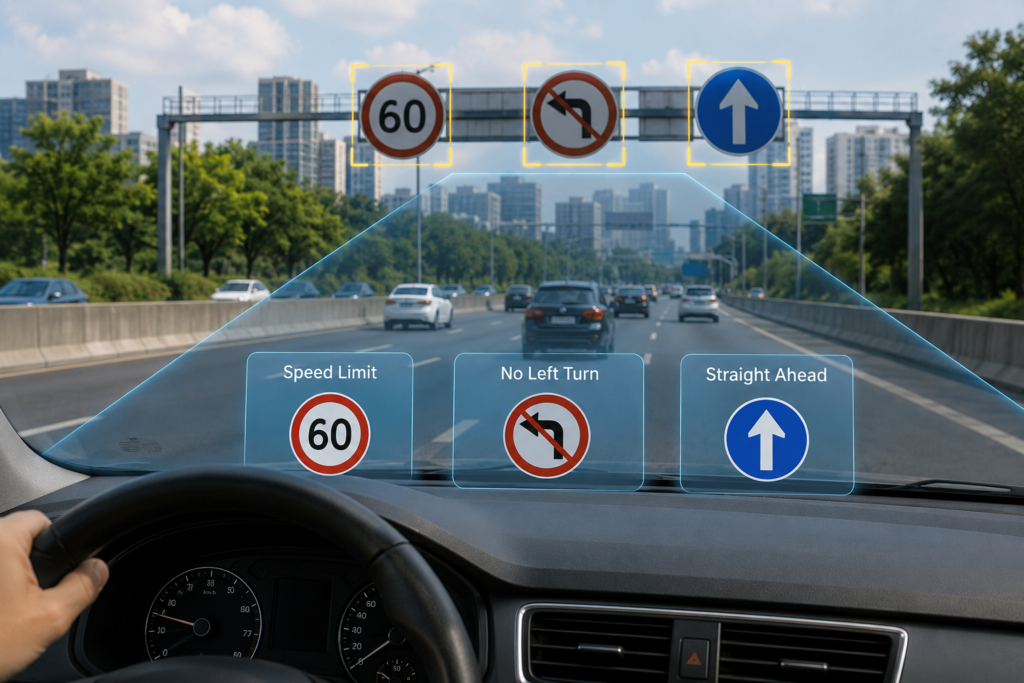
After identifying the sign, the system can show the information to the driver. For example, if the vehicle passes a 60 km/h speed limit sign, the instrument cluster may display the same speed limit.
Some systems can also use information from the navigation system and digital maps to improve the accuracy of the displayed road information.
How Does Traffic Sign Recognition Work?
The basic process may look simple from the driver’s perspective, but several technologies work together in the background.
First, the vehicle’s camera captures images of the road. The camera is constantly looking for objects that could represent traffic signs.
The system then processes these images using computer vision technology. It searches for characteristics commonly associated with traffic signs, including specific shapes, colors, borders, symbols, and numbers.
Once a possible sign has been detected, the software classifies it. For example, it may determine whether the sign represents a speed limit, a stop instruction, a no overtaking restriction, or another road rule.
The vehicle then sends the recognized information to the driver display.
This entire process happens very quickly, often while the car is moving at normal road speeds. The driver usually only sees the final result rather than all the processing happening behind the scenes.
The Role of the Camera
The camera is one of the most important parts of a traffic sign recognition system. Without a clear view of the road, the system may have difficulty recognizing signs.
Most vehicles use a forward facing camera positioned behind the windshield. Its location gives it a good view of road signs, lane markings, and other objects ahead.
The camera captures images many times while the vehicle is moving. The system then analyzes those images to find potential traffic signs.
Camera quality is important because road conditions can change significantly. Bright sunlight, darkness, rain, fog, dirt on the windshield, and damaged signs can all affect what the camera sees.
This is one reason I believe drivers should still pay attention to road signs even when their vehicle has traffic sign recognition.
How Artificial Intelligence Helps
Artificial intelligence and machine learning have become important parts of modern traffic sign recognition systems.
The software needs to understand that different signs can have different shapes, colors, fonts, and symbols. A speed limit sign in one country may not look exactly like a speed limit sign in another country.
Machine learning models can be trained using large collections of traffic sign images. Through this training, the system learns common visual patterns associated with different types of signs.
For example, it can learn that a circular sign containing a number may represent a speed restriction. It can also learn to distinguish between different numbers and symbols.
Modern systems can become better at handling real world situations, although their performance still depends on camera quality, software design, road conditions, and the availability of suitable training data.
Recognizing Speed Limit Signs
Speed limit recognition is one of the most common functions of traffic sign recognition systems.
When the camera detects a speed limit sign, the system attempts to read the number and identify what the sign means. The detected speed limit can then appear on the instrument panel or head up display.
For example, if a driver enters a road where the speed limit changes from 50 km/h to 80 km/h, the system may recognize the new sign and update the displayed speed limit.
Some vehicles can combine this information with other driver assistance systems. Depending on the vehicle and its features, recognized speed information may be used to provide warnings when the driver’s current speed is above the detected limit.
However, drivers should understand that recognition is not always perfect. A temporary speed limit, hidden sign, or poorly visible sign can sometimes cause problems.
Recognizing Other Traffic Signs
Traffic sign recognition is not limited to speed limits.
Depending on the vehicle, the system may recognize signs such as no entry, no overtaking, stop, yield, one way, and other regulatory or warning signs.
The exact capabilities vary between manufacturers and vehicle models.
Some systems are designed primarily for speed limit recognition, while more advanced systems can recognize a wider range of traffic signs.
The system may also recognize additional information attached to signs. For example, a speed limit may apply only during certain conditions or to a particular type of vehicle.
This is where things become more complicated because understanding the complete meaning of a road sign requires more than simply reading a number.
What Happens When a Sign Is Partially Hidden?
Real roads are rarely perfect.
A traffic sign may be partly covered by a tree, blocked by another vehicle, damaged, dirty, or affected by strong sunlight. This can make recognition difficult.
The system attempts to identify signs even when conditions are not ideal, but there are limits.
If only part of a sign is visible, the software may not have enough information to confidently identify it. In some situations, the system may ignore the sign rather than displaying incorrect information.
I consider this an important point because drivers should never assume that the absence of a warning on the dashboard means there was no road sign.
The physical traffic signs on the road should always remain the primary source of information.
Traffic Sign Recognition at Night
Nighttime driving presents another challenge.
Modern cameras can work in low light, but visibility is naturally reduced after sunset. Headlights, reflections, bright streetlights, and other vehicles can also affect the camera image.
Some advanced systems are designed to handle nighttime conditions more effectively. However, recognition accuracy can still vary.
Weather can create additional problems. Rain can cover parts of the windshield, while fog can reduce visibility. Snow and dirt can also interfere with the camera.
For this reason, keeping the windshield clean and ensuring that the camera area is not blocked is important for vehicles equipped with this technology.
Combining Camera Data With Navigation
One of the interesting developments in modern vehicles is the combination of camera based recognition with navigation data.
The camera provides real time information about what the vehicle is seeing. Navigation data can provide additional information about the road and its expected restrictions.
When these systems work together, the vehicle may have more context about the current road.
For example, if the camera recognizes a speed limit sign, the navigation system may also have information about the speed limit for that road segment.
This combination can help reduce uncertainty, although map data can become outdated and should not automatically be considered more accurate than the physical signs on the road.
Benefits of Traffic Sign Recognition
There are several reasons why I think traffic sign recognition is a useful driver assistance feature.
The first benefit is convenience. Drivers do not have to rely entirely on memory when they pass several speed limit signs during a long journey.
The system can also help draw attention to important restrictions. A driver may miss a sign because of traffic, poor visibility, or distraction. A clear display on the dashboard can provide an additional reminder.
Another benefit is improved driver awareness. When combined with other advanced driver assistance technologies, traffic sign recognition can contribute to a more informed driving experience.
It can be particularly helpful on unfamiliar roads where drivers may not know the local speed restrictions or road rules.
Limitations of Traffic Sign Recognition
Despite its advantages, traffic sign recognition is not perfect.
One major limitation is visibility. If the camera cannot clearly see a sign, the system may not recognize it.
Another problem is incorrect interpretation. Signs can sometimes be unusual, temporary, damaged, or positioned in a way that makes recognition difficult.
Different countries also use different traffic sign designs. A system designed and trained for one region may have limitations when used in another region.
There can also be situations where the system recognizes a sign correctly but cannot fully understand how it applies to the vehicle. Additional signs or road markings may change the meaning.
For these reasons, I would always treat traffic sign recognition as an assistance feature rather than a replacement for proper driving attention.
Does Traffic Sign Recognition Make Driving Safer?
Traffic sign recognition can contribute to safer driving, but it should not be considered a guarantee of safety.
The technology is most useful when it supports an attentive driver. It can provide another layer of information and help remind drivers about important restrictions.
However, safe driving still depends on observing the road, understanding traffic conditions, following local laws, and making responsible decisions.
I think the biggest advantage is that the system can reduce the amount of information a driver has to remember. Instead of relying entirely on memory, the driver can receive a visual reminder of a recently detected sign.
Maintenance and Camera Calibration
The camera used for traffic sign recognition needs a clear view.
Drivers should keep the windshield clean, especially around the camera area. Stickers, accessories, dirt, or damage near the camera can interfere with its operation.
Camera calibration is also important. If the windshield is replaced or certain vehicle repairs are performed, the camera may need to be recalibrated according to the manufacturer’s instructions.
A properly maintained system has a better chance of working as intended.
The Future of Traffic Sign Recognition
I expect traffic sign recognition to become more advanced as vehicle cameras and artificial intelligence continue to improve.
Future systems may become better at recognizing temporary road signs, construction zones, electronic signs, and complex combinations of road information.
The technology may also become more closely connected with navigation, driver monitoring, adaptive cruise control, and other driver assistance features.
However, the goal should remain the same: providing useful information to drivers without encouraging them to stop paying attention.
Final Thoughts
Traffic sign recognition systems are a good example of how modern automotive technology can assist everyday drivers. The system uses cameras, computer vision, artificial intelligence, and sometimes navigation data to identify traffic signs and communicate their meaning to the driver.
From my point of view, its greatest value is not that it drives the car for you. Instead, it provides an additional layer of awareness. It can remind you of speed limits, identify certain road restrictions, and make unfamiliar roads easier to understand.
At the same time, drivers should remember that technology has limitations. Weather, visibility, damaged signs, blocked cameras, and unusual road situations can affect recognition accuracy.
The best approach is to use traffic sign recognition as a helpful assistant while continuing to watch the road and follow actual traffic signs. As automotive technology continues to develop, systems like this will likely become an increasingly common part of the modern driving experience.