Related Articles
Modern cars are becoming smarter every year, and one of the most useful driver assistance technologies is the car lane centering system. If you have ever driven on a highway and noticed your vehicle making small steering adjustments to remain in the middle of its lane, you have probably seen this technology in action.
In my view, lane centering is one of those features that can make long drives more comfortable while also helping the driver maintain better control of the vehicle. However, it is important to understand that lane centering is a driver assistance system, not a replacement for the driver.
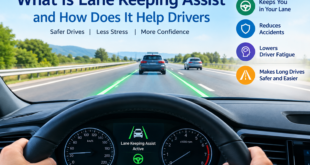
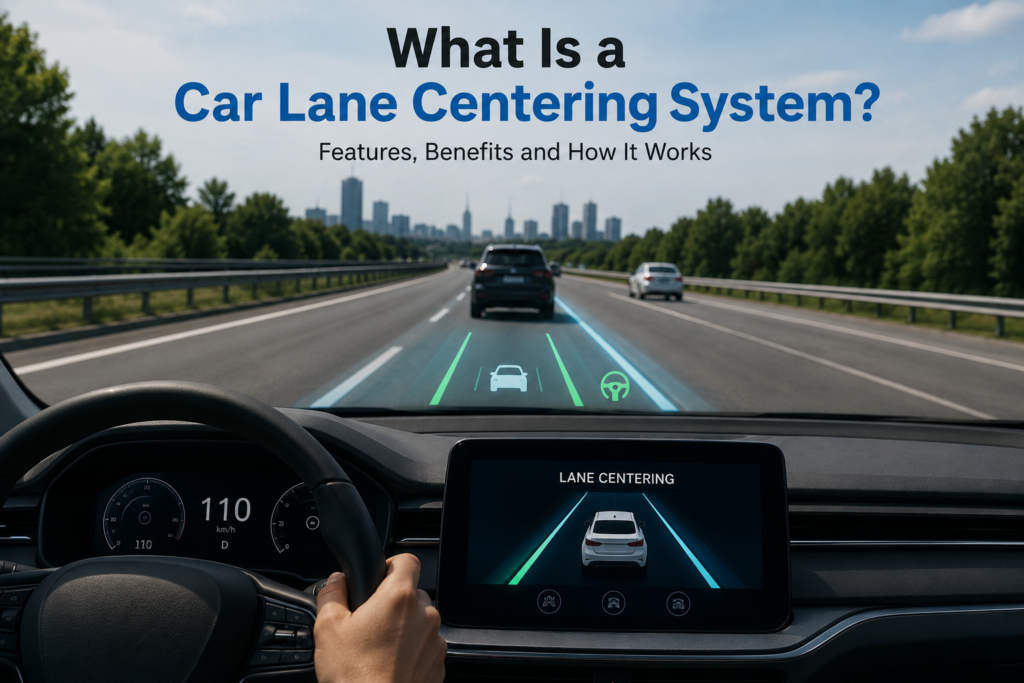
A lane centering system uses cameras, sensors, and computer software to identify lane markings and determine where the vehicle is positioned within its lane. The system can then make small steering adjustments to help keep the vehicle near the center of the lane.
What Is a Car Lane Centering System?
A car lane centering system is an advanced driver assistance feature designed to help a vehicle stay centered between lane markings. Unlike a basic lane departure warning system, which mainly alerts the driver when the vehicle begins moving toward a lane boundary, lane centering can actively provide steering assistance.
The system continuously monitors the road and estimates the position of the vehicle relative to the lane. If the car begins moving too close to one side, the system can make a small steering correction.
For example, imagine driving on a straight highway. You may naturally move slightly toward the left or right side of the lane because of road conditions, wind, or small steering movements. A lane centering system can recognize this movement and gently adjust the steering to help the vehicle return toward the center.
The exact behavior depends on the vehicle manufacturer and the specific system installed in the car.
How Does Lane Centering Work?
The basic idea behind lane centering is relatively simple, but the technology working in the background is quite advanced.
A typical system uses a forward facing camera to identify lane markings. Some vehicles may also use radar and other sensors as part of their driver assistance technology.
The camera continuously observes the road ahead. Software then processes the visual information to identify the lane boundaries and calculate where the vehicle is positioned.
The system may consider several factors, including the location of lane markings, the direction of the road, the vehicle’s current steering angle, and its movement within the lane.
If the vehicle starts drifting away from the center, the system can send instructions to the electronic steering system. The steering wheel may then move slightly as the vehicle makes a correction.
From my point of view, the important thing to understand is that these corrections are normally subtle. The system is not supposed to make large or sudden steering movements during normal operation.
Lane Centering vs Lane Departure Warning
People sometimes confuse lane centering with lane departure warning, but they are not exactly the same.
Lane departure warning primarily informs the driver that the vehicle is leaving or approaching the edge of its lane. Depending on the vehicle, the warning may appear on the dashboard or come through an audible or steering wheel alert.
Lane centering goes a step further because it can provide steering assistance to keep the vehicle closer to the middle of the lane.
A simple way to understand the difference is this:
Lane departure warning: Tells you that you are moving toward the lane boundary.
Lane keeping assist: Can help steer the vehicle away from the lane boundary.
Lane centering: Continuously helps position the vehicle closer to the center of the lane.
The names and exact functions can vary between manufacturers, so it is always worth checking the owner’s manual for a particular vehicle.
What Sensors Are Used?
The technology behind a car lane centering system can vary depending on the vehicle.
A forward facing camera is one of the most common components. It looks at the road ahead and searches for lane markings and other visual information.
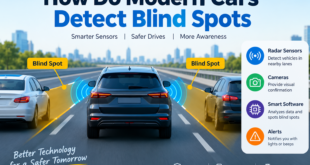
Some advanced driver assistance systems also combine cameras with radar sensors. Radar can provide information about vehicles and objects around the car and can work together with other sensors to improve the vehicle’s understanding of its surroundings.
The car’s computer processes information from these sensors in real time. It then determines whether steering assistance is required.
Modern vehicles can perform these calculations extremely quickly, allowing the system to continuously respond to changes in the road.
When Does Lane Centering Work Best?
Lane centering generally works best when road markings are clear and visible. Highways and well maintained roads are often suitable environments because lane boundaries are easier for the vehicle’s camera to recognize.
Straight or gently curved roads can also provide favorable conditions for the system.
However, performance can be affected by poor weather, faded lane markings, construction zones, sharp curves, strong sunlight, snow, dirt on the camera, or other unusual road conditions.
This is why drivers should never assume that lane centering will work perfectly in every situation.
Benefits of a Car Lane Centering System
One of the biggest advantages of lane centering is reduced driver workload during longer journeys.
Highway driving can become tiring because the driver must continuously make small steering corrections. A lane centering system can assist with some of these corrections.
Reduced Driver Fatigue
During a long highway journey, constantly maintaining the vehicle’s position can become tiring. Steering assistance may reduce some of this workload and make the journey feel more comfortable.
Better Lane Position
Another advantage is that the system can help the vehicle remain closer to the middle of its lane. This can be particularly useful on long stretches of highway.
Helpful on Long Drives
For people who regularly travel long distances, lane centering can be a convenient driver assistance feature. When combined with other systems, such as adaptive cruise control, it can make highway driving considerably less demanding.
Additional Driver Assistance
Lane centering is not designed to replace safe driving. Instead, I see it as an additional layer of assistance that can support an attentive driver.
Lane Centering and Adaptive Cruise Control
Lane centering is often discussed alongside adaptive cruise control because many modern vehicles combine the two technologies.
Adaptive cruise control manages the vehicle’s speed and following distance from traffic ahead. Lane centering provides steering assistance to help maintain the vehicle’s position within the lane.
When these systems work together, the vehicle can assist with both speed control and steering on suitable roads.
However, the driver still needs to remain attentive and ready to take control.
These systems do not automatically turn a normal car into a fully self driving vehicle.
Is Lane Centering Safe?
When used correctly, lane centering can be a useful safety and convenience feature. However, its safety depends heavily on how the driver uses it.
The driver should continue watching the road and maintaining control of the vehicle. Lane centering can have difficulty recognizing road markings in certain conditions.
For example, heavy rain may reduce visibility. Faded lane markings can make it harder for the camera to identify the lane. Road construction can also create confusing markings.
There may also be situations where the system temporarily becomes unavailable.
For this reason, I would never recommend treating lane centering as something that allows you to stop paying attention.
Limitations of Lane Centering Technology
Every driver assistance technology has limitations, and lane centering is no exception.
One common limitation is its dependence on visible lane markings. If the road markings disappear, the system may have difficulty determining where the vehicle should be positioned.
Weather can also affect performance. Heavy rain, fog, snow, or dust may interfere with the camera’s ability to clearly see the road.
Sharp curves can present another challenge. Depending on the system, the vehicle may not be able to follow every curve smoothly.
A dirty or blocked camera can also reduce system performance. This is why keeping the windshield area around the camera clean can be important.
Drivers should also remember that road conditions can change quickly. A system that works well on one part of a highway may not perform in exactly the same way a few minutes later.
What Happens If Lane Markings Are Missing?
If lane markings become difficult to see, the lane centering system may provide less assistance or deactivate completely.
Many vehicles provide a warning when the system cannot detect the necessary road information.
This is an important feature because it reminds the driver that assistance is limited.
Drivers should therefore be prepared to take full responsibility for steering whenever the system cannot operate properly.
Does Lane Centering Drive the Car by Itself?
No. A lane centering system should not be confused with fully autonomous driving.
The system can provide steering assistance, but the driver remains responsible for controlling the vehicle.
Some advanced vehicles can provide more sophisticated assistance when lane centering is combined with other technologies. Even then, the exact capabilities depend on the vehicle, software, road conditions, and manufacturer.
Drivers should always understand what their particular vehicle’s system can and cannot do.
How to Use Lane Centering Properly
Using lane centering responsibly is fairly straightforward.
First, make sure you understand the system through the owner’s manual. Different manufacturers use different names and operating conditions.
Keep your attention on the road and maintain an appropriate driving position.
Do not use the system as an excuse to look at your phone, sleep, or become distracted.
Keep your hands and attention ready to take control when necessary.
Finally, remember that lane centering is designed to assist you rather than replace you.
Final Thoughts
A car lane centering system is an impressive example of how modern automotive technology can assist drivers. By using cameras, sensors, and computer software, the system can monitor lane position and provide steering assistance to help keep the vehicle near the center of its lane.
In my opinion, its biggest value comes during long highway journeys, where small steering corrections can become tiring over time. When combined with technologies such as adaptive cruise control, lane centering can make driving more comfortable and less demanding.
At the same time, drivers should understand its limitations. Poor weather, unclear lane markings, road construction, sharp curves, and blocked sensors can affect performance.
The most important point is simple: lane centering is a driver assistance technology, not a substitute for an attentive driver. When used correctly and responsibly, it can be a useful feature that adds convenience and assistance to modern driving.