Related Articles

When I think about the important parts of a car, the engine, tires, brakes, and battery usually come to mind first. However, there is another component that plays a very important role in keeping the car running properly. That component is the car alternator.
Many people know that a car has a battery, but they may not know that the alternator is responsible for keeping that battery charged while the engine is running. It also supplies electrical power to many systems inside the vehicle.
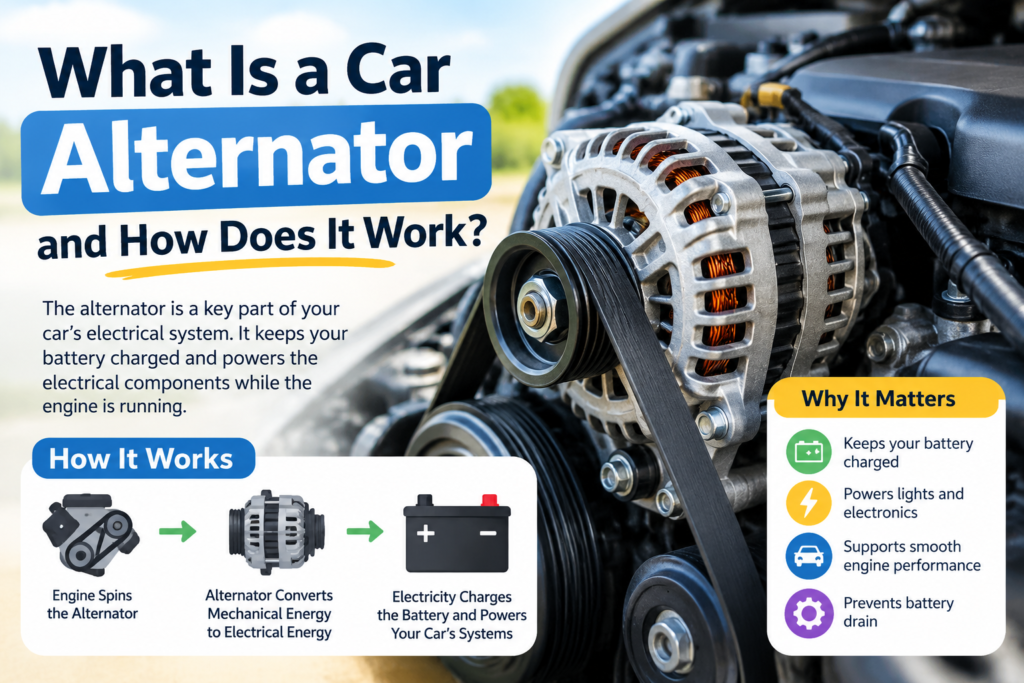
In simple words, the alternator converts the mechanical energy produced by the running engine into electrical energy. This electricity is then used by the car’s electrical systems and helps recharge the battery.
In this article, I will explain what a car alternator is, how it works, what its main parts are, and how you can recognize common alternator problems.
What Is a Car Alternator?
A car alternator is an electrical generator that produces electricity while the engine is running. It is usually located near the front or side of the engine and is connected to the engine through a belt.
The alternator has a simple but important job. When the engine runs, it turns the alternator. The alternator uses this movement to generate electrical power.
This power is needed for things such as headlights, interior lights, dashboard systems, entertainment systems, air conditioning controls, sensors, computers, and many other electrical components.
The alternator also helps maintain the charge in the car battery. The battery provides electrical energy when the engine is starting and when the engine is not running. Once the engine starts, the alternator takes over much of the electrical workload and helps recharge the battery.
How Does a Car Alternator Work?
Understanding how an alternator works becomes easier when we look at the process step by step.
When I explain this to someone who is new to cars, I usually describe it as a small power station connected to the engine.
First, the engine starts and begins rotating. A belt connected to the engine turns the alternator pulley. This causes the internal parts of the alternator to spin.
Inside the alternator, a rotating magnetic field moves around stationary wire coils. This movement produces alternating electrical current, commonly called AC electricity.
The car, however, mainly uses direct current, or DC electricity. This is where the alternator’s rectifier comes into play. The rectifier converts the AC electricity into DC electricity.
The voltage regulator then helps control the electrical output so that the vehicle receives an appropriate and stable voltage.
The resulting electricity powers the car’s electrical components and helps keep the battery charged.
This entire process happens continuously while the engine is running.
Main Parts of a Car Alternator
A car alternator contains several important parts. Each one has a specific job.
Rotor
The rotor is the rotating part inside the alternator. It creates a magnetic field as it spins.
The rotor is connected to the pulley through a shaft. When the engine turns the belt, the pulley turns the rotor.
Stator
The stator is the stationary part surrounding the rotor. It contains wire coils where electrical energy is generated as the magnetic field moves through them.
The interaction between the spinning rotor and the stator creates alternating current.
Rectifier
The rectifier converts the alternating current produced by the alternator into direct current.
This is important because most of the vehicle’s electrical system and the battery operate using DC electricity.
Voltage Regulator
The voltage regulator controls the alternator’s electrical output. Without proper voltage regulation, the vehicle could receive too much or too little electrical power.
A properly working regulator helps maintain a suitable charging voltage and protects electrical components from unstable output.
Pulley
The pulley is connected to the alternator belt. It transfers mechanical energy from the engine to the alternator.
Some modern vehicles use special pulley designs that help reduce vibration and improve belt operation.
Bearings
Bearings allow the alternator’s rotating components to spin smoothly. Worn bearings can create unusual noises and may eventually affect alternator performance.
What Does an Alternator Do?
The main purpose of an alternator is to produce electricity while the engine is running.
It performs two major jobs.
The first job is supplying electrical power to the vehicle. Modern cars contain many electrical systems, so this is extremely important.
The second job is recharging the battery. Every time you start the engine, the starter motor uses energy from the battery. The alternator helps replace that energy after the engine starts.
The alternator does not simply charge the battery all the time at maximum power. The vehicle’s charging system regulates output based on electrical demand and operating conditions.
Alternator vs Battery
People sometimes confuse the battery and alternator because both are connected to the vehicle’s electrical system.
The battery stores electrical energy. Its main job is to provide the strong burst of power needed to start the engine and to supply electricity when the engine is off.
The alternator generates electricity while the engine is running.
I like to think of the battery as an energy storage unit and the alternator as the generator that helps keep that storage unit charged.
Both components are important, but they perform different jobs.
A healthy battery with a failing alternator can eventually become completely discharged. Likewise, a good alternator cannot fix a battery that has reached the end of its useful life.
Signs of a Bad Alternator
A failing alternator can cause several noticeable problems. Recognizing these signs early can help prevent a breakdown.
Dim or Flickering Lights
If your headlights or interior lights become unusually dim or flicker, the charging system may not be supplying consistent electrical power.
However, lighting problems can have other causes too, so proper testing is important.
Battery Warning Light
Many cars have a battery shaped warning light on the dashboard. This light does not always mean that the battery itself is defective.
It can indicate a problem with the charging system, including the alternator, belt, wiring, or voltage regulation.
Weak Battery
If the battery repeatedly becomes weak even after being charged or replaced, the alternator may not be charging it properly.
Electrical Problems
Problems with power windows, dashboard electronics, audio systems, or other electrical features can sometimes occur when charging voltage is too low or unstable.
Strange Noises
A worn alternator bearing or damaged internal component may produce grinding, whining, or other unusual noises.
Difficulty Starting
If the alternator is not charging the battery correctly, the battery can gradually lose its stored energy. Eventually, the car may struggle to start or may not start at all.
What Causes Alternator Problems?
Several things can cause an alternator to stop working properly.
Normal wear and tear is one of the most common reasons. Alternators contain moving parts that operate every time the engine runs.
A damaged or loose serpentine belt can also create problems because the alternator may not spin at the correct speed.
Worn bearings, damaged wiring, faulty voltage regulation, and internal electrical problems can also affect alternator performance.
Heat and contamination can contribute to component wear as well. Since the alternator operates in the engine compartment, it experiences considerable heat and vibration.
How Long Does a Car Alternator Last?
There is no single mileage figure that applies to every alternator. Lifespan depends on the vehicle, driving conditions, electrical demand, component quality, maintenance, and climate.
Some alternators can work reliably for many years, while others may develop problems earlier.
Instead of replacing an alternator based only on age or mileage, I believe it is better to pay attention to warning signs and have the charging system tested when something seems unusual.
How Is an Alternator Tested?
A mechanic can test the vehicle’s charging system using appropriate electrical testing equipment.
The battery condition, charging voltage, belt condition, wiring, and alternator output can all be checked.
Testing is useful because a weak battery does not automatically mean the alternator is bad. Similarly, an alternator problem may be caused by something outside the alternator itself.
A complete charging system inspection can help identify the actual cause instead of replacing parts unnecessarily.
Can You Drive With a Bad Alternator?
Driving with an alternator that is not working correctly can be risky.
If the alternator stops producing enough electricity, the vehicle will eventually depend on the energy stored in the battery. Once that stored energy is exhausted, the engine may stop running and the car may not restart.
The vehicle could also lose important electrical functions as voltage drops.
For this reason, if the battery warning light comes on together with dim lights, unusual noises, or starting problems, I would avoid unnecessary driving and have the charging system inspected.
How to Keep the Charging System Healthy
Regular vehicle maintenance can help identify charging system problems before they become serious.
I recommend checking the serpentine belt during routine maintenance and paying attention to unusual sounds or dashboard warning lights.
It is also important to keep battery terminals and electrical connections clean and secure.
If your car repeatedly has battery problems, do not simply replace the battery again without checking the charging system. The alternator may be the reason the battery is not staying charged.
Following the vehicle manufacturer’s maintenance recommendations is also a good way to keep the electrical system working properly.
Final Thoughts
The car alternator is one of those components that many drivers do not think about until something goes wrong. Even though it is hidden inside the engine compartment, it has an essential role in the vehicle.
The alternator converts mechanical energy from the running engine into electrical energy. That electricity powers many vehicle systems and helps recharge the battery.
Understanding how an alternator works can make it easier to recognize problems such as dim lights, battery warning lights, repeated weak batteries, strange noises, and starting difficulties.
In my view, the most important thing is not to ignore these warning signs. A small charging system problem can eventually leave you with a vehicle that will not start. Regular inspections and timely repairs can help keep the alternator, battery, and entire electrical system working reliably.
If you understand the basic role of the alternator, you can also have a much better conversation with a mechanic when an electrical problem appears. It is a simple example of how several mechanical and electrical components work together to keep a modern car moving.