Related Articles


Vehicle safety has improved a lot over the years, and one of the features I consider especially useful is Vehicle Stability Control. Many modern cars come with this technology because it helps drivers maintain control when the vehicle starts to slide or move in an unexpected direction. I believe understanding how Vehicle Stability Control works is important for every driver because it can provide extra support during difficult driving situations.
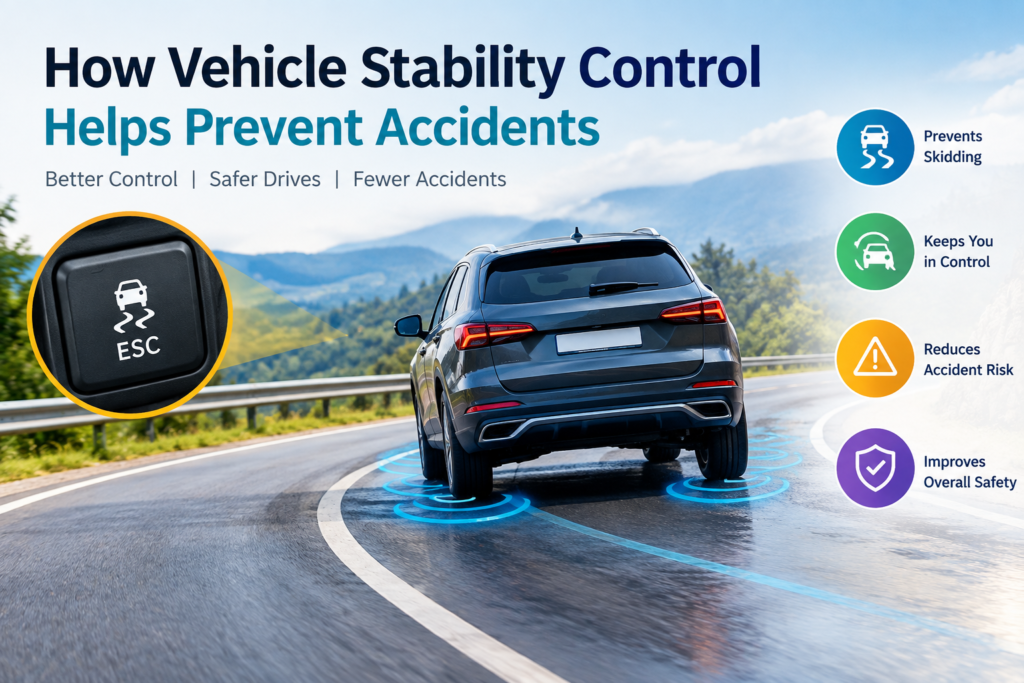
Vehicle Stability Control is also known by different names depending on the vehicle manufacturer. You may see terms such as Electronic Stability Control, Electronic Stability Program, Dynamic Stability Control, or simply ESC. Although the names can be different, the main purpose is similar. The system monitors the movement of the vehicle and helps correct it when the car begins to lose stability.
What Is Vehicle Stability Control?
Vehicle Stability Control is an electronic safety system designed to help a driver maintain control of a vehicle. It works by monitoring several important factors, including steering direction, wheel speed, vehicle movement, and the direction in which the vehicle is actually traveling.
In simple words, the system compares where the driver wants the vehicle to go with where the vehicle is actually going. If the system detects that the car is beginning to skid or move away from the intended path, it can automatically apply braking to individual wheels and reduce engine power when necessary.
From my point of view, this is especially helpful because losing control can happen very quickly. A driver may not always have enough time to react correctly, particularly on wet roads, slippery surfaces, or during sudden emergency maneuvers.
How Vehicle Stability Control Works
Vehicle Stability Control uses sensors placed throughout the vehicle. These sensors continuously collect information about the car’s movement.
One sensor monitors the steering angle so the system knows which direction the driver wants to travel. Wheel speed sensors monitor how quickly each wheel is rotating. Other sensors can measure the vehicle’s rotation and sideways movement.
The control system compares all this information several times while the vehicle is moving. If it notices a difference between the driver’s intended direction and the vehicle’s actual movement, it can respond automatically.
For example, imagine I am driving around a curve and suddenly encounter a slippery section of road. The vehicle may begin moving wider than I intended. Vehicle Stability Control can detect this movement and apply braking to selected wheels to help bring the vehicle back toward the intended path.
The system works extremely quickly, often before the driver fully realizes that the vehicle is losing stability.
Helps Prevent Skidding
One of the biggest benefits of Vehicle Stability Control is its ability to help prevent or reduce skidding.
Skidding can happen when tires lose grip with the road. Wet roads, loose gravel, snow, ice, mud, and sudden steering movements can all increase the possibility of losing traction.
When the system detects instability, it can brake individual wheels to help stabilize the vehicle. This does not mean the system can completely eliminate every skid, but it can reduce the severity of many situations.
I think this is one of the most valuable features because a small loss of control can quickly become a serious accident if the vehicle moves into another lane or leaves the road.
Helps During Emergency Steering
Sometimes accidents can be avoided only by making a sudden steering maneuver. For example, a driver may need to avoid an unexpected object, another vehicle, or an animal on the road.
Sudden steering can cause the vehicle to become unstable, especially when traveling at higher speeds. Vehicle Stability Control can help maintain stability during these situations.
The system does not decide where the driver should steer. Instead, it provides assistance when the vehicle’s movement becomes inconsistent with the driver’s steering input.
This is important because emergency situations require quick decisions. Having a safety system working in the background can provide an additional layer of protection.
Improves Control on Wet Roads
Wet roads can be challenging because water reduces the amount of grip available between the tires and road surface. If a driver turns sharply, accelerates suddenly, or brakes aggressively, the vehicle may become unstable.
Vehicle Stability Control can help detect unwanted movement and respond accordingly.
However, I would never consider this technology a reason to drive faster in bad weather. It is an assistance system, not a replacement for careful driving. Reducing speed, keeping a safe distance, and using good tires are still extremely important.
Reduces the Risk of Losing Control in Curves
Curves are another situation where Vehicle Stability Control can be useful. A vehicle may become unstable if a driver enters a curve too quickly or suddenly changes direction.
If the vehicle begins moving differently from the intended path, the stability system can intervene. It may reduce engine power or apply braking to selected wheels to help the vehicle regain stability.
In my opinion, this is particularly useful for drivers who may not recognize how quickly a vehicle can lose grip during a sharp turn.
Works With Other Safety Systems
Vehicle Stability Control does not work alone. It is generally connected with other electronic safety systems in the vehicle.
For example, the system can work alongside Anti lock Braking Systems and traction control. These technologies have different purposes, but together they can improve overall vehicle control.
Anti lock braking helps prevent the wheels from locking during hard braking. Traction control helps reduce excessive wheel spin during acceleration. Vehicle Stability Control focuses more broadly on maintaining the vehicle’s intended direction and stability.
When these systems work together, they can provide valuable assistance in different driving conditions.
Why Tires Still Matter
Although Vehicle Stability Control is helpful, I believe drivers should never forget the importance of good tires.
The stability system can only work with the grip available from the tires. If tires are badly worn, incorrectly inflated, damaged, or unsuitable for the road conditions, the vehicle may have less ability to maintain traction.
Checking tire pressure regularly is a simple habit that can make a meaningful difference. Drivers should also inspect tire condition and replace tires when necessary.
A modern safety system cannot overcome the basic limitations of poor tire grip.
Vehicle Stability Control Is Not a Substitute for Safe Driving
One common misunderstanding is that drivers can depend completely on electronic safety systems. I do not think this is a good approach.
Vehicle Stability Control is designed to assist the driver, not replace the driver’s responsibility.
Speed remains one of the most important factors in road safety. Driving too fast for the conditions can make it difficult for any safety system to prevent an accident.
Drivers should continue to follow speed limits, maintain a safe following distance, avoid distractions, and adjust their driving according to weather and road conditions.
Can Vehicle Stability Control Prevent Every Accident?
No safety system can prevent every accident.
Vehicle Stability Control can help reduce the risk of losing control, but it cannot change the laws of physics. If a vehicle is traveling too fast, has very little tire grip, or encounters an extreme road condition, the system may not be able to prevent a crash.
This is why I see Vehicle Stability Control as an extra safety layer rather than a guarantee.
Good driving habits remain the first line of protection.
What Happens When the Stability Light Flashes?
Many vehicles have a dashboard light showing a car with curved skid marks. When this light flashes while driving, it often means the stability or traction system is actively working.
For example, if the vehicle detects wheel slip on a slippery road, the warning light may flash briefly while the system intervenes.
If the light remains illuminated continuously, however, it may indicate that the system has been turned off or that there is a fault that needs attention. The vehicle owner’s manual can provide specific information about the warning light.
I would recommend having a warning checked rather than ignoring it, especially if the vehicle is being driven regularly in difficult conditions.
Benefits for Everyday Drivers
Vehicle Stability Control is not only useful during extreme emergencies. It can provide assistance during everyday driving when unexpected conditions occur.
A wet corner, loose road surface, sudden steering movement, or unexpected obstacle can create a situation where the vehicle starts behaving differently from what the driver expects.
Having a system that continuously monitors vehicle movement can provide another layer of protection.
For me, one of the biggest advantages is that the system operates automatically. The driver does not need to manually calculate which wheel needs braking. The vehicle’s electronic control system handles the response within a very short period.
Final Thoughts
Vehicle Stability Control is one of the important safety technologies found in modern vehicles. It helps drivers maintain control when a vehicle begins to skid, slide, or move away from the intended direction.
The system uses sensors to monitor steering input, wheel speed, and vehicle movement. When it detects instability, it can apply braking to individual wheels and reduce engine power to help restore control.
I believe this technology can be especially valuable during wet weather, emergency steering, sharp curves, and other situations where a vehicle may lose stability. At the same time, drivers should understand that Vehicle Stability Control is not a replacement for responsible driving.
Good tires, appropriate speed, proper vehicle maintenance, attention to the road, and safe driving habits are still essential. When these habits are combined with modern safety technology, drivers can create a much safer driving environment.
Understanding how Vehicle Stability Control helps prevent accidents can also make drivers more confident and aware of what their vehicle is doing. Rather than depending on technology blindly, I believe the best approach is to understand its purpose and use it as an additional safety feature while continuing to drive carefully and responsibly.